


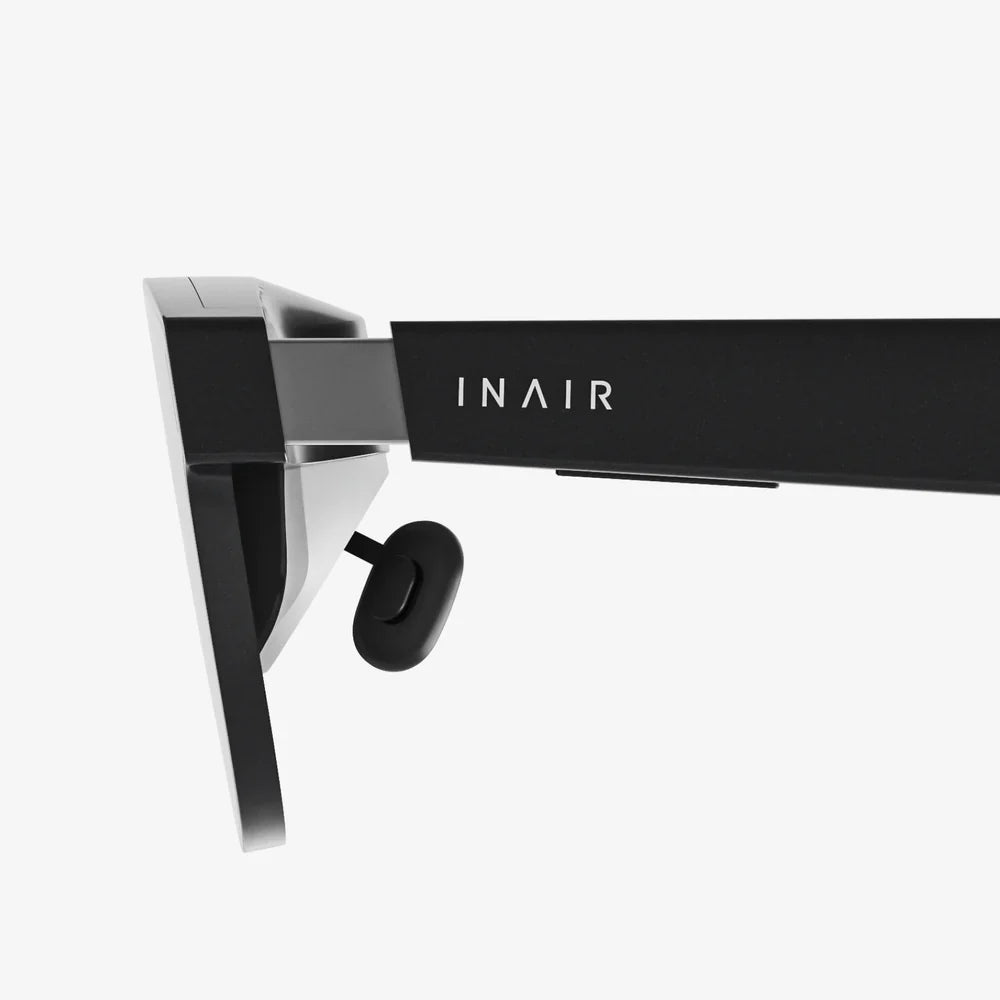
Imagine a world where your view of the bustling city street seamlessly overlays navigation arrows, the name of that intriguing restaurant, and a notification from your calendar, all without you ever looking down at a screen. Now, imagine that same crystal-clear, digitally-augmented view is perfectly in focus because it’s tailored precisely to your unique vision prescription. This isn’t a distant sci-fi fantasy; it’s the imminent future of wearable technology, and it hinges on one critical question: do smart glasses come with prescription lenses? The answer is more complex and fascinating than a simple yes or no, unlocking a new era of accessibility and personalization in tech.
The Fundamental Challenge: Merging Optics with Ocular Correction
At their core, smart glasses are an optical instrument. They project digital images, often from miniature projectors or displays located in the temples, onto a lens or waveguide that redirects the light into the user's eye. This creates the illusion that the digital content is floating in space several feet away. This intricate optical system is designed with a specific focal plane in mind. The primary hurdle for integrating prescription lenses is that traditional corrective lenses work by bending light to compensate for refractive errors like myopia (nearsightedness), hyperopia (farsightedness), astigmatism, or presbyopia (age-related farsightedness). The challenge lies in seamlessly combining these two optical systems—the corrective and the projective—without compromising the clarity of either the real world or the digital overlay.
The Spectrum of Solutions: From Inserts to Integrated Lenses
The industry has developed several innovative approaches to solve this puzzle, each with its own advantages and trade-offs. Understanding these options is key to finding the right solution for your needs.
Magnetic Prescription Inserts (The Clip-In Solution)
This is currently one of the most popular and user-friendly methods. The smart glasses frame is designed with a built-in slot or a magnetic attachment point on the inner side of the lens. A separate optical lab then creates a custom prescription lens insert that snaps securely into place.
- Pros: High flexibility. Users can have multiple inserts for different prescriptions (e.g., single vision, computer-use progressives) and swap them easily. It protects the expensive smart lenses from scratches and allows for easy updating of prescriptions without replacing the entire device.
- Cons: It can add a small amount of bulk and weight to the glasses. There's also a potential for a very slight "tunnel vision" effect or reduced field of view, as you are looking through two layers of material.
Custom Integrated Prescription Lenses
This is the holy grail of smart glasses design: a single lens that performs both the vision correction and the digital projection. In this model, the waveguides or reflective elements necessary for the augmented reality display are directly fabricated into a prescription lens.
- Pros: Offers the most natural aesthetic and wearing experience, indistinguishable from high-end traditional glasses. It provides the widest possible field of view for the digital content and eliminates any potential visual artifacts from having two lens layers.
- Cons: This is a significantly more complex and expensive manufacturing process. It locks the prescription into the device itself, making it difficult and costly to update if your vision changes. This option is often offered directly by the manufacturer or through a select network of optical partners.
The Universal Frame Design
Some smart glass frames are designed to be universally adaptable. They feature a standard shape and size that allows a local optician to fit prescription lenses directly into the frame, much like they would with any other pair of glasses. The smart technology is entirely contained within the frame and temples, projecting the image onto the user's chosen lenses.
- Pros: Empowers the user to use their trusted local optician and potentially their preferred lens brand, including options for high-index materials, blue light filtering, or photochromic transitions.
- Cons: The success of the AR projection is highly dependent on the curvature and material of the chosen lens. Incorrectly fitted lenses can severely distort the digital image. Not all frame designs support this.
Key Considerations Before You Get Prescription Smart Glasses
Navigating this new category requires careful thought beyond just your prescription strength.
Understanding Your Prescription Type
Not all corrections are created equal in the world of smart optics.
- Single Vision: The most straightforward to accommodate. Whether for distance or reading, a uniform correction is easily applied to inserts or custom lenses.
- Astigmatism: Correcting for an irregularly shaped cornea requires a cylindrical lens power. This is perfectly manageable but requires precise alignment (axis) within the frame to work correctly, which is why professional fitting is crucial.
- Progressive Lenses (Multifocals): This presents the biggest challenge. Progressives have a gradient of power for seeing at distance, intermediate, and near. The digital display from smart glasses typically projects to a fixed focal plane (often simulating a screen several feet away). This means the digital content may only be visible in a specific zone of the progressive lens, potentially requiring users to learn a new head movement to view it clearly. Some manufacturers are developing digital software solutions to compensate for this.
The Fitting Process is Non-Negotiable
You cannot simply order smart glasses with a prescription online by typing in your numbers from an old receipt. A professional fitting by an optician is essential. They need to take precise measurements like Pupillary Distance (PD) and Optical Center Height (OCH). These measurements ensure the corrective lenses are perfectly aligned with your eyes and, just as importantly, with the projection system of the smart glasses. An incorrect PD will mean the digital image appears blurry or doubled, rendering the AR features useless.
Cost and Insurance Implications
Be prepared for a significant investment. The cost is typically two-fold: the price of the smart glasses technology itself and the price of the prescription lenses or inserts. While some vision insurance plans may contribute to the cost of the lenses (as they are a medical device for vision correction), they are unlikely to cover the tech component. Flexible Spending Accounts (FSAs) or Health Savings Accounts (HSAs) can often be used for the prescription portion.
The Future of Sight: Where Prescription Tech is Headed
The integration of prescription lenses is not the endgame; it's the foundation for even more profound innovations. Researchers are actively exploring technologies like liquid crystal lenses that can change their corrective power electronically, potentially allowing users to adjust their prescription on the fly via an app. Imagine smart glasses that automatically adapt to provide perfect focus for reading a book, then shift to distance vision for driving, all while overlaying navigation on the road ahead. Furthermore, the data from these devices could provide invaluable insights into our visual health, tracking eye strain and potentially even detecting early signs of conditions like diabetic retinopathy. The goal is to move beyond mere correction to active enhancement, making smart glasses not just a tool for seeing the digital world, but for seeing our entire world better.
The fusion of advanced optics and personalized vision correction is quietly revolutionizing who can access and benefit from augmented reality. It transforms smart glasses from a niche gadget for those with 20/20 vision into an indispensable, all-day tool for millions. The question is no longer if you can get smart glasses with your prescription, but which innovative solution will best bring your world—both physical and digital—into perfect, brilliant focus.
Share:
Wearable Technology: The Invisible Revolution Reshaping Our Daily Lives
Average Battery Life Smart Glasses: The Unseen Barrier to Mainstream Adoption