


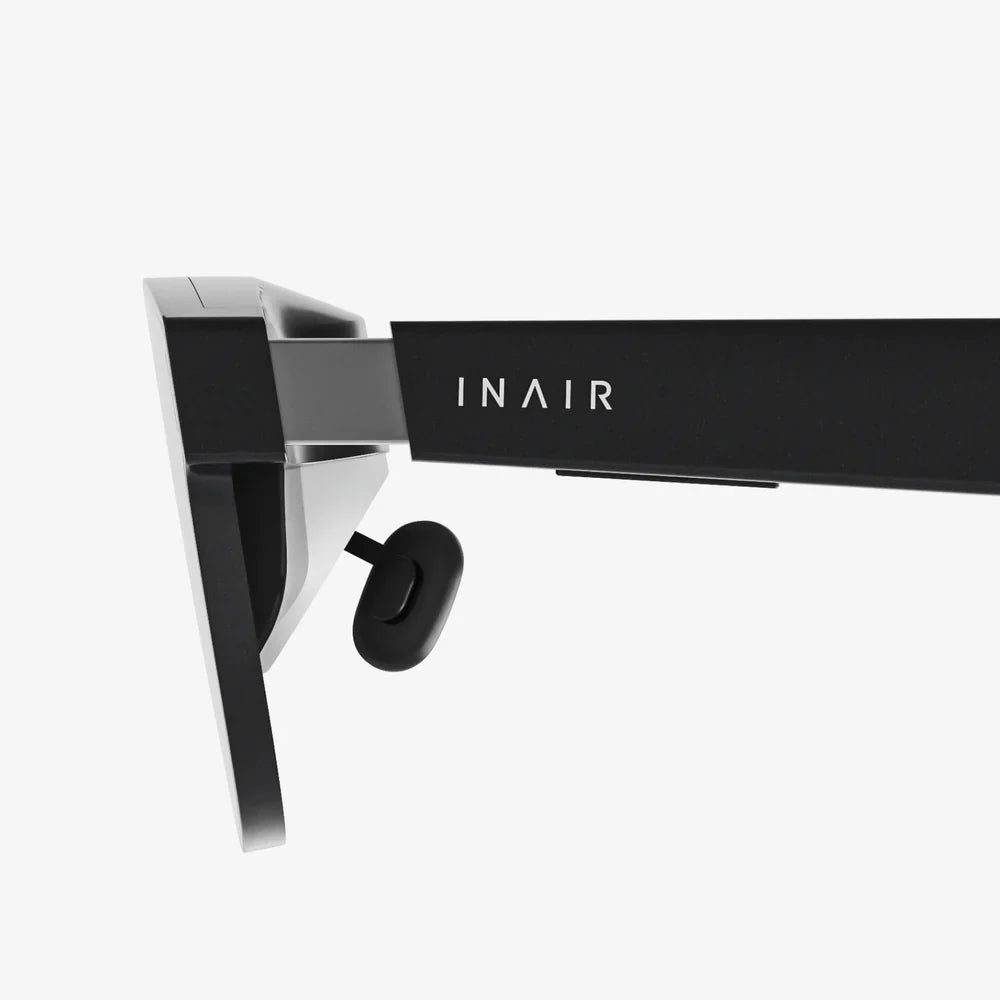
- by wangfred
Average Battery Life Smart Glasses: The Unseen Barrier to Mainstream Adoption
- by wangfred
Imagine a world where information flows seamlessly before your eyes, where digital assistants whisper guidance directly into your ears, and the line between the physical and digital realms gracefully blurs. This is the promise of smart glasses, a futuristic vision that has tantalized tech enthusiasts for over a decade. Yet, for all their potential, a single, mundane limitation consistently shatters this augmented reality dream: the relentless hunt for a power outlet, the dreaded low-battery warning, and the stark reality of average battery life smart glasses currently offer. This isn't just a minor inconvenience; it's the fundamental barrier standing between a niche gadget and a truly transformative, all-day wearable technology.
To comprehend the challenges of battery life, one must first understand the immense energy demands placed on these compact devices. Unlike their simpler predecessors, modern smart glasses are packed with sophisticated technology, each component a hungry mouth feeding on the limited power stored within their slender frames.
The central, seemingly unsolvable dilemma for engineers is this: consumers demand a device that is lightweight, comfortable, and aesthetically acceptable, which severely limits the physical space available for a battery. The quest, therefore, is not just to improve battery capacity, but to radically reduce the power appetite of every single component within the device.
What constitutes "average battery life smart glasses" is a moving target, heavily dependent on the device's intended function and feature set. There is no one-size-fits-all answer, but a clear spectrum has emerged.
On one end, you have audio-focused smart glasses. These prioritize discreet speakers and microphones over a full visual display, often featuring a minimal LED indicator. By forgoing the most power-hungry component—the optical engine—these devices can achieve impressive longevity. It is not uncommon for models in this category to last a full waking day, often quoted in the range of 10 to 12 hours, and sometimes even longer with a reserve provided by their charging case. This endurance makes them viable for all-day use as a primary audio device.
On the other end of the spectrum reside true augmented reality (AR) glasses. These are the devices that fulfill the sci-fi promise, overlaying rich digital information onto the real world. Their battery life is a different story altogether. For these computationally intensive wearables, an average battery life often falls between a mere 2 to 4 hours of active use. This starkly limited runtime is the single biggest factor preventing their adoption as an all-day productivity or entertainment tool. A user cannot be tethered to a world of digital overlays if that world vanishes before lunchtime.
Between these two poles exists a middle ground of display-enabled smart glasses that offer basic notifications, simple translations, or monochromatic displays for limited information. These hybrids might manage between 4 to 6 hours, attempting to balance functionality with a semblance of practical endurance. This is the current battleground where most innovation is focused, striving to push the visual experience forward without completely sacrificing usability.
The conversation around battery life transcends mere specifications on a box. It directly dictates how, when, and if people will integrate this technology into their lives. Short battery life creates a cascade of negative user experiences that stifle adoption.
Ultimately, the average battery life smart glasses possess today creates a psychological and practical barrier. It reminds the user they are wearing a piece of technology, a machine with limitations, rather than allowing them to simply experience the benefits of an augmented life.
Improving endurance is not solely about stuffing a larger battery into the frame. It is a holistic endeavor involving hardware, software, and accessory design working in concert.
Software and Computational Efficiency: Intelligent software plays a monumental role. This includes features like:
The Charging Case Paradigm: For many consumers, the charging case has become a non-negotiable part of the wearable ecosystem. A well-designed case does more than protect the glasses; it acts as a portable power bank, offering multiple full charges on the go. For audio-focused glasses, this can extend total usage time to 30-40 hours or more, effectively solving the battery life issue for most users. For AR glasses, cases are bulkier out of necessity but provide a crucial lifeline, effectively multiplying the base battery life and making half-day or full-day usage a possibility, albeit with the need to store the glasses in the case during breaks.
Thermal and Material Innovation: Managing heat is managing energy. New materials that dissipate heat more effectively can prevent the device from throttling performance (and thus killing battery life) to cool down. Furthermore, efficient heat management means less energy is wasted as thermal loss, directing more power toward actual functionality.
The path to longer-lasting smart glasses is being paved with breakthroughs in multiple fields of science and engineering. The future of average battery life smart glasses is bright, driven by several promising avenues of innovation.
Next-Generation Battery Chemistry: While lithium-ion dominates today, researchers are actively developing successors. Solid-state batteries promise higher energy density—meaning more power can be stored in the same space—along with improved safety and faster charging times. This would allow manufacturers to either significantly extend runtime without changing the form factor or achieve the same runtime with a smaller, lighter battery.
Ultra-Low-Power Displays: Display technology is perhaps the most critical area for improvement. Innovations like micro-LEDs are incredibly bright and efficient compared to older technologies. Research into laser-based scanning systems and new forms of photonic chips also aims to create brilliant displays that consume a fraction of the power of current systems.
Ambient and Solar Power Harvesting: The ultimate dream is for devices to power themselves. Early-stage research is exploring ways to embed transparent solar cells into lenses to trickle-charge the battery from ambient light. Similarly, kinetic energy harvesting from movement or thermoelectric generation from body heat could provide small but meaningful boosts to longevity, potentially allowing a device to maintain its charge indefinitely with moderate use.
AI-Driven Power Optimization: Future devices will feature hyper-intelligent power management systems that use machine learning to predict user behavior. The glasses could learn your routine, pre-emptively powering up necessary components before you need them and aggressively shutting down everything else, creating a truly personalized and optimized power profile.
Distributed Computing: The concept of offloading intensive computational tasks to a nearby smartphone or a powerful home computer via a seamless, low-energy connection will continue to evolve. By acting as a dumb terminal with a sophisticated display, the glasses themselves could become far more efficient, relying on the external device's larger battery for the heavy lifting.
These innovations, combined with incremental improvements in chip manufacturing (smaller, more efficient transistors) and radio technology, suggest that the average battery life smart glasses offer will see dramatic improvements in the coming five to ten years. We are moving toward a future where all-day AR will not just be a marketing slogan but a practical reality.
The race to perfect smart glasses is not won by who has the most features, but by who can make those features last. It's a silent war fought in research labs over milliamps and milliwatts, a battle to shrink power consumption faster than consumer expectations grow. The company that finally cracks the code—delivering a full day of rich, augmented vision in a package people forget they're wearing—will not just win a market; it will open a gateway to a new human experience, seamlessly blending our physical and digital existences in a way we can only begin to imagine. The future is waiting, and it's holding its charge.
Share:
Do Smart Glasses Come With Prescription Lenses? The Ultimate Guide to Vision-Centric Tech
Humane Wearable AI Device The Future of Seamless and Ethical Technology Integration