


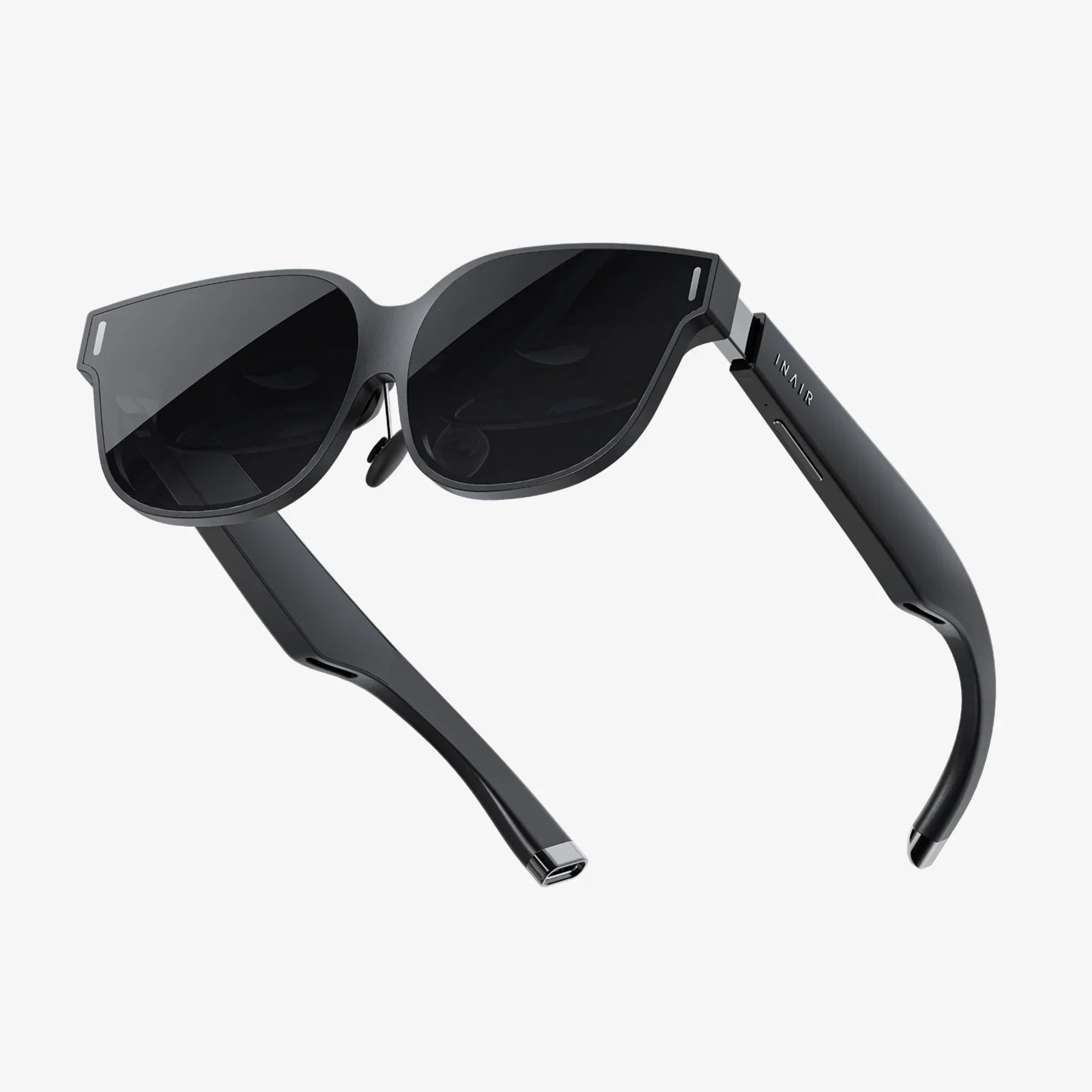
Imagine a world where technology doesn't demand your attention but anticipates your needs, where it doesn't isolate you from your surroundings but enhances your connection to them. This is the promise of the humane wearable AI device, a concept rapidly transitioning from science fiction to tangible reality, poised to redefine our relationship with the digital realm.
Beyond the Screen: The Philosophical Shift in Computing
For decades, human-computer interaction has been dominated by the screen. We stare into glass rectangles, our fingers tapping and swiping, our postures hunched, our attention captured. This paradigm, while powerful, creates a barrier between us and the physical world. The next evolution, championed by the development of humane wearable AI, is not about a better screen, but about moving beyond it entirely. It's a shift from technology that we must actively use to technology that passively assists. This new class of device is designed to be ambient, contextual, and seamlessly integrated into the fabric of our daily lives, offering information and capabilities without the disruptive need to unlock a device and navigate an app.
Defining "Humane" in the Age of Artificial Intelligence
The term "humane" is the critical differentiator. It's not merely a descriptor of form factor; it's a foundational design philosophy. A truly humane wearable AI device is built upon three core pillars:
Ethical and Responsible AI
At its heart, the AI must be designed with a robust ethical framework. This encompasses several non-negotiable principles. First is privacy by design. These devices, by their very nature, will have access to unprecedented amounts of personal and environmental data—conversations, locations, visual and auditory information. A humane device must process this data with utmost security, employing robust on-device processing to minimize data ever leaving the user's possession. Transparent data policies and user control over what is collected and how it is used are paramount.
Second is bias mitigation. The AI models must be rigorously trained and continuously audited to prevent perpetuating societal biases related to race, gender, accent, or socioeconomic status. A device that misunderstands or misrepresents certain groups is not humane.
Finally, there is the principle of user agency. The device should serve as an assistant, not an autopilot. It must always seek permission before acting, offer clear explanations for its suggestions, and include simple, immediate ways to disable its functionality. The human must remain unequivocally in control.
Seamless and Unobtrusive Integration
"Wearable" must mean more than portable. It implies comfort, aesthetic consideration, and a form factor that feels natural. A humane device shouldn't be a bulky, distracting piece of tech armor. It should be lightweight, ergonomic, and designed for all-day wear without causing fatigue or social awkwardness. The goal is for the technology to fade into the background, becoming an almost imperceptible part of the user's attire or persona. The interaction model should be subtle—perhaps a gentle, haptic tap on the wrist, a quiet spoken word in an earpiece, or a minimalist laser projection onto a hand—rather than a loud notification that hijacks your focus.
Contextual and Useful Intelligence
The AI's value is derived from its deep understanding of context. Using a combination of sensors—advanced microphones, cameras, inertial measurement units (IMUs), and location data—the device builds a sophisticated real-time model of the user's environment. Is the user in a busy market? In a quiet meeting? Walking down a unfamiliar street? Having a conversation in a foreign language?
Armed with this context, the AI can offer genuinely useful assistance. It could translate a menu in real time, discreetly remind you of a colleague's name moments before a handshake, summarize the key points of a meeting you just left, or warn you of an unseen hazard on the path ahead. The intelligence is not generic; it is hyper-personalized and situationally aware, providing the right information at the right time in the right way.
The Technological Architecture Powering Humane Devices
Creating such a device is a monumental feat of engineering, requiring breakthroughs in several fields converging simultaneously.
Sensor Fusion and On-Device Processing
The device is a symphony of sensors, each feeding data into a central neural processing unit. The magic lies in sensor fusion—the ability to combine these disparate data streams (audio, visual, spatial, biometric) to form a coherent and accurate understanding of a scene. Crucially, to uphold privacy, the vast majority of this processing must happen locally on the device itself. This requires incredibly powerful, yet ultra-low-power, specialized chips capable of running complex AI models without draining the battery or needing a constant cloud connection. This edge computing is the bedrock of a private and responsive experience.
Advanced Interaction Modalities
With no screen, new languages of interaction must be invented.
- Voice AI: Moving far beyond simple voice commands to natural, conversational dialogue that understands nuance, intent, and context.
- Gesture Control: Intuitive hand and finger gestures, tracked precisely by cameras and IMUs, allow for control without a whisper.
- Minimalist Display Systems: Technologies like micro-projectors can turn any surface—a palm, a wall, a table—into a temporary, private display for more complex information, disappearing when not needed.
- Haptic Feedback: Sophisticated vibration patterns can convey complex notifications and information silently and privately.
Battery and Power Management
All-day battery life is a non-negotiable feature for a device meant to be worn constantly. This drives innovation in low-power electronics, energy-efficient displays and projectors, and advanced power management systems that can intelligently power down unused sensors. Complementing this are new charging paradigms, such as solar-augmented charging, ultra-fast charging, or even disruptive technologies like energy harvesting from body heat or movement.
The Profound Impact: Applications Across Life and Industry
The potential applications for humane wearable AI are as vast as human experience itself.
Enhanced Human Capability and Accessibility
This technology could be profoundly empowering. For individuals with visual impairments, a device could audibly describe people, objects, and text in their environment, effectively acting as a visual prosthesis. For those who are hard of hearing, it could provide real-time transcription of conversations. It could aid individuals with memory conditions by offering contextual reminders and prompts, helping them navigate their daily lives with greater independence and confidence.
Revolutionizing Professional Fields
In medicine, a surgeon could access vital patient statistics or surgical guides hands-free during a procedure. An engineer could pull up schematics overlaid on the machinery they are repairing. A scientist in the field could instantly identify species, record data, and analyze samples without ever looking away from their work. The device becomes an invisible expert assistant, augmenting human skill and knowledge.
Deepening Human Connection
By removing the physical phone as a barrier, these devices could help us be more present. Instead of fumbling for a camera to capture a moment, a simple gesture could discreetly take a photo, allowing you to stay engaged in the experience itself. Real-time translation could dissolve language barriers, fostering deeper cross-cultural communication and understanding. The focus shifts from documenting life to living it.
Navigating the Labyrinth: Ethical and Societal Challenges
The path to this future is fraught with complex challenges that society must confront head-on.
The Privacy Paradox
How do we balance incredible personalization with an absolute right to privacy? The constant sensing required for these devices creates a unprecedented surveillance capability. Robust legal frameworks, transparent corporate policies, and verifiable technical safeguards (like hardware kill switches for microphones and cameras) are essential to prevent misuse by corporations or governments.
The Erosion of Attention and Authenticity
If every moment of boredom is filled with AI-generated stimulation, do we risk losing the capacity for reflection and independent thought? Furthermore, if we begin to rely on an AI to craft our messages, remember our facts, and even guide our social interactions, what happens to our own authentic skills and personality? These devices must be designed to enhance, not replace, human cognition and connection.
Economic and Social Division
As with any transformative technology, there is a risk of creating a new digital divide. Will these powerful augmentations be available only to a wealthy elite, creating a class of "enhanced" individuals with significant advantages over others? Ensuring equitable access and preventing discriminatory use will be critical to a just future.
The journey toward a world with humane wearable AI is not merely a technical challenge; it is a profoundly human one. It demands a collaborative effort from engineers, ethicists, policymakers, and users to steer this powerful technology toward a future that enhances our humanity rather than diminishes it. The goal is not to build a future where we are constantly assisted by machines, but one where technology is so thoughtfully and ethically woven into our existence that it empowers us to be more present, more capable, and more connected to each other and the world around us. The most successful humane wearable AI device will be the one you barely notice, yet couldn't imagine living without.
Share:
Average Battery Life Smart Glasses: The Unseen Barrier to Mainstream Adoption
Latest Wearable Tech Trends 2025: The Invisible Revolution Reshaping Our Lives