


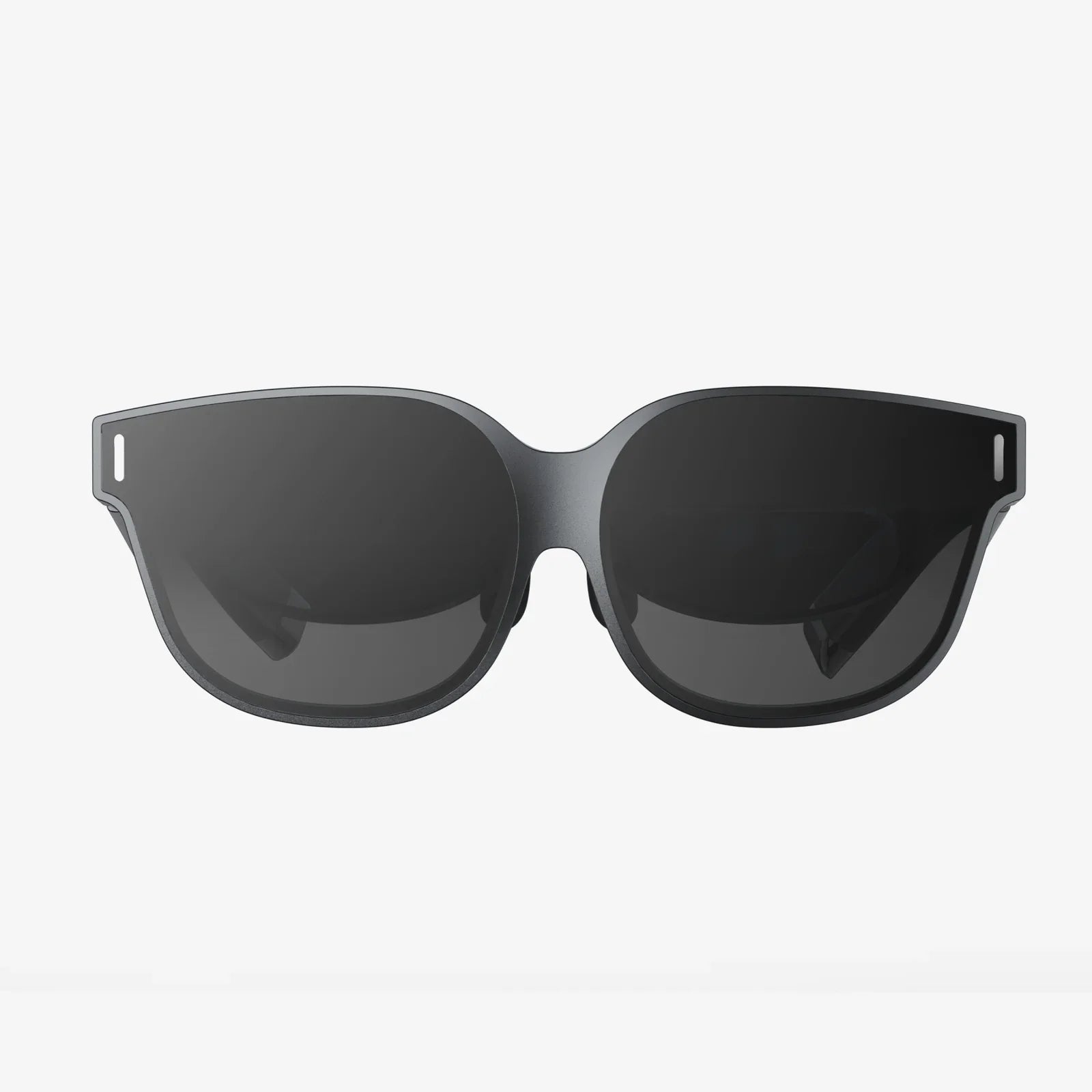
Imagine walking through a bustling market in a foreign country, the air thick with a language completely foreign to you. Instead of fumbling with a phone or a phrasebook, you simply glance at a vendor, and their words instantly appear as subtitles in your native tongue, superimposed on the world right before your eyes. This is the revolutionary promise embedded in the question: do smart glasses translate? The answer is a resounding and transformative yes, heralding a new era where language barriers begin to crumble, not in the palm of your hand, but directly within your line of sight.
The Core Technology: More Than Meets the Eye
At first glance, the concept seems deceptively simple: hear speech, translate it, and display the text. However, the technological symphony required to make this happen seamlessly is extraordinarily complex. It's a intricate dance between hardware and software, each component pushing the boundaries of modern engineering.
The hardware suite in a pair of translation-enabled smart glasses is a marvel of miniaturization. It typically includes:
- Directional Microphones: These are not your average smartphone mics. Advanced beamforming technology allows them to focus on a specific speaker's voice, filtering out ambient noise from crowds, traffic, or wind. This is crucial for obtaining a clean audio signal for accurate transcription.
- Compact Processing Unit: Nestled within the frame is a small but powerful computer. This unit handles the initial audio processing and runs the operating system, serving as the local brain of the device.
- Optical Display System (Combiner): This is the magic window. Using technologies like LED micro-displays and waveguides or holographic optical elements, text and simple graphics are projected onto a tiny, transparent combiner lens. This allows the user to see the digital translation overlay without completely obscuring their natural view of the person and the environment.
- Connectivity Modules: While some processing can be done on-device, high-quality translation often relies on a constant, low-latency connection to cloud servers via Wi-Fi or cellular data (often through a paired smartphone). This offloads the heavy computational lifting of complex neural machine translation models.
- Battery: Powering all this technology demands a high-capacity, yet incredibly small and lightweight, battery integrated into the frames or stems.
On the software side, the process is a multi-stage pipeline:
- Automatic Speech Recognition (ASR): The focused audio is first converted from speech to text in the original language. This step must handle accents, dialects, and colloquialisms.
- Neural Machine Translation (NMT): The transcribed text is then translated into the target language. Modern NMT uses deep learning models trained on vast corpora of text, enabling remarkably nuanced and contextual translations that far surpass older rule-based or statistical methods.
- Text-to-Speech (TTS) - Optional: For a completely hands-free experience, the translated text can be converted back into spoken audio played through a bone conduction speaker or a tiny earpiece, allowing the user to "hear" the translation while keeping their ears open to the environment.
- Augmented Reality Interface: The software seamlessly integrates the final text or audio output into the user's visual or auditory field in a way that feels intuitive and non-obtrusive.
Real-World Applications: Breaking Barriers Across Industries
The potential applications for real-time translation glasses extend far beyond the tourist trying to order a coffee. They are poised to become powerful tools that redefine communication in numerous professional and personal contexts.
Global Business and Diplomacy
In international meetings, negotiations, and conferences, every word and nuance matters. Translation glasses can facilitate more natural, flowing conversations between executives, diplomats, and engineers, reducing the reliance on human interpreters for preliminary discussions and fostering a stronger, more immediate personal connection. A factory manager from one country could tour a facility in another, receiving real-time translations of technical instructions and safety protocols directly from the engineers on the floor, dramatically improving efficiency and safety.
Healthcare and Emergency Services
This is perhaps one of the most critical use cases. In emergency rooms, where every second counts, first responders and doctors could use this technology to quickly understand the symptoms and medical history of a patient who speaks a different language. It could bridge the communication gap in stressful situations, leading to faster diagnoses and more effective treatment. It also empowers patients, allowing them to understand their diagnosis and provide informed consent without waiting for a translator to arrive.
Education and Cultural Exchange
Imagine a university lecture where international students can follow along in their native language. Or a museum where visitors can look at an artifact and hear a description in their preferred language. These glasses could democratize access to education and culture, creating immersive, personalized learning experiences without the need for audio guides or translated pamphlets. They encourage deeper cultural immersion for travelers, allowing for genuine interactions with locals that go beyond simple transactions.
Accessibility
The technology also holds immense promise for the deaf and hard-of-hearing community. Real-time transcription of conversations could be displayed through smart glasses, functioning as a powerful, always-available subtitling system for the world, making everyday social interactions more accessible.
The Inevitable Challenges and Limitations
Despite the exciting potential, the path to perfect, ubiquitous translation glasses is fraught with significant technical, practical, and ethical hurdles.
Technical Hurdles
- Accuracy and Context: While NMT is impressive, it is not infallible. It can struggle with complex sentence structures, sarcasm, humor, and highly specialized jargon (e.g., legal or medical terminology). A mistranslation in a business negotiation or medical consultation could have serious consequences.
- Latency: The delay between hearing the speech and seeing the translation must be minimal to maintain a natural conversation flow. Even a delay of a few seconds can be disruptive. Cloud-based translation introduces latency due to network transmission, pushing the need for more powerful on-device processing.
- Battery Life: Continuous audio processing, connectivity, and display projection are immense drains on battery. Current iterations often struggle to last a full day of active use, limiting their practicality for long meetings or travel.
- Field of View and Display Clutter: The current AR displays have a limited field of view. Text blocking a user's central vision could be dangerous while walking or operating machinery. Designing a UI that is informative yet minimally invasive is a major challenge.
Practical and Social Considerations
- Social Acceptance and Etiquette: Wearing glasses that record and translate conversations raises questions of social awkwardness. Is it considered rude to wear them during a personal chat? Does the other person need to consent to being "translated"? Normalizing their use will take time.
- Privacy and Data Security: This is the paramount concern. These devices are constantly capturing audio, which is often sent to the cloud for processing. The questions are legion: Where is this data stored? Who has access to it? Is it used to train AI models? Could conversations be subpoenaed? Robust, transparent data encryption and privacy policies are non-negotiable for widespread adoption.
- Cost and Accessibility: Initially, this cutting-edge technology will be expensive, putting it out of reach for many individuals and smaller organizations, potentially creating a new digital divide.
The Future Lens: Where Do We Go From Here?
The current state of translation glasses is akin to the early days of mobile phones—bulky, expensive, and with limited functionality compared to what's to come. The future trajectory, however, points toward a world of seamless integration.
We can expect rapid advancements in several key areas:
- On-Device AI: As processors become more powerful and efficient, more translation will happen directly on the glasses themselves. This will solve critical issues of latency and data privacy, as conversations won't need to be sent to the cloud.
- Context-Aware Translation: Future systems will leverage cameras and sensors to understand context. By recognizing objects, gestures, and facial expressions, the AI could provide translations that are far more accurate and nuanced.
- True Augmented Reality: Instead of simple text subtitles, future interfaces might use spatial anchors to place translated labels directly onto objects in the environment or display culturally relevant information about a landmark as you look at it.
- Biometric Integration: Eventually, these devices could integrate with biometric sensors to gauge the user's emotional state or stress level, potentially allowing the translation to adapt its tone or provide additional context to improve communication further.
The journey toward this future is not just about refining algorithms and shrinking hardware; it's about navigating the complex ethical landscape with care and building a foundation of trust with users. The goal is not to create a world where everyone speaks one language, but to build bridges that allow the rich tapestry of human language and culture to be experienced and appreciated by all.
The next time you dream of wandering a foreign city, striking up a conversation with a stranger, or collaborating with a colleague across the globe, remember that the tool to make it happen is no longer a fantasy. The technology is here, evolving at a breathtaking pace, and it's set to change not just what we see through our glasses, but how we see and connect with the entire world.
Share:
Is AI the Future of Smart Glasses? Exploring the Next Evolution in Wearable Tech
Premium Smart Glasses with Bluetooth: The Ultimate Fusion of Style and Sound