


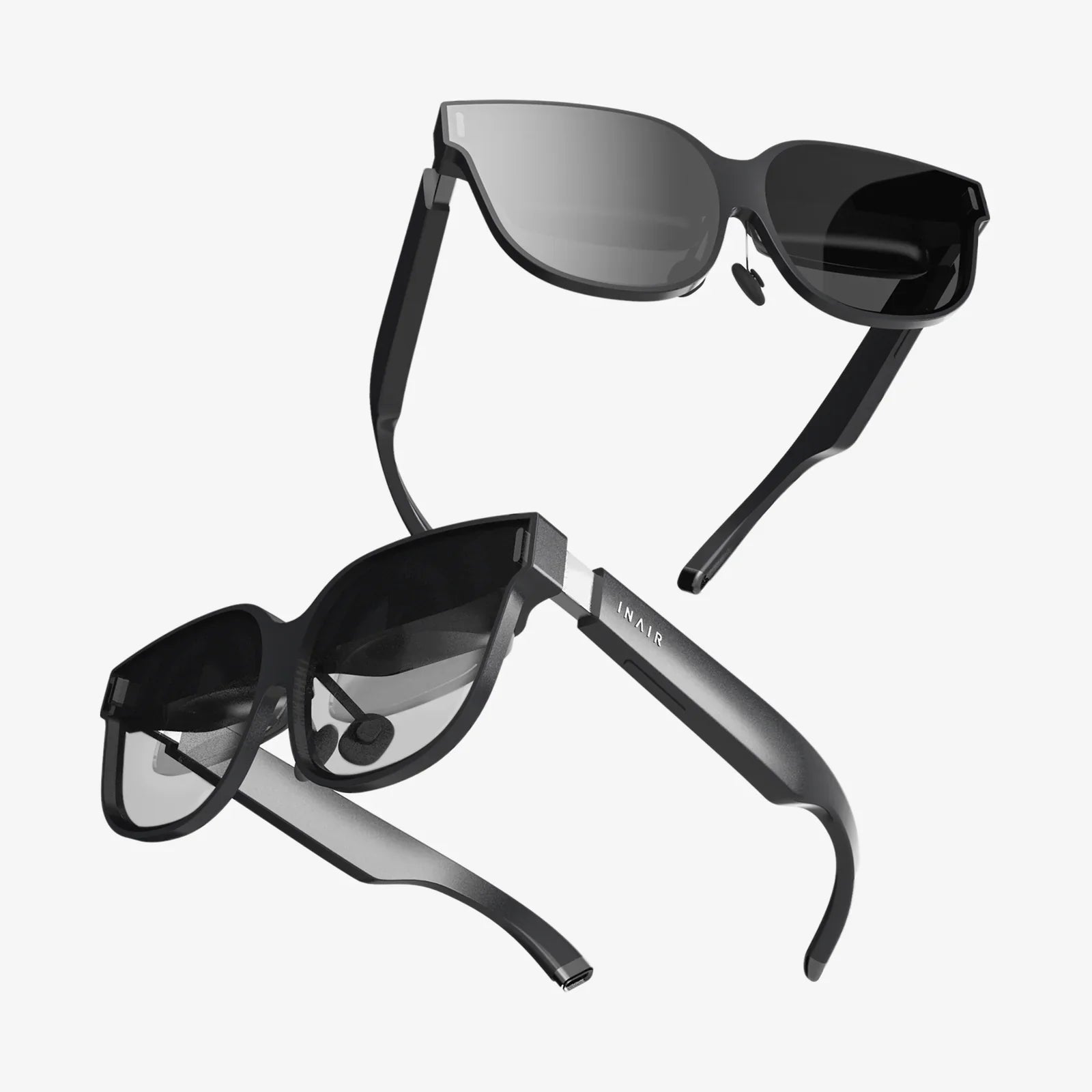
Imagine a world where information floats seamlessly before your eyes, where digital overlays enhance your reality, and your field of vision becomes a limitless screen. This is the tantalizing promise of smart goggles, a piece of technology that feels ripped from the pages of science fiction. But do smart goggles work in the real world, outside of flashy marketing videos and futuristic concept films? The answer is far more complex and fascinating than a simple yes or no. The journey to understand their true capabilities reveals a landscape of staggering innovation, significant hurdles, and a future that is simultaneously closer and further away than we might think.
The Core Technology: How Smart Goggles Actually Function
To understand if smart goggles work, we must first dissect how they operate. At their heart, these devices are sophisticated wearable computers designed to merge the digital and physical realms. They are not merely screens strapped to your face; they are sensory platforms that perceive the world to augment it.
The primary magic lies in their display technology. Most advanced models utilize either Optical See-Through (OST) or Video See-Through (VST) systems. OST systems employ semi-transparent waveguides or combiners—essentially clever pieces of optics that project digital images onto a clear lens, allowing you to see both the real world and the virtual overlay simultaneously. It's a bit like a high-tech, holographic heads-up display in a fighter jet. VST systems, on the other hand, use outward-facing cameras to capture a live video feed of your surroundings. This feed is then combined with digital elements on an internal, non-transparent display, creating a blended reality. Each method has trade-offs: OST offers a more natural view of the real world but can struggle with contrast in bright light, while VST provides richer, more immersive digital visuals but can introduce latency, potentially leading to motion sickness.
Beyond the display, a suite of sensors does the heavy lifting to make the experience responsive and believable. This sensor fusion is critical to answering 'do they work?'
- Cameras: Multiple high-resolution cameras track the environment, while dedicated eye-tracking cameras monitor your gaze and pupil dilation for interaction and rendering efficiency.
- Inertial Measurement Units (IMUs): These accelerometers and gyroscopes track the precise movement and rotation of your head in real-time, ensuring digital objects stay locked in place.
- Depth Sensors: Using technologies like LiDAR (Light Detection and Ranging) or structured light, these sensors scan the environment to create a 3D depth map. This allows the goggles to understand the geometry of a room, so a virtual character can convincingly hide behind your real sofa.
- Microphones and Speakers: Spatial audio technology makes sounds appear to emanate from specific points in your environment, completing the illusion of a mixed-reality world.
All this data is processed by a miniaturized computer, often with specialized chips for simultaneous localization and mapping (SLAM), which continuously answers the question: "Where am I, and what is around me?" This complex dance of hardware and sophisticated algorithms is what allows digital content to not just appear in your world, but to become a part of it.
Where They Shine: The Practical Applications Today
While the consumer dream of ubiquitous augmented reality is still evolving, smart goggles are already proving they unequivocally do work in several professional and niche domains. Their value proposition in these areas is not about entertainment; it's about enhancing capability, safety, and efficiency.
In the realm of enterprise and manufacturing, smart goggles are a game-changer. Technicians and engineers can access interactive 3D schematics overlaid directly onto the machinery they are repairing. Remote experts can see what a field worker sees and annotate their real-world view with arrows, circles, and notes, guiding them through complex procedures without ever being on site. This "see-what-I-see" remote collaboration drastically reduces downtime, minimizes errors, and slashes travel costs. For complex assembly lines, digital instructions can be projected onto the workbench, showing exactly which part goes where, streamlining the process and reducing the need for extensive training.
The medical and healthcare field is another area where this technology is demonstrating profound utility. Surgeons can have vital signs, ultrasound data, or pre-operative scans displayed in their periphery without looking away from the patient. Medical students can practice procedures on detailed, interactive holographic anatomy models. Furthermore, these devices can assist surgeons in visualizing tumors or critical structures during operations, potentially increasing precision and improving patient outcomes.
For design and architecture, smart goggles are the ultimate visualization tool. Architects and clients can walk through a full-scale, holographic model of a building before a single foundation is poured. Interior designers can place virtual furniture in a client's empty living room, allowing them to see how different pieces would look and fit. This ability to prototype and iterate in the real world saves immense amounts of time and resources.
In training and simulation, the military has been a long-time pioneer. Soldiers can train in highly realistic simulated combat scenarios that blend real-world environments with digital threats and allies. Similarly, first responders can practice high-stress emergency response procedures in a safe, controlled, yet realistic augmented environment.
The Hurdles: Why Smart Goggles Aren't In Every Home Yet
For all their success in enterprise, the path to mass consumer adoption is littered with significant challenges. These hurdles explain why the question "do smart goggles work?" has a different answer for a factory technician than it does for an average consumer looking to play games.
The most immediate barrier is hardware limitations. Despite incredible engineering, many devices remain bulky, heavy, and uncomfortable for extended wear. The quest for all-day battery life often leads to large, hot battery packs that must be carried in a pocket, tethered to the headset. The field of view on many models is still like looking through a letterbox, with digital content confined to a small window rather than filling your entire periphery. Furthermore, achieving visual comfort—where virtual objects are perfectly focused and aligned with the real world—is incredibly difficult and can vary from person to person, sometimes causing eye strain or headaches.
Then there is the software and ecosystem challenge. For consumers to invest, there must be a compelling and continuous reason to wear them—a "killer app." While gaming is an obvious candidate, the library of truly must-have experiences is still small. The user interfaces for navigating these 3D worlds are still being invented; they must be intuitive, fast, and powerful without relying on traditional keyboards and mice. Furthermore, a robust ecosystem of apps and services that seamlessly integrate into daily life—from social media and communication to productivity and shopping—is still in its infancy.
Perhaps the most profound challenge is the social acceptance factor. Wearing a conspicuous piece of technology on your face in public raises questions of privacy, both for the user and for those around them. The presence of cameras recording the environment can make bystanders uncomfortable. The "cyborg" aesthetic, while cool to some, is a major turn-off for others. Until the form factor shrinks to something resembling ordinary eyeglasses, this social barrier will remain a significant impediment to widespread public use.
The Future: Where The Technology Is Headed
The current state of smart goggles is merely a prelude to a far more integrated future. The trajectory of the technology points toward solutions for nearly every existing limitation. Research in areas like holographic optics, meta-lenses, and retinal projection promises a future where displays are brighter, sharper, and have a much wider field of view, all within a form factor that resembles standard eyeglasses. Advancements in battery technology, such as solid-state batteries, and ultra-low-power chipsets will eventually deliver the all-day, untethered experience that is essential for consumer adoption.
The true endgame is the concept of contextual and ambient computing. The goal is not to have users immersed in a blinding array of distracting windows, but to have technology fade into the background, providing information and assistance only when and where it is needed. Your goggles could highlight the path to your gate at the airport, translate a street sign in real-time, or remind you of a colleague's name as you walk into a meeting—all without you ever needing to take out your phone or issue a voice command. This shift from active interaction to passive, intelligent assistance is the key to making the technology truly indispensable.
Furthermore, the convergence with Artificial Intelligence will be transformative. On-device AI will allow the goggles to understand the context of what you're looking at and anticipate your needs. It could help you learn a new skill by guiding your hands, or identify a plant species during a walk in the woods. This intelligent layer will move the technology beyond a simple display into the realm of a true cognitive partner.
So, do smart goggles work? The evidence is clear. They are not a futuristic fantasy; they are a functioning, powerful technology that is already delivering immense value in specific, professional contexts. They work for the surgeon visualizing a complex procedure, the engineer collaborating with a remote team, and the architect walking a client through a dream home. However, for the average consumer dreaming of a seamless, all-day augmented life, the technology is not quite there yet. The foundational pieces are all in place, humming with potential, waiting for the final leaps in miniaturization, battery life, and social design to unlock a revolution that will fundamentally change how we see, and interact with, the world around us. The future they promise is not a matter of if, but when.
The true test of this technology isn't happening in a lab; it's happening in the subtle, almost imperceptible moments where a digital hint solves a real-world problem, making you wonder how you ever managed without it. The race isn't to build the most powerful goggles, but to create the first pair you forget you're even wearing—until you need them.
Share:
What Are the Pros and Cons of a VR Headset: An In-Depth Exploration
Best VR Headset for 6.5 Inch Phone - Your Ultimate Viewer's Guide