


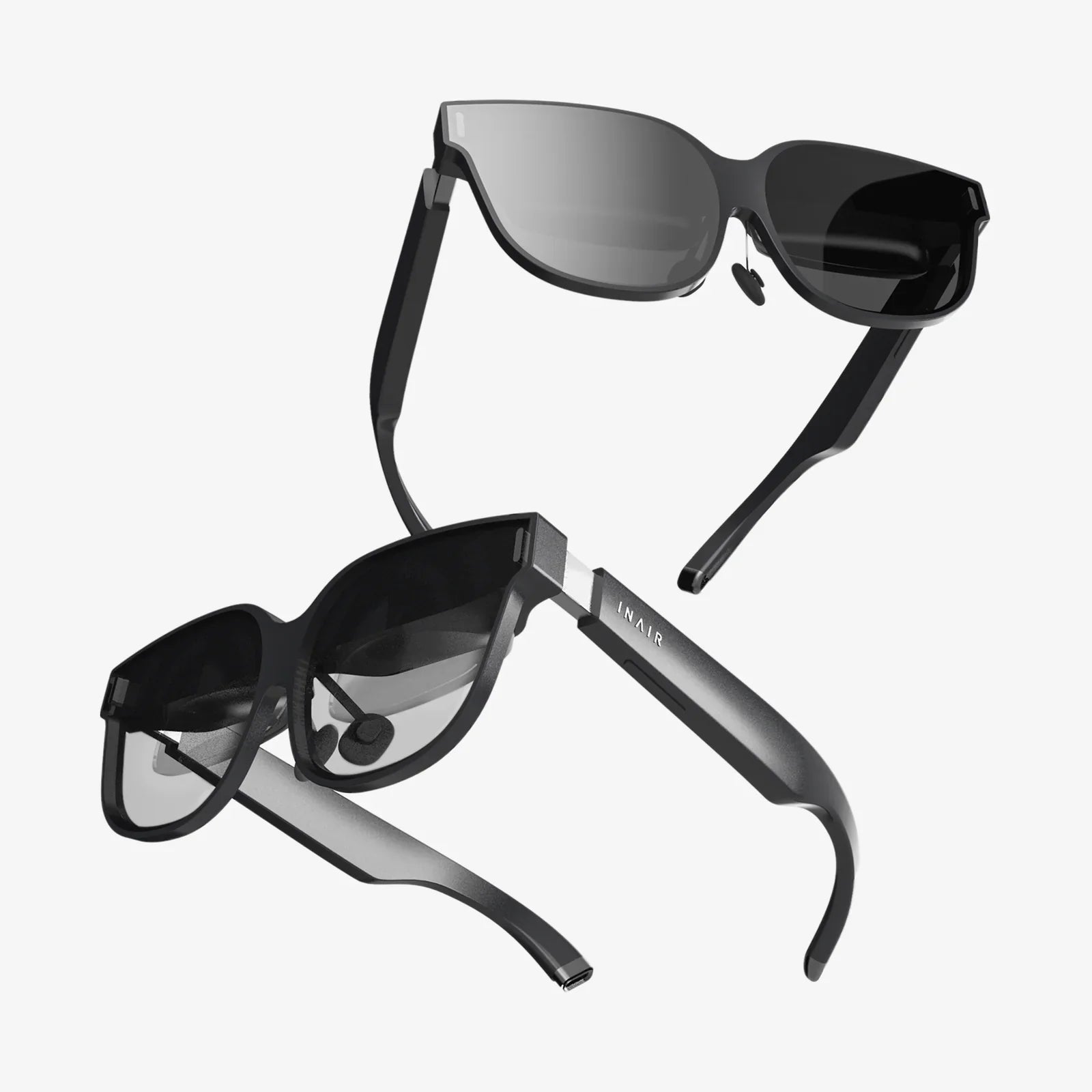
Imagine a world where a pair of sleek, unassuming glasses could describe the world to someone who cannot see it, translate a foreign menu in real-time, or identify a long-lost friend from across the room. This is the tantalizing promise of smart vision glasses, a technology that sounds like it was ripped from the pages of a science fiction novel. But the burning question on everyone's mind, from tech enthusiasts to those with a genuine medical need, is a simple one: do they actually work? The answer is far more complex and fascinating than a simple yes or no. It’s a story of remarkable engineering, profound human benefit, and the inevitable growing pains of any technology attempting to leap from the lab into our daily lives.
The Core Technology: How Smart Vision Glasses Perceive the World
To understand whether these devices work, we must first dismantle the magic and look at the machinery. Smart vision glasses are not a single, monolithic technology but rather a sophisticated symphony of components working in concert. At their heart lies a combination of sensors, processors, and output systems designed to augment or interpret visual data.
The primary data gatherers are typically miniature cameras, often stereoscopic, mounted on the frames. These act as the device's eyes, continuously capturing a video feed of the wearer's surroundings. This raw visual data is then processed by an onboard computer, a small but powerful chipset that is the true brain of the operation. Here, the heavy lifting occurs through complex algorithms and, most importantly, artificial intelligence (AI) and machine learning models.
This AI is trained on millions of images to perform specific tasks. It can perform object recognition, identifying everything from a pedestrian and a car to a specific brand of cereal on a shelf. It can perform optical character recognition (OCR), reading text from signs, documents, and screens. More advanced systems can interpret scenes, understanding that a collection of objects—a stove, a fridge, a sink—likely constitutes a kitchen. This processed information must then be communicated to the wearer. This is achieved through various output methods: auditory feedback via a bone conduction speaker or a tiny earpiece that describes the world through spoken word; tactile feedback through subtle vibrations; or visual feedback via miniature displays that project information directly onto the lenses for those with low vision.
Defining "Work": Applications for the Visually Impaired Community
The most significant and impactful application of smart vision glasses is within the visually impaired and blind communities. For this user group, the question "do they work?" is measured not in technical specifications, but in regained independence, safety, and access to information. In this context, the technology undoubtedly works, and its benefits are often life-changing.
One of the most powerful functions is real-time text-to-speech. A user can point their head at a restaurant menu, a printed letter, or a street sign, and the glasses will read the text aloud clearly and efficiently. This transforms a previously insurmountable barrier into a minor inconvenience, enabling greater social and personal autonomy. Similarly, product identification allows a user to independently identify canned goods in their pantry, distinguish between denominations of currency, or find a specific item on a cluttered desk.
Navigation and obstacle avoidance represent another critical area. While a white cane is an invaluable tool for detecting immediate ground-level obstacles, it cannot detect a tree branch at head height or a person walking towards them. Smart glasses can scan the environment and provide auditory cues, such as "obstacle ahead at shoulder level" or "doorway to your right," significantly enhancing spatial awareness and safety when navigating both familiar and unfamiliar environments. Furthermore, features like facial recognition can provide a huge social benefit, whispering the name of an approaching acquaintance, thereby alleviating social anxiety and allowing for more natural interactions.
Beyond Impairment: Consumer and Niche Applications
While the assistive technology sector is the most mature, the potential applications for the general consumer and specialized professions are vast, though less proven. The concept of augmented reality (AR) glasses for everyone promises a world of digital overlays on our physical reality.
Imagine a mechanic seeing a schematic overlaid on a complex engine block, a warehouse worker having item locations and picking instructions flashed before their eyes, or a tourist seeing historical facts pop up as they gaze upon a monument. These applications are in active development, and while demonstrative prototypes exist, their widespread, reliable, and all-day utility for the average consumer is still a work in progress. The technology works in controlled demonstrations, but the challenge lies in creating a device that is socially acceptable, comfortable for extended wear, and provides genuinely indispensable functionality that outweighs the convenience of simply using a smartphone.
The Current Limitations and Hurdles to Overcome
Despite the impressive progress, smart vision glasses are not yet a perfect, ubiquitous technology. Several significant hurdles remain that prevent them from "working" flawlessly for every user in every situation. Acknowledging these limitations is crucial to forming a realistic understanding of the field.
First and foremost is battery life. The combination of constant video capture, real-time AI processing, and audio output is incredibly power-intensive. Many current models struggle to last a full waking day on a single charge, which severely limits their utility as an all-day assistive device. Users must often plan their activities around the battery life, carrying charging packs and worrying about their device dying at an inopportune moment.
Computational and connectivity constraints are another major factor. To achieve real-time processing, some devices offload data to a paired smartphone or even to the cloud. This creates a dependency on a second device and a strong cellular or Wi-Fi signal, which is not always available. Fully onboard processing eliminates this issue but requires more advanced and expensive chipsets that can handle the load without overheating or draining the battery excessively.
Perhaps the most nuanced challenge is contextual understanding and accuracy. While AI is powerful, it is not infallible. It can misidentify objects, struggle in poor lighting conditions, or fail to read distorted text. For a sighted person using AR for fun, a small error is a minor glitch. For a blind user relying on the device to navigate a busy crosswalk, an error could have serious consequences. Reducing this error rate to an infinitesimally small number is one of the industry's biggest goals.
Finally, there are the human factors: cost and design. Advanced technology commands a high price, placing many assistive devices out of reach for those who need them most without insurance or subsidy. Furthermore, while designs have improved, many devices are still noticeably bulkier than traditional eyewear, leading to concerns about social stigma and comfort during all-day wear.
The Future Horizon: Where the Technology is Headed
The trajectory of smart vision glasses is one of rapid convergence and refinement. The future of this technology lies in solving the current limitations and integrating more seamlessly into the human experience. We are moving towards more powerful and efficient processors, enabled by advances in semiconductor technology, that will allow for more complex onboard AI without the battery life penalty. This will enable more sophisticated functions like detailed scene description, going beyond identifying an object to explaining the relationship between objects—e.g., "a dog is sitting on a couch next to a person who is reading a book."
Improvements in display technology, such as holographic waveguides and laser-based retinal projection, promise to create brighter, sharper, and more transparent AR displays that are visible even in bright sunlight. These advancements will make the visual output more useful for those with low vision and more immersive for general consumers. Furthermore, the development of more natural user interfaces, moving beyond simple voice commands to include gesture control and even EEG-based input, will make the interaction with the digital overlay feel less like using a computer and more like an extension of thought.
The ultimate goal is a device that becomes an invisible conduit to information, a true cognitive partner that enhances human perception without getting in the way. The path there is being paved by relentless innovation in AI, material science, and miniaturization.
So, do smart vision glasses work? The evidence is clear: they are already working wonders, granting new levels of independence and access to thousands of users with visual impairments. They are functional, powerful, and profoundly impactful tools. However, they are not yet the effortless, all-seeing AI companions of science fiction. They are a rapidly evolving first draft—a promising and powerful proof of concept that is constantly being rewritten and improved. The technology is real, it is here, and it is changing lives today, even as its developers race to overcome the final barriers to making it smaller, smarter, longer-lasting, and accessible to all. The gap between the promise and the reality is closing faster than ever before.
Share:
AR Smart Home: The Invisible Revolution Reshaping Domestic Life
AR Department: The Strategic Engine Driving Modern Business Growth and Innovation