


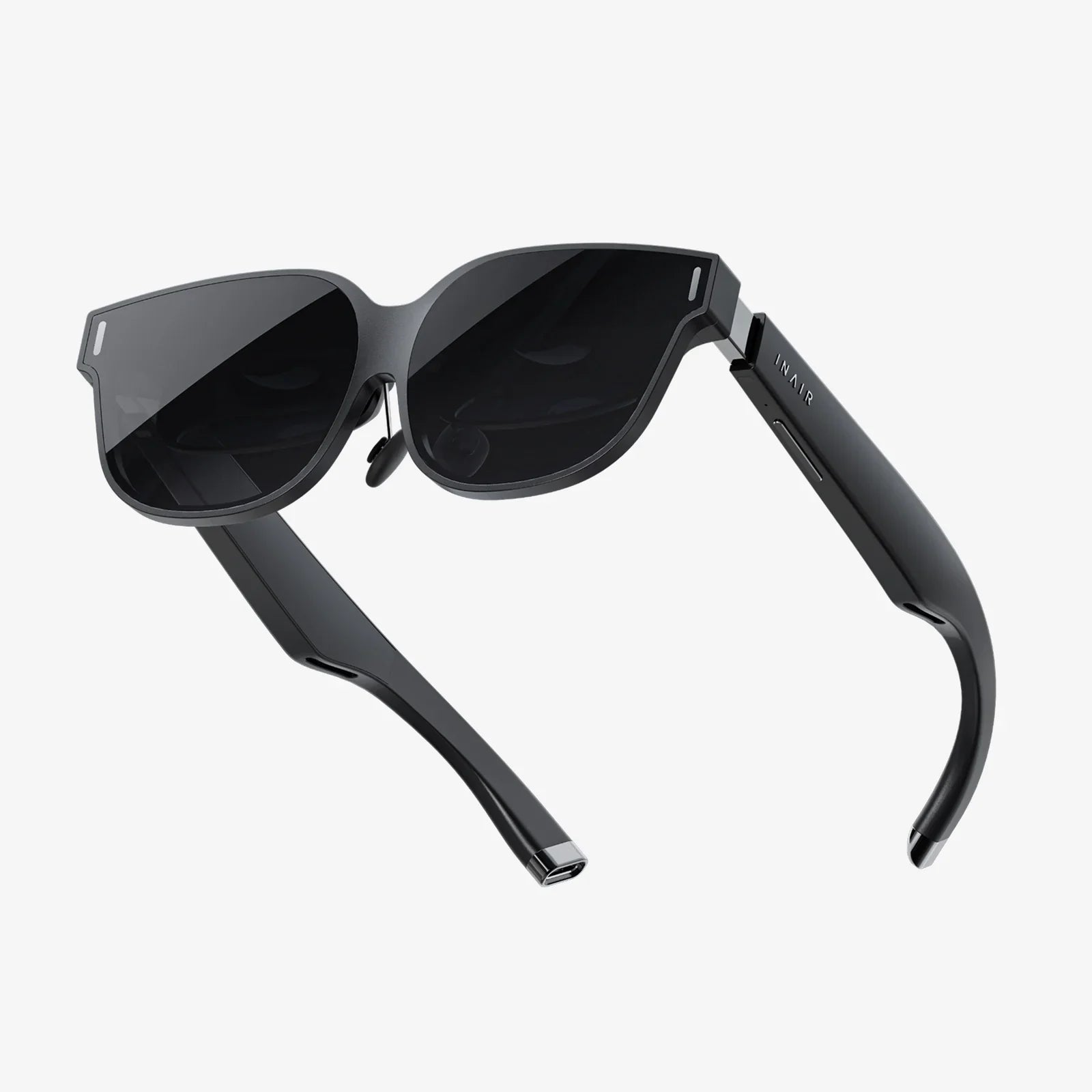
You’ve seen the headlines, the flashy commercials, and perhaps even tried on a headset yourself. The promise is intoxicating: a portal to another world, a front-row seat to impossible experiences, a fundamental shift in how we work, learn, and play. But a persistent question lingers in the minds of consumers and critics alike, cutting through the buzzworthy marketing and speculative fiction: does VR truly have a future beyond the hype? Is it destined to be a transformative pillar of our technological landscape, or will it remain a niche novelty, forever on the cusp of mainstream adoption without ever quite arriving? The answer is not a simple yes or no, but a complex tapestry of breathtaking innovation, stubborn limitations, and untapped potential that is still being woven.
The Immersive Promise: More Than Just Games
For many, the introduction to virtual reality begins and ends with gaming. It’s the most obvious and commercially successful application to date. The ability to step inside a digital environment, to look around a fantasy landscape with natural head movements, and to interact with that world using motion-tracked controllers provides a level of immersion that flat screens simply cannot match. It transforms gameplay from a passive observation into an active, embodied experience. This is the sizzle that sells headsets.
However, to judge VR solely on its gaming merits is to profoundly underestimate its scope. The real potential of this technology lies in its capacity as an empathy machine and a productivity tool. Journalists and documentarians are using VR to transport viewers to the front lines of conflict zones, into refugee camps, and onto the melting ice caps of the Arctic. This isn’t just watching a news report; it’s a visceral, first-person experience that fosters a deeper, more emotional understanding of complex global issues. Does VR have the power to make us more empathetic? Early evidence strongly suggests it does.
Revolutionizing Real-World Fields
The theoretical applications are fascinating, but VR’s value is already being proven in concrete, practical ways across critical industries.
Healthcare and Therapy
The medical field has emerged as one of VR’s most promising frontiers. Surgeons now routinely train in hyper-realistic virtual operating rooms, practicing complex procedures without any risk to a patient. This accelerates the learning curve and improves surgical outcomes. Beyond training, VR is a powerful therapeutic tool. It’s used for exposure therapy, helping patients with phobias (like fear of heights or flying) confront their triggers in a safe, controlled environment. It manages chronic pain by distracting the brain with immersive experiences, and it aids in physical rehabilitation, turning repetitive exercises into engaging games that improve patient motivation and compliance.
Education and Corporate Training
Imagine a history class where students don’t just read about ancient Rome—they walk through a faithfully reconstructed Forum. Picture a biology lesson where students can step inside a human cell, examining its organelles from the inside out. This is the promise of VR in education: transforming abstract concepts into tangible, memorable experiences. This active learning boosts knowledge retention and engagement. In the corporate world, companies use VR to train employees in everything from public speaking and leadership soft skills to high-stakes scenarios like emergency evacuation procedures or equipment operation on an oil rig, all without real-world consequences.
Design and Architecture
The ability to step inside a design before it is built is revolutionizing architecture, real estate, and interior design. Instead of poring over blueprints or 3D models on a screen, architects and clients can don a headset and walk through a full-scale model of a building. They can assess sightlines, spatial relationships, and lighting in a way that was previously impossible. Car manufacturers design cabins and test ergonomics in VR. This not only saves immense amounts of time and money on physical prototypes but also leads to better, more human-centric designs.
The Social Dimension and the Metaverse
The concept of the metaverse—a persistent network of shared virtual spaces—is intrinsically linked to the future of VR. While current implementations are often clunky and fragmented, the core idea is powerful. VR social platforms allow people to gather as customizable avatars for concerts, meetings, or simply to hang out. The sense of social presence—the feeling that you are truly in a room with another person—is far stronger than a video call. For remote teams and distributed families, this could redefine collaboration and connection. Does VR hold the key to a more connected future for a increasingly remote world? It offers a compelling alternative to the Zoom grid, promising a return to the nuance of body language and shared space, albeit a digital one.
The Formidable Barriers to Adoption
Despite this incredible potential, the path to ubiquity is fraught with significant obstacles. These challenges are the primary reason the question "does VR" is still asked with a tone of skepticism.
The Hardware Hurdle: Cost, Comfort, and Friction
The single biggest barrier remains the hardware itself. High-end headsets that deliver a compelling experience carry a high cost, placing them out of reach for many consumers. Even more significant is the issue of user friction. Today’s headsets can be cumbersome, requiring setup, calibration, and a clear play space. They can cause discomfort during extended use, and a significant portion of the population experiences cybersickness—a form of motion-induced nausea. For VR to become a daily tool, like a smartphone, the hardware must become as easy to use and comfortable to wear as a pair of sunglasses. This requires leaps in miniaturization, battery technology, and display latency.
The Content Conundrum
Hardware is nothing without software. While there are excellent VR experiences available, there is still a lack of a definitive "killer app" that would drive mass adoption beyond gaming. The content library, while growing, doesn’t yet boast the depth and breadth of traditional gaming consoles or streaming services. Creating high-quality VR content is also expensive and time-consuming, which can deter developers. The ecosystem needs a self-sustaining cycle: more users to justify more content, and more content to attract more users.
The Social and Psychological Questions
As with any transformative technology, VR raises important societal questions. What are the psychological effects of long-term immersion in virtual worlds? How do we prevent the creation of even more potent echo chambers and filter bubbles? Issues of privacy, data security, and digital harassment in virtual spaces are already emerging and need robust solutions. Furthermore, there is a risk of deepening the digital divide; if crucial meetings, education, and social events move into VR, what happens to those who cannot afford or access the technology?
The Verdict: A Future of Niche Dominance and Gradual Evolution?
So, does VR have a future? The evidence points not to a sudden, world-changing revolution, but to a gradual and impactful evolution. It is unlikely that VR will completely replace traditional screens or face-to-face interaction in the near term. Instead, it will carve out indispensable niches where its unique strengths provide undeniable value.
We will see VR thrive not in every living room, but in every hospital, design firm, university, and corporate training center. Its future is less about a consumer smash hit and more about becoming a silent, powerful utility—a tool for specialists to do their jobs better, for students to learn more effectively, and for patients to heal more completely. The technology will continue to improve: headsets will get smaller, lighter, and cheaper; displays will become sharper and more comfortable; and haptic feedback will evolve to deepen the sense of touch. The friction will slowly decrease.
The dream of a ready-player-one-style virtual universe remains a distant, speculative future. But the practical, professional, and profoundly human applications of VR are here today and growing more sophisticated by the month. It is a technology of immense power, not for escaping our reality, but for enhancing our understanding of it and expanding our capabilities within it.
The journey into virtual reality is no longer about asking if it will work; the question now is how we will choose to use it. The headsets may still be tethered by wires and limitations, but the human imagination exploring within them is not. The next chapter won't be written by the technology itself, but by the doctors, educators, artists, and engineers who are just beginning to scratch the surface of what's possible when the digital world feels real.
Share:
AI Machine: The Silent Revolution Reshaping Our World and Future
Digital Products That Sell Online: The Ultimate Guide to Profitable E-Commerce