


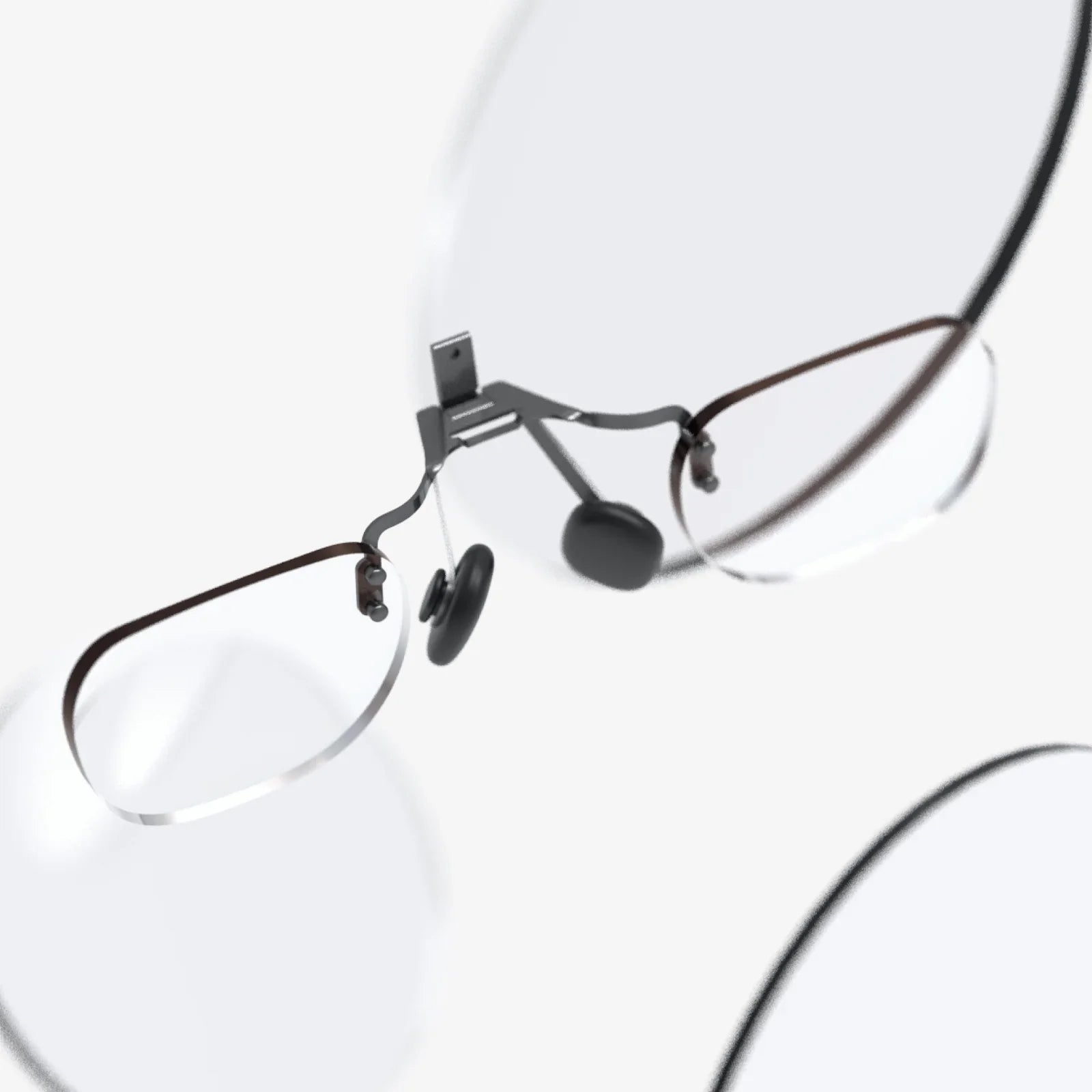
Imagine a world where your eyeglasses are no longer a static, passive tool but a dynamic, intelligent system that actively works to optimize your vision in real-time. This is no longer the realm of science fiction; it is the burgeoning reality promised by electric eyeglasses, a technological leap set to redefine our relationship with one of humanity's oldest and most vital assistive devices. This innovation moves beyond simple correction, venturing into the territory of enhancement, adaptation, and seamless integration with our digital lives.
The Core Technology: How Electric Eyeglasses Actually Work
At the heart of electric eyeglasses lies a fundamental shift from traditional passive lenses to active, tunable optics. The magic happens through several ingenious technological approaches, each with its own mechanism for altering light transmission and focal power.
Liquid Crystal Lens Technology
One of the most prevalent technologies involves the use of liquid crystals sandwiched between two layers of glass or polycarbonate. These crystals are naturally disordered, but when a small, low-voltage electric current is applied through transparent electrodes, they align in a specific pattern. This alignment changes the way light passes through the lens, effectively altering its refractive index. By precisely controlling the voltage, manufacturers can create zones within the lens or change the entire lens's power almost instantaneously, shifting from a distance to a near prescription or inducing a prismatic effect on demand.
Electroactive Polymer Membranes
Another fascinating approach utilizes flexible, electroactive polymer membranes. These ultra-thin films change their shape—curving or flattening—in response to an electrical charge. This physical deformation directly changes the lens's curvature, much like the lens in a human eye, thereby modifying its optical power. This biomimetic technology allows for a remarkably smooth and continuous range of focus, from distance to reading and every point in between, offering a more natural visual experience.
Micro-Fluidic and Mechanical Systems
Some pioneering designs explore micro-fluidics, where tiny channels within the lens contain optical fluids. Applying an electrical current moves this fluid, changing the shape of a flexible membrane on the lens surface and thus its prescription. Other concepts involve miniature, almost imperceptible mechanical elements that physically adjust the lens elements relative to one another. All these systems are powered by incredibly small, rechargeable batteries discreetly integrated into the frames, often lasting for a full day or more on a single charge.
Beyond Bifocals: The Multifaceted Applications
The applications for this technology extend far beyond simply replacing traditional bifocals or progressive lenses. Electric eyeglasses open up a new frontier of personalized vision solutions.
Dynamic Presbyopia Correction
The most immediate and impactful application is for presbyopia, the age-related loss of near focus that affects nearly everyone over the age of 45. Traditional solutions like bifocals or progressives have fixed zones, forcing the wearer to move their head to find the "sweet spot" for a given task. Electric eyeglasses eliminate this compromise. A simple gesture—a tap on the temple, a button press, or even an automatic eye-tracking system—can instantly adjust the entire lens for perfect near vision, then just as quickly revert to distance vision when you look up. This provides a seamless, more natural, and frustration-free visual experience.
Automated Adaptive Sunglasses
Imagine sunglasses that adapt their tint level to the ambient light conditions instantly and automatically. Using embedded light sensors, electric eyeglasses can transition from clear indoors to a dark tint in bright sunlight in milliseconds, offering optimal comfort and protection without ever needing to switch pairs. This goes beyond traditional photochromic lenses, which are slow to react and often don't darken sufficiently inside a car due to UV-filtering windshields.
Vision Therapy and Medical Rehabilitation
In the medical field, this technology holds immense promise. For patients undergoing vision therapy for conditions like amblyopia (lazy eye) or strabismus (crossed eyes), electric eyeglasses can be programmed to selectively blur or clarify vision in one eye to force the brain to use the weaker eye, a process known as patching. They can also dynamically introduce and adjust prismatic corrections to aid in binocular vision training, all under the precise control of an eye care professional.
Augmented Reality Integration
The true future potential lies in the convergence of adaptive vision and augmented reality (AR). Electric eyeglass frames provide the perfect platform to house the necessary micro-projectors and waveguides to overlay digital information onto the real world. The adaptive lenses would be crucial here, ensuring that the digital overlay is always in perfect focus for the user, regardless of their prescription or what they are looking at in the physical environment. This creates a seamless blend of the physical and digital worlds for navigation, information access, and immersive entertainment.
A Vision of the Future: Potential and Possibilities
As the technology matures, the possibilities become even more extraordinary. We could see glasses that continuously monitor our ocular health, tracking intraocular pressure as a early warning system for glaucoma or detecting minute changes in retinal blood vessels that might indicate diabetes. They could connect to our digital ecosystem, automatically adjusting focus based on the task at hand—optimizing for screen time, reading a book, or driving. The concept of a single pair of glasses that serves all visual and technological needs is finally within reach.
Navigating the Challenges: Hurdles on the Road to Adoption
Despite the exciting potential, the path to mainstream adoption is not without its significant obstacles. The primary barrier is cost. The complex micro-electronics, specialized materials, and precision manufacturing required make early iterations of electric eyeglasses a significant investment, placing them out of reach for many consumers initially. Furthermore, the frames need to be slightly bulkier to house the battery and electronics, posing a challenge for designers who must balance functionality with aesthetics and comfort. Long-term durability and repairability are also open questions, as a complex electronic device is inherently more susceptible to failure than a simple piece of molded plastic.
The Human Element: A Shift in the Patient-Eye Care Professional Relationship
The advent of electric eyeglasses will also fundamentally change the dynamic of an eye exam. Instead of a one-time determination of a static prescription, eye care professionals will become more like system administrators, programming and fine-tuning a dynamic visual device. They will set parameters, adjust ranges of focus, and potentially update software to optimize performance for a patient's lifestyle. This requires new skills and a deeper understanding of the interplay between software, hardware, and human physiology.
We stand at the precipice of a revolution in optical technology. Electric eyeglasses represent a paradigm shift, transforming a static aid into an active partner in our visual experience. They promise to erase the compromises of traditional lenses, offering unparalleled adaptability, convenience, and a gateway to a world where our vision is continuously optimized for the task at hand. While challenges remain in design, cost, and adoption, the direction is clear. The future of sight is not just about seeing clearly—it's about seeing smarter, and it's a future that is coming into focus faster than we might think.
Share:
AR Developer: The Architect of a New Reality Shaping Our Digital Future
Human Computer Interaction Research: The Invisible Science Shaping Our Digital Future