


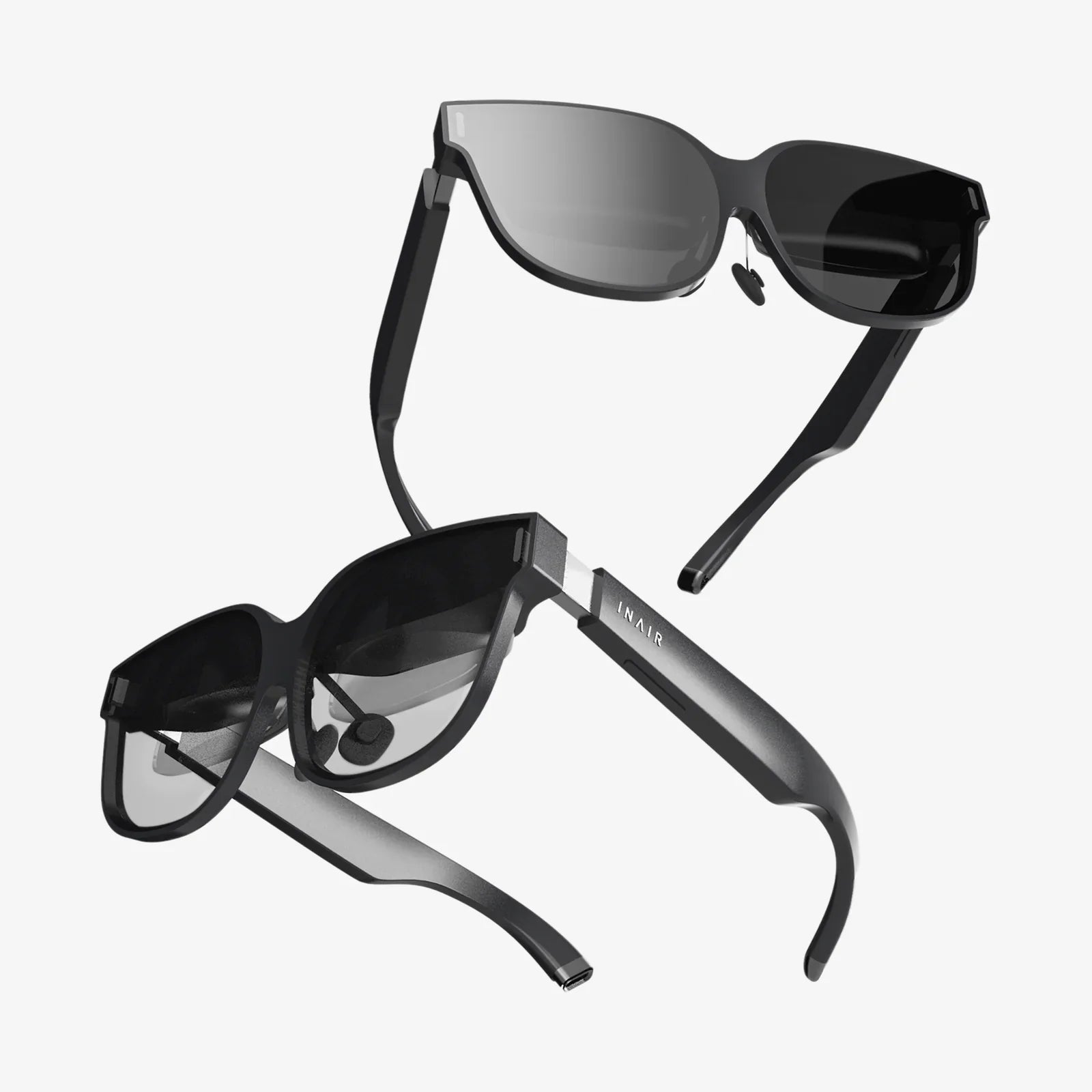
Imagine a world where the digital and physical realms are not just connected but seamlessly interwoven, where complex data is no longer confined to flat screens but painted onto the very fabric of your workspace, and where a technician on the factory floor in Munich can receive real-time, hands-free guidance from an expert sitting in an office in Tokyo. This is not a distant sci-fi fantasy; it is the immediate future being forged by the powerful convergence of enterprise augmented reality tools with spatial computing integration. This technological synergy is poised to redefine the very architecture of business operations, creating a new paradigm for productivity, safety, and innovation that is as intuitive as it is revolutionary.
The Confluence of Two Transformative Technologies
To understand the power of this combination, we must first deconstruct its core components. Enterprise Augmented Reality (AR) has been on a steady ascent, moving beyond novelty marketing applications to become a serious tool for business. At its core, enterprise AR overlays digital information—such as 3D models, instructions, or performance metrics—onto a user's view of the physical world, typically through smart glasses or tablet/smartphone cameras.
Spatial computing, however, is the broader, more profound framework that makes this overlay truly intelligent and interactive. It is a suite of technologies that enables a system to understand and map the physical space around it in three dimensions. This includes depth-sensing cameras, LiDAR scanners, advanced computer vision algorithms, and powerful spatial mapping software. It’s what allows a device to not just display a digital object, but to anchor it to a specific point on a physical machine, to understand that a virtual button should be placed on a real wall, and to recognize occlusions (e.g., a digital wireframe disappearing behind a physical pipe).
The integration of enterprise AR tools with spatial computing is therefore a fundamental upgrade. It moves AR from a simple heads-up display to a contextual, aware, and persistent digital layer on top of reality. It transforms AR from a tool that shows information to a system that understands environment and context.
Revolutionizing the Frontline Workforce
Perhaps the most immediate and impactful application of this technology is in empowering the industrial and frontline workforce. For decades, complex assembly, maintenance, and repair tasks have relied on paper manuals, PDFs on clunky tablets, or the tribal knowledge of seasoned veterans. Spatially-aware AR shatters this old model.
- Precision Assembly and Manufacturing: A worker on an assembly line can see digital templates and instructions projected directly onto the product they are building. The system, understanding the spatial context, can highlight the exact bolt that needs tightening, show the correct torque value floating beside it, and automatically validate that the step was completed correctly before moving on. This reduces errors, slashes training time for new hires, and dramatically improves quality control.
- Complex Maintenance and Repair: A field service technician wearing AR glasses can look at a malfunctioning pump. Spatially-aware software instantly recognizes the equipment model and overlays an interactive 3D schematic onto the physical unit. The technician can then use hand gestures or voice commands to peel away virtual layers, revealing internal components. The system can guide them through each repair step, highlighting specific valves and connections in the correct sequence, all while keeping their hands free and their focus on the task.
- Remote Expert Assistance: This is where spatial context becomes a game-changer for collaboration. When a local worker encounters a problem, they can initiate a video call with a remote expert. That expert doesn't just see a flat video feed; they see a spatially-aware live view from the worker's perspective. The expert can then draw annotations—arrows, circles, notes—that are not just on the 2D screen but are locked in 3D space on the actual equipment. The local worker sees these annotations as if they were painted on the machine itself. This "see-what-I-see" capability with persistent spatial annotations drastically improves communication and resolves issues faster, reducing downtime and travel costs.
Transforming Design, Prototyping, and Architecture
The impact extends far beyond the factory floor into the creative and design phases of business. Spatial computing gives designers and architects the ultimate canvas: the real world.
Architects and interior designers can project full-scale, photorealistic 3D models of their designs into an empty physical space. They can literally walk through a building before a single brick is laid, assessing spatial relationships, lighting, and flow in a way that is impossible on a computer screen. Clients can experience the proposed design, making informed decisions and requesting changes early in the process, when they are least expensive to implement.
Similarly, automotive and industrial designers can use spatially-integrated AR to visualize new prototypes at a 1:1 scale. They can place a digital model of a new engine component into an existing vehicle bay to check for fit and clearance issues, or evaluate the ergonomics of a new cockpit design. This iterative process, known as digital prototyping, accelerates development cycles and saves millions in physical prototyping costs.
Creating the Immersive and Intelligent Workspace
Spatial computing integration is also redefining the concept of the office and data visualization. The notion of being tethered to a desk with multiple monitors is becoming obsolete.
Imagine putting on a lightweight pair of AR glasses and instantly having your ideal digital workspace appear around you. Your web browser is pinned to the wall to your left, your communication apps are floating to your right, and your central project—a complex 3D data visualization—is sitting on the table in front of you. You can manipulate this data with your hands, breaking it apart, drilling down into layers, and collaborating with colleagues who can see the same spatially-anchored holograms from their own locations.
This transforms data from abstract numbers and charts into tangible, interactive objects that can be understood intuitively. A financial analyst could walk through a 3D model of market trends, or a logistics manager could see a holographic map of a supply chain with real-time bottlenecks highlighted in the physical space of their conference room. This spatial data interaction leads to faster, more insightful decision-making.
Overcoming the Implementation Hurdles
Despite its immense potential, the path to widespread adoption is not without significant challenges. Successfully deploying enterprise AR with spatial computing requires careful strategic planning.
- Hardware and Connectivity: The devices need to be robust, comfortable for all-day wear, have all-day battery life, and offer high-resolution displays. They must also be supported by powerful, low-latency connectivity (like 5G or robust Wi-Fi 6/6E networks) to handle the massive data processing often done in the cloud.
- Software and Content Creation: Developing accurate 3D digital twins of equipment and environments is resource-intensive. The software platforms need to be interoperable with existing enterprise systems (ERP, CRM, CMMS) to pull relevant data into the AR experience. A strong content strategy is essential.
- User Experience (UX) and Change Management: The UX for spatial interfaces is a new frontier. Interactions must be intuitive, using natural gestures and voice commands. Perhaps the biggest hurdle is cultural: companies must invest in comprehensive change management and training programs to overcome workforce skepticism and build proficiency with these new tools.
- Security and Data Privacy: These devices are sensors that capture vast amounts of visual and spatial data from within a company's operations. Protecting this data from cyber threats and establishing clear privacy protocols is paramount.
The Future is Spatial: What Lies Ahead
The evolution of this technology is rapid. We are moving towards increasingly smaller, more powerful form factors—eventually converging on normal-looking glasses. Artificial Intelligence and Machine Learning will be deeply integrated, moving systems from context-aware to predictive and prescriptive. An AR system won't just show a technician how to fix a machine; it will predict the failure before it happens and guide a preemptive repair.
Furthermore, the concept of the digital twin will be fully realized through spatial computing. A perfect digital replica of a physical asset, process, or system will exist in real-time, and interacting with it through AR will be the primary way to monitor, control, and optimize the physical counterpart.
The businesses that will thrive in the next decade are those that begin to view the physical world not as a limitation, but as a new user interface. They are the ones experimenting today, building internal expertise, and understanding that the ROI isn't just in doing old things slightly faster, but in enabling entirely new ways of working that were previously unimaginable. The seamless merger of the digital and physical through enterprise AR tools with spatial computing integration is not just an IT upgrade; it is a fundamental strategic advantage, rewriting the rules of efficiency, collaboration, and human-machine interaction for a new era.
The line between our digital data and our physical world is blurring into irrelevance, and forward-thinking enterprises are already stepping through the looking glass. The ability to interact with information not on a screen, but in your space, transforms abstract complexity into tangible understanding, turning every warehouse, factory floor, and boardroom into a dynamic canvas for innovation. This isn't just about seeing data—it's about experiencing it, manipulating it, and collaborating with it in the real world, unlocking a level of operational intelligence and human potential that will define the winners of tomorrow. The future of work is not on your desk; it's all around you.
Share:
What Is a Spatial Computer - Blurring the Lines Between Our Digital and Physical Worlds
Work Smart: The Ultimate Guide to Maximizing Productivity and Achieving More with Less Effort