


- by wangfred
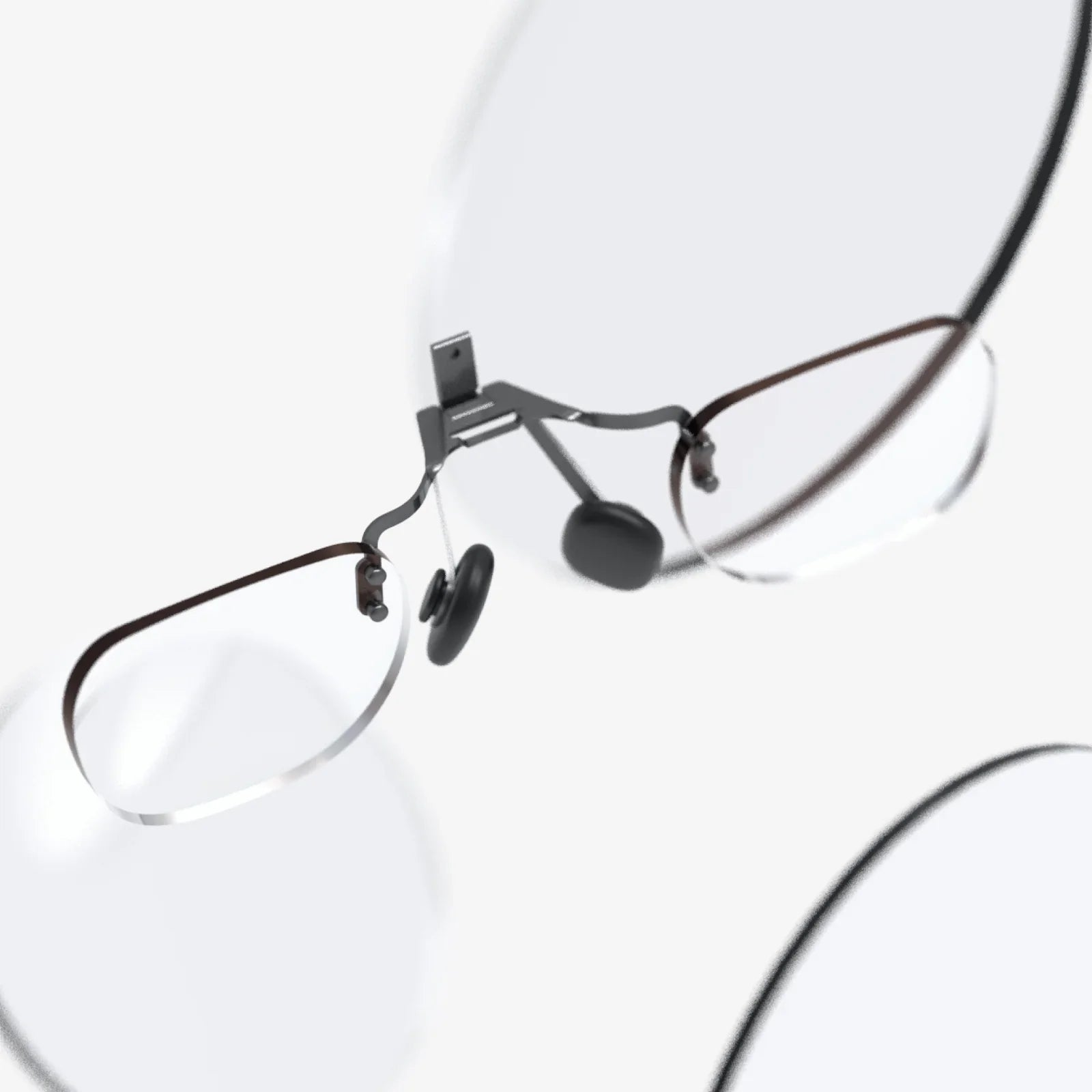
Even Reality AI Smart Glasses Are Redefining Human Perception and Connection
- by wangfred
Imagine a world where the line between the digital and the physical doesn't just blur—it vanishes. Where the information you need doesn't live on a screen in your hand but is seamlessly painted onto the world itself, accessible with a glance, a whisper, or a thought. This is the audacious promise held within the sleek frames of a new generation of eyewear, a promise that goes far beyond mere convenience to fundamentally redefine our experience of reality. We are standing at the precipice of a sensory revolution, and it’s being powered by a silent, ever-present intelligence.
The human desire to enhance our senses is as old as humanity itself. Eyeglasses, invented centuries ago, were one of our first and most successful forays into technological augmentation, correcting faulty vision to restore a natural state. Then came cameras, telephones, and televisions, allowing us to capture, transmit, and view realities distant in time and space. The smartphone became the ultimate pocket-sized portal, a black mirror that held our attention but also created a barrier between us and our immediate surroundings. We became a society of hunched shoulders and downcast eyes, lost in a device.
The concept of wearable displays aimed to break this barrier. Early iterations were clunky, expensive, and offered a limited, often isolating experience. They were novelties for enthusiasts, not tools for the masses. The critical missing ingredient was intelligence. Without a sophisticated, contextual understanding of the user and their environment, these devices could only project information, not integrate it. They were a window, not a layer.
This is where the paradigm truly shifts. The integration of advanced artificial intelligence is what transforms simple smart glasses into a revolutionary platform. It is the difference between a static map and a live guide who knows not only where you are but also who you are, what you need, and what you might find interesting.
At its core, this AI operates through a constant, sophisticated feedback loop:
This seamless cycle creates an experience where the technology fades into the background, and the augmented reality feels simply like… reality.
The applications for this technology are as vast as human endeavor itself. They promise to dissolve the friction between intention and action across countless domains.
Imagine walking through a foreign city where street signs and menus gently glow with instant translations. Directional arrows are drawn onto the sidewalk itself, guiding you turn-by-turn without ever needing to look away from the architecture and life around you. Historical buildings can have their stories unlocked, with architectural highlights pointed out and eras visualized.
The implications for field and industrial work are profound. A technician repairing a complex machine can see animated repair instructions overlaid directly on the faulty component, with torque specs and warnings highlighted. A architect can walk through a physical construction site and see the full BIM model superimposed onto the unfinished structure, identifying clashes before they become costly errors. A warehouse worker’s pick-list can visually highlight the exact shelf and item, streamlining logistics to an unprecedented degree.
For individuals who are deaf or hard of hearing, live captions of conversations can be displayed subtly near the speaker’s face, making dialogue fluid and natural. For those with visual impairments, the glasses can audibly describe scenes, read documents aloud, and identify obstacles, granting a new level of environmental awareness and independence. In social settings, they could discreetly remind you of a name and key details about a person you met years ago, easing social anxiety.
A medical student can practice procedures on a hyper-realistic holographic cadaver. A mechanic can learn to rebuild an engine with digital guides layered onto a physical block. An artist could sculpt digital clay in three dimensions with their hands, or a musician could have a virtual control panel hover above their physical instruments. The potential for experiential, hands-on learning is limitless.
Such a powerful technology does not arrive without profound challenges. The very features that make it transformative also make it potentially disruptive and dangerous if left unchecked.
This is the single greatest concern. A device that sees and hears everything you do represents the most pervasive surveillance tool ever conceived. The potential for misuse by corporations, governments, and malicious actors is staggering. Continuous facial recognition could eradicate public anonymity. Recording private conversations without consent becomes trivial. The very concept of a "momentary lapse in privacy" could become obsolete. Robust, transparent, and user-centric data policies are not optional; they are a prerequisite for public acceptance. Features like physical camera shutters, clear recording indicators, and granular, on-device processing that doesn’t stream raw data to the cloud will be essential for building trust.
Will this technology unite us or further divide us? There is a risk of creating a new digital chasm between those who can afford these devices and those who cannot, potentially limiting access to information, advanced job training, and new social experiences. Furthermore, if everyone is inhabiting a personalized reality overlay, do we risk losing a shared, common experience of the world? Will we be together in a room but alone in our individually curated digital bubbles?
Over-reliance on augmented information could lead to a degradation of innate human skills like navigation, memory, and observation. More immediately, navigating the physical world while distracted by digital overlays poses obvious safety risks, akin to the dangers of texting while walking, but amplified. Ensuring these devices enhance situational awareness rather than diminish it will be a critical design challenge.
Looking further ahead, the trajectory points toward an even deeper integration. The goal is a move from a wearable device to a virtually imperceptible one. Advances in materials science could lead to lenses as thin and light as conventional glasses, with all compute and battery needs elegantly distributed throughout the frame. The user interface will evolve from voice and gestures toward direct neural input, allowing us to control the digital layer with intention alone, making the technology a true extension of our cognition.
This is not about replacing reality with a virtual one. It is about enriching our existing reality with a contextually relevant digital stratum. It’s about making the invisible visible and the intangible tangible. It’s about unlocking the latent data that surrounds us and presenting it in a way that empowers rather than overwhelms.
The ultimate success of this technology will not be measured by its technical specifications, but by its humanity. It must be designed to augment human potential, not replace it; to enhance connection, not inhibit it; to empower the individual, not surveil them. It has the potential to help us see the world not just as it is, but as it could be, filled with knowledge, stories, and possibilities waiting to be revealed. The frame is being set, and the world is about to be redrawn, right before our eyes.
Share:
How Has Augmented Reality Impacted Society: A Digital Revolution
AR VR Accessibility: Unlocking Immersive Worlds for Every User