


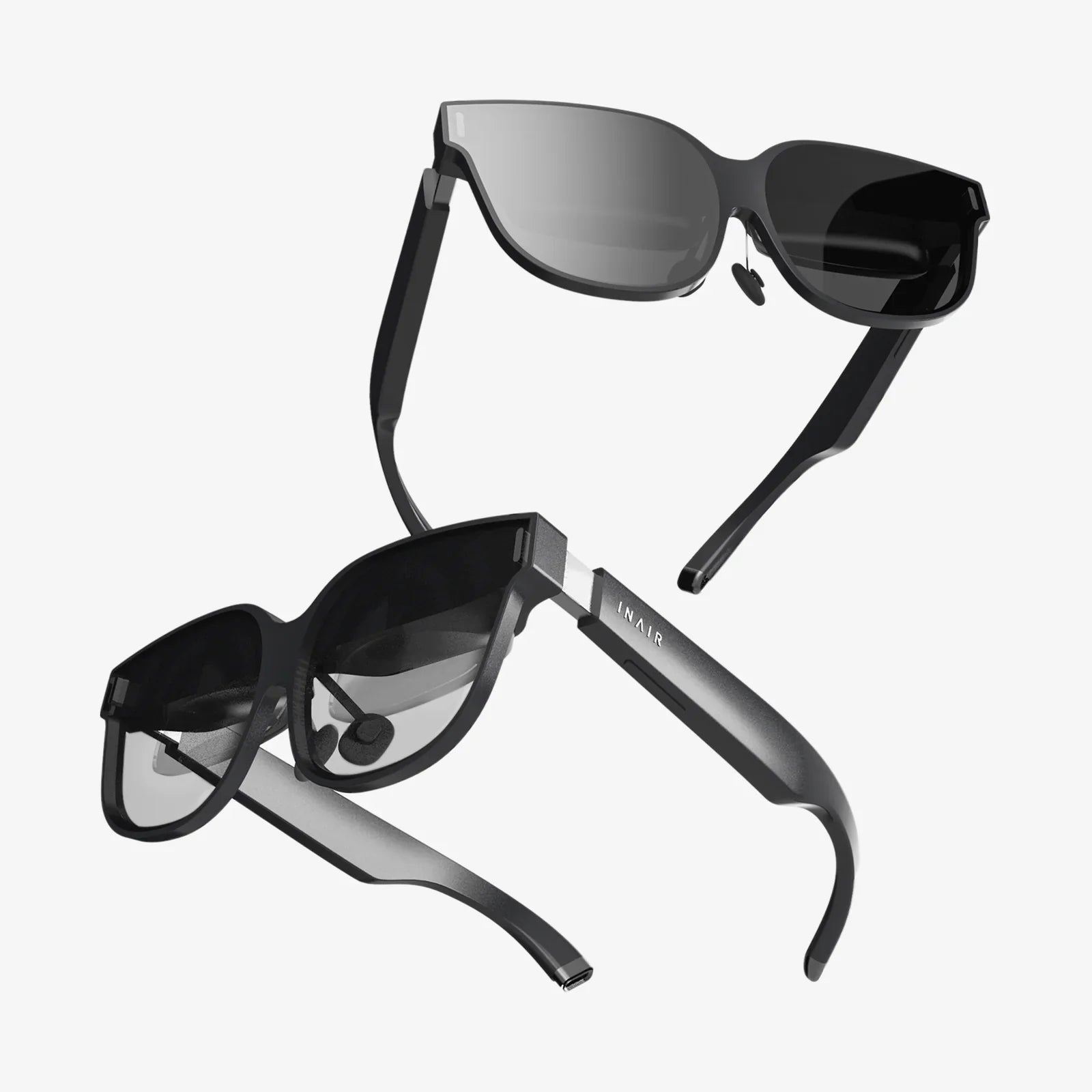
- by wangfred
Everyone Smart Glasses Now: The Dawn of a Seamless Augmented Reality
- by wangfred
Imagine a world where information doesn’t live on a screen in your hand but is painted onto the canvas of reality itself. Directions appear as a gentle glowing path on the sidewalk, a colleague’s name hovers subtly above their head in a crowded meeting, and the recipe for dinner floats beside the sizzling pan, hands-free and instantly accessible. This isn’t a distant sci-fi fantasy; it’s the imminent future promised by the next generation of smart glasses, a future that is arriving for everyone, now.
The concept of wearable computers for the face has tantalized technologists for decades. Early iterations were bulky, expensive, and socially awkward, often resembling bizarre cyborg headgear more than a practical accessory. They were the domain of developers, enthusiasts, and corporations with deep pockets for experimental technology. The fundamental barriers were threefold: technological limitation, aesthetic design, and social acceptance.
What makes now different is a perfect storm of technological convergence. The miniaturization of components has reached a critical point. Micro-displays are sharper and brighter than ever, while consuming a fraction of the power. Advanced sensors, including high-resolution cameras, LiDAR scanners, and inertial measurement units (IMUs), have become tiny and affordable. The real engine behind this revolution, however, is artificial intelligence. On-device AI processors can now understand the world in real-time, processing visual and auditory data to provide contextually relevant information without a constant, lag-inducing connection to the cloud. This combination of powerful, miniature hardware and sophisticated software has finally made it possible to design smart glasses that people might actually want to wear all day.
When we say "smart glasses," it's crucial to move beyond the simplistic idea of glasses that just display notifications. The next generation is about contextual augmentation. True intelligence lies in the device's ability to understand where you are, what you’re doing, and what information would be genuinely helpful at that precise moment.
This shift turns the glasses from a passive notification screen into an active assistant, enhancing your perception and cognition without demanding your attention.
The ultimate goal for this technology is not to be another distracting device but to fade into the background. The ideal smart glasses experience is one of subtlety and seamlessness. They must become as unconscious and essential as a wristwatch or a pair of sunglasses.
This integration happens on multiple levels. Physically, they must be lightweight, comfortable, and, most importantly, look like ordinary eyewear. Manufacturers are now offering a variety of styles, from classic full-rimmed frames to modern sporty designs, often with customizable lenses including prescription, blue-light filtering, and transition options. The technology is being designed to be invisible, tucked into the stems and frame.
On an interactive level, control must be intuitive and private. Voice assistants, activated by a low whisper, are key. However, even more discreet are emerging interaction models like touch-sensitive stems for swipe controls, or even subvocal recognition that detects the tiny muscular movements of your throat when you think a command without speaking aloud. Bone conduction audio delivers sound directly to your inner ear, leaving your ears open to hear the real world clearly and keeping your audio private.
The phrase "for everyone" is not just marketing hyperbole; it's a fundamental shift in strategy and accessibility. Earlier attempts were priced as luxury tech items, putting them out of reach for the average consumer. The current wave is focused on achieving a compelling core experience at a more accessible price point, aiming for the mass market.
Furthermore, this democratization extends to functionality. While early adopters might be gamers and tech workers, the applications span every conceivable demographic:
By solving real problems for a broad audience, smart glasses move from a novelty to a necessity.
Of course, weaving computers into our visual field is not without its significant challenges. The path to widespread adoption is paved with legitimate concerns that must be addressed head-on.
Privacy and the Societal Contract: The most pressing issue is the privacy of both the wearer and those around them. The potential for surreptitious recording is a serious social and ethical dilemma. The industry must establish clear, transparent, and ethical norms. Features like a prominent recording indicator light (a "privacy LED") that cannot be disabled, clear ethical guidelines for developers, and robust data encryption are non-negotiable starting points. Society will need to develop new etiquette around their use, much like it did with smartphones.
Battery Life and Connectivity: For all-day wear, battery life is paramount. The balance between functionality and power consumption is a constant engineering battle. Solutions include low-power always-on contextual awareness that only activates full power when needed, and efficient charging cases. Similarly, a seamless blend of on-device processing and cloud connectivity will be essential for a smooth experience without lag.
The Digital Divide: As with any transformative technology, there is a risk of exacerbating inequality. Ensuring that the benefits of augmented intelligence are accessible across economic and social strata will be an ongoing challenge for policymakers and technology creators alike.
The arrival of practical, accessible smart glasses represents a computing paradigm shift as significant as the personal computer or the smartphone. It’s a move away from pulling a device out of our pocket to interact with a separate digital world, and towards a future where the digital and physical are seamlessly intertwined. We are adding a dynamic, informational layer to human perception itself.
This is not about replacing reality with a virtual one; it’s about enriching our existing reality with a flow of useful, contextually-aware information. It’s about enhancing human capability, making us more knowledgeable, efficient, and connected to the world around us without the constant mediation of a handheld screen. The technology is finally maturing, the designs are becoming palatable, and the software is becoming truly intelligent. The age of glancing up at the world and seeing it smarter, is not on the horizon—it’s already here, waiting for you to put them on.
The world is about to get an upgrade, and it’s all happening right before your eyes. Are you ready to see what you’ve been missing?