


- by wangfred
Excellent Wearables: The Invisible Revolution Reshaping Our Daily Lives
- by wangfred
Imagine a world where your watch doesn't just tell time, it tells you you're about to get sick. Where your ring can sense your stress levels and guide you to calmness before you even feel the anxiety creep in. This isn't science fiction; it's the present reality, powered by the silent, seamless integration of excellent wearables into our lives. We are standing at the precipice of a health and connectivity revolution, all accessible from our wrists, ears, and fingers, and it's changing everything we thought we knew about technology and the human body.
The journey of wearables is a story of rapid and profound evolution. The earliest devices were simple pedometers, digital manifestations of a basic human desire to quantify movement. They answered the question: "How active was I today?" But excellence in this field is defined by moving beyond mere quantification to meaningful qualification. The modern excellent wearable is a sophisticated bio-hub, a personal health guardian that lives on your body.
This shift was catalyzed by advancements in sensor technology. Early optical heart rate sensors were novel but often unreliable during intense movement. Today, multi-path photopleodysmography (PPG) sensors, accelerometers, gyroscopes, and even electrodermal activity sensors work in concert to paint a high-fidelity picture of your physiological state. They don't just measure your heart rate; they analyze its variability—a key indicator of recovery and stress. They don't just track sleep; they chart a detailed map of your sleep stages, identifying disturbances and offering actionable insights to improve your rest.
The true marker of an excellent wearable is its move from reactive to proactive. It's the difference between a device that tells you you had a poor night's sleep and one that, noticing elevated nighttime heart rate and restless sleep, suggests you might be fighting off a virus and should prioritize rest. This predictive capacity transforms a gadget from a passive recorder into an active partner in your well-being.
What separates a good device from a truly excellent one? It's a combination of hardware sophistication, software intelligence, and seamless design.
The most powerful feature of modern wearables is their ability to conduct clinical-grade health monitoring in the background of your life. Excellent devices now offer:
Excellence is no longer confined to the wrist. Innovation has blossomed into new, often less intrusive, form factors that offer unique advantages.
Smart Rings: These tiny powerhouses represent the pinnacle of minimalist design meeting maximum functionality. Worn on a finger, they eliminate the screen distraction of a watch, making them ideal for continuous, uninterrupted sleep tracking. Their smaller form factor often allows for more precise heart rate and temperature readings during sleep, as they are less prone to movement artifacts. They are the ultimate set-it-and-forget-it health monitors, gathering vast datasets on your body without ever demanding your attention.
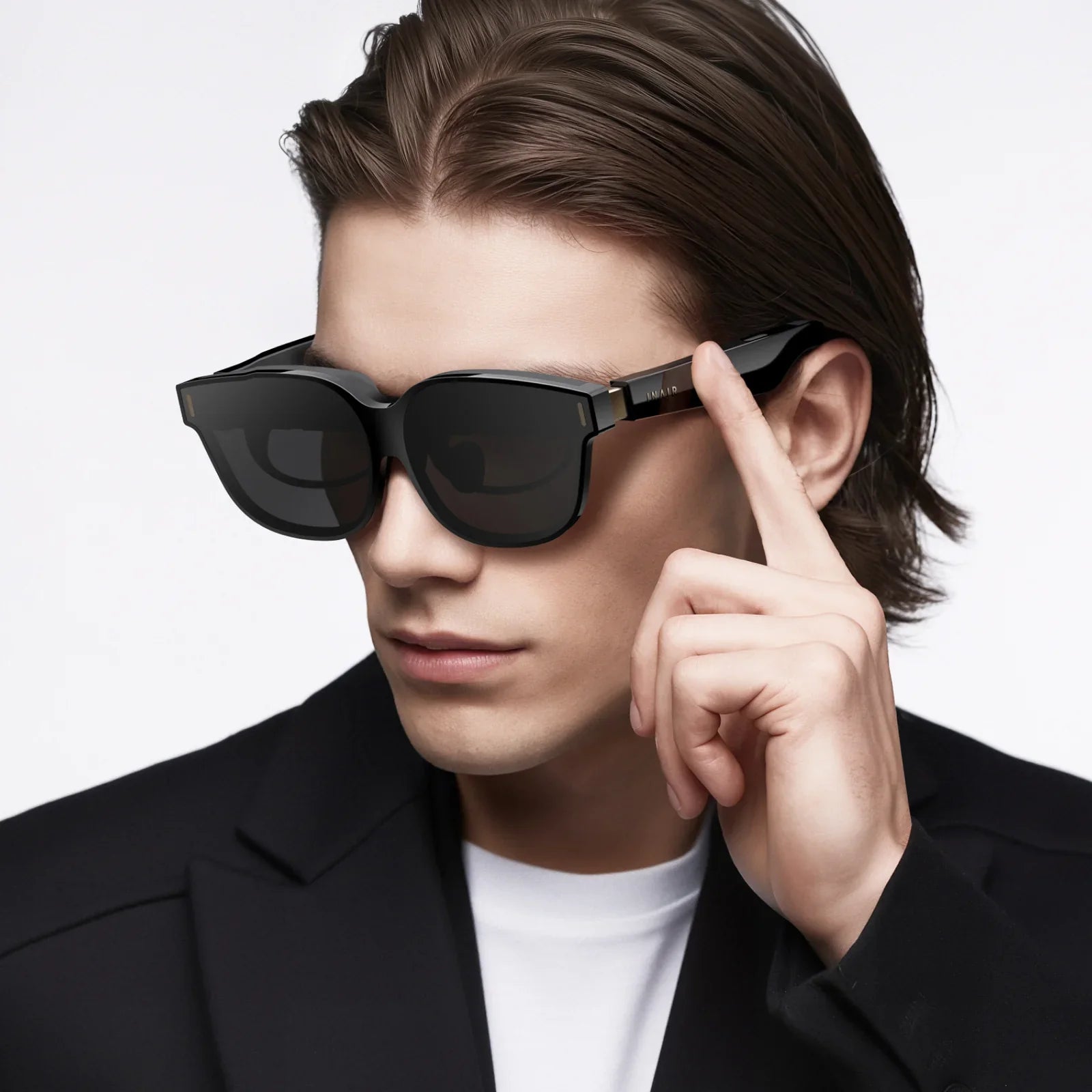
Smart Glasses and Hearables: Excellence in audio wearables has moved beyond delivering pristine sound. They now incorporate advanced biometric sensors and leverage their unique position in and around the ear—a key vascular access point—to gather highly accurate data on heart rate, core temperature, and even posture. Furthermore, they are becoming hubs for ambient computing, delivering contextual information and translating languages in real-time, directly into your ear.
Hardware is nothing without intelligent software. The raw data from sensors is a chaotic stream of numbers. The value is extracted through sophisticated algorithms and artificial intelligence that identify patterns, establish personal baselines, and deliver personalized, contextual insights.
An excellent wearable doesn't just tell you your HRV is 40 ms; it tells you that this is 15% lower than your 90-day average, likely due to two intense workouts yesterday and a late night, and suggests today might be a good day for active recovery instead of another punishing session. This level of personalization prevents generic, one-size-fits-all advice and creates a feedback loop that is uniquely valuable to the individual user.
The value of these devices is not theoretical; it is being felt in profound ways across healthcare, fitness, and daily productivity.
We are shifting from a reactive healthcare model—treating illness after it occurs—to a proactive one focused on prevention and early detection. Excellent wearables are at the forefront of this change.
Cardiologists are now reviewing weeks of continuous heart rhythm data from a patient's wearable to diagnose intermittent arrhythmias that a 24-hour Holter monitor might miss. Individuals are receiving AFib notifications and seeking medical attention before a catastrophic stroke occurs. People are identifying trends in elevated resting heart rate that correlate with COVID-19 infection before other symptoms manifest, allowing them to isolate early.
This democratization of health data empowers individuals to take a more active role in their own well-being and provides clinicians with a rich, longitudinal dataset that was previously impossible to capture outside a hospital setting.
For athletes and fitness enthusiasts, excellent wearables have become indispensable coaching tools. They provide objective metrics on performance, recovery, and readiness, helping to optimize training and prevent overtraining and injury.
Features like built-in GPS track pace and route, running dynamics analyze form and efficiency, and recovery metrics guide the timing and intensity of the next workout. This data-driven approach removes guesswork, leading to more effective and sustainable fitness journeys. It allows users to see the direct correlation between lifestyle factors—like sleep, alcohol consumption, and stress—and their physical performance, fostering healthier habits overall.
Beyond health, excellent wearables are streamlining our digital interactions. A flick of the wrist can dismiss a notification, control smart home devices, or make a contactless payment. Hearables can filter out noise in a crowded cafe, allowing for deep focus, or seamlessly switch between a phone call and a laptop podcast.
This ambient computing layer reduces the need to constantly reach for a phone, keeping us connected to what's important while minimizing digital distraction. It's technology that works for you, not the other way around.
The path forward is not without its hurdles. The very power of these devices raises critical questions.
Data Privacy and Security: The data collected by wearables is among the most personal information imaginable—a continuous log of your body's inner workings. Excellent wearables must be built on a foundation of robust security and transparent privacy policies. Users must have clear control over their data, how it is used, and who it is shared with. The industry must prioritize ethical data handling to maintain the trust of its users.
Medical Validation vs. Wellness Guidance: It is crucial to understand the distinction between a device providing wellness information and one making a medical diagnosis. While features like ECG have received regulatory clearance, most metrics are intended for general health and fitness purposes. Excellent devices are clear about the limitations of their technology and encourage users to consult healthcare professionals for medical advice. The goal is informed awareness, not self-diagnosis.
Avoiding Data Anxiety: There is a risk of becoming overwhelmed or overly anxious about the constant stream of biometric data—a phenomenon sometimes called "quantified self-induced anxiety." The best devices are designed to mitigate this by focusing on trends over time rather than momentary fluctuations and by delivering insights in a calm, encouraging manner that promotes positive action rather than fear.
The trajectory of wearable technology points toward even deeper integration and more incredible capabilities. The next generation of excellent wearables will likely feature non-invasive glucose monitoring, eliminating the need for finger-prick tests for millions. Continuous blood pressure monitoring is another holy grail that researchers are close to achieving in a wearable form factor.
We will see a greater emphasis on mental health, with devices using a combination of physiological markers and user input to track stress, anxiety, and mood, offering guided breathing exercises or mindfulness prompts when needed. Furthermore, the future is one of ecosystem integration, where your wearable communicates seamlessly with other smart devices in your home, car, and office to create a truly responsive and health-optimizing environment.
The ultimate goal is invisibility. The most excellent wearable will be one you don't even think about—it will be woven into your clothing, embedded in your earrings, or integrated into a sleek pair of glasses. It will work tirelessly in the background, a guardian angel of silicon and sensor, offering its insights only when you need them most, helping you live a healthier, safer, and more connected life without ever getting in the way of living it.
The data streaming from your wrist is no longer just numbers on a screen; it's the narrative of your body, a real-time biography of your health waiting to be read. The power to decode your stress, predict your potential, and unlock a new level of self-awareness is no longer a futuristic promise—it's a present-day reality, quietly humming on the wrists and in the pockets of millions. The question is no longer if these devices work, but how much you're willing to learn about the one thing you have with you every second of your life: yourself.