


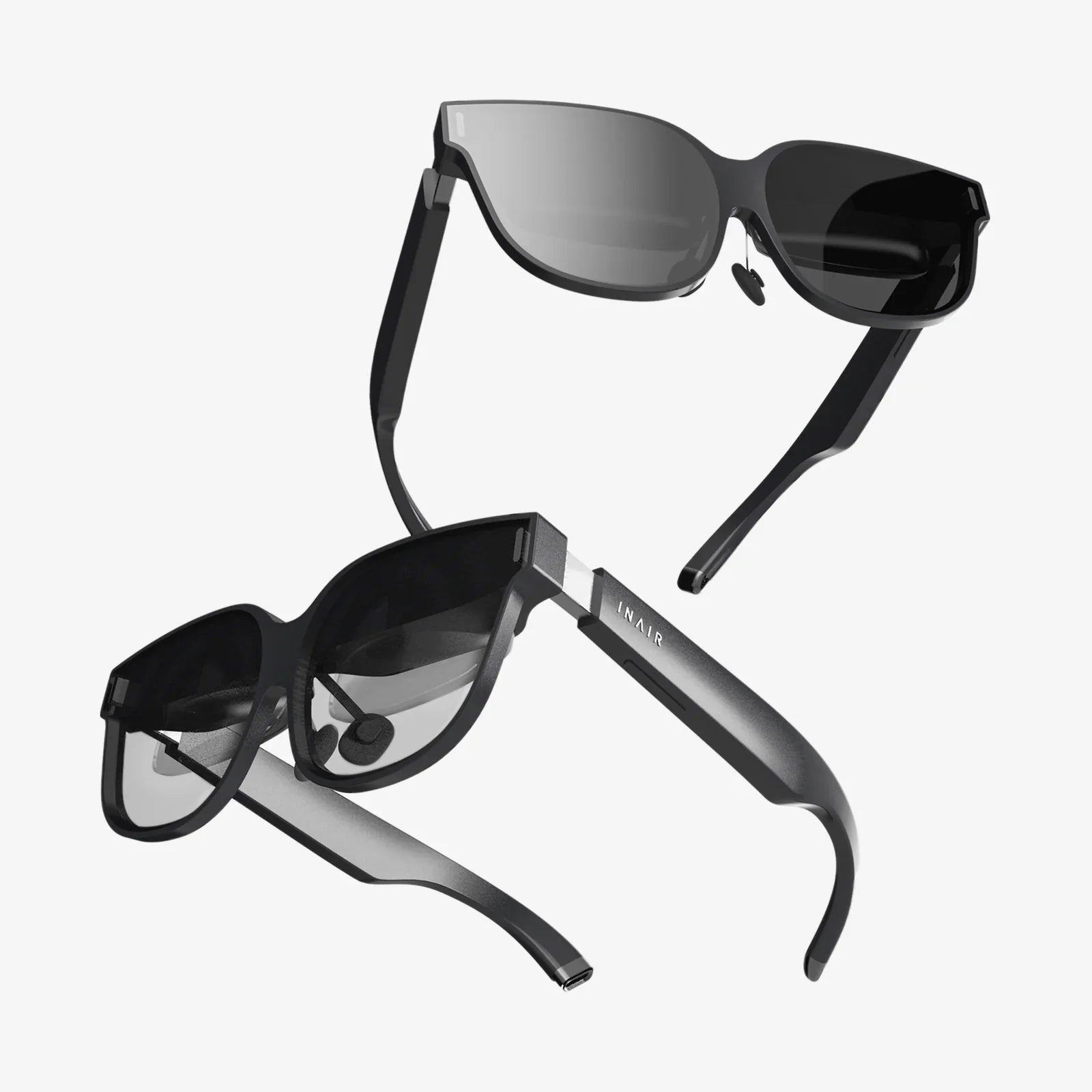
You've seen the sleek, futuristic photos and the breathless headlines promising a world where digital information seamlessly overlays your reality. The concept is intoxicating: a personal heads-up display for your life, granting you superhuman knowledge and connectivity without ever needing to look down at a screen. But then you see the price tag, a figure that often rivals a high-end laptop, and the fantasy collides with a stark, financial reality. Are expensive smart glasses a revolutionary leap in personal technology, or are we merely being sold a beautifully packaged promise at a premium cost? The answer, as it turns out, is far more complex than a simple yes or no, lying at the intersection of cutting-edge engineering, aspirational marketing, and the nascent struggle to define the next dominant computing platform.
The Anatomy of a Premium Price Tag
To understand the cost, one must first dissect the sophisticated technology crammed into the slender frames of high-end smart glasses. This is not merely a pair of spectacles with a tiny projector glued on. The expense is a direct reflection of the immense research, development, and miniaturization required to create a functional, wearable device.
The Optical Heart: Waveguides and Micro-LEDs
At the core of any pair of smart glasses is its optical engine. This is the system that paints digital images onto your retina, making them appear as if they are floating in the world before you. The most advanced and, consequently, most expensive systems utilize technologies like holographic waveguides and micro-LED displays.
Waveguides are essentially transparent pieces of glass or plastic etched with microscopic patterns. They act like magical conduits, capturing light from a tiny projector at the temple and piping it directly in front of the eye while remaining largely invisible. Manufacturing these with nanometer precision is an incredibly complex and costly process, with low yields driving prices even higher. Paired with ultra-bright, energy-efficient micro-LEDs that can produce vibrant colors in direct sunlight, this optical system represents a significant portion of the research investment and bill of materials.
The Invisible Brain: Processing Power and Connectivity
For the glasses to be truly "smart," they require a miniaturized computer capable of handling tasks like spatial tracking, voice recognition, and data processing. This system-on-a-chip (SoC) must be incredibly powerful yet sip power to ensure all-day battery life, a formidable engineering challenge. Furthermore, seamless connectivity via Bluetooth, Wi-Fi, and sometimes even cellular data modules is essential, all requiring intricate antennas that must fit within the confines of the frame without causing interference. This relentless pursuit of power-efficient performance in a thermally constrained package is a major driver of development cost.
The Form Factor Challenge: Batteries and Materials
Perhaps the greatest hurdle is the battery. Powering a projector, computer, and radios for several hours demands a high-density battery. However, consumers will not tolerate bulky, uncomfortable frames. Engineers are therefore forced to innovate with custom-shaped batteries distributed throughout the frame—in the temples, the hinges, and the front—adding to the complexity and cost. Finally, to justify a luxury price, the materials must feel premium. This means using lightweight, durable metals like titanium, high-quality acetate, and custom-designed hinges that feel solid and expensive, further distancing them from the cost of mass-market eyewear.
Beyond Hardware: The Ecosystem and Experience
The hardware is only part of the story. The price of admission also includes access to a nascent software ecosystem and a specific user experience that is still being defined.
The Software Conundrum
Today's expensive smart glasses are a platform in search of a killer app. Unlike smartphones, which found immediate utility in communication and the web, the definitive use case for smart glasses remains elusive. Developers are experimenting with everything from turn-by-turn navigation overlays and real-time language translation to contextual information about landmarks and interactive manuals for professionals. Building this software requires significant investment, a cost that is ultimately factored into the device's price. Early adopters are not just buying a product; they are funding the exploration of what this technology can even be used for.
The Aspirational Premium
There is an undeniable element of aspirational pricing at play. By positioning these devices as luxury items, manufacturers target tech enthusiasts and professionals for whom the price is a secondary concern to the edge gained by early access. This strategy helps fund further research and development while keeping initial production volumes manageable. It’s a classic tech industry cycle: start with a high-priced, cutting-edge product for enthusiasts and gradually democratize the technology as manufacturing scales and efficiencies are found.
The Professional Case: Justifying the Investment
For the average consumer, the value proposition of expensive smart glasses is shaky. For certain professionals, however, the calculus changes dramatically. In fields like medicine, engineering, logistics, and field service, hands-free access to information can directly translate into increased efficiency, fewer errors, and enhanced safety.
A surgeon could view a patient's vital stats or a surgical plan without turning away from the operating table. An engineer could examine a schematic while keeping both hands on the machinery. A warehouse worker could see inventory details and navigation instructions without fumbling with a handheld scanner. In these high-stakes, high-value environments, the upfront cost of the device can be quickly offset by the tangible ROI it provides in productivity and accuracy. This professional market often serves as the initial proving ground, providing crucial real-world data that informs the development of more affordable consumer models down the line.
The Future: From Luxury to Mainstream?
The current landscape of expensive smart glasses is merely the first chapter. The technology is on a trajectory familiar to other personal electronics: initial prototypes are clunky and prohibitively expensive, followed by refined but still premium first-generation products, before eventually evolving into sleek, affordable, and mass-market devices.
The path to mainstream adoption is paved with several key milestones. Battery technology must continue to improve, offering longer life in smaller packages. Display technology needs to become brighter, higher resolution, and drastically cheaper to produce. The social acceptance of wearing a camera on one's face remains a significant hurdle, necessitating robust privacy controls and transparent user indicators. Most importantly, developers must uncover that elusive "killer application"—the one function so compelling that it makes the glasses feel indispensable, much like texting and mobile internet did for the smartphone.
The steep price of today's most advanced smart glasses is a testament to the immense complexity of building the future on your face. It's a tax on impatience, paid by those who must be first to experience the next computing frontier. While the current value for the everyday user may be limited to novelty and status, the underlying technology represents a profound shift in how we might interact with information. The question isn't really if the price will fall, but when the experience will become so undeniably powerful that the cost, whatever it may be, feels not like an expense, but an essential investment in augmenting your own reality.
Share:
Cheap VR Headset UK: Your Ultimate Guide to Affordable Virtual Reality
Best Smart Devices: A Comprehensive Guide to Automating Your Life