


- by wangfred
Experience Developing for Wearables: Navigating the Frontier of Personal Technology
- by wangfred
Imagine an app that doesn't live in your pocket or on your desk, but on your wrist, in your ears, or even on your face. It’s a piece of software that is with you constantly, sensing your body, your environment, and your intentions. This is the captivating, complex, and incredibly intimate realm of wearable technology development, a frontier that demands a fundamentally different approach from traditional mobile or web development. The experience of developing for wearables is less about building a sprawling feature set and more about crafting moments of micro-utility and seamless connection, all within the severe constraints of a device strapped to the human body.
The journey into wearable development begins with a paradigm shift. You must abandon the mindset of a screen-centric, attention-hungry application and embrace a new set of core principles.
The primary screen of a wearable is not designed for prolonged reading or complex navigation. Its purpose is to deliver information that can be understood in a second or less—the time it takes to glance at your wrist while walking. This glanceability principle dictates everything from typography and iconography to the amount of data presented. A successful wearable interface communicates its core message through minimal text, clear color contrasts, and intuitive symbols. Every pixel is precious, and every millisecond of the user's attention is a valuable resource not to be wasted.
Unlike a phone, a wearable is deeply contextual. It knows if you're running, sleeping, or sitting in a meeting. It can track your heart rate, measure ambient noise, and know your location. The most powerful applications leverage this sensor data to deliver proactive, intelligent information. Instead of the user asking "What's my next meeting?" the device might gently tap your wrist five minutes before it starts, knowing you need to leave your current location to get there on time. This shift from reactive to proactive is what makes wearables feel truly magical. Development, therefore, moves from crafting UIs to crafting intelligent context-aware algorithms that predict user needs.
Users don't "use" a wearable app for thirty minutes; they interact with it for five to ten seconds at a time. These are micro-interactions: dismissing a notification, checking the weather, pausing a podcast, logging a glass of water. The development focus is on making these tiny interactions as frictionless and efficient as possible. This often means prioritizing voice commands, simple swipe gestures, or a single physical button press over complex touch targets and multi-step menus. The goal is to get the user in and out in the blink of an eye, having accomplished their task without ever breaking their flow.
Beyond philosophy, the day-to-day experience of a wearable developer is defined by a unique set of technical challenges that test the limits of modern software engineering.
This is the most immediate and constant hurdle. Wearables have:
To overcome these constraints, most wearables operate in a companion model with a smartphone. The phone acts as a powerful brain, handling heavy lifting like data syncing, complex network requests, and storage. The wearable is the nimble, sensor-rich interface. Developing this communication channel is a discipline in itself. It requires robust, efficient, and persistent Bluetooth Low Energy (BLE) connections, careful data serialization to save transmission energy, and sophisticated conflict resolution for when the devices are out of sync.
A wearable is essentially a bundle of sophisticated sensors. Integrating accelerometers, gyroscopes, heart rate monitors, GPS, and SpO2 sensors is a core part of development. However, raw sensor data is noisy and unreliable. A heart rate monitor might be fooled by vigorous movement; a step counter might miscount. A significant portion of development time is spent not on the app logic itself, but on data sanitization: writing algorithms to filter noise, smooth data, detect outliers, and infer meaningful patterns from a chaotic stream of numbers. The accuracy of the entire user experience hinges on this often-invisible work.
Perhaps the most profound aspect of the experience is the human factor. You are developing for a device that is worn on the skin, often for 24 hours a day. This intimacy brings immense responsibility.
Wearables collect the most personal data imaginable: health metrics, location history, sleep patterns, and more. Developers have a non-negotiable ethical and technical obligation to embed privacy and security into the DNA of their application. This means end-to-end encryption for all data, both at rest and in transit. It means requesting user permissions thoughtfully and transparently, explaining precisely why each data point is needed. It means providing users with clear controls and the ability to delete their data permanently. A single privacy scandal can destroy trust in an entire product category.
The physical design of the wearable is not just a casing; it's a primary component of the user interface. A device meant for fitness will prioritize a large, sunlight-readable screen and physical buttons that can be used with sweaty fingers. A smart ring has no screen at all, relying entirely on haptic feedback and companion app notifications. An AR glasses developer must think about holographic interfaces that exist in the user's real-world space. The development experience is a continuous dialogue between the software and the physical hardware it runs on, something rarely considered in other fields of development.
The "wearable" category encompasses a vast range of human bodies and abilities. Software must be designed for small screens and limited interaction modes to be accessible. Haptic patterns must be distinct and configurable for those with hearing impairments. Health algorithms must be tested across diverse demographics to ensure they are accurate for people of different ages, skin tones, and fitness levels. Building for everyone is not an afterthought; it is a central tenet of creating humane technology.
The experience of developing for wearables is rapidly evolving as the technology itself leaps forward. The next generation of developers will be working on even more immersive and integrated platforms.
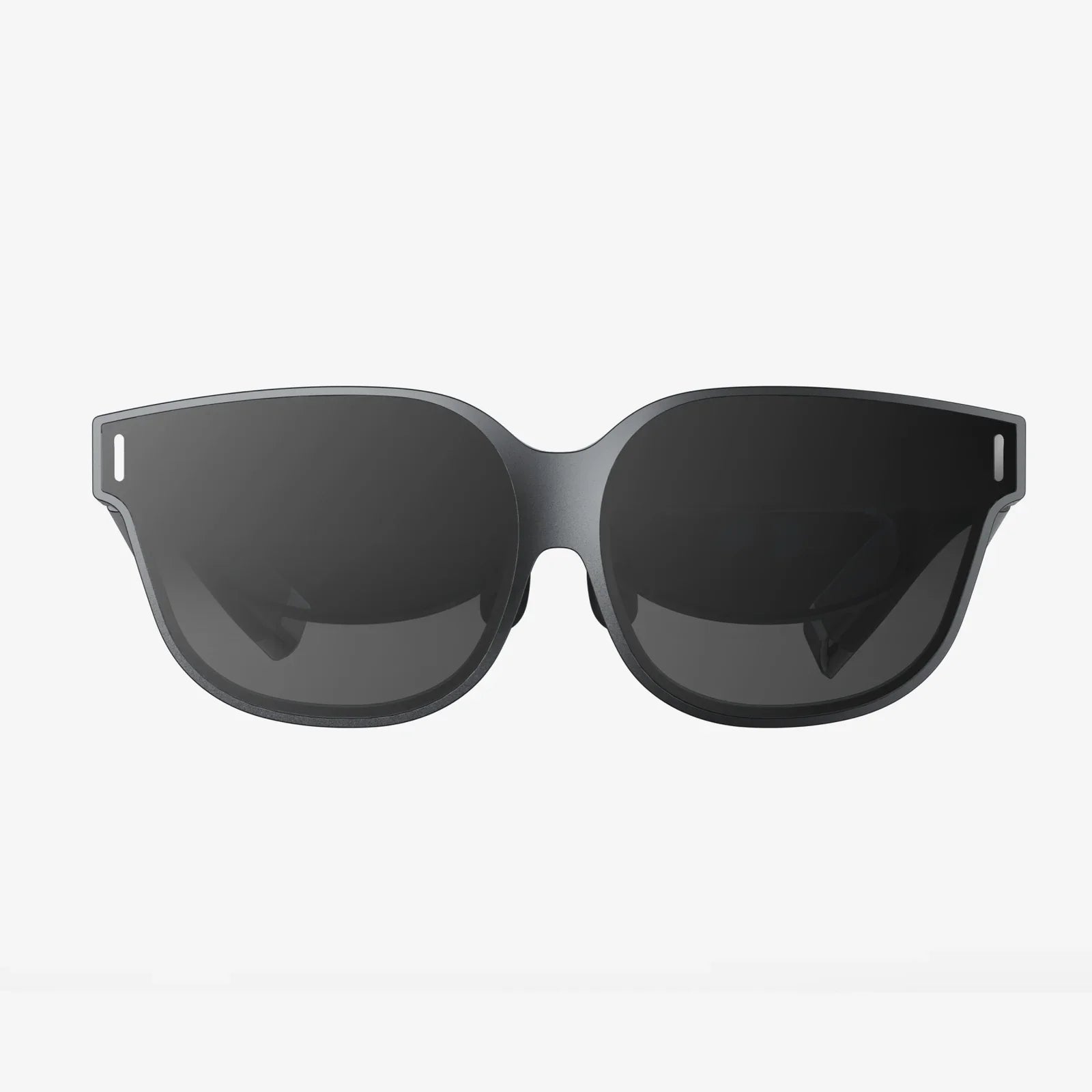
Smart glasses represent the next great wearable frontier. Development moves from designing for a tiny rectangle to designing for the entire world. This introduces concepts like spatial computing, persistent digital objects anchored in physical space, and gesture-based or gaze-based input. The challenges of battery life, processing power, and thermal management become even more extreme, but the potential for utility is staggering—from navigation arrows painted onto the street to repair instructions overlaid on a broken engine.
Future wearables will move beyond tracking steps and heart rate to measuring advanced biomarkers like cortisol levels, blood glucose, and blood pressure. This will require even more sophisticated sensor fusion and AI-driven analysis. Developers will transition from building simple dashboards to creating systems that can provide genuine health insights and early warnings, partnering directly with medical professionals and regulatory bodies like the FDA. The stakes, and the responsibility, will be higher than ever.
The wearable will not exist in isolation. It will be the most personal node in a vast network of devices—phones, laptops, cars, and smart home products. The development experience will be about creating a seamless flow of information and context across this ecosystem. Your glasses might show you a notification that appeared on your phone; your smart ring might automatically unlock your laptop; your car might adjust its climate control based on your core body temperature. Developing for this interconnected future requires a systems-thinking approach on a grand scale.
The true reward of developing for wearables lies in this unique convergence of constraints and intimacy. It’s a practice that forces elegance through limitation, that demands a deeper respect for user attention and battery life, and that offers a direct conduit to enhancing human well-being. It’s a frustrating, humbling, and perpetually evolving craft, but for those who master its unique language, the opportunity to build the future of personal computing is quite literally at their fingertips.