


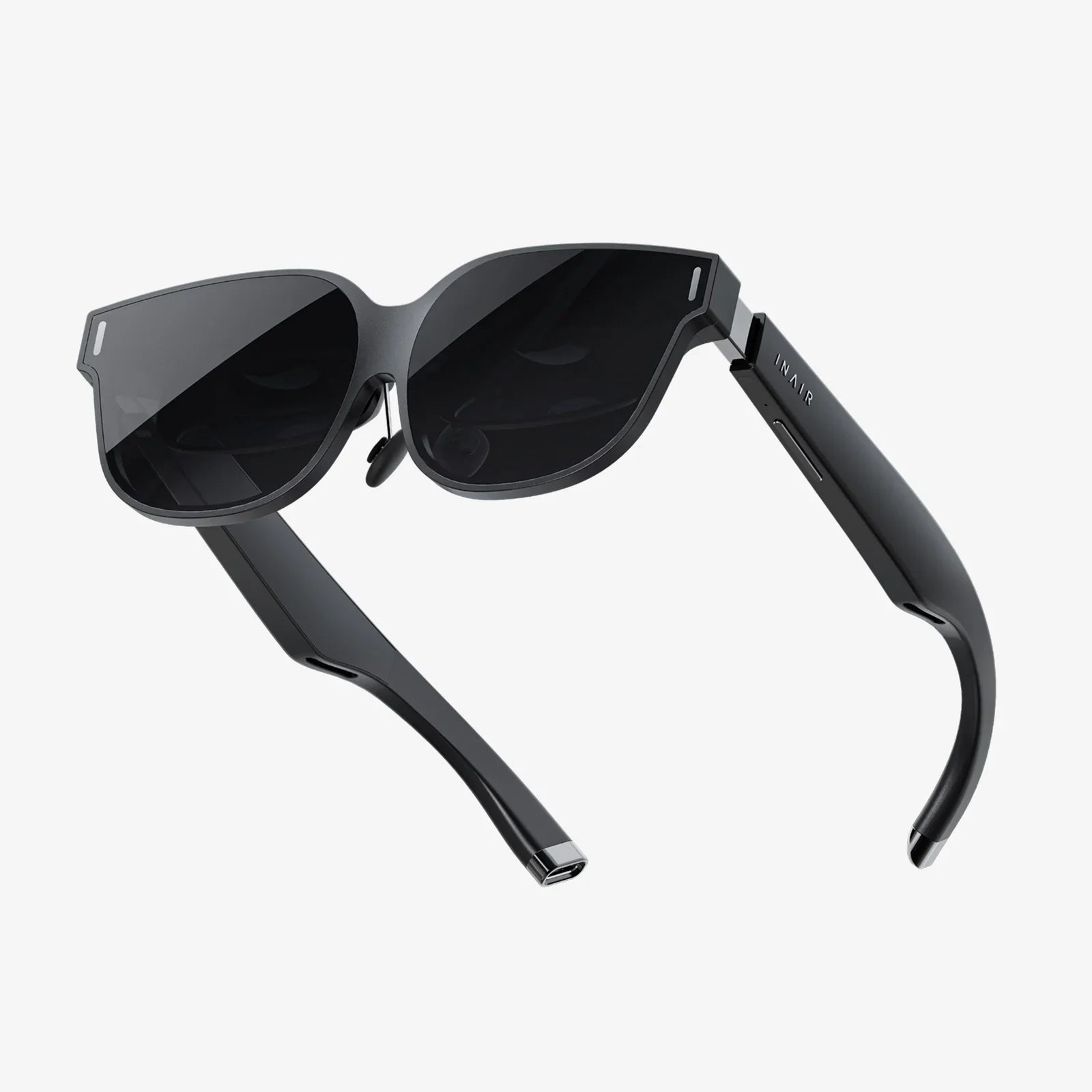
- by wangfred
Explain Augmented Reality: The Digital Layer Transforming Our World
- by wangfred
Imagine a world where the line between the digital and the physical blurs into irrelevance, where information is not something you search for but something that appears contextually in your field of vision, and where your environment becomes an interactive canvas. This is not the distant future; it is the burgeoning present, powered by a revolutionary technology known as augmented reality. It’s a concept that promises to fundamentally alter how we work, learn, play, and connect, and understanding it is the first step into this new, enhanced dimension of human experience.
At its simplest, augmented reality (AR) is a technology that overlays computer-generated perceptual information onto the real world. Unlike virtual reality (VR), which creates a completely artificial environment, AR uses the existing environment and adds digital layers on top of it. This synthesis creates a composite view that augments the real world with digital details, such as images, text, 3D models, animations, and videos. The key differentiator is that AR enhances reality rather than replacing it. It allows users to maintain a presence in their physical surroundings while interacting with virtual objects, making the experience more intuitive and contextually relevant.
While AR feels like a modern innovation, its conceptual roots are surprisingly deep. The term "augmented reality" is believed to have been coined in 1990 by Boeing researcher Tom Caudell, who developed a head-mounted display system to guide workers through the complex process of assembling aircraft wiring harnesses. However, the idea dates back further. In 1968, computer scientist Ivan Sutherland created the "Sword of Damocles," a head-mounted display system so primitive and heavy it had to be suspended from the ceiling, yet it laid the foundational vision for both AR and VR. The subsequent decades saw incremental advancements in tracking, display, and computing power, but it was the proliferation of powerful smartphones in the late 2000s that truly democratized AR, bringing it out of research labs and into the pockets of billions.
For an AR experience to feel seamless and magical, it relies on a sophisticated interplay of hardware and software components working in concert.
An AR system must first understand its environment. This is achieved through a suite of sensors, primarily cameras, which act as the system's eyes. But vision alone is not enough. Advanced systems incorporate a range of other sensors:
The raw data from the sensors is meaningless without interpretation. This is where the "brain" of the operation comes in. Powerful processors run complex algorithms for:
Finally, the fused reality must be presented to the user. This is done through various display technologies, each with its own advantages:
The true power of AR is revealed not in its technology, but in its transformative applications across nearly every industry.
AR is solving one of online shopping's biggest drawbacks: the inability to try before you buy. Customers can now use their smartphones to see how a new sofa would look in their living room, accurately scaled to the room's dimensions. They can virtually try on glasses, makeup, or even clothes, dramatically reducing return rates and increasing consumer confidence. In physical stores, AR can bring products to life, showing additional information, reviews, or demonstrations when a customer points their phone at an item.
AR turns abstract concepts into tangible, interactive experiences. Instead of reading about the solar system, students can have planets orbit around them in their classroom. Medical students can practice complex surgical procedures on detailed, interactive 3D models of the human body without risk. Field technicians can receive real-time, hands-on guidance with complex machinery, with digital arrows and instructions overlaid directly onto the equipment they are repairing, drastically reducing errors and training time.
From concept to assembly, AR is streamlining design and production. Designers can visualize and interact with full-scale 3D prototypes long before a physical model is built, making iterative changes in real-time. On the factory floor, assembly line workers can see step-by-step instructions overlaid on their workspace, highlighting which part to pick up and exactly where it needs to go, improving efficiency and reducing training overhead.
Beyond training, AR has direct patient applications. Surgeons can use head-mounted displays to see critical patient data, like heart rate or a 3D model of a tumor, directly in their field of view during an operation without looking away at a monitor. It can also assist in incredibly precise procedures, such as vein detection for drawing blood or overlaying surgical plans onto a patient's body.
Forget looking down at a blue dot on a map. AR navigation apps overlay giant arrows and directions onto the live view from your camera, showing you exactly which way to walk in the real world. This can be used indoors, in complex venues like airports and museums, or outdoors for city exploration, making it impossible to get lost.
Despite its immense potential, the path to ubiquitous AR is not without significant hurdles.
For AR to become truly seamless, several technical barriers must be overcome. Battery life remains a major constraint for mobile and wearable devices, as the constant sensing and rendering are incredibly power-intensive. Display technology needs to advance to become lighter, more comfortable, and offer a wider field of view with higher resolution. Finally, achieving robust and accurate environmental understanding in all lighting and weather conditions is an ongoing challenge for computer vision algorithms.
As digital content blends with our physical reality, new social questions emerge. How do we prevent digital spam or virtual graffiti from cluttering our world? The concept of attention is also at stake; always-available information could lead to increased distraction and a further disconnection from immediate physical surroundings. Privacy is perhaps the most pressing concern. AR systems, by their very nature, are constantly scanning and analyzing their environment, which could lead to unprecedented levels of data collection about our lives, homes, and behaviors.
Walking around with a headset that partially obscures your vision raises obvious safety concerns, particularly in busy urban environments or while driving. Social acceptance is another hurdle; while earbuds are now ubiquitous, wearing computer glasses on your face is a more significant social leap that will require time and elegant, non-intrusive design to overcome.
The evolution of AR is steadily progressing towards a future where the technology becomes as invisible and indispensable as the smartphone is today. We are moving towards sleek, socially acceptable glasses that will offer all-day battery life and a always-on digital layer of information. This will be powered by a convergence of technologies: 5G and later 6G networks will provide the high-speed, low-latency connectivity needed for cloud processing, while advancements in AI will make environmental understanding and interaction more natural and intuitive. We are heading towards a world of the spatial web, where information is anchored to places and objects, forever changing how we access knowledge and interact with our environment.
The journey into this augmented world is already underway, transforming everything from how we shop for a new couch to how a surgeon prepares for a life-saving operation. It’s a silent revolution, not of replacing what is real, but of enriching it, offering a new lens through which to see and interact with the limitless potential of the world around us. The screen is fading, and the world itself is becoming the interface—are you ready to look up and see what’s possible?
Share:
AR VR Marketing Trends 2025: The Future of Immersive Customer Engagement
Best AR VR Glasses 2025: The Ultimate Guide to the Future of Immersion