


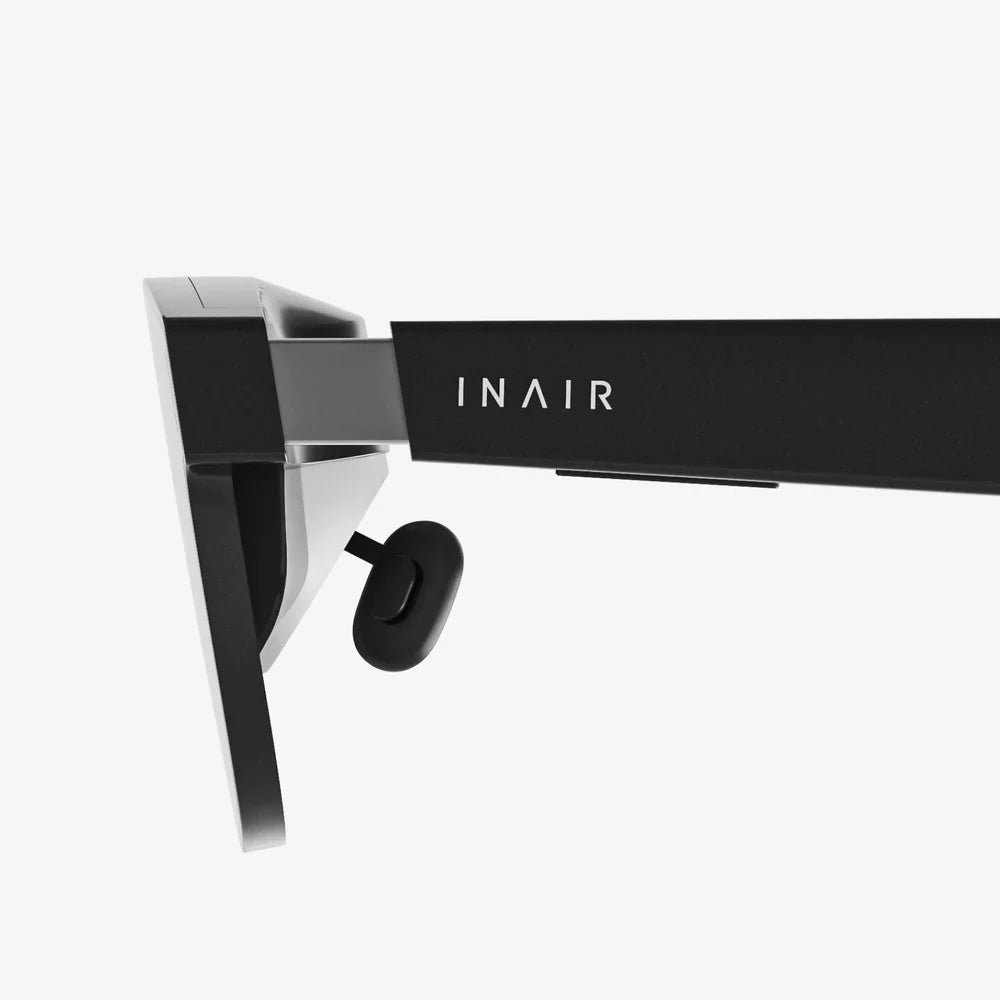
Imagine a world where the line between the digital and the physical isn't just blurred—it's erased. Where you can learn, work, create, and connect in environments limited only by imagination, not by geography or physics. This is the promise held within the expansive and often misunderstood concept of extended reality. It’s a term you’ve likely heard, but its full depth and potential extend far beyond the hype, representing a fundamental shift in how we will interact with information and with each other. To truly grasp the future unfolding before us, we must start with a clear and comprehensive extended reality definition.
The Core Components of the XR Spectrum
Extended Reality (XR) is not a single technology but an umbrella term that encompasses all real-and-virtual combined environments and human-machine interactions generated by computer technology and wearables. It includes representative forms such as Augmented Reality (AR), Virtual Reality (VR), and Mixed Reality (MR), and the areas interpolated among them. The key to the extended reality definition is the concept of a virtuality continuum, a spectrum that ranges from the completely real environment to a fully virtual one.
Augmented Reality (AR)
Augmented Reality overlays digital information—images, text, 3D models, animations—onto the user's view of the real world. The primary goal of AR is to enhance the physical environment with contextual, computer-generated perceptual information. Users remain grounded in their actual surroundings while digital elements are composited onto their field of view, typically through device screens like smartphones, tablets, or, more effectively, through transparent glasses or lenses. A common example is using a mobile application to see how a piece of furniture would look in your living room before purchasing it. The environment is real, but it is augmented with useful digital data.
Virtual Reality (VR)
At the opposite end of the spectrum lies Virtual Reality. VR immerses the user in a completely computer-generated simulation, effectively replacing the real world. By wearing a head-mounted display (HMD) that blocks out the physical environment, users are transported to a digital realm where they can look around, move, and sometimes interact with the virtual world using motion-tracking controllers. This total immersion is what defines the VR experience, making it ideal for applications like flight simulators for pilot training, deep-space exploration for scientists, or fully immersive gaming experiences that feel tangibly real.
Mixed Reality (MR)
Mixed Reality is often considered the most advanced and least understood point on the spectrum. It doesn't just overlay digital content (like AR) but anchors that content to the real world, allowing for real-time interaction between the physical and the digital. In a true MR experience, a digital object can be placed behind a physical couch, and as the user moves, the perspective on that object changes exactly as it would for a real object. It understands the geometry of the real world. This requires advanced sensors, cameras, and processing power to map the environment and blend the realities seamlessly. MR represents the next step in the evolution of interactive computing, where holograms and digital twins become part of our daily workflow.
The Technology Powering the XR Revolution
Understanding the extended reality definition requires a look under the hood at the converging technologies that make it possible. These systems are marvels of modern engineering, combining advances in several fields.
- Sensors and Cameras: These are the eyes of an XR device. A suite of cameras, LiDAR scanners, depth sensors, and infrared sensors work in concert to understand the user's environment, track the position of their head and hands (a process called inside-out tracking), and map the physical space in 3D. This environmental understanding is crucial for placing digital objects convincingly and for enabling safe movement in VR.
- Processing Power: The immense amount of data from sensors must be processed in milliseconds to maintain immersion and avoid user discomfort like motion sickness. This requires incredibly powerful processors, often with dedicated chips for computer vision tasks. While some systems are tethered to powerful external computers, the industry trend is toward standalone, untethered devices with onboard processing capabilities rivaling modern smartphones.
- Displays and Optics: The window into these new worlds is the display. For VR, high-resolution, fast-refresh-rate displays are housed inside headsets with sophisticated lenses that focus the image for the user's eyes. For AR and MR, the challenge is different: projecting digital images onto transparent lenses so they appear to exist in the real world. Technologies like waveguides and micro-LEDs are at the forefront of making these displays brighter, sharper, and more energy-efficient.
- Haptics and Feedback: True immersion engages more than just sight and sound. Haptic technology provides tactile feedback, simulating the sense of touch. This can range from simple vibrations in controllers to advanced gloves or full-body suits that can simulate pressure, texture, and even temperature, closing the loop on the illusion of physical presence in a digital space.
Transforming Industries: The Practical Applications of XR
The value of XR extends far beyond entertainment. Its ability to visualize the invisible, simulate the expensive or dangerous, and connect the remote is revolutionizing nearly every sector.
Healthcare and Medicine
In healthcare, XR is saving lives and improving outcomes. Surgeons use AR to overlay CT scans and MRI data directly onto a patient's body during procedures, providing x-ray vision to guide their incisions with unparalleled precision. Medical students use VR to practice complex surgeries in a risk-free environment, and VR exposure therapy is proving highly effective in treating PTSD, phobias, and anxiety disorders by allowing patients to confront triggers in a controlled, safe setting.
Education and Training
XR turns learning from a passive activity into an active experience. Instead of reading about ancient Rome, students can take a VR field trip to walk its streets. Mechanics in training can learn to repair a complex engine by following AR instructions overlaid on the physical machinery, highlighting each part and step. This "see-it, do-it" methodology drastically improves knowledge retention and skill acquisition, making training faster, safer, and more effective.
Enterprise and Manufacturing
From design to maintenance, XR is streamlining industrial processes. Engineers and designers use MR to collaborate on 3D holographic prototypes, making changes in real-time without the cost of physical models. Remote experts can see what a field technician sees through AR glasses and annotate their view to guide them through a repair, eliminating travel time and costs. This not only boosts efficiency but also empowers a distributed workforce.
Retail and Remote Work
The retail experience is being reimagined with XR. Customers can virtually try on clothes, preview makeup, or visualize products in their home before buying. In the realm of remote work, VR meeting spaces offer a powerful alternative to video calls, recreating the presence and serendipity of in-person collaboration through shared virtual whiteboards and immersive environments, combating the isolation of distributed teams.
Navigating the Challenges and Ethical Considerations
As with any transformative technology, the path forward for XR is not without significant hurdles and profound ethical questions that society must address.
- Privacy and Data Security: XR devices are data collection powerhouses. They don't just track what you click; they map the geometry of your home, record your gestures, eye movements, and even your biometric responses. This creates an unprecedented treasure trove of intimate personal data. The question of who owns this data, how it is stored, and how it might be used (or misused) for advertising, surveillance, or social scoring is paramount.
- User Safety and Health: Prolonged use can lead to physical side effects like eye strain, simulator sickness (cybersickness), and disorientation. There are also concerns about psychological effects, such as reality blurring, where users struggle to distinguish between virtual and real experiences, or the potential for addiction to curated virtual worlds. Establishing healthy usage guidelines and ethical design principles is critical.
- The Digital Divide and Accessibility: High-quality XR hardware remains expensive, potentially creating a new dimension of inequality between those who can afford access to these powerful experiences and those who cannot. Furthermore, ensuring these technologies are accessible to people with different physical abilities is a major design challenge that must be prioritized to avoid exclusion.
- Misinformation and Reality Manipulation: If AR can overlay anything onto our view of the world, it also has the potential to hide or alter reality. The technology could be weaponized to spread hyper-realistic misinformation, create deepfake environments, or manipulate perceptions in subtle and dangerous ways, challenging our very notion of shared reality.
The Future Horizon: Where is XR Heading?
The current state of XR is impressive, but it is merely the foundation for a far more integrated future. We are moving toward devices that are socially acceptable, all-day wearables—think lightweight glasses rather than bulky headsets. The convergence of XR with Artificial Intelligence (AI) and 5G/6G connectivity will unlock new capabilities. AI will power more intelligent and context-aware digital assistants and more realistic avatars, while high-bandwidth, low-latency networks will enable complex cloud rendering, making high-fidelity experiences available on lightweight devices. The ultimate goal is the concept of the metaverse—a persistent, networked, and interoperable universe of experiences—which will be primarily accessed through XR interfaces. This evolution will see XR cease to be a distinct device we put on and take off, and instead become a seamless layer integrated into our perception of reality itself.
The journey into the spatial computing era is already underway, and its trajectory is pointing toward a world where our digital and physical lives are inextricably linked. The extended reality definition is not a static entry in a tech dictionary; it is a living, evolving blueprint for the next platform of human experience. The possibilities are as limitless as our collective imagination, promising to redefine everything from how we perform surgery to how we tell stories, connect with loved ones, and understand the universe around us. The boundary is dissolving, and what emerges on the other side will be nothing short of a new reality.
Share:
Cheap Internet Glasses: A Clear Vision for the Modern Consumer
Smart Glasses Mirror Phone Screen: The Ultimate Guide to Your Personal Heads-Up Display