


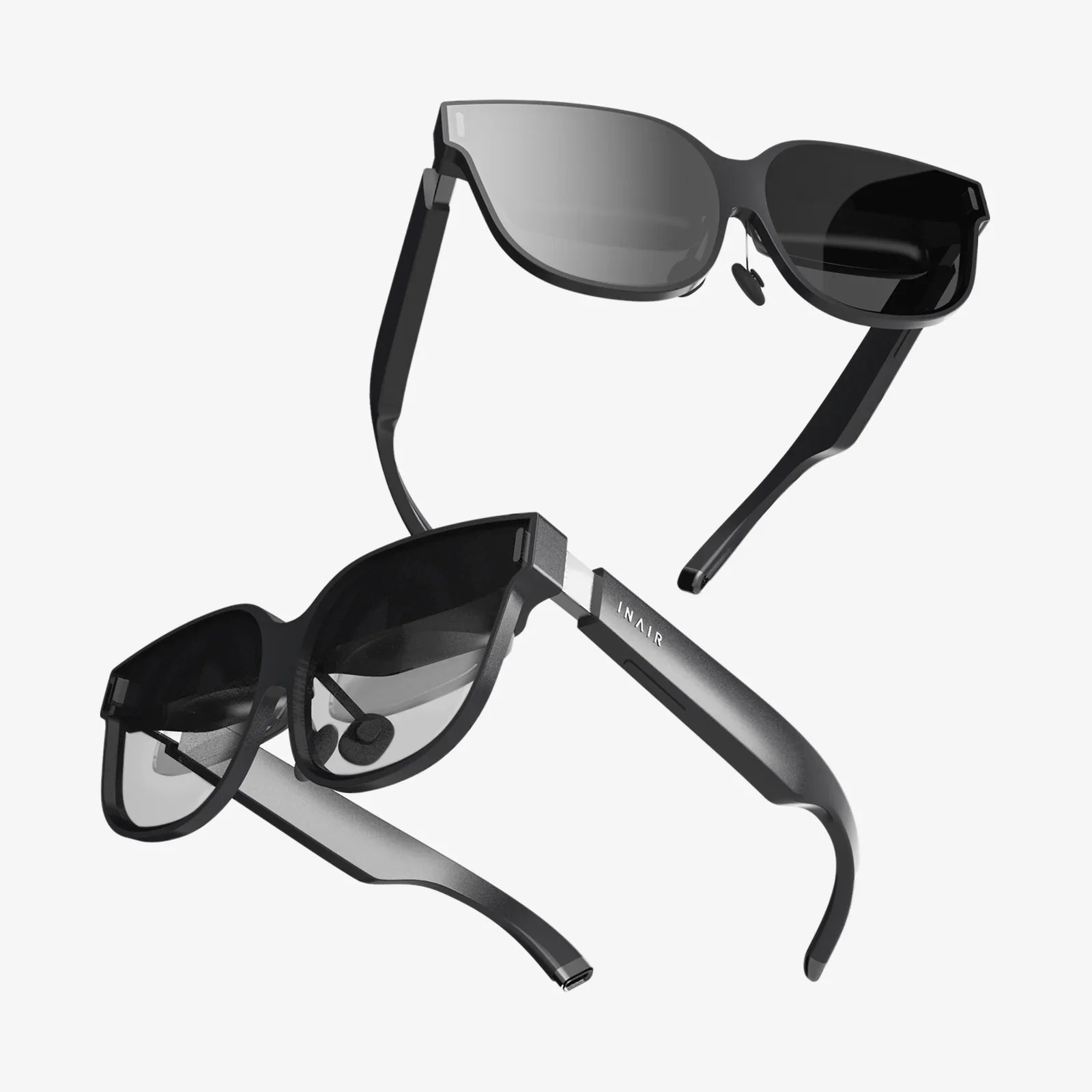
Imagine a world where the digital and the physical are no longer separate realms, where you can learn, work, create, and connect in ways previously confined to the pages of a sci-fi novel. This is the promise, and increasingly the reality, ushered in by the rapid evolution of extended reality devices. This technology is not merely a new gadget on the shelf; it is a fundamental shift in how we interact with information and with each other, poised to dismantle the barriers of screens and distance. The journey into this blended world is already beginning, and it promises to be more transformative than anyone could have predicted.
The XR Spectrum: Demystifying the Terminology
Before diving into the applications and implications, it's crucial to understand the landscape. "Extended Reality" or XR is an umbrella term that encompasses several distinct but related technologies.
Virtual Reality (VR) offers a fully immersive, digital experience. By wearing a headset, users are transported to a completely computer-generated environment, entirely replacing their field of vision and, with advanced audio, their hearing. The real world is shut out, allowing for deep immersion in simulated settings, from the depths of the ocean to the surface of Mars. Interaction within this space is typically achieved through handheld controllers or, in more advanced systems, hand-tracking technology.
Augmented Reality (AR), by contrast, overlays digital information onto the user's view of the physical world. Rather than replacing reality, it enhances it. Think of popular mobile games that placed digital creatures on your sidewalk or navigation apps that project arrows onto the live video feed of the street ahead. The key differentiator for dedicated AR devices, often smart glasses, is that this overlay is seamless and persistent within the user's natural field of view, moving beyond the confines of a smartphone screen.
Mixed Reality (MR) is often considered a more advanced subset of AR. While AR simply overlays data, MR involves digital objects that can interact with and be anchored to the real world. A virtual character might jump onto your real coffee table, or a digital schematic might be pinned to a physical machine, remaining in place as you walk around it. This requires a sophisticated understanding of the user's environment through sensors and cameras, creating a cohesive blend where physical and digital elements coexist and interact in real-time.
These technologies exist on a continuum, known as the Virtuality Continuum, with the completely real environment at one end and a fully virtual one at the other. Extended reality devices are the hardware that enables us to travel anywhere along this spectrum.
Beyond Gaming: The Industrial and Enterprise Revolution
While consumer entertainment is a significant driver, the most profound and immediate impact of extended reality devices is occurring in industrial and enterprise settings. Here, the return on investment is clear and compelling, revolutionizing long-established processes.
Transforming Design and Prototyping
In fields like automotive design, architecture, and aerospace, XR is fundamentally changing the design process. Instead of viewing blueprints on a 2D screen or building expensive physical prototypes, engineers and designers can step inside a full-scale, 1:1 model of their creation. They can walk around a virtual car, examining the ergonomics of the interior, checking sightlines, and identifying potential design flaws long before any metal is cut. This not only saves immense amounts of time and money but also fosters more creative and iterative design thinking.
Supercharging Manufacturing and Maintenance
On the factory floor and in the field, AR is becoming an indispensable tool. Technicians performing complex repairs or assemblies can wear smart glasses that project step-by-step instructions, diagrams, and safety warnings directly into their line of sight. This allows them to work hands-free, reduces errors, and dramatically shortens training times for new employees. A veteran expert located thousands of miles away can see what the on-site technician sees and provide remote guidance, annotating the real-world view with digital arrows and notes. This "see-what-I-see" capability is breaking down geographical barriers to expertise.
Revolutionizing Healthcare and Medicine
The applications in medicine are nothing short of revolutionary. Surgeons are using AR to visualize a patient's anatomy—such as CT scans or MRI data—precisely overlaid on their body during procedures, effectively giving them "X-ray vision." This enhances precision and improves outcomes. Medical students are using VR to practice complex surgeries in a risk-free simulated environment, gaining valuable muscle memory and procedural knowledge. Furthermore, VR is being successfully deployed for pain management, physical rehabilitation, and treating phobias and PTSD through controlled exposure therapy.
The Social and Experiential Shift: New Ways to Connect and Learn
The potential of extended reality devices to reshape human interaction and experiential learning is vast, moving us towards a more embodied internet often referred to as the "metaverse."
The Future of Remote Collaboration and Social Connection
Video conferencing kept the world running during global lockdowns, but it is a poor substitute for the nuance of in-person interaction. XR promises the next evolution: presence. Instead of being a face in a grid on a screen, colleagues from across the globe can meet as lifelike avatars in a shared virtual boardroom, or even more powerfully, as holograms in your actual physical space. They can interact with 3D data models together, manipulate digital objects, and communicate with body language and spatial audio, creating a sense of shared presence that flat screens cannot replicate. This has the potential to make remote work more collaborative and social connection more profound.
Redefining Education and Training
Education is being transformed from a passive activity into an active, immersive experience. Instead of reading about ancient Rome, history students can take a virtual field trip to walk its streets. Biology students can step inside a human cell to explore its organelles. Trainee mechanics can practice dismantling and reassembling a complex engine virtually before ever touching a real tool. This experiential learning leads to dramatically higher retention rates and a deeper conceptual understanding by engaging multiple senses and creating memorable experiences.
Unlocking New Frontiers in Entertainment and Retail
The entertainment industry is on the cusp of a new creative renaissance. Imagine attending a live concert where your favorite artist performs as a hologram in your living room, or watching a film where you are inside the scene, able to look around freely. Interactive storytelling will place you at the center of the narrative. In retail, AR allows you to visualize how a new sofa will look in your actual living room or how a pair of glasses will look on your face before making a purchase, reducing uncertainty and returns.
Navigating the Challenges: The Roadblocks to Ubiquity
Despite the incredible potential, the path to widespread adoption of extended reality devices is not without significant hurdles. Addressing these challenges is critical for the technology to reach its full potential.
The Hardware Conundrum: Form Factor, Comfort, and Power
For true ubiquity, devices must become smaller, lighter, more comfortable, and less obtrusive. The ideal form factor is a pair of stylish glasses that someone would willingly wear all day, but packing the necessary processing power, battery life, displays, and sensors into that size is a monumental engineering challenge. There is a constant trade-off between performance and portability. Furthermore, issues like motion sickness for some users in VR, and the field of view and visual clarity in AR, are ongoing areas of intense research and development.
The Software and Connectivity Imperative
Powerful hardware is useless without compelling software and content. The ecosystem needs a robust and interoperable platform where developers can create experiences that work across different devices. The concept of the "metaverse" depends on this seamless interoperability. Moreover, processing high-fidelity graphics and streaming complex data in real-time requires immense bandwidth and ultra-low latency, pushing the limits of current 5G and future 6G networks.
The Ethical and Societal Implications: Privacy and the Digital Divide
Perhaps the most profound challenges are ethical. Extended reality devices, by their very nature, are data collection machines. They have cameras and sensors that map your physical environment and, in some cases, track your eye movements, body language, and even biometric responses. This raises enormous privacy concerns. Who owns the data of your living room? How is your attention and emotional data being used? Furthermore, there is a real risk of a new "digital divide" emerging between those who can afford access to these transformative tools and those who cannot, potentially exacerbating existing social and economic inequalities.
Glimpsing the Future: Where Do We Go From Here?
The trajectory of extended reality technology is pointing towards a more seamless and integrated future. We are moving towards devices that are indistinguishable from regular eyewear, with displays projected directly onto the retina for a more natural visual experience. Advances in haptic feedback will allow us to not just see but also feel digital objects. Artificial intelligence will be deeply integrated, acting as a contextual and proactive assistant that understands our environment and our intentions. The line between interacting with a computer and interacting with the world will continue to fade, leading to what pioneers call "ambient computing"—where technology is everywhere yet invisible, woven into the fabric of our daily lives.
The evolution of extended reality devices is not just a story of technological innovation; it is a story about redefining human potential. It’s about a surgeon gaining superhuman sight, a student walking through history, a family feeling together despite being continents apart, and an artist painting in three dimensions. The devices themselves are merely the portals. The real magic lies in the experiences they unlock and the connections they foster. We are standing at the precipice of this new reality, and the first step into this blended world is the one you take right now.
Share:
Can a VR Headset Make You Blind? The Truth About Virtual Reality and Your Vision
Headphones for People Who Wear Glasses: The Ultimate Guide to Uncompromised Comfort