


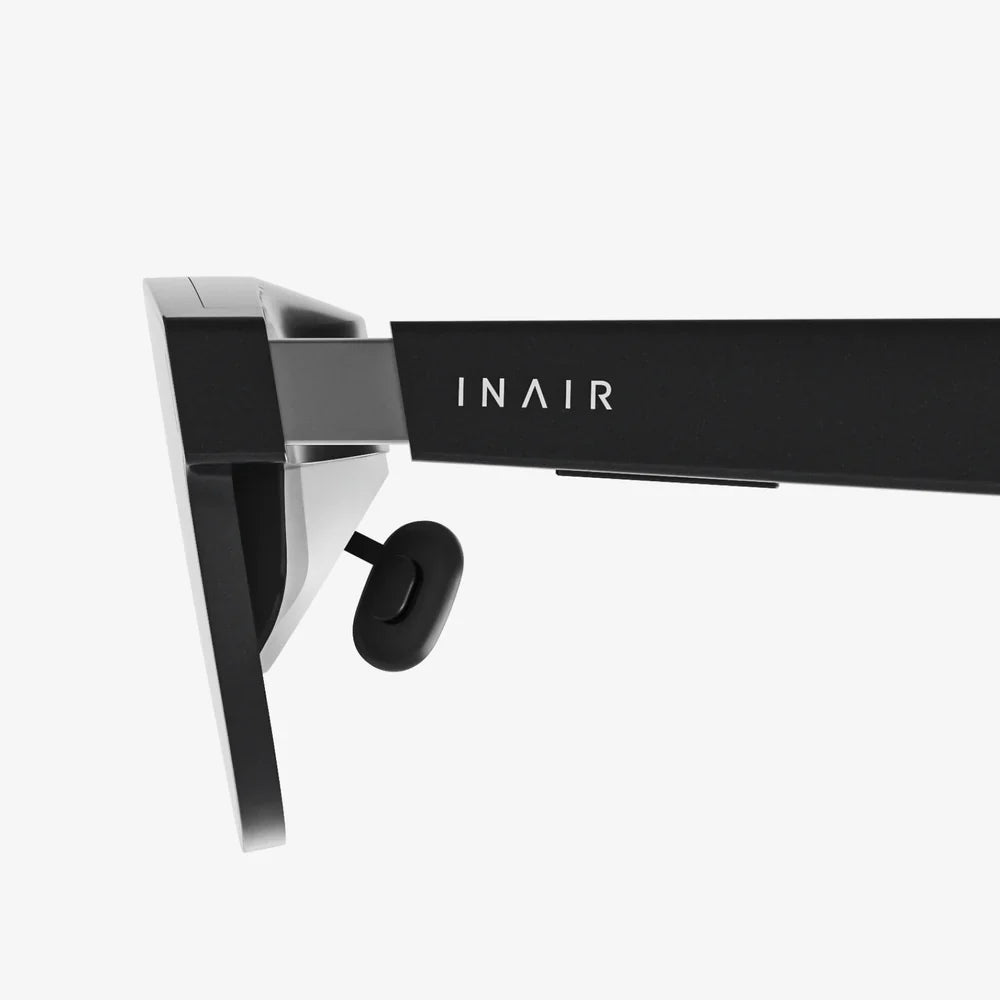
Imagine a world where your digital life doesn’t just live on a flat screen but spills out into your living room, where you can learn by doing, not just by seeing, and where distance is no longer a barrier to shared experience. This is the promise, and increasingly the reality, being delivered by the rapid evolution of extended reality products. These technologies are poised to fundamentally alter the fabric of our daily lives, and the transformation has already begun.
The Spectrum of Experience: More Than Just a Headset
Extended reality is not a single technology but an umbrella term encompassing a spectrum of immersive technologies that blend the physical and virtual worlds. At one end lies Augmented Reality, which overlays digital information—images, text, animations—onto the user's real-world environment. This is often experienced through smartphone cameras or specialized eyewear, enhancing one's immediate surroundings with a layer of interactive data.
Moving further along the spectrum, we encounter Mixed Reality. MR is a significant leap from basic AR. It doesn't just overlay digital content; it anchors it to the physical world, allowing for genuine interaction. A virtual character can sit on your real sofa, and a digital control panel can be fixed to your actual wall. MR understands the geometry of your space, enabling a believable coexistence of real and virtual objects.
At the far end of the spectrum exists Virtual Reality, the most immersive of the three. VR products completely occlude the user's vision, replacing their real-world environment with a fully digital, computer-generated simulation. Through head-mounted displays and motion-tracking controllers, users are transported to entirely new worlds, from the depths of the ocean to the surface of Mars, for work, education, or play.
The Engine Room: The Technology Powering the Illusion
The magic of extended reality products feels like wizardry, but it is underpinned by staggering advancements in several key technological domains.
Sensory Immersion: Sight, Sound, and Touch
Visual fidelity is paramount. High-resolution, high-refresh-rate displays are critical to avoiding the screen-door effect and ensuring visual comfort. Advanced lenses warp and focus the image to create a convincing sense of depth and scale. This is complemented by spatial audio technology, which mimics how sound behaves in the real world. Sounds can come from above, behind, or far away, completing the auditory illusion and providing crucial contextual cues.
Perhaps the next frontier is haptic feedback. While controllers today provide basic vibrations, the future lies in gloves and even full-body suits that can simulate the sensation of touch—the texture of a virtual object, the impact of a virtual raindrop, or the recoil of a virtual tool.
Tracking and Mapping: Knowing Where You Are
For XR to work, the device must understand both the user and their environment. Inside-out tracking uses integrated cameras and sensors on the headset itself to map the room and track the user's head and hand movements in real-time without external sensors. Simultaneous Localization and Mapping algorithms continuously scan the environment, creating a 3D mesh that allows digital objects to be placed persistently and occluded correctly by real-world furniture.
Computational Power: The Invisible Brain
Rendering complex, interactive 3D worlds in real-time requires immense processing power. This is handled by increasingly powerful mobile processors for standalone devices and by high-end computing systems for tethered experiences. The advent of cloud-based rendering promises to offload this heavy computation to remote servers, potentially making photorealistic XR experiences accessible on lighter, more affordable hardware.
Transforming Industries: The Practical Revolution
While entertainment captures the public imagination, the most profound impact of extended reality products is occurring in enterprise and professional fields.
Revolutionizing Education and Training
XR creates unparalleled opportunities for experiential learning. Medical students can practice complex surgical procedures on virtual patients, making mistakes without consequence. Mechanics can train on virtual engines, and engineers can walk through full-scale 3D models of buildings before construction begins. This "learning by doing" in a safe, repeatable, and scalable environment dramatically improves knowledge retention and skill acquisition.
Reimagining Design and Manufacturing
In architecture, engineering, and construction, XR is transforming the design process. Instead of looking at blueprints on a screen, architects and clients can walk through a life-size model of a building, assessing sightlines, lighting, and space. On the factory floor, assembly line workers can have digital instructions overlaid directly onto the machinery they are assembling, reducing errors and speeding up production. Remote experts can see what a field technician sees and annotate their real-world view to guide them through a repair.
Enhancing Healthcare and Therapy
The applications in healthcare are vast and life-changing. Surgeons use AR to visualize patient scan data like MRI overlays directly on the surgical site, improving precision. VR is proving highly effective in physical therapy, turning repetitive exercises into engaging games, and in mental health, it is used for exposure therapy to treat phobias and PTSD in a controlled, safe setting.
Redefining Retail and Remote Work
Consumers can use AR to see how furniture would look in their home or how clothes would fit before purchasing. In the workplace, XR is the foundation for the vision of the metaverse—a persistent network of shared virtual spaces for collaboration. Teams distributed across the globe can meet around a virtual prototype as if they were in the same room, manipulating 3D data with their hands, fostering a new level of presence and collaboration that video calls cannot match.
Navigating the Challenges: The Road Ahead
For all its potential, the widespread adoption of extended reality products faces significant hurdles that must be addressed.
The Hardware Conundrum: Comfort, Cost, and Accessibility
For VR to become a all-day productivity tool, headsets need to become smaller, lighter, more comfortable, and offer all-day battery life. The "codec smile"—the mark left on a user's face after prolonged use—must become a relic of the past. Furthermore, the cost of high-end hardware remains a barrier to mass adoption. Achieving a compelling experience at a consumer-friendly price point is the industry's holy grail.
The Social and Psychological Dimension
As we spend more time in virtual spaces, questions about societal impact become urgent. How does prolonged immersion affect human psychology, social skills, and our relationship with the physical world? Issues of privacy are also paramount; these devices collect unprecedented amounts of biometric and spatial data, raising serious concerns about who has access to this information and how it is used. Establishing robust ethical frameworks and regulations is not optional; it is essential.
The Quest for a Killer App and Interoperability
While many compelling professional applications exist, the consumer market still awaits a definitive "killer app" that would drive universal adoption. Furthermore, for the vision of an open metaverse to become reality, different platforms and virtual worlds must become interoperable. Users will expect to move their digital identities and assets seamlessly across experiences, a challenge that requires industry-wide cooperation and new technical standards.
The Future is Blended: What Comes Next?
The trajectory of extended reality points toward a future where the technology becomes increasingly invisible and integrated into our lives. We are moving toward sleek, socially acceptable eyewear that can switch between AR transparency and VR immersion. The convergence with artificial intelligence will make these interfaces more intuitive, anticipating our needs and managing digital information on our behalf. Brain-computer interfaces, though far off, hint at a ultimate future where we will control digital worlds with our thoughts.
This evolution will gradually dissolve the hard line between our digital and physical existences. We won't "put on" the internet; we will simply exist within a digitally augmented world. The potential to enhance human capability, democratize knowledge and experience, and solve complex problems is staggering. It will redefine what it means to work, learn, play, and connect.
The door to this blended reality is now open, offering a glimpse into a future limited only by our imagination. The journey from niche novelty to central pillar of our computing infrastructure is underway, and it promises to be one of the most transformative technological shifts of our lifetime. The question is no longer if this future will arrive, but how quickly we will adapt to its incredible possibilities and profound responsibilities.
Share:
How to Wear Headphones with Glasses: A Complete Guide to Pain-Free Audio
How Old Should You Be to Use a VR Headset: A Guide for Parents