


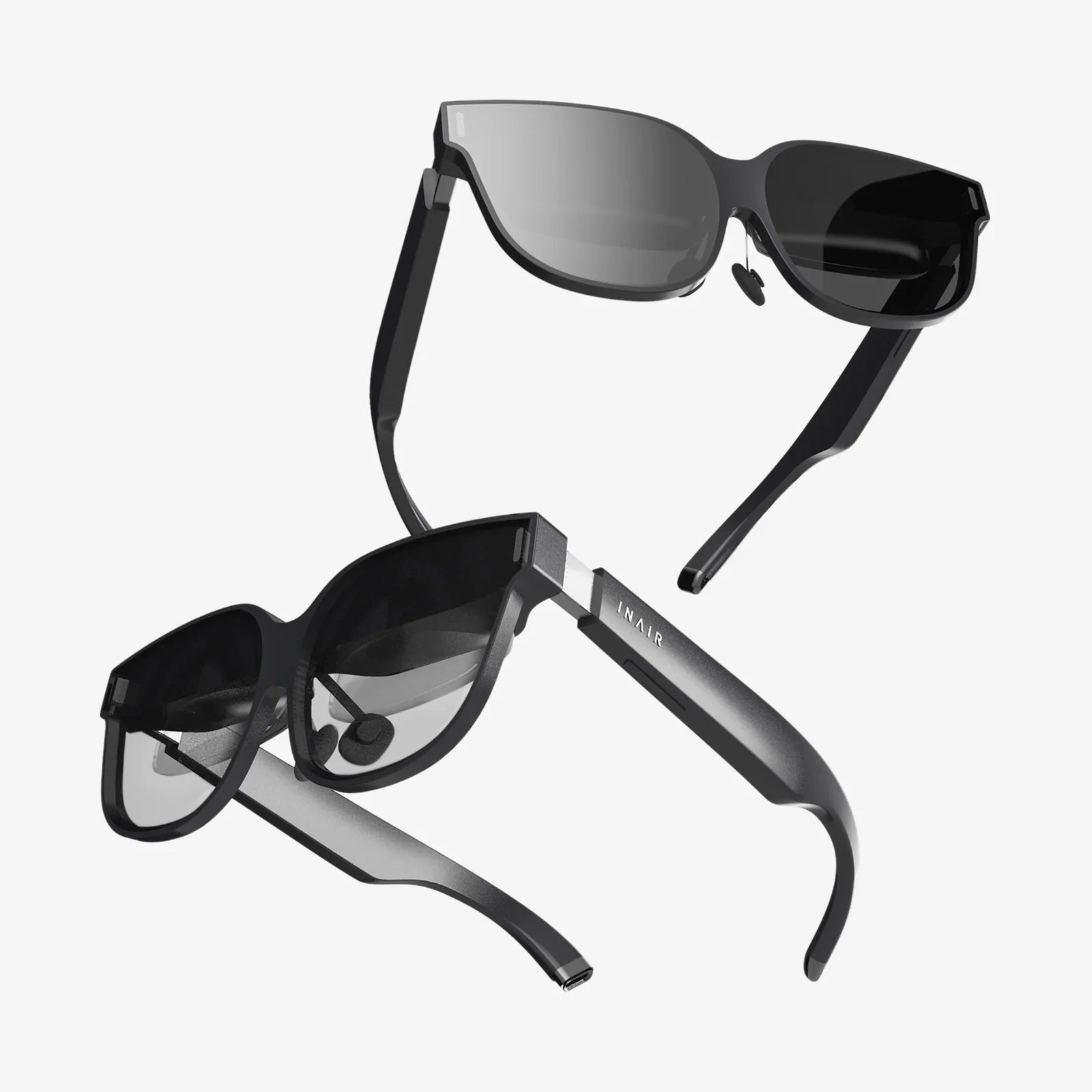
Imagine a world where the line between the digital and the physical isn't just blurred—it's erased. A world where a surgeon in one country can guide a procedure in another through a pair of smart glasses, where a history student can walk through ancient Rome as it once stood, and where a factory technician can see a holographic schematic overlaid onto a malfunctioning machine. This is no longer the stuff of science fiction; it is the burgeoning, dynamic, and rapidly expanding frontier of the extended reality reality market, a technological revolution poised to reshape every facet of our lives.
The Spectrum of Experience: Defining the XR Universe
Before delving into the market forces at play, it's crucial to understand the taxonomy of extended reality. XR is not a single technology but an umbrella term encompassing a spectrum of immersive technologies that blend the physical and virtual worlds.
Virtual Reality (VR): The Complete Immersion
At one end of the spectrum lies Virtual Reality. VR creates a fully digital, computer-generated environment that completely replaces the user's real-world surroundings. By wearing a headset that occludes vision and often incorporates headphones for spatial audio and controllers for interaction, the user is transported into a simulated reality. The primary goal of VR is total immersion, making it the technology of choice for applications like:
- High-fidelity training simulations for pilots, surgeons, and first responders.
- Deeply immersive gaming and entertainment experiences.
- Virtual prototyping and design, allowing engineers to interact with 3D models at scale.
- Therapeutic applications for treating phobias, PTSD, and for physical rehabilitation.
Augmented Reality (AR): The Digital Overlay
On the opposite end of the spectrum is Augmented Reality. Unlike VR, AR does not replace the real world but enhances it by superimposing digital information—images, text, data, 3D models—onto the user's view of their physical environment. This is most commonly experienced today through smartphone cameras or, more powerfully, through transparent glasses or lenses. AR's strength is contextuality, providing relevant information exactly when and where it's needed.
- Industrial maintenance and repair, with technicians seeing step-by-step instructions overlaid on equipment.
- Retail and e-commerce, allowing customers to "try on" clothes or visualize furniture in their home before buying.
- Navigation systems that project directions onto the windshield of a car or onto the street through a phone.
- Interactive marketing and advertising campaigns that bring print media to life.
Mixed Reality (MR): The Seamless Blend
Occupying the middle ground is Mixed Reality. MR is often considered the most advanced form of XR, as it not only overlays digital objects onto the real world but also allows those objects to interact with the physical environment in real-time. In a true MR experience, a digital character can hide behind your real-world sofa, or a virtual control panel can be anchored to your physical wall. This requires sophisticated sensors and cameras to continuously map and understand the geometry and properties of the surrounding space.
Fueling the Fire: Key Drivers of the XR Market Explosion
The extended reality reality market is not growing in a vacuum. Its explosive trajectory is being fueled by a powerful convergence of technological advancements, evolving consumer readiness, and clear enterprise demand.
Technological Advancements: The Hardware Leap
The hardware underpinning XR has undergone a quantum leap in recent years. Early headsets were cumbersome, low-resolution, and often induced nausea. Today, we see:
- Increased Processing Power: The miniaturization of powerful processors, often leveraging advancements from the mobile industry, enables complex rendering and tracking in real-time without being tethered to a powerful computer.
- Higher Resolution Displays: The adoption of micro-OLED and other high-pixel-density screens drastically reduces the "screen door effect," creating sharper and more believable virtual scenes.
- Advanced Tracking and Sensing: Inside-out tracking (where sensors on the headset map the environment without external beacons), eye-tracking, and hand-tracking have become more accurate and affordable, enabling more natural and intuitive interactions.
- 5G Connectivity: The low latency and high bandwidth of 5G networks are critical for cloud-based XR, offloading intensive processing to remote servers and enabling complex, multi-user experiences on lighter, less expensive devices.
The Software and Content Ecosystem
Powerful hardware is useless without compelling software. The maturation of game engines like Unity and Unreal Engine has been a game-changer. These platforms, originally designed for high-end video games, provide developers with the tools to create photorealistic and highly interactive XR experiences with relative efficiency. Furthermore, a robust ecosystem of SDKs (Software Development Kits) and APIs (Application Programming Interfaces) is lowering the barrier to entry for developers, accelerating content creation across industries.
Enterprise Adoption: The ROI Driver
While consumer entertainment grabs headlines, the enterprise sector is currently the most significant driver of the extended reality reality market. Companies are investing heavily in XR because it demonstrates a clear return on investment (ROI).
- Training and Onboarding: XR allows for the creation of risk-free, repeatable, and scalable training scenarios for complex or dangerous tasks. Training airline mechanics on a virtual engine is far safer and cheaper than using a physical one.
- Remote Collaboration and Assistance: Experts can now guide on-site workers remotely through AR annotations, seeing what they see and drawing instructions directly into their field of view. This reduces travel costs and downtime dramatically.
- Design and Prototyping: Automotive and aerospace companies use VR to collaborate on full-scale 3D models of vehicles long before a physical prototype is built, saving millions in development costs.
Transforming Industries: The XR Impact in Action
The transformative potential of XR is being realized across a diverse range of sectors, each finding unique and powerful applications for the technology.
Healthcare: Saving Lives with Immersive Tech
The healthcare industry is embracing XR with remarkable results. Surgeons use AR to visualize patient anatomy, such as CT scans and MRI data, overlaid directly onto the patient during surgery, improving precision and outcomes. Medical students practice complex procedures in VR simulations, gaining muscle memory and confidence without risk to patients. Furthermore, VR is proving highly effective in pain management, physical therapy, and treating mental health conditions like anxiety and phobias through controlled exposure therapy.
Manufacturing and Industrial Sectors
This is perhaps the most mature domain for XR application. From design and assembly to maintenance and logistics, XR is streamlining operations. Workers on a factory floor can use AR glasses to receive picking instructions in a warehouse, instantly locating items and seeing optimal routes. Complex assembly processes are guided by digital work instructions that adapt to the task at hand, reducing errors and improving efficiency. Remote experts can see through the eyes of a field technician to diagnose and solve problems in minutes instead of days.
Retail and E-commerce
XR is fundamentally changing the retail experience, bridging the gap between online and in-store shopping. Augmented Reality apps allow customers to see how a piece of furniture would look and fit in their living room, how a new shade of paint would transform a wall, or how a pair of glasses would look on their face. This "try-before-you-buy" capability reduces purchase hesitation and lowers return rates, creating a more confident and satisfied customer.
Education and Training
Education is being revolutionized by the power of immersion. Instead of reading about the Roman Empire, students can take a virtual field trip through it. Instead of watching a video about cellular biology, they can step inside a human cell and interact with its components. This experiential learning leads to dramatically improved knowledge retention and engagement. Corporate training is similarly being transformed, with employees practicing soft skills, public speaking, or emergency procedures in a safe virtual environment.
Navigating the Challenges: The Roadblocks to Mass Adoption
Despite its immense potential, the extended reality reality market must overcome several significant hurdles before achieving ubiquitous adoption.
- Hardware Limitations: Even with improvements, headsets can still be expensive, bulky, and have limited battery life. Achieving a form factor that is as socially acceptable and comfortable as a pair of everyday glasses remains the ultimate goal.
- User Experience (UX) and Interaction Paradigms: Designing intuitive interfaces for 3D spaces is a new challenge. Input methods are still evolving, and experiences that cause motion sickness or user fatigue remain a problem.
- Content Gap: There is still a need for a broader library of high-quality, enterprise-grade and consumer-grade content that provides sustained value beyond a novelty experience.
- Privacy and Security Concerns: XR devices, with their always-on cameras and microphones, collect unprecedented amounts of sensitive data about a user's environment, behavior, and even biometric responses. Establishing robust data security and privacy frameworks is paramount.
- The Social Dimension: As we spend more time in virtual spaces, questions about social isolation, the definition of reality, and the potential for new forms of addiction and manipulation need to be addressed thoughtfully.
The Future is Spatial: What Lies Ahead for XR
The trajectory of the extended reality reality market points toward a future where the internet evolves from something we look at on a screen to something we are in. This concept of the "spatial web" or "metaverse" envisions a persistent network of interconnected virtual spaces where we will work, socialize, learn, and play.
We can anticipate several key developments:
- The Proliferation of AR Glasses: The eventual shift from smartphones to sleek, powerful AR glasses as our primary computing interface.
- Haptic Feedback and Multisensory Experiences: Technology that allows users to not just see and hear digital content, but to feel it through advanced haptic suits and gloves.
- AI Integration: Artificial Intelligence will be deeply integrated into XR, powering intelligent assistants that understand context and can generate dynamic content in real-time.
- Neural Interfaces: Further into the future, we may see the development of more direct brain-computer interfaces for controlling virtual environments, moving beyond handheld controllers.
The journey is just beginning. The extended reality reality market represents more than just a new product category; it signifies a fundamental shift in how humanity interfaces with information and with each other. It holds the promise of overcoming physical limitations, democratizing expertise, and unlocking new levels of creativity and productivity. The companies, developers, and policymakers who navigate its challenges thoughtfully and ethically will be the ones to shape this next chapter of human experience.
We stand at the precipice of a new dimension, not of science fiction, but of science fact. The tools to build, explore, and profit from this new reality are here today, and they are only getting more powerful. The question is no longer if extended reality will change everything, but how quickly you will choose to step into the world it is creating.
Share:
Best VR for iPhone 11 Pro Max - A Deep Dive into High-Fidelity Mobile Immersion
VR Headset Content: The Digital Frontier of Experience and the Quest for Compelling Narratives