


- by wangfred
Extended Reality Trends 2025: The Blurring Line Between Digital and Physical
- by wangfred
Imagine a world where your morning meeting is held on the surface of Mars, your furniture is perfectly arranged in your living room before you even buy it, and learning a complex surgical procedure involves practicing on a photorealistic, digital twin of a human heart. This is not a distant science fiction fantasy; it is the tangible future being built today, and its arrival is scheduled for 2025. The trajectory of Extended Reality (XR)—an umbrella term encompassing Virtual Reality (VR), Augmented Reality (AR), and Mixed Reality (MR)—is accelerating at an unprecedented rate, driven by breakthroughs in artificial intelligence, miniaturization, and connectivity. The coming year is positioned not as an incremental step, but as a pivotal inflection point where XR will begin its transition from a compelling novelty to an indispensable utility, seamlessly weaving itself into the very fabric of our professional, personal, and social lives. The line between our digital and physical realities is set to dissolve, and the trends emerging now are the blueprints for this new, immersive layer of existence.
If hardware provides the eyes and ears of XR, then Artificial Intelligence is its brain. In 2025, the relationship between AI and XR will evolve from one of support to deep, inseparable symbiosis. This fusion will power the most significant trend: intelligent, context-aware experiences that understand and adapt to their environment and user in real-time.
Gone are the days of pre-scripted, static AR overlays. Next-generation AR applications, powered by on-device neural processing units (NPUs), will use computer vision to continuously scan and interpret the world. They will not just recognize a coffee machine; they will understand its model, its current state, and overlay dynamic, step-by-step instructions for crafting a perfect latte based on the specific beans you just placed next to it. This is contextual intelligence in action—the system synthesizing visual data, user history, and object recognition to provide proactive, hyper-relevant information precisely when and where it is needed.
Furthermore, generative AI models will become the engine for dynamic world-building in VR. Instead of exploring vast, beautiful but static digital environments, users in 2025 will interact with worlds that are alive and responsive. AI non-player characters (NPCs) will possess advanced conversational capabilities and unique personalities, remembering past interactions and evolving their dialogue. Environments will change organically based on user actions, creating truly unique and personalized narratives for education, training, and entertainment. This moves XR from a pre-rendered medium to a living, breathing simulation.
The internet as we know it—a series of pages on a flat screen—is becoming a relic. The trend towards the immersive web, or WebXR, will gain monumental traction in 2025, transforming how we access and interact with information online. Standards like WebXR will mature, allowing users to experience 3D and AR content directly through their web browsers without needing to download dedicated applications.
This democratization of XR will have profound implications. Imagine browsing an e-commerce site and, with a single click, seeing a life-size, 3D model of a new sofa in your actual living room through your phone's camera. Architects will share links to immersive walkthroughs of unbuilt designs, viewable by clients on any device. News articles will be supplemented with AR reconstructions of historical events, unfolding on your kitchen table. This shift to spatial computing—where the digital world is mapped onto the physical one—will make information more intuitive, experiential, and impactful.
This trend is fundamentally about breaking down barriers to entry. The requirement for expensive, specialized hardware will diminish as the smartphone in your pocket and the lightweight glasses on your face become the primary portals to this new layer of digital content. The web will cease to be something we look at and become something we exist within.
A critical hurdle for social and professional XR adoption has been the "uncanny valley" of digital avatars—cartoonish or slightly off-putting representations that fail to convey genuine human emotion and nuance. In 2025, this barrier will crumble. Advances in real-time rendering, facial tracking via standard cameras, and motion capture will enable hyper-realistic avatars that are near-indistinguishable from a video feed.
These avatars will do more than just look real; they will feel real. Sophisticated emotion recognition algorithms will track micro-expressions and vocal tonality, translating them into subtle facial animations for your digital self. This is paramount for achieving true social presence—the feeling that you are actually in a room with another person, not just their digital proxy. The applications are vast:
This trend moves the focus from simply communicating to genuinely connecting, making digital interactions rich, empathetic, and human.
While consumer applications capture headlines, the most robust and immediate adoption of XR is happening within the enterprise sector. By 2025, XR will be a standard tool in the corporate toolkit, moving from pilot programs to fully integrated, mission-critical systems that deliver measurable ROI.
The trends here are focused on efficiency, safety, and scalability. Digital Twin technology will become ubiquitous, allowing engineers and designers to interact with and stress-test full-scale, photorealistic models of everything from jet engines to entire factory production lines before a single physical component is built. This enables rapid prototyping, predictive maintenance, and remote expert oversight, drastically reducing costs and development time.
Furthermore, XR-based training will become the gold standard for high-stakes industries. Surgeons will practice complex procedures on virtual patients. Field technicians will receive real-time, hands-free AR guidance to repair malfunctioning equipment, with instructions overlaid directly onto the machinery. Warehouse workers will be guided by AR systems that optimize picking routes and reduce errors. These applications are not about entertainment; they are about enhancing human capability, improving safety, and driving operational excellence at a scale previously unimaginable.
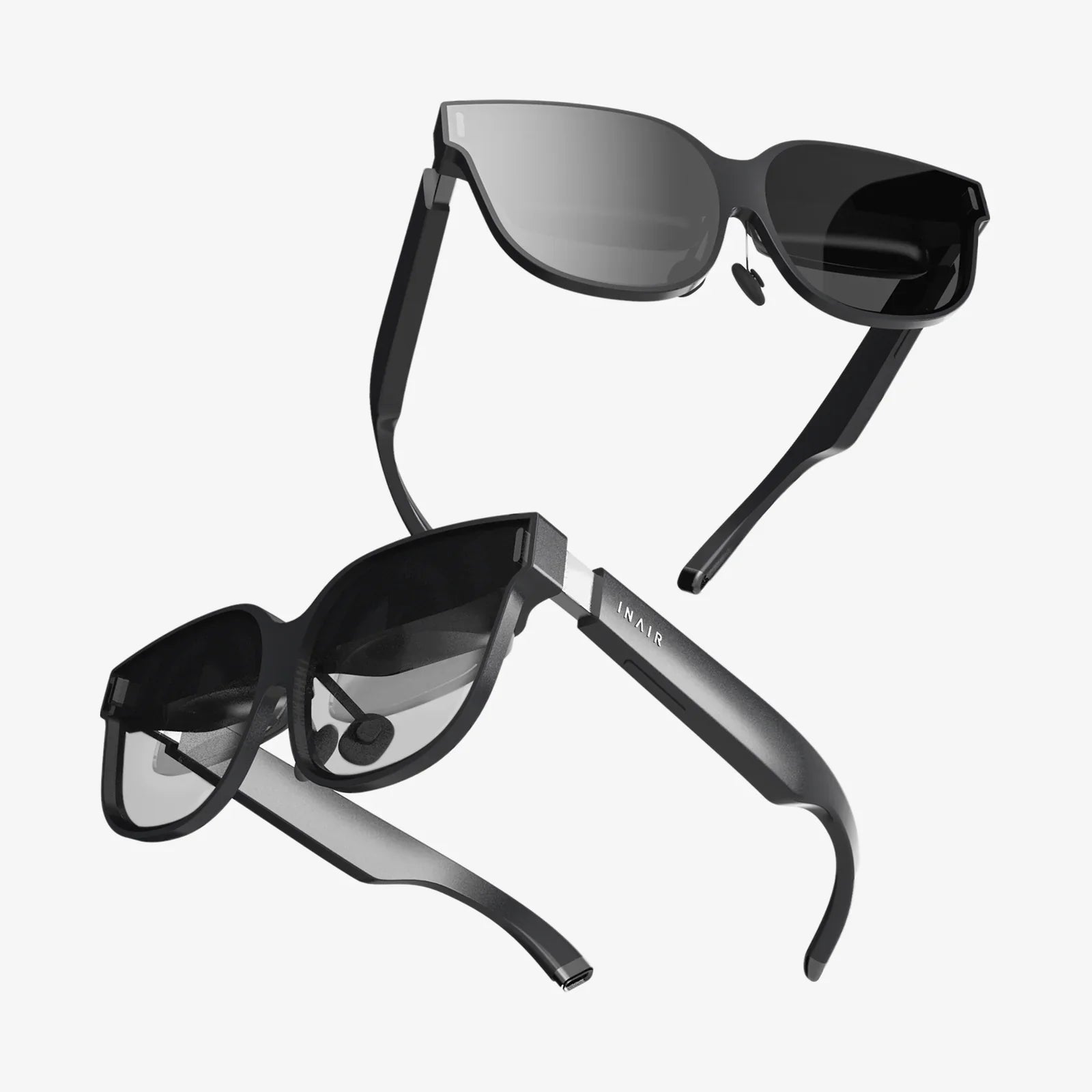
A major impediment to mass XR adoption has been hardware: often bulky, uncomfortable, and socially isolating. The trend in 2025 is a decisive move towards normalization. We are on the cusp of a form factor revolution that will see AR glasses shrink in size, weight, and cost to resemble something close to standard eyewear.
Breakthroughs in micro-OLED displays, waveguide optics, and battery technology are enabling this shift. The goal is to create all-day wearable devices that provide useful contextual information without obstructing the user's view or fashion sense. These devices will function as a seamless extension of the smartphone, handling notifications, navigation, and translation in a glanceable, hands-free manner.
This evolution is critical for making XR a persistent layer of reality rather than an experience you dip into. When the technology fades into the background—becoming as unnoticeable as a pair of prescription glasses—that is when its transformative potential will be fully unlocked for the average consumer, seamlessly blending the digital and physical worlds as we go about our daily routines.
With great power comes great responsibility, and the immersive nature of XR amplifies this adage. As these trends accelerate, a parallel and equally important trend must be the development of a robust ethical and legal framework. The industry cannot afford to repeat the mistakes of the social media era.
Key concerns that will dominate discussions in 2025 include:
The successful adoption of XR depends not just on technological prowess but on building trust. This means prioritizing ethical design, user well-being, and inclusive access from the very beginning.
The horizon of 2025 is not a passive destination we are drifting towards; it is an active construction site, bustling with the energy of innovators who are coding, designing, and building the very foundations of our future reality. The trends of AI integration, the immersive web, photorealistic avatars, enterprise transformation, and sleek hardware are not isolated threads but are rapidly weaving together to form a new tapestry of human experience. This is the dawn of a world where our digital and physical selves are no longer separate entities but are fused into a continuous, enhanced existence. The question is no longer if this future will arrive, but how prepared we are to step into it, shape it responsibly, and harness its incredible potential to redefine the human experience itself.
Share:
How to Put Phone in VR Headset: Your Ultimate Immersive Guide
AR Headset Definition: The Ultimate Guide to Augmented Reality Wearables