


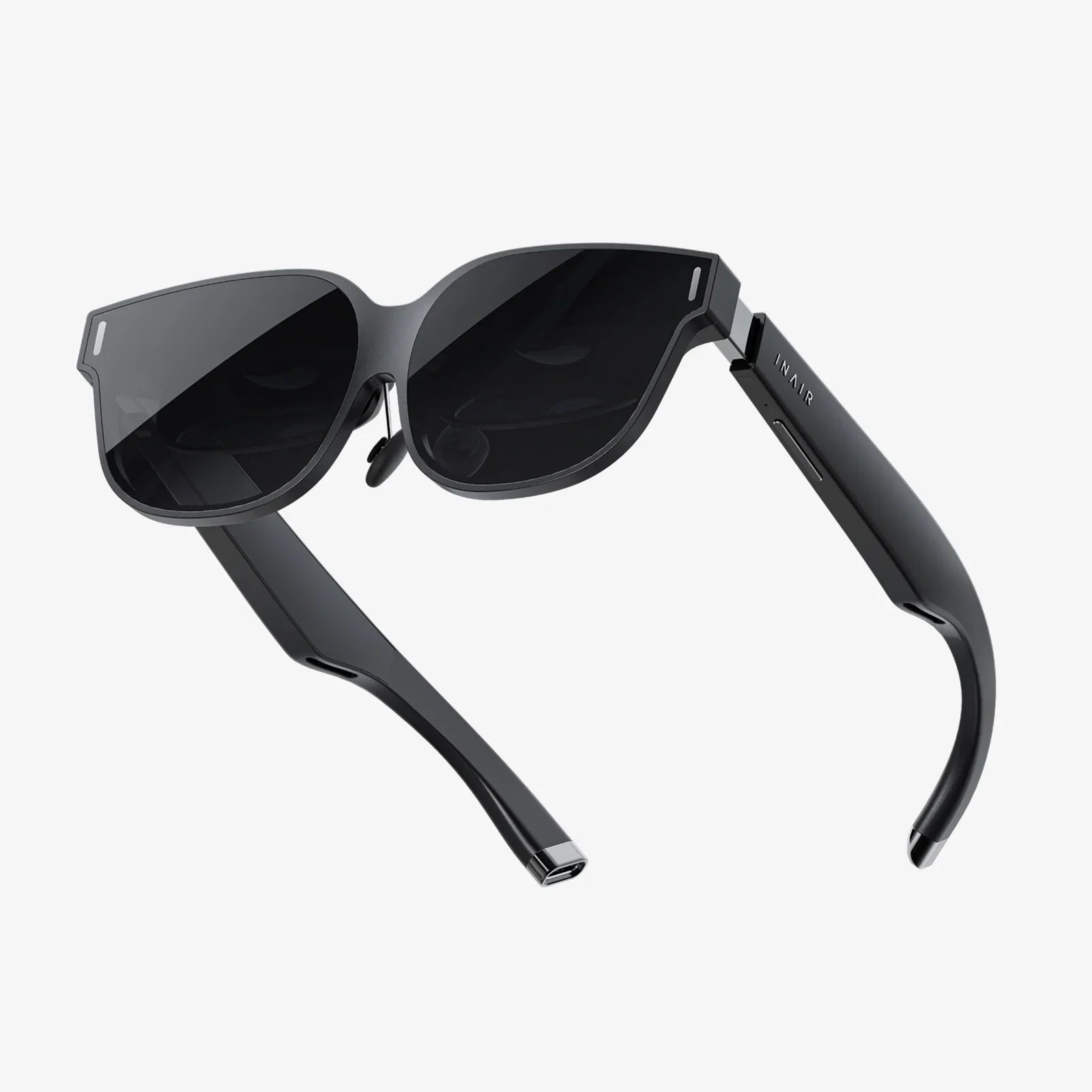
Imagine putting on a headset and stepping into a world that is more vivid, more intuitive, and more responsive than the one you remember from just a week ago. Objects have more precise physics, your digital workspace has a powerful new tool, and the avatars of your colleagues express nuance you didn't think was possible. This isn't a fantasy of some distant future; it's the direct result of the relentless, often silent, march of extended reality updates. These continuous software and firmware enhancements are the unsung heroes of the XR revolution, acting as the invisible hand that constantly molds and refines our perception of digital reality, pushing the boundaries of what's possible without requiring a trip to the store for new hardware.
The Unseen Evolution: Beyond Hardware Limitations
For too long, the technology conversation has been dominated by hardware specifications: processing power, display resolution, field of view, and weight. While these are critical foundational elements, they represent a static snapshot of a device's capabilities at launch. Extended reality updates transform this static picture into a dynamic, living ecosystem. A headset purchased today is not the same device a year from now; it is a platform that evolves, learns, and improves.
These updates are comprehensive, targeting every layer of the XR experience:
- Core System & Performance: Firmware updates optimize power management, reduce latency, and streamline the communication between sensors, processors, and displays. This can lead to longer battery life, smoother tracking, and a overall more stable experience, directly combating the motion sickness that early adopters often faced.
- Spatial Mapping and Computer Vision: Algorithms for understanding the physical world are in a constant state of refinement. Updates enhance depth sensing accuracy, improve object recognition (distinguishing a sofa from a chair, or a wall from a window), and enable more persistent and precise spatial anchors. This means your digital objects don't jitter or drift; they feel truly locked in place.
- User Interface (UI) and User Experience (UX): The way we interact with immersive content is rapidly evolving. Updates can introduce new gesture controls, voice command functionalities, and menu systems that feel more natural and less obtrusive, reducing the cognitive load on the user.
- Avatar and Social Systems: As the metaverse concept grows, so does the need for believable human representation. Updates progressively enhance avatar expressiveness, eye-tracking accuracy, and lip-syncing technology, making remote social interactions feel more genuine and emotionally resonant.
- Developer Tools and APIs: For creators, updates to software development kits (SDKs) and application programming interfaces (APIs) are crucial. They provide access to new features, better optimization techniques, and more powerful tools, which in turn lead to higher-quality applications for end-users.
This iterative process means that the value proposition of an XR device is no longer solely tied to its physical components. Its future potential, unlocked through software, becomes a primary feature.
Revolutionizing Industries Through Iterative Enhancement
The impact of these rolling updates is most profoundly felt not in consumer entertainment, but in enterprise and industrial applications, where precision, reliability, and efficiency are paramount.
Healthcare and Surgery
In medical training, extended reality updates are transforming how procedures are taught and practiced. A surgical simulation application can receive an update that introduces a new, highly complex procedure with unprecedented anatomical accuracy. Medical students can practice on a virtual patient that behaves with real-world physics, updated to reflect the latest surgical techniques. For remote surgery assisted by AR, updates can improve the overlay of critical patient data—like blood flow or tumor margins—directly onto the surgeon's field of view, with enhancements to tracking stability that make the difference between a successful and a risky operation.
Manufacturing and Design
On the factory floor, AR is used for complex assembly, maintenance, and quality control. An update can push a new set of instructions for assembling a just-released product model to technicians' smart glasses worldwide, instantly. For designers and engineers, collaborative VR design reviews become more effective with each update. A new software patch might enable real-time photorealistic rendering of materials or introduce a multi-user pointer system that eliminates confusion, shaving days off the prototyping process.
Education and Remote Collaboration
The classroom, whether physical or virtual, is being reshaped. A history app can receive a content update that adds a meticulously detailed, explorable Roman villa, while a physics update improves the accuracy of virtual gravity and projectile motion experiments. For remote work, updates are breaking down geographical barriers. A significant update might introduce a feature that uses passthrough cameras and new algorithms to perfectly blend remote participants as holograms into your physical office space, making it feel as if they are truly sitting across the table from you.
Building the Foundation of the Spatial Internet
Extended reality updates are doing more than just improving apps; they are actively constructing the underlying fabric of the next computing platform: the spatial internet. This is a world where digital information is not confined to screens but is mapped onto and intertwined with our physical environment.
Key to this vision is the concept of persistence. For the digital world to feel real, it must exist consistently, whether you're there to see it or not. Updates are progressively making this a reality. They enhance the systems that allow a virtual sculpture you placed in your living room to remain exactly there days later, or for a digital note left on a machine in a factory to persist for the next shift. This requires robust cloud-based coordination and ever-improving local spatial mapping, both fueled by software updates.
Furthermore, these updates are establishing critical interoperability standards. As the ecosystem matures, it's essential that digital objects and experiences can move across different devices and platforms. Updates are gradually implementing the protocols and frameworks that will allow an avatar or asset created in one universe to be used in another, moving us away from today's walled gardens and toward an open, connected metaverse.
The Challenges and Responsibilities of Perpetual Evolution
This always-evolving model is not without its significant challenges. The very nature of continuous updates introduces new complexities for users, developers, and manufacturers alike.
- Fragmentation: Unlike a mobile OS update that rolls out to millions of identical devices, the XR landscape is a tapestry of different headsets with varying capabilities. A powerful update designed for a cutting-edge device may not be compatible with an older model, or may need to be significantly scaled back. This creates a fragmented ecosystem where users have vastly different experiences based on their hardware generation.
- Software Lifecycle and Support: How long will a device receive meaningful updates? Manufacturers must grapple with supporting older hardware without stifling innovation on new devices. For enterprise customers who have invested heavily in a fleet of devices, a premature end to software support can be a catastrophic operational risk.
- Security and Privacy: Every update is a potential vector for security vulnerabilities. As these devices become more integrated into our daily lives and workplaces—with always-on cameras and microphones—the stakes for cybersecurity are incredibly high. Updates must not only add features but also constantly patch vulnerabilities to protect user data and physical safety.
- User Experience and Testing: Pushing an update that introduces bugs or performance issues can severely degrade the user experience and erode trust. The testing pipeline for XR updates is extraordinarily complex, as it must account for an almost infinite number of real-world environments and user behaviors.
Navigating these challenges requires a responsible and user-centric approach from XR companies, emphasizing transparency, robust testing, and long-term support plans.
The Future: Predictive Updates and Contextual Intelligence
The next frontier for extended reality updates lies in moving from a reactive model to a predictive and contextual one. Leveraging artificial intelligence and machine learning, future systems will not just receive generic improvements but will personalize and adapt in real-time.
Imagine an XR system that analyzes your workflow and pre-loads a specific set of tools right before you need them for a meeting. Or an AR navigation app that receives a micro-update on the fly, rerouting your path through a building because it detected via crowd-sourced data that the hallway ahead is congested. The updates will become smaller, more frequent, and hyper-contextual, blending seamlessly into the experience until the line between the platform and the update completely disappears.
This evolution will be powered by a synergy between edge computing (processing on the device for low latency) and the cloud (for massive data aggregation and complex AI modeling). The update itself will become an intelligent agent, constantly tuning your reality to be more efficient, more informative, and more immersive.
The true magic of extended reality is not captured in a spec sheet or a launch day review. It is woven into the months and years of iterative refinement that follow. These silent, ongoing extended reality updates are the continuous drip of water that is slowly but surely carving the grand canyon of our digital future. They are the mechanism through which promise becomes practice, transforming ambitious hardware into indispensable, adaptive portals to new worlds of work, play, and human connection. The device you unbox is merely a seed; it is the relentless stream of software updates that allows it to grow, evolve, and ultimately, redefine your reality.
Share:
How to Store VR Headset: The Ultimate Guide to Protection and Longevity
What Is Extended Reality XR Definition: Unlocking the Spectrum of Digital Worlds