


Imagine a world where the digital and physical aren't just connected, but seamlessly intertwined; where your morning meeting is held around a virtual table with colleagues who appear as lifelike holograms, your afternoon training involves physically practicing a complex procedure on a photorealistic simulation, and your evening entertainment transports you to the front row of a concert happening on the other side of the globe. This isn't a distant sci-fi fantasy—it's the emerging reality being built today, and if you're not paying attention to the latest Extended Reality XR news, you're missing the blueprint of our collective future. The pace of change is not just accelerating, it's leaping forward, breaking down the barriers between what is real and what is possible.
The XR Landscape: More Than Just Acronyms
Before diving into the headlines, it's crucial to understand the spectrum we're discussing. Extended Reality (XR) is the umbrella term that encompasses all combined real-and-virtual environments, including the technologies that facilitate human-machine interactions. It's the family name for a set of revolutionary siblings:
- Virtual Reality (VR): A fully immersive, digital experience that shuts out the physical world. Users don a headset to be transported to entirely computer-generated environments, from the depths of the ocean to the surface of Mars.
- Augmented Reality (AR): This technology overlays digital information—images, text, animations—onto the user's real-world view. Think of navigation arrows painted onto the road through your smartphone screen or a virtual dinosaur stomping through your living room.
- Mixed Reality (MR): Often seen as the most advanced subset of AR, MR not only overlays but anchors digital objects to the physical world, allowing for genuine interaction. A virtual ball in MR can bounce off your real-world table and roll onto your floor, obeying the laws of physics.
The constant flow of Extended Reality XR news highlights the rapid convergence of these technologies. The lines are blurring, with new devices and software platforms increasingly offering capabilities from across the entire spectrum, making the term XR more relevant than ever.
Headlines That Are Reshaping Industries
The narrative around XR has decisively shifted from "if" to "when" and "how." The latest developments are not confined to labs; they are actively transforming core sectors of the global economy.
Revolutionizing Enterprise and Workforce Training
Perhaps the most significant and immediate impact of XR is being felt in the enterprise sector. Companies are investing heavily to solve real-world problems. The latest Extended Reality XR news from this front is staggering. Major automotive manufacturers are using VR to design new vehicles, allowing engineers to inspect full-scale 3D models long before a physical prototype is built, saving millions and accelerating development cycles.
In high-stakes fields like medicine and surgery, AR is providing life-saving guidance. Surgeons can now see critical patient data, like MRI scans or vital signs, superimposed directly onto their field of view during an operation, without ever looking away from the patient. Meanwhile, VR simulations are allowing medical students to practice complex procedures countless times in a risk-free environment, achieving a level of muscle memory and preparedness previously unimaginable.
From training warehouse employees on safety protocols to allowing architects to walk clients through unbuilt skyscrapers, the enterprise applications are proving that XR is a powerful tool for productivity, safety, and innovation.
The Metaverse: Beyond the Hype
No discussion of current Extended Reality XR news is complete without addressing the metaverse. While the term has been subject to immense hype and skepticism, its core concept—a persistent network of shared, real-time 3D virtual spaces—is a driving force behind XR development. The vision is an internet you don't just look at, but one you are inside of.
Recent developments show a maturation beyond mere gaming and social hangouts. We're seeing the emergence of industrial metaverses where global teams of engineers can collaborate on a digital twin of a factory floor. Fashion weeks are being held in virtual spaces, with digital-only clothing being sold for avatars. Concerts featuring top-tier artists are drawing audiences of millions in VR, creating new revenue streams and fan experiences. The news cycle is increasingly filled with examples of businesses experimenting with and investing in these persistent virtual worlds, signaling a long-term belief in their economic and social potential.
The Hardware Race Heats Up
The technology underpinning these experiences is advancing at a breakneck pace, a constant source of exciting Extended Reality XR news. The focus is on making devices smaller, lighter, more powerful, and, crucially, more accessible.
We are witnessing the steady move away from tethered headsets requiring powerful external computers towards standalone devices with onboard processing. The latest generation of headsets boasts incredible leaps in display resolution, eliminating the "screen door effect" and making virtual objects appear crisp and real. Advances in inside-out tracking mean complex external sensors are no longer needed, making setup instantaneous and use more flexible.
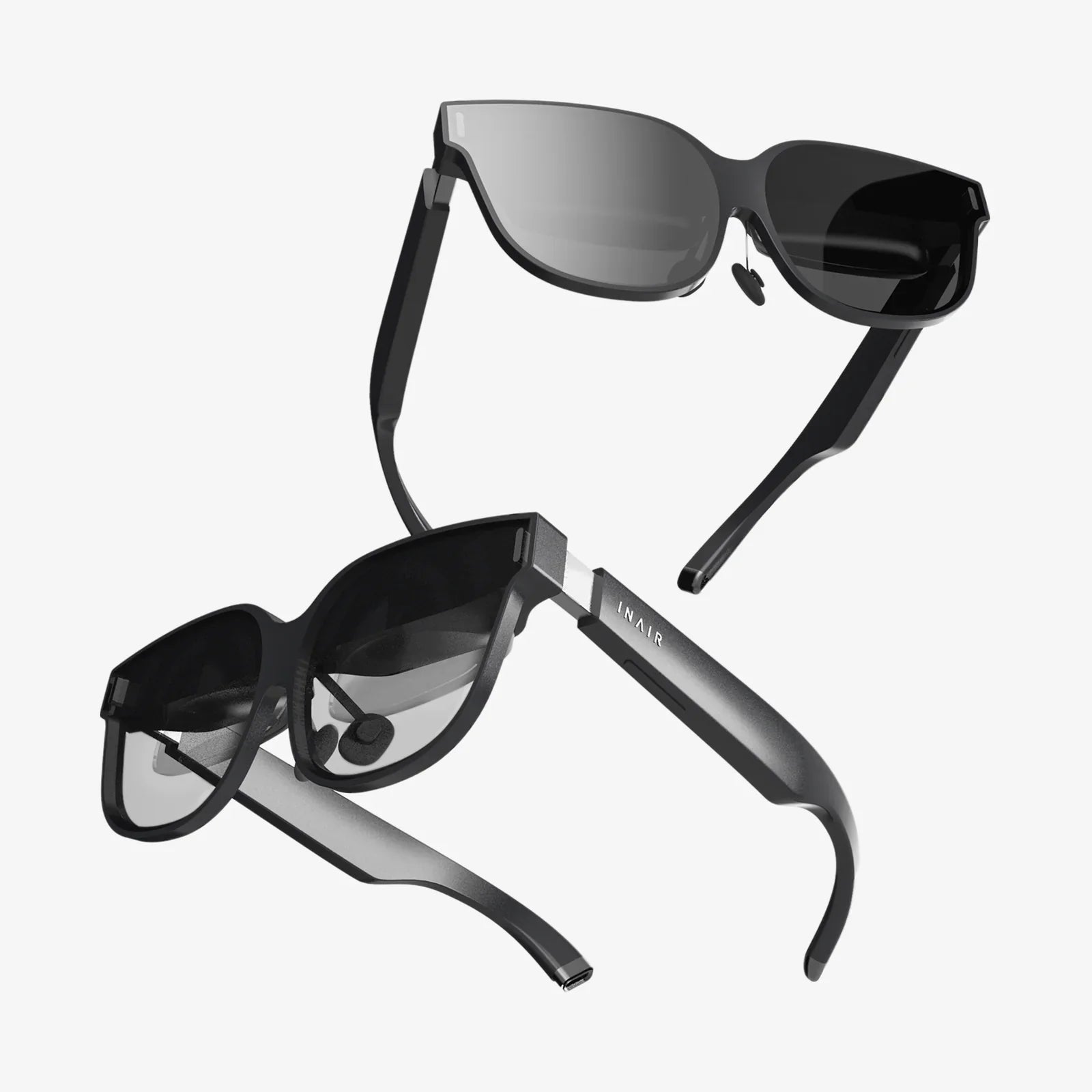
Perhaps the most anticipated frontier is in the realm of AR glasses. The holy grail is a pair of stylish, lightweight glasses that can overlay useful digital information onto the world all day long. Recent tech news points to significant progress in waveguides, micro-LED displays, and battery technology that are inching us closer to this reality. While consumer-ready versions may still be a few years out, the R&D efforts from numerous tech giants confirm that this is the ultimate destination.
Overcoming the Hurdles: Challenges in the XR Space
For all the progress, the path to ubiquitous XR is not without its obstacles. Informed Extended Reality XR news coverage must address these challenges head-on.
- Technical Limitations: Despite improvements, battery life remains a constraint for mobile devices. Processing power, while impressive, still struggles to render hyper-realistic graphics in real-time without generating significant heat. Achieving perfect, comfortable pass-through video for MR and convincing haptic feedback that lets you "feel" digital objects are still active areas of development.
- The Social and Ethical Dimension: As we spend more time in blended realities, profound questions emerge. How do we manage data privacy when devices with always-on cameras and microphones are constantly mapping our environments? What are the psychological effects of long-term immersion? How do we prevent the creation of a "digital divide" between those who can afford these technologies and those who cannot? Establishing ethical frameworks and regulations is as important as the technology itself.
- Content and Developer Ecosystem: Hardware is useless without compelling software. Encouraging a robust ecosystem of developers to create experiences that are valuable, entertaining, and productive is a key challenge. The industry needs its "killer app"—the equivalent of the spreadsheet for the PC or the browser for the internet—to drive mass adoption.
Glimpsing the Horizon: What's Next in XR?
Looking at the cutting-edge research and development, the next wave of Extended Reality XR news promises to be even more transformative. Several key areas are poised to define the next decade:
- AI Integration: Artificial Intelligence is the rocket fuel for XR. AI will power hyper-realistic avatars that can make eye contact and hold natural conversations, generate dynamic virtual worlds on the fly, and intelligently understand and contextually respond to a user's actions and environment. The fusion of AI and XR will create experiences that are not just immersive but truly intelligent and responsive.
- Haptics and Full-Body Tracking: The future of immersion lies beyond sight and sound. Researchers are making strides in haptic gloves and suits that can simulate the sensation of touch, pressure, and temperature. Combined with advanced full-body tracking, this will allow users to shake a virtual person's hand and feel its grip, or feel the virtual wind on their skin, closing the sensory loop and creating unparalleled presence.
- Brain-Computer Interfaces (BCIs): Looking even further ahead, the ultimate interface may be no interface at all. Early-stage BCIs aim to allow users to control digital experiences through neural signals alone—thinking about an action to make it happen in the virtual world. While this technology is in its infancy, it represents the final frontier in creating a seamless connection between human intent and digital reality.
The stream of Extended Reality XR news is no longer a niche topic for tech enthusiasts; it is a front-row seat to a fundamental shift in human-computer interaction. From reshaping global industries and creating new forms of social connection to pushing the very boundaries of human perception, XR is steadily moving from the fringe to the center of our technological landscape. The devices are getting smarter, the experiences more compelling, and the applications more critical. This isn't just about putting on a headset; it's about unlocking new dimensions of human potential, creativity, and connection. The door between our world and the digital realm is swinging wide open—will you step through?
Share:
Virtual Reality AR XR News Today: The Blurring Line Between Our World and the Digital
Virtual Reality AR XR News Today: The Blurring Line Between Our World and the Digital