


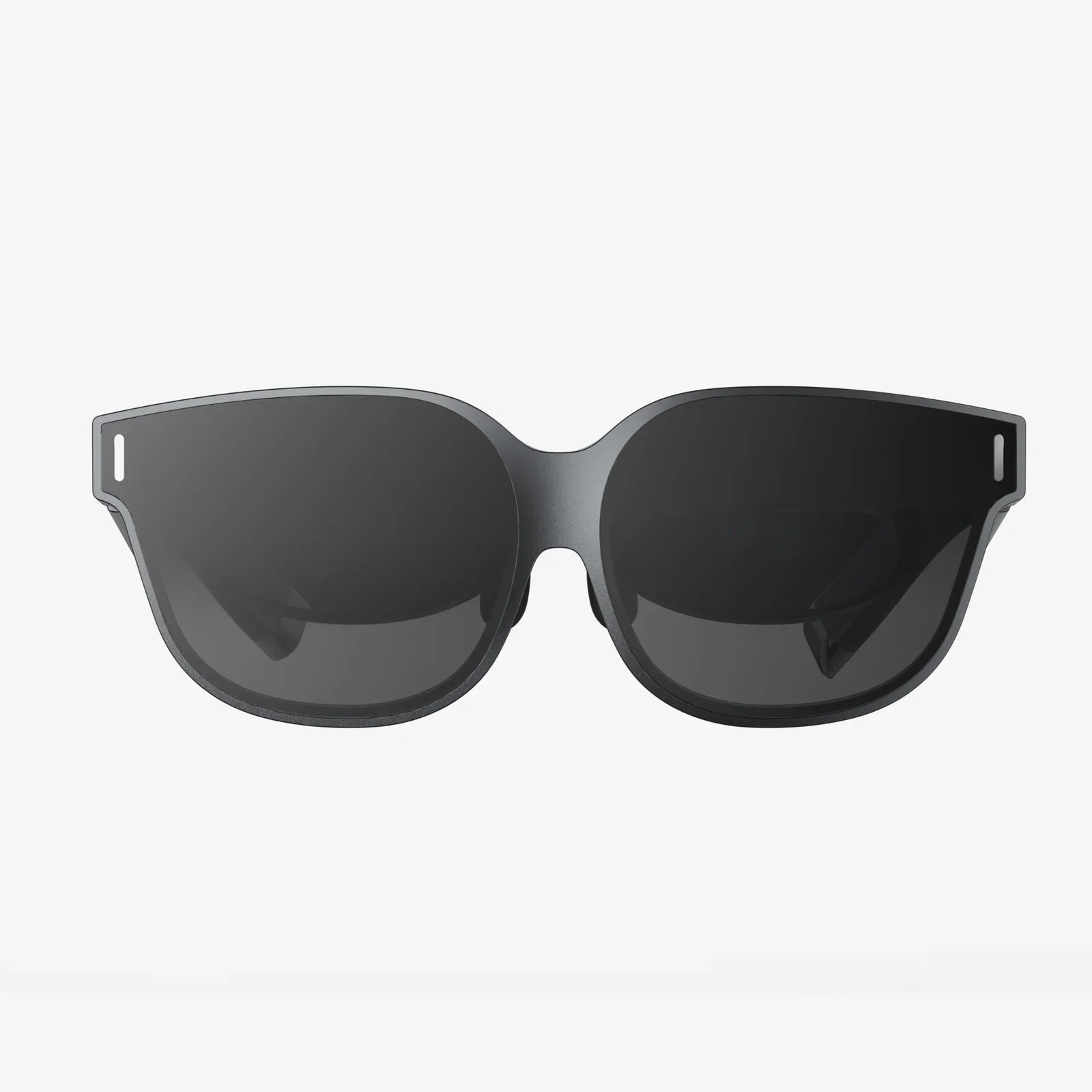
Imagine a world where the line between the digital and the physical isn't just blurred—it's elegantly erased. A world where you can walk with dinosaurs, collaborate with colleagues as lifelike holograms from across the globe, or learn complex surgery by practicing on a perfect digital twin. This is not a distant sci-fi fantasy; it is the imminent promise of Extended Reality, a technological revolution poised to redefine every facet of human experience. The journey into this blended world begins now, and understanding its scope is the first step toward shaping it.
The XR Spectrum: Demystifying the Acronym
Extended Reality, or XR, is not a single technology but an umbrella term that encompasses all combined real-and-virtual environments generated by computer technology and wearables. It represents a continuum of experiences that range from complete immersion in a synthetic world to simple digital overlays on our physical surroundings.
Virtual Reality (VR): The Total Escape
At one end of the spectrum lies Virtual Reality. VR is the most immersive form of XR, designed to transport the user entirely into a computer-generated simulation. By wearing a headset that occludes the real world and replaces it with a 360-degree digital environment, users are effectively cut off from their physical surroundings. This is often combined with motion-tracking controllers and haptic feedback devices to create a powerful sense of "presence"—the convincing feeling of being in another place. The primary goal of VR is to shut out the physical world and substitute it with a digital one, whether for gaming, training simulations, or virtual tourism.
Augmented Reality (AR): The Digital Overlay
On the opposite end of the spectrum is Augmented Reality. Unlike VR, AR does not replace the real world. Instead, it enhances it by superimposing digital information—images, text, 3D models, animations—onto the user's view of their physical environment. This is most commonly experienced through smartphone cameras or smart glasses. The digital elements appear to coexist with the real world, providing contextual information and interactive experiences. Think of navigation arrows painted onto the street in front of you, a virtual dinosaur appearing to stomp through your living room, or product information popping up when you point your phone at a item in a store. AR aims to add a layer of useful or entertaining data onto our existing reality.
Mixed Reality (MR): The Seamless Blend
Occupying the crucial middle ground between AR and VR is Mixed Reality. MR is often considered the most advanced and complex form of XR. It doesn't just overlay digital content; it anchors that content to the physical world, allowing for real-time interaction between the user, the real environment, and the digital objects. In a true MR experience, a virtual ball can bounce off a real-world table, and a digital character can convincingly hide behind your actual sofa. This requires sophisticated understanding of the physical space through sensors, cameras, and advanced computer vision. MR represents the pinnacle of the blend, where the physical and digital are not just adjacent but functionally integrated.
The Engine Room: Core Technologies Powering XR
The magic of XR is powered by a complex symphony of hardware and software advancements that have converged to make these experiences possible and increasingly compelling.
Hardware: The Gateways to New Realities
The most visible component of XR is the hardware that acts as a gateway. This includes a range of devices:
- Headsets and Glasses: From tethered, high-powered VR headsets that connect to powerful computers to deliver ultra-realistic graphics, to standalone wireless headsets that offer freedom of movement, to sleek AR glasses designed for all-day wear. These devices are packed with displays, lenses, and a suite of sensors.
- Sensors and Cameras: These are the eyes of an XR device. Inside-out tracking cameras map the user's environment, while infrared sensors, depth sensors, and LiDAR (Light Detection and Ranging) create a precise 3D map of the space, understanding the geometry and surfaces to place digital objects convincingly.
- Haptic Feedback Systems: To move beyond visual and auditory immersion, haptics provide the sense of touch. This can range from simple vibrations in controllers to advanced gloves and full-body suits that simulate the pressure, texture, and impact of virtual objects.
Software and Connectivity: The Invisible Framework
Hardware is nothing without the software that brings it to life. This includes powerful game engines that render realistic 3D environments in real-time, spatial mapping algorithms, and software development kits (SDKs) that allow creators to build experiences. Furthermore, the rise of edge computing and lightning-fast 5G networks is critical for offloading the immense processing power required for high-fidelity XR, potentially enabling complex, photorealistic experiences on lighter, more comfortable devices.
Artificial Intelligence: The Brain Behind the Experience
AI is the silent powerhouse supercharging XR. Computer vision algorithms allow devices to recognize objects, surfaces, and gestures. Natural language processing enables voice-controlled interfaces within these virtual worlds. Machine learning is used for predictive tracking, foveated rendering (which focuses processing power only where the user is looking to improve efficiency), and creating intelligent, responsive digital characters. AI is what makes XR experiences feel smart, contextual, and truly interactive.
Beyond Novelty: The Transformative Applications of XR
While entertainment is a massive driver, the true potential of XR lies in its capacity to solve real-world problems and transform major industries.
Revolutionizing Education and Training
XR is turning learning from a passive activity into an active, experiential journey. Medical students can perform intricate virtual dissections and practice procedures on responsive digital patients without risk. History students can walk through ancient Rome, witnessing the construction of the Colosseum firsthand. Mechanics can train on the digital twin of a jet engine, with step-by-step instructions overlaid onto the components. This "learning by doing" in a safe, repeatable, and cost-effective virtual environment dramatically improves knowledge retention and skill acquisition.
Transforming Enterprise and Industrial Work
In the corporate and industrial world, XR is a powerful tool for efficiency and collaboration. Remote experts can see what a field technician sees through AR glasses and annotate their view with arrows and instructions to guide complex repairs, reducing downtime and travel costs. Architects and engineers can walk clients through full-scale, immersive 3D models of unbuilt structures, making changes in real-time. Factories use VR to prototype and test assembly lines digitally before physical implementation, saving millions.
Advancing Healthcare and Therapy
The healthcare sector is witnessing profound XR applications. Surgeons use AR to visualize patient anatomy like CT scans directly overlaid on the surgical site during operations, improving precision. VR is proving highly effective in exposure therapy for treating phobias and PTSD, allowing patients to confront and manage their fears in a controlled, safe setting. It is also used for motor rehabilitation, turning repetitive exercises into engaging games that encourage patient participation.
Redefining Retail and Remote Collaboration
Imagine trying on clothes virtually or seeing how a new sofa would look and fit in your living room before you buy it—AR is making this a mainstream shopping experience. For remote collaboration, MR is creating a paradigm shift. Instead of a grid of faces on a video call, teams from around the world can meet as avatars or holograms in a shared virtual workspace, interacting with 3D models of their projects as if they were in the same physical room, breaking down the barriers of distance.
Navigating the Uncharted: Challenges and Ethical Considerations
As with any powerful technology, the path forward for XR is not without significant hurdles and profound ethical questions that society must address.
Technical and Social Hurdles
For XR to achieve mass adoption, several technical barriers must fall. Devices need to become smaller, lighter, more comfortable, and offer all-day battery life. The "vergence-accommodation conflict," a technical issue that can cause eye strain and nausea, needs a robust solution. Furthermore, the "digital divide" is a real concern; ensuring this transformative technology does not become a luxury that exacerbates social and economic inequality is crucial.
The Privacy Paradox
XR devices are, by their nature, data collection machines. They have the potential to gather unprecedented amounts of intimate personal data—not just what you look at, but how you move, your biometric responses, the detailed layout of your home, and even your unconscious gestures. This creates a massive privacy challenge. Who owns this data? How is it stored and used? Robust regulations and transparent data policies are essential to build trust and protect users.
Identity, Reality, and Societal Impact
As our realities become increasingly mediated by technology, deep philosophical questions emerge. How will prolonged immersion in virtual worlds affect our perception of reality and our social skills? The concept of identity will evolve as we create and inhabit digital avatars. There is also the risk of "experiential manipulation," where our perception of reality could be subtly altered for commercial or political gain. Establishing a clear ethical framework for the development and deployment of XR is one of the most critical tasks of the coming decade.
The door to a world where our digital and physical lives are seamlessly interwoven is swinging open, and Extended Reality is the key. This is not merely an upgrade to our screens; it is a fundamental shift in how we compute, connect, and comprehend the universe around us. The challenges are as immense as the opportunities, demanding thoughtful collaboration between technologists, ethicists, and policymakers. The blended future is being built today—will you be a passive observer or an active participant in shaping its extraordinary potential?
Share:
Least Expensive VR Headset: Your Ultimate Guide to Affordable Virtual Reality
Least Expensive VR Headset: Your Ultimate Guide to Affordable Virtual Reality