


- by wangfred
Eye Projector Technology: The Future of Personal Visual Computing
- by wangfred
Imagine a world where your entire digital existence—your emails, your entertainment, your virtual workspace—is projected seamlessly onto your field of vision, accessible with a mere glance, controlled by the subtle movement of your eye. This is not a scene from a futuristic film; it is the ambitious promise of eye projector technology, a frontier in personal computing that seeks to liberate us from the tyranny of screens and usher in an era of truly integrated, ambient information. The concept is as audacious as it is transformative, proposing to turn our very eyes into the ultimate display, merging the digital and physical worlds into a single, cohesive reality.
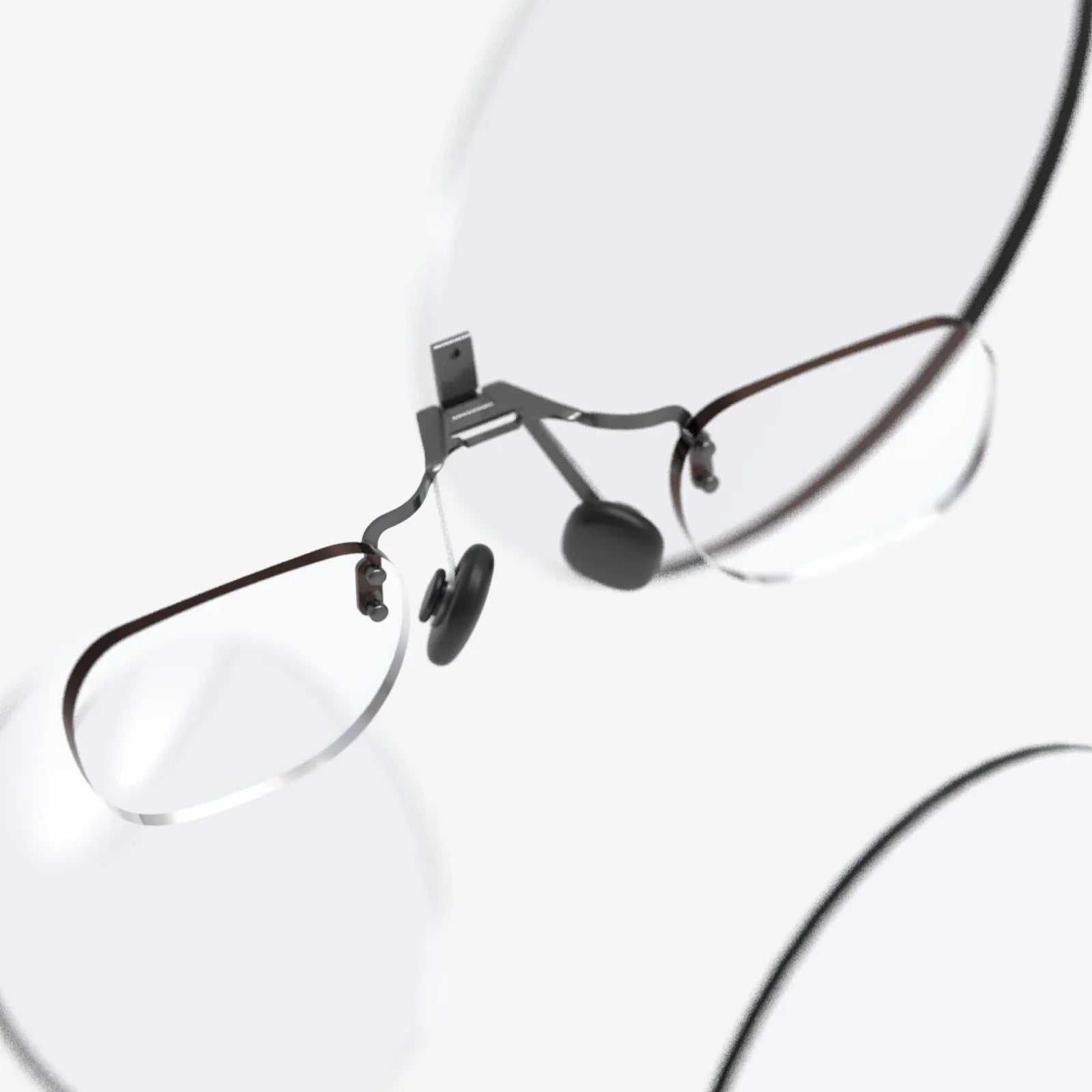
At its heart, the technology is a sophisticated miniaturization of two established fields: projection and eye-tracking. The fundamental idea is to create a wearable device, likely in a form factor resembling conventional eyewear, that houses a micro-projector system. This system would not project an image onto a wall or a screen, but rather directly onto the user's retina. This technique, known as virtual retinal display (VRD), uses low-powered lasers or LEDs to scan light directly onto the retina, painting the image photon by photon.
This process is fundamentally different from looking at a screen. A traditional display emits light that bounces off objects and into your eye. A VRD bypasses this entirely, forming the image on the retina itself. This allows for incredibly high resolution and brightness that is not dependent on external lighting conditions. The image would appear to be floating in space, superimposed over the user's natural view of the real world, creating a potent augmented reality (AR) experience.
However, projecting a stable image is only half the battle. The human eye is in constant motion, making tiny, involuntary movements called microsaccades. For a projected image to appear stable and not jittery or blurred, the device must track the eye's position and orientation with extreme precision and speed. This requires a high-frequency eye-tracking system, typically using miniature cameras and infrared lights to map the pupil's position and the eye's gaze vector in real-time. The projector then adjusts its scanning mirrors or modulators accordingly, compensating for every tiny movement to keep the digital image locked in place relative to the user's perspective.
The potential applications for such a technology are staggeringly broad, poised to disrupt nearly every aspect of modern life.
Surgeons could have vital signs, MRI scans, and procedural guides projected into their visual field during operations, keeping their focus entirely on the patient. Engineers and architects could manipulate 3D holographic models of their designs with their hands, with schematics and data floating beside them. Field technicians could have repair manuals and diagnostic data overlaid directly onto the malfunctioning machinery they are fixing.
Imagine walking through a foreign city with navigation arrows painted onto the sidewalk, restaurant reviews floating above eateries, and real-time translations of street signs appearing as you look at them. Your morning run could display your heart rate, pace, and a map directly in your vision, without the need to glance at a wristwatch. Socially, the implications are profound; you could see a person's name and how you know them when they approach, a feature that would be a boon for networking events, though not without privacy concerns.
This technology could spell the end for televisions, monitors, and smartphones as we know them. You could watch a movie on a virtual 100-foot screen in your living room, play a video game with the UI integrated into your environment, or read a book with the text perfectly crisp and clear, regardless of ambient light. The cinematic experience would become truly personal and immersive.
For individuals with visual impairments, eye projectors could be life-changing. They could enhance contrast, highlight obstacles, zoom in on text, or read out written words that the user looks at. For those with certain types of low vision, the technology could effectively act as a high-tech visual prosthesis, projecting enhanced imagery to compensate for the eye's deficiencies.
Despite the compelling vision, the path to a consumer-ready eye projector is littered with monumental technical, physiological, and ethical hurdles.
Cramming a high-resolution projector, a precision eye-tracking system, a powerful processor, and a battery into a package that is comfortable, socially acceptable, and aesthetically pleasing is a herculean task. The device must be lightweight, not generate excessive heat, and have enough battery life to last a full day of use. Current advancements in micro-optics and low-power chips are promising, but a solution that ticks all these boxes remains elusive.
This is the most critical barrier. Shining any kind of light directly into the human eye, especially using lasers, raises serious safety questions. The power must be kept extremely low to avoid any risk of retinal damage, even with prolonged use. This creates a trade-off between image brightness and safety. Furthermore, the effect of having a digital image constantly superimposed on one's natural vision for extended periods is unknown. Could it cause eye strain, headaches, or long-term changes in visual perception? Comprehensive longitudinal studies would be essential.
The hardware is only a vessel; the software and user interface (UI) are what will make or break the experience. Designing an intuitive UI that is navigable by gaze, gesture, and voice—without causing overwhelming information overload or becoming a distracting nuisance—is a monumental challenge in human-computer interaction. The device would also need seamless, high-bandwidth connectivity to other devices and the cloud, raising its own set of security and latency issues.
Beyond the engineering, eye projectors force us to confront deep philosophical questions about privacy, reality, and human connection.
The same eye-tracking that stabilizes the image is a powerful data collection tool. It could record everything you look at, for how long, and how your pupils dilate in response—a literal window into your subconscious attention, interest, and emotional state. Who owns this data? How is it used? The potential for targeted advertising is dystopian; imagine a world where you look at a product on a shelf and instantly see a personalized price and ad campaign projected next to it. The risks of constant surveillance, both corporate and governmental, are unprecedented.
There is also the risk of further blurring the lines between reality and digital fiction. If we can curate our visual experience to such a degree, will we begin to disengage from the un-augmented world? Will shared reality become a thing of the past, replaced by personalized, algorithmically-driven visual feeds? The technology could be a powerful tool for education and empathy, allowing us to see the world through another's eyes, or it could be used to create impenetrable filter bubbles and spread hyper-realistic misinformation.
Research and development in this area are active, driven by major investments in adjacent fields like AR and VR. Progress in areas like photonic chips, which can manipulate light at a nano-scale, and new, safer laser technologies are slowly making the concept more feasible. The first iterations will likely be targeted at specific enterprise and medical applications, where the cost and form factor are less prohibitive, and the benefits are clear and immediate.
The journey from lab prototype to a consumer product is long and uncertain. It will require not just technological breakthroughs, but a robust public discourse to establish ethical guidelines, regulatory frameworks for safety and privacy, and a thoughtful approach to integration. The goal should not be to replace reality, but to augment it in a way that enhances human capability and connection.
The dream of the eye projector is the dream of a frictionless interface between human and machine, a tool that expands our perception rather than distracting from it. While the challenges are immense, the pursuit is a testament to our desire to push the boundaries of what is possible. It represents a future where technology doesn't demand our attention on a slab of glass, but instead whispers information directly into our senses, empowering us to engage with our world more deeply, intelligently, and profoundly than ever before. The day this technology matures will mark a paradigm shift as significant as the invention of the graphical user interface or the smartphone, fundamentally redefining our relationship with the digital universe.