


Imagine a world where your entire digital universe—your emails, your movies, your video calls, your navigation—floats seamlessly in your field of vision, accessible with a glance yet invisible to those around you. This is not a distant sci-fi fantasy; it is the imminent promise of eyeglass video display technology, a revolution brewing not on our desks or in our palms, but directly before our eyes. This technology is set to fundamentally alter our relationship with information, dissolving the barrier between the digital and the physical and unlocking a new era of human-computer interaction that is as intimate as it is powerful.
The Architectural Marvel: How Eyeglass Video Displays Work
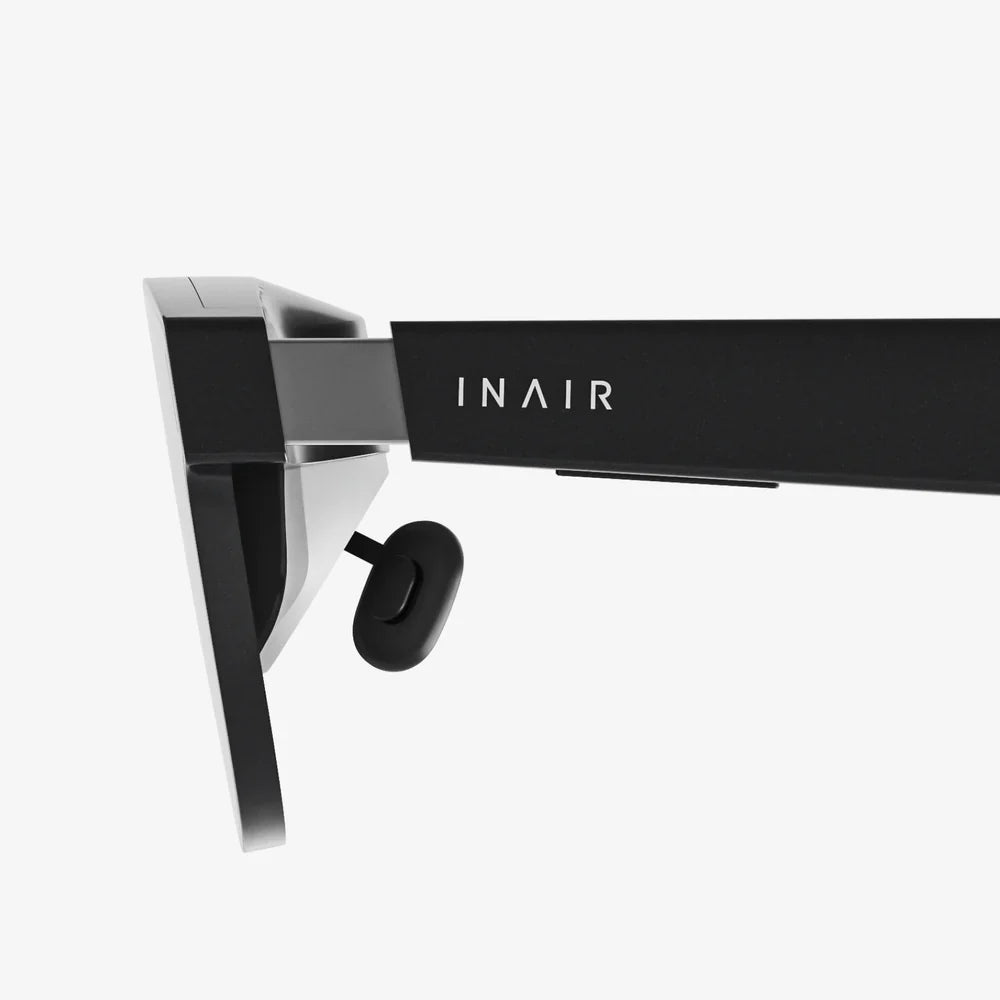
At its core, an eyeglass video display is a feat of optical engineering miniaturization. Unlike traditional screens that we look at, these systems project images directly onto the user's retina or create a virtual image that appears to hover in space. The magic happens through a combination of micro-displays, waveguides, and complex optical systems all packed into a form factor resembling a standard pair of eyeglasses.
The process typically begins with a minuscule display panel, often an LCD or MicroLED, which generates the initial image. This image is then directed into a transparent lens, which acts as a waveguide. Through a series of microscopic gratings or reflections within the lens itself, the light representing the digital image is "piped" toward the eye. Finally, an optical element, such as a combiner or a special mirror, overlays this digital light onto the user's natural view of the real world. The result is a stable, high-resolution overlay of information that feels integrated into the user's environment, whether it's a simple notification in the corner of their eye or a full-sized, virtual cinema screen projected against a blank wall.
Beyond Novelty: Transformative Applications Across Industries
The true power of this technology lies not in its technical wizardry, but in its practical applications. By providing hands-free, contextual information directly within the user's line of sight, eyeglass video displays will become indispensable tools across numerous fields.
The Professional Workspace Reimagined
For surgeons, these displays can overlay critical patient vitals, ultrasound data, or procedural guides directly onto their view of the operating field, eliminating the need to look away at distant monitors. For field engineers and mechanics, complex schematics, instruction manuals, and live video feeds from remote experts can be superimposed onto the machinery they are repairing, drastically reducing errors and downtime. Architects could walk through a physical construction site and see their digital Building Information Modeling (BIM) data overlaid onto the unfinished structures, identifying potential clashes before they become costly problems.
Redefining Education and Training
Imagine a chemistry student conducting a complex experiment with interactive safety warnings and molecular models floating beside their beakers. A history class on a field trip to ancient ruins could see digital reconstructions of the buildings in their prime, layered directly onto the crumbling stones. This technology enables experiential, contextual learning that transcends textbooks and static screens, creating immersive and unforgettable educational experiences.
A New Paradigm for Navigation and Exploration
Turn-by-turn navigation will evolve from a voice from your phone or a map on your dashboard to glowing arrows and street names painted onto the road itself. Tourists exploring a new city will be able to glance at a landmark and instantly see historical facts, visitor reviews, and opening hours. This seamless integration of data transforms the way we explore and interact with our surroundings, making us more informed and connected to our environment.
The Invisible Elephant in the Room: Societal and Ethical Challenges
However, this always-available, always-on digital overlay does not come without significant challenges. The widespread adoption of eyeglass video displays will force us to confront thorny ethical and societal questions that we are only beginning to grapple with.
The Battle for Attention and the Death of Presence
If today's smartphones have already eroded our ability to be truly present in a moment, what happens when the digital distraction is permanently grafted onto our reality? The constant lure of notifications, messages, and entertainment could create a society of people who are physically present but mentally absent, further weakening the fabric of interpersonal connection. The technology risks creating a new digital divide, not based on access to devices, but on the ability to disconnect and engage in genuine, uninterrupted human interaction.
A Privacy Apocalypse Waiting to Happen?
The privacy implications are perhaps the most daunting. These devices, by their very nature, will be equipped with always-on cameras and microphones to understand their environment. The potential for ubiquitous surveillance, either by corporations or governments, is staggering. Furthermore, features like facial recognition could allow a user to instantly pull up the social media profile of anyone they see on the street, annihilating any remaining notion of anonymity in public spaces. Robust ethical frameworks, transparent data policies, and potentially entirely new laws will be required to prevent this technology from becoming the ultimate tool for exploitation.
The Etiquette of a Augmented World
Social norms will need to rapidly evolve. How will we know if someone is recording us? Is it rude to check a notification during a conversation if it only requires a subtle eye movement? Will certain spaces, like cinemas, courtrooms, or intimate dinners, become "augmentation-free" zones? Navigating this new social landscape will require a conscious effort to establish etiquette that preserves respect and consent.
The Human Factor: Design, Accessibility, and the Future of Interaction
For this technology to succeed, it must be designed with the human experience at its center. It cannot be a clunky, intrusive piece of hardware; it must be comfortable, stylish, and accessible. The user interface is equally critical. Interaction will likely move beyond touch and voice to include subtle eye-tracking, gesture control, and even neural interfaces. The goal is to make the technology feel like a natural extension of our own cognition.
This has incredible potential for accessibility. For individuals with low vision, the displays could highlight obstacles, magnify text, and enhance contrast in real-time. For those who are hard of hearing, real-time speech-to-text transcription could be displayed during conversations, making every interaction more accessible. The technology could serve as a powerful equalizer, providing assistive features that are seamlessly integrated into daily life.
The ultimate evolution of this technology may be toward complete transparency. The goal is not to lose ourselves in a digital world, but to use that digital layer to enhance our understanding of, and interaction with, the physical world. The ideal eyeglass video display won't feel like a screen at all; it will feel like a superpower, granting us just-in-time information and capabilities that feel innate, allowing us to be more capable, more connected, and more human in everything we do.
The path to a future where digital information floats effortlessly in our sight is being paved today in research labs and design studios. The eyeglass video display is more than just the next gadget; it is a gateway to a new way of being, a silent partner that will amplify our abilities and reshape our reality. The question is no longer if this future will arrive, but how we will choose to build it, regulate it, and ultimately, how we will ensure it serves to enhance humanity rather than diminish it. The revolution won't be televised; it will be seen through a pair of seemingly ordinary glasses, and it will change everything.
Share:
Communal Workspace The Evolution of Shared Professional Environments
TV on VR: The Ultimate Guide to Immersive Entertainment and the Future of Viewing