


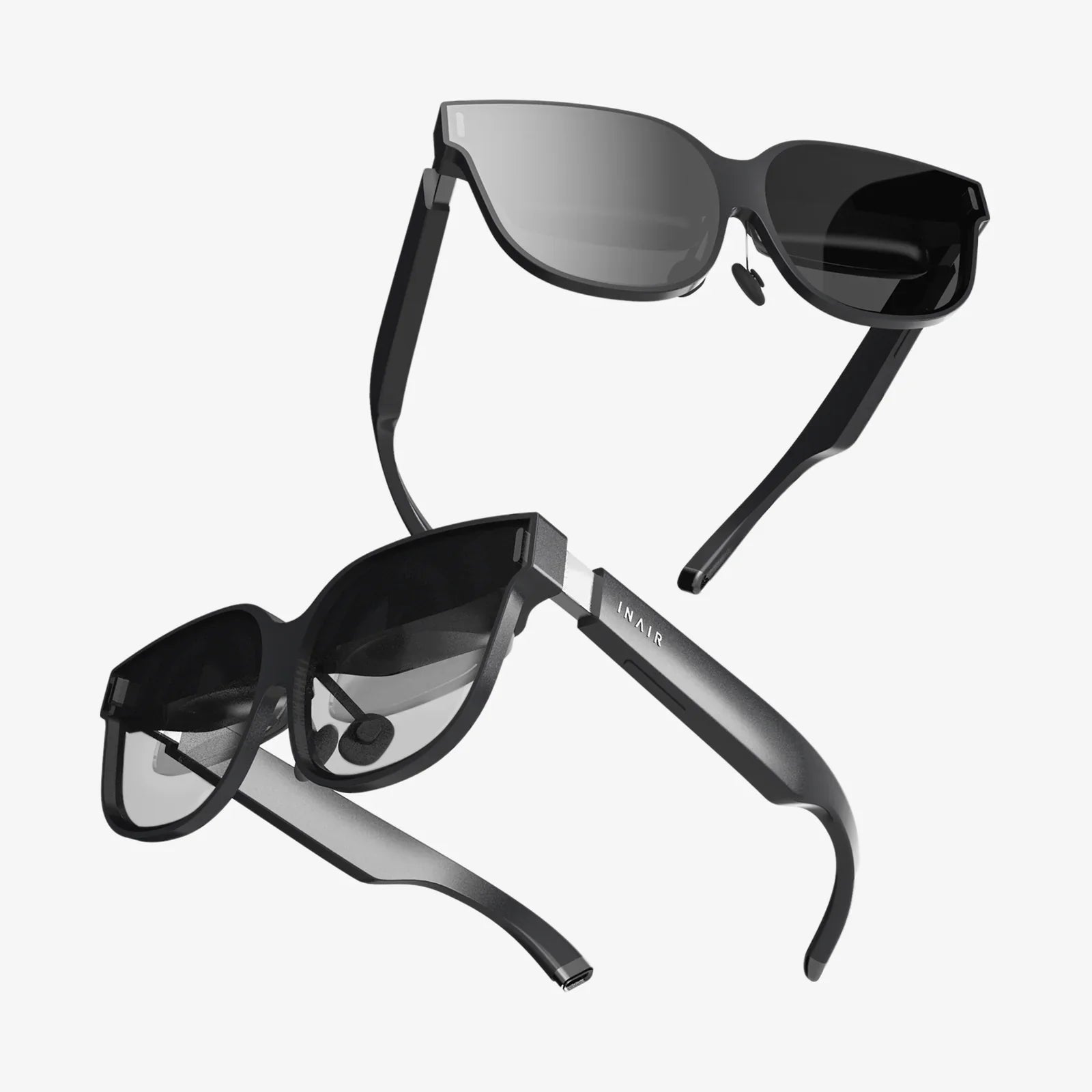
For decades, the concept of smart glasses has hovered on the periphery of our technological imagination, a futuristic promise often more science fiction than science fact. But a quiet revolution is underway, one that is moving this technology from the realm of clunky prototypes and niche industrial applications into the mainstream of consumer consciousness. The latest eyewear smart glasses news isn't just about incremental updates; it's about a fundamental shift in how we will interact with the digital world, seamlessly blending information with reality right before our eyes. This isn't a distant future—it's a transformation happening now, and it promises to redefine everything from social connection to professional productivity.
The Evolution from Novelty to Necessity
The journey of smart eyewear has been a rollercoaster of hype and disappointment. Early attempts, while ambitious, were often hampered by limited battery life, intrusive designs, and a lack of compelling software. They were solutions in search of a problem, perceived by many as either a geeky accessory or a privacy-invading nuisance. The turning point came when the industry shifted its focus. Instead of trying to create a all-in-one replacement for the smartphone, developers began to explore specific, high-value use cases where hands-free, eyes-up information provided a distinct advantage.
This pragmatic approach led to a surge in adoption within enterprise and specialized fields. Surgeons began using them to view patient vitals and surgical plans without looking away from the operating table. Warehouse logistics experts used them for hands-free inventory picking, with order information and location data overlaid onto their field of view. Engineers and mechanics could pull up complex schematics and instructions while keeping both hands on the task. This proven utility in demanding environments provided the rigorous testing ground needed to refine the technology, making it more robust, more useful, and crucially, more ready for a broader audience.
Breaking the Design Barrier: Form Meets Function
Perhaps the most significant hurdle for consumer adoption has been aesthetics. Early models were conspicuously technological, marking the wearer as a "glasshole" rather than a style-conscious individual. The latest wave of eyewear smart glasses news, however, is dominated by a new design philosophy: invisibility. The goal is no longer to look like a piece of advanced computing hardware, but to look like a regular, even fashionable, pair of glasses.
Manufacturers are achieving this through miniaturization and sophisticated material science. Processing units, batteries, and speakers are being ingeniously integrated into the temples of the frames. Waveguide technology, which projects light into the eye, allows for near-transparent lenses that appear completely normal when not in use. The most recent prototypes showcased at tech events are virtually indistinguishable from premium eyewear sold by high-end optical brands. This focus on style is critical. For smart glasses to become a true everyday wearable, people must want to wear them, not feel they have to. They must be an expression of personal style, not a declaration of tech allegiance.
The Core Technologies Powering the Vision
This sleek new form factor is powered by a suite of astonishing technologies working in concert. Understanding these components is key to appreciating the current state of the art.
Advanced Optical Systems
At the heart of any smart glass is its display. The race is on to develop systems that are bright, high-resolution, energy-efficient, and, most importantly, socially acceptable. MicroLED displays, known for their incredible brightness and low power consumption, are becoming the gold standard. These tiny displays project images onto waveguides—essentially transparent pieces of glass or plastic with etched patterns that bounce the light toward the user's retina. The result is a crisp, floating image that seems to exist in the world ahead, all while allowing the wearer to see their surroundings unimpeded.
The Rise of On-Device AI
Raw computing power is nothing without intelligence. This is where artificial intelligence becomes the true differentiator. Early smart glasses relied heavily on a constant connection to a smartphone to offload processing tasks. The newest generation features dedicated AI processors and neural processing units (NPUs) embedded directly into the frame.
This on-device AI enables a host of powerful, instantaneous features without the latency of a cloud connection. Real-time language translation can transcribe a conversation and display subtitles directly in your view as someone speaks. Advanced computer vision can identify objects, landmarks, or even plants and animals, providing contextual information on demand. For navigation, arrows and directions can be painted onto the street itself. This shift to edge computing is crucial for responsiveness, privacy, and battery life, making the experience feel truly magical and seamless.
Immersive Audio and Intuitive Interaction
Output isn't just visual. Spatial audio technology uses tiny speakers in the temples to beam sound directly into the wearer's ears without needing earbuds. This allows you to hear notifications, music, or calls while still being fully aware of ambient noises like traffic or a conversation partner—a critical safety feature. For interaction, the clumsy touchpads of the past are being replaced by more intuitive methods. Voice assistants are a natural fit. More subtly, gesture control allows users to answer calls, skip songs, or control volume with a subtle swipe on the temple. Some prototypes are even exploring EMG (electromyography) sensors that can detect tiny, intentional movements in the muscles of the face or ear, allowing for completely silent and invisible control.
The Software Ecosystem: Building the Metaverse Bridge
Hardware is nothing without software. The operating systems and developer platforms for smart glasses are rapidly maturing. Major tech players are creating robust SDKs (Software Development Kits) to encourage developers to build applications specifically for this new context. We are moving beyond simple notifications and into rich, contextual experiences.
Imagine walking through a city and seeing historical facts pop up about the buildings around you, or having restaurant reviews and ratings hover over their doorways. For professionals, 3D models could be manipulated and examined from every angle as holograms floating above a workbench. This technology is also seen as a potential gateway to the much-hyped metaverse, not as a device that cuts you off from the world like a VR headset, but as one that layers digital objects and interactions onto your physical reality, creating a true augmented world.
Navigating the Societal and Ethical Landscape
With great power comes great responsibility, and the pervasive nature of smart glasses raises profound questions that society is only beginning to grapple with.
The Privacy Paradox
The most immediate and obvious concern is privacy. A device that sees what you see and hears what you hear has unparalleled data-gathering potential. The specter of constant, surreptitious recording is a legitimate fear. In response, the industry is implementing clear hardware and software solutions. Many new models feature a prominent LED indicator light that automatically illuminates when recording or photographing, providing a clear signal to others. Privacy is also being baked into the design through on-device processing; the idea is that sensitive data like video feeds can be analyzed locally to extract relevant information (e.g., translating text) without ever being stored or transmitted to the cloud.
Redefining Social Etiquette
How will this technology change human interaction? Will conversations become strained if people are unsure whether they are being recorded or if the other person is distracted by a hidden stream of information? New social norms will need to evolve. The concept of "presence" will be challenged. The etiquette will likely mirror that of smartphones: it will be considered rude to engage with your glasses during a face-to-face conversation, just as it is now to constantly check your phone. The technology itself must be designed to be dismissible, allowing users to quickly and easily return to an un-augmented reality to be fully present with the people in front of them.
What the Future Holds: The Path to Ubiquity
The trajectory is clear. The next iterations will focus on perfecting the blend of technology and humanity. Battery technology will improve, moving from all-day to multi-day life. Displays will become even brighter and more vibrant, usable in direct sunlight. Connectivity will move toward standalone 5G/6G modems, untethering glasses from a phone entirely. The most exciting frontier is the development of adaptive lenses that can electronically toggle between clear and sunglasses-dark, or even automatically adjust their prescription to match the user's focus, effectively creating a universal vision-correcting display.
The ultimate goal is a device that feels less like a computer and more like a natural extension of our own senses and cognition—a true companion that enhances our capabilities without overwhelming our humanity.
Imagine a world where your focus instantly brings up relevant information, where language barriers dissolve in real-time, and where the digital and physical realms coexist in a harmonious blend. This is the promise being delivered by the latest advancements in eyewear smart glasses. The news is no longer about if this future will arrive, but how quickly we will adapt to it. The frames on your face are poised to become the most personal, powerful, and transformative portal to a new layer of reality, and the journey is just beginning.
Share:
Smart Mobile Devices: The Unseen Revolution Reshaping Our Daily Lives
AR Explanation: Unlocking the Digital Layer of Reality