


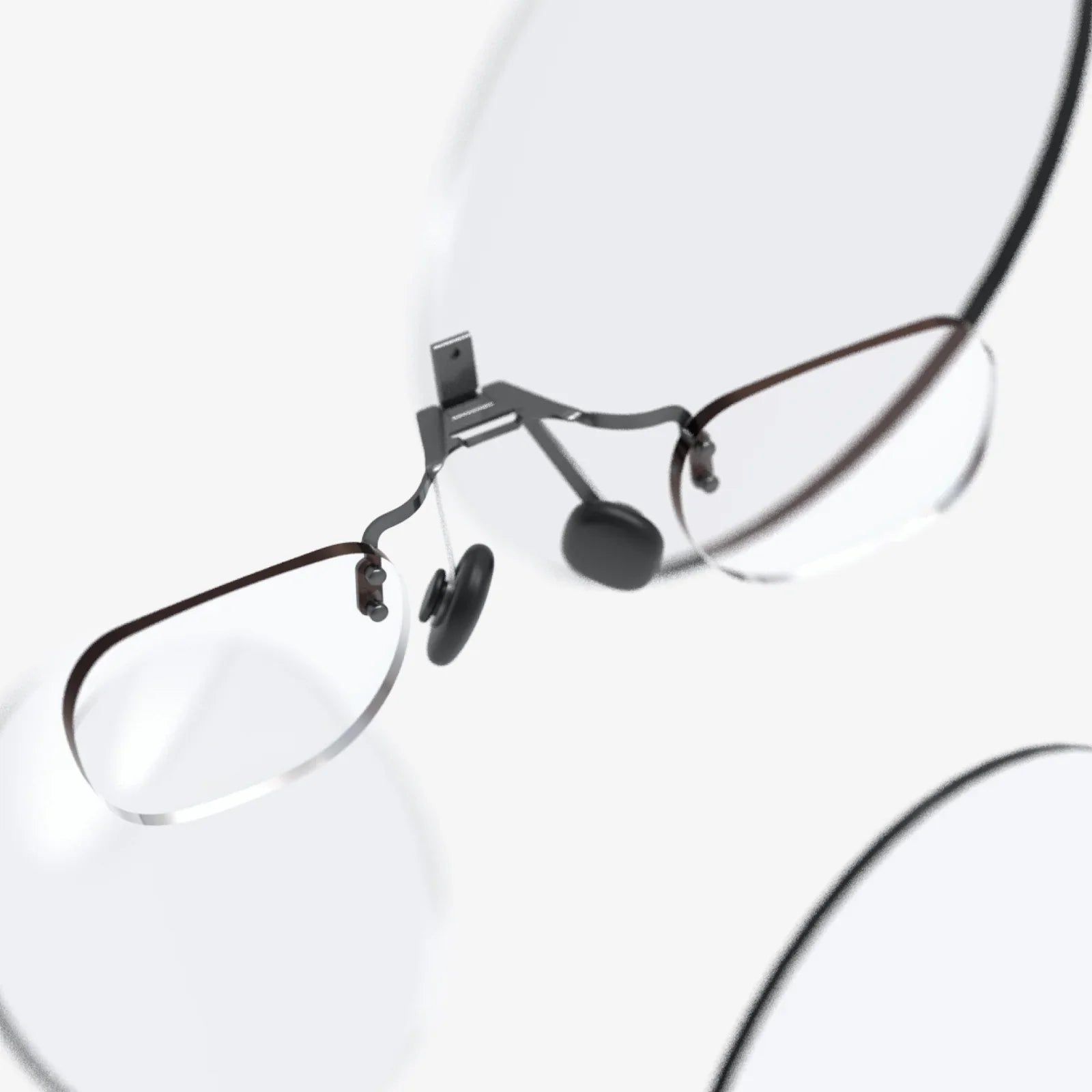
Imagine a world where the digital and physical realms are no longer separate experiences on different screens but are seamlessly woven together, layer upon layer, right before your eyes. This is the promise, the potential, and the profound revolution being ushered in by the next generation of eyewear wearable devices. They are not merely gadgets; they are portals, promising to redefine our very perception of reality, communication, and information itself.
From Augmented Vision to Augmented Reality: A Historical Lens
The concept of enhancing human vision is as old as the polished obsidian mirrors used by our ancestors. The invention of spectacles in the 13th century was a monumental leap, a wearable device that corrected a biological limitation. For centuries, eyewear remained functionally static, defined by its primary purpose of vision correction, with fashion being its only major evolution. The late 20th century saw the first inklings of a paradigm shift, with rudimentary displays being integrated into helmets and goggles for specialized military and industrial applications. These were bulky, expensive, and far from consumer-ready, but they planted the seed for a powerful idea: what if your glasses could show you more than the world itself?
The true genesis of modern smart eyewear can be traced to the early 2010s, with the arrival of the first mainstream attempt to merge a camera, a tiny display, and internet connectivity into a spectacles form factor. While this initial foray faced significant challenges regarding design, privacy, and utility, it was a crucial proof of concept. It demonstrated a public appetite for a less intrusive form of technology—one that didn’t require looking down at a slab of glass and metal in your hand. It sparked a global conversation about the future of wearables, pushing the entire industry to think smaller, smarter, and more integrated into the human form.
The Anatomy of Intelligence: Deconstructing Smart Eyewear
Today's advanced eyewear wearable devices are marvels of micro-engineering, packing a suite of sophisticated technologies into a form factor that is increasingly indistinguishable from traditional eyewear. The core components that power this revolution include:
- Micro-Displays and Waveguides: The magic of overlaying digital information onto the real world happens here. Micro-displays, often based on OLED or MicroLED technology, generate incredibly sharp, bright images. These images are then projected towards the user's eye using advanced optics like waveguides or holographic diffraction gratings. These are essentially transparent pieces of glass or plastic that can bend light, channeling the digital imagery directly onto the retina while allowing ambient light to pass through, creating the illusion that the digital content exists in the world around you.
- Spatial Audio and Bone Conduction: Immersive experience isn't just visual. High-fidelity speakers built into the temples can create a personal sound bubble for media consumption and calls. More advanced systems employ bone conduction technology, which transmits sound waves through the bones of the skull directly to the inner ear. This leaves the ear canal open, allowing users to hear their digital audio clearly while remaining fully aware of ambient sounds in their environment—a critical feature for safety and situational awareness.
- The Sensor Suite: This is the nervous system of the device. A typical pair of smart glasses is equipped with a sophisticated array of sensors, including inertial measurement units (IMUs) for tracking head movement and orientation, ambient light sensors, proximity sensors, and high-resolution cameras. More advanced models incorporate depth sensors and LiDAR scanners to create a precise, real-time 3D map of the surrounding environment, enabling digital objects to interact realistically with physical surfaces.
- Onboard Processing and Connectivity: The brain of the operation is a miniaturized system-on-a-chip (SoC) that handles everything from running the operating system and processing sensor data to rendering graphics. This is complemented by robust connectivity options like Bluetooth for pairing with a smartphone and Wi-Fi for direct internet access, ensuring a seamless flow of data.
- Power Management: Perhaps the greatest engineering challenge is power. Fitting a battery with sufficient capacity into the slim temples of a pair of glasses is a constant battle between performance, size, and weight. Innovations in low-power displays, efficient processors, and advanced battery chemistry are crucial for achieving all-day usability.
Beyond Novelty: Transformative Applications Across Industries
The true value of eyewear wearables is not in the technology itself, but in its application. They are moving beyond consumer novelty into powerful professional tools and life-enhancing aids.
The Professional Workspace Reimagined
In fields where hands-free access to information is critical, smart glasses are a game-changer. For a surgeon, vital signs and imaging data can be displayed in their periphery without ever looking away from the operating field. For a field engineer repairing complex machinery, digital schematics and remote expert guidance can be overlaid directly onto the equipment they are fixing, drastically reducing errors and downtime. In logistics and warehousing, workers can see picking lists, inventory locations, and navigation prompts hands-free, dramatically accelerating fulfillment processes and improving accuracy.
Redefining Accessibility and Human Augmentation
This technology holds immense promise for enhancing human capability. For individuals with low vision, smart glasses can identify obstacles, read text aloud from signs or documents, and highlight curbs and steps in real-time, granting a new level of independence. Real-time translation subtitles overlaid onto a conversation partner's face could one day break down language barriers in a profoundly natural way. For those with hearing impairments, speech-to-text transcription displayed within the glasses could make every conversation accessible.
The Future of Social Connection and Content Creation
Eyewear wearables offer a first-person perspective (POV) that is inherently more intimate and engaging than traditional camera footage. The next generation of social media and content creation will be built on this authentic, hands-free format. Imagine sharing a live, point-of-view stream of a concert you're attending or a cooking tutorial where your audience sees exactly what you see. For remote collaboration, a shared augmented reality space, visible to all participants through their devices, could make digital meetings feel as tangible as being in the same room, manipulating 3D models together.
The Invisible Elephant in the Room: Privacy, Security, and the Social Contract
The path forward for eyewear wearables is not without significant hurdles, the most formidable of which is the societal and ethical dimension. A device that sees and hears what you do, constantly recording the world, presents unprecedented privacy challenges. The potential for surreptitious recording in sensitive social situations, changing rooms, or private spaces is a legitimate and serious concern. The very concept of consent is eroded when a camera can be always-on and virtually undetectable.
This necessitates a new social contract. It will require:
- Clear Hardware Indicators: Unambiguous, always-visible recording lights that cannot be disabled by software are a non-negotiable baseline requirement to inform people when they are in the field of view of a recording device.
- Robust Data Ethics and Regulation: Companies developing this technology must embed privacy-by-design principles. Strict data anonymization policies, on-device processing for sensitive information (like facial recognition), and transparent user controls over data collection are essential. Governments will need to create new legal frameworks that address the unique challenges of pervasive, ambient computing.
- Cultural Norming and Etiquette: Just as society developed new rules of etiquette for mobile phone use, new norms will need to emerge for smart glasses. Establishing "AR-free" zones in certain establishments and developing a common understanding of when it is and isn't appropriate to use such devices will be a gradual cultural process.
- Cybersecurity: A device that is constantly capturing a feed of your life is a treasure trove of sensitive data. Protecting this data from hackers is paramount. End-to-end encryption for stored and transmitted data, along with regular security patches, must be a top priority for manufacturers.
The Road Ahead: The Invisible Fusion of Human and Machine
The ultimate evolution of eyewear wearables is not a heavier, more feature-packed device, but its opposite: true invisibility. The end goal is for the technology to fade entirely into the background, becoming as unnoticeable and indispensable as a pair of prescription lenses. Future iterations will leverage breakthroughs in materials science, such as meta-lenses that can replace bulky traditional optics, and ultra-low-power chips that draw energy from ambient light or body heat.
The user interface will evolve from clumsy voice commands and touchpads to something far more intuitive. Subtle gesture control, detected by sensors tracking minute finger movements, and ultimately, brain-computer interfaces (BCIs) reading neural signals, will allow us to interact with our digital layer through thought alone. The device will become a true cognitive partner, anticipating needs and presenting information contextually, without ever being asked.
We are standing at the precipice of a new era of computing, one that moves beyond the handheld rectangle and into the very fabric of our perception. Eyewear wearable devices are the key that unlocks this door, offering a future where technology doesn't demand our attention but enhances our reality, empowers our capabilities, and connects us to information and to each other in ways we are only beginning to imagine. The revolution won't be televised; it will be projected directly onto our retinas.
The line between the digital self and the physical self is blurring, and the bridge is being built not in your pocket, but on your face. The next time you see someone wearing a seemingly ordinary pair of glasses, look closer—you might just be glimpsing the future, and it’s a vision far more incredible than anyone could have ever imagined.
Share:
Top AI Tools: The Ultimate Guide to Transforming Your Workflow in 2024
Best AR Display: The Ultimate Guide to Unlocking the Future of Visual Technology