


- by wangfred
Face Goggles AI: The Unseen Revolution Reshaping Our Digital and Physical Worlds
- by wangfred
Imagine walking through a city where every face tells a story, not to you, but to the invisible lenses embedded in the world around you. Your phone, a security camera, a storefront display—each is a potential window into a digitally augmented layer of reality, one where identities, preferences, and histories are instantly accessible. This is not a scene from a science fiction thriller; it is the imminent future being built today by a powerful technological convergence known as Face Goggles AI. This technology, which seamlessly merges advanced facial recognition algorithms with the immersive, interactive overlay of augmented reality, is poised to dismantle the barriers between our digital and physical selves, promising a world of unparalleled convenience and personalization, while simultaneously forcing a profound societal reckoning with the very nature of privacy and anonymity.
At its most fundamental level, Face Goggles AI is a sophisticated pipeline of data processing and interpretation. It begins with sensor acquisition. High-resolution cameras, often paired with depth sensors and infrared projectors, capture not just a two-dimensional image of a face, but a detailed three-dimensional map. This data is rich with information: the distance between the eyes, the contour of the cheekbones, the unique pattern of the skin's texture—all forming a biometric signature as distinct as a fingerprint.
Next, the raw data is fed into a deep neural network, the AI engine of the system. This is where the magic happens. This network has been trained on millions, if not billions, of facial images, learning to identify and isolate the most salient features that distinguish one individual from another. It doesn't store a literal image; instead, it creates a numerical representation, often called an embedding or a faceprint. This mathematical model is incredibly efficient and forms the basis for all subsequent tasks.
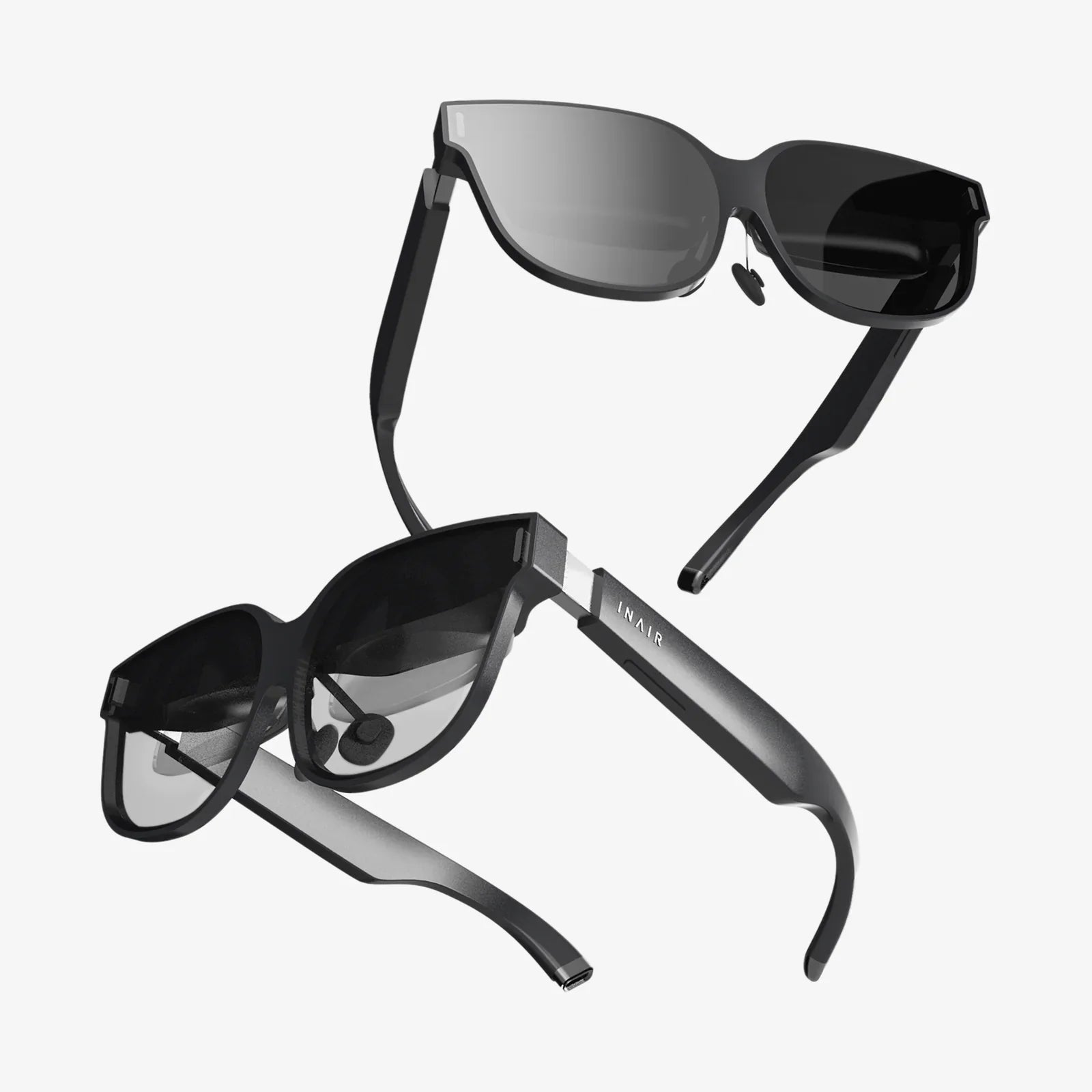
The final stage is augmented reality integration and action. This is what transforms mere recognition into "goggles." Once a faceprint is identified and matched against a database, the system projects relevant digital information directly into the user's field of view. This could be through a smartphone screen, smart glasses, or a heads-up display. The digital overlay is precisely anchored to the individual's face or position in space, creating the illusion that the information is part of the real world. This closed loop of see-recognize-augment is the defining characteristic of this transformative technology.
The theoretical potential of Face Goggles AI is vast, but its real-world applications are already taking root, promising to revolutionize sectors from commerce to public safety.
Imagine walking into a store where a digital screen recognizes you as a loyal customer and immediately displays your favorite brands and a personalized discount code. Sales associates, equipped with smart glasses, could see your purchase history and preferences, allowing them to offer expert, tailored advice. In a clothing store, a virtual mirror could superimpose different outfits onto your reflection without you ever needing to step into a changing room. This level of context-aware personalization moves far beyond simple online recommendations, creating a dynamic and responsive physical shopping environment.
The applications in security are both powerful and controversial. Airports could implement seamless, walk-through security checks where your face is your boarding pass and identity verification, eliminating queues and physical documents. Sensitive facilities could replace keycards and PIN codes with frictionless facial access. For law enforcement, officers could identify individuals with outstanding warrants or missing persons in real-time during routine interactions. However, this power also enables the potential for pervasive surveillance, a topic that demands rigorous public debate and robust legal frameworks to prevent abuse and protect civil liberties.
In the medical field, Face Goggles AI can serve as a powerful diagnostic and assistive tool. It can be trained to recognize the early signs of certain neurological conditions like Parkinson's or stroke by analyzing subtle facial muscle movements and asymmetries that are imperceptible to the human eye. In elderly care facilities, systems could monitor residents for signs of distress, falls, or changes in behavior that indicate a health issue, enabling faster response times. For individuals with visual impairments, smart glasses could identify friends and family in a crowd and whisper their names, restoring a layer of social interaction and independence.
On a social level, this technology could fundamentally alter how we connect. At a large conference, your glasses could help you remember the name and company of everyone you meet. It could translate a colleague's speech in real-time, superimposing subtitles directly under their face. Our faces could become the ultimate universal login, replacing passwords for everything from our bank accounts to our social media profiles. This creates a future of ultimate convenience but also one where our physical identity is irrevocably tethered to our digital footprint.
For all its promise, the rise of Face Goggles AI casts a long and troubling shadow. The ethical dilemmas it presents are among the most pressing of our technological age.
The most immediate casualty of ubiquitous facial recognition is public anonymity. The ability to move through a space without being identified, tracked, and logged is a cornerstone of a free society. It allows for private conversations, anonymous political speech, and simply being left alone. Face Goggles AI, deployed without constraint, creates a world of perpetual line-ups, where every citizen is constantly being identified and checked against countless databases. This creates a chilling effect on free assembly and expression, fundamentally altering the relationship between the individual and the state.
AI systems are only as unbiased as the data they are trained on. Numerous studies have shown that many facial recognition algorithms exhibit significant racial and gender bias, performing far less accurately on women and people of color. A false positive in a security context could lead to wrongful detention and immense personal trauma. The consequences of a "glitch" in a system that is trusted to objectively identify truth are terrifying, potentially reinforcing and automating societal prejudices on a massive scale. The concept of algorithmic accountability becomes a matter of critical importance.
In most public spaces, how can an individual possibly consent to having their face scanned and identified? The very nature of the technology allows for passive, remote identification without a person's knowledge or permission. This turns every citizen into a walking data point, their biometric information harvested and analyzed by corporations and governments, often for purposes they did not agree to and cannot control. The fundamental principle of informed consent is rendered meaningless in a world watched by unseen AI goggles.
The integration with AR opens a terrifying door for real-world misinformation and manipulation. A malicious actor could theoretically deploy a system that superimposes false names or false information onto individuals, potentially inciting violence or public shaming. Imagine a political protester being falsely labeled as a violent criminal to those viewing them through certain lenses. This technology could create a fragmented reality where different people see different versions of the truth, undermining shared facts and social cohesion.
The genie of Face Goggles AI is out of the bottle. The challenge before us is not to futilely try to stuff it back in, but to build a robust lamp that can control its power. This requires a multi-faceted approach involving technology, law, and ethics.
From a technological standpoint, research must prioritize the development of explainable AI, allowing us to understand how decisions are made, and federated learning, which can train models without centralizing sensitive biometric data. Privacy-preserving techniques like on-device processing, where data is analyzed on the user's gadget and never sent to a cloud server, are crucial. We must also invest heavily in debiasing datasets and creating rigorous, independent auditing standards for these systems.
On a legal and regulatory level, we need clear, strong laws akin to the European Union's AI Act that establish red lines. The use of real-time remote facial recognition in public spaces by law enforcement should be subject to a moratorium or an outright ban without explicit judicial authorization for specific, serious crimes. Citizens must be granted digital rights over their biometric data, including the right to know how it is being used, the right to correct errors, and the right to have it deleted. Transparency mandates requiring organizations to disclose the use of such technology are non-negotiable.
Finally, a broad public dialogue is essential. We cannot allow the norms for this powerful technology to be set solely by boardrooms and government agencies behind closed doors. We must ask ourselves as a society: What kind of future do we want to live in? What trade-offs between convenience and privacy are we willing to accept? The answers to these questions will define the next chapter of our relationship with technology and with each other.
The age of Face Goggles AI is dawning, offering a glimpse into a future of dazzling possibility and profound peril. It is a tool of immense power, and its ultimate impact—whether it becomes a shield that protects and empowers or a weapon of control and division—rests not in the code, but in our hands. The choices we make today, the laws we pass, the ethics we uphold, and the conversations we have will determine if this revolution illuminates our world or casts it into shadow. The lens is now turning on us, demanding we look closely at the future we are creating.
Share:
Top VR Phones: The Ultimate Guide to the Best Mobile Virtual Reality Experiences in 2024
AR Viewer: Transforming How We See and Interact With the Digital World