


Imagine a world where the digital and the physical are not separate realms but a single, seamless tapestry of experience. This is not a glimpse into a distant science fiction future; it is the reality being woven around us today, a reality whose first, tentative thread was spun decades ago. The quest to understand our present and future is rooted in a single, pivotal moment: the creation of the first augmented reality. This is the story of that genesis, a tale of audacious vision, clunky hardware, and the birth of an idea so powerful it is now changing everything.
The Conceptual Forerunners: A Vision Before the Hardware
Long before the requisite technology existed, the seeds of augmented reality were planted in the fertile soil of human imagination. The concept of overlaying information onto our view of the world has deep literary and philosophical roots. Many point to L. Frank Baum's 1901 novel, The Master Key, which introduced the concept of "Character Markers"—a set of spectacles that, when worn, revealed letters on people's foreheads denoting their character traits. This was a purely fictional prophecy, but it captured the essential AR premise: enhancing vision with contextually relevant data.
In the mid-20th century, another precursor emerged in the world of cinema. In 1962's Terminal Station, director John Frankenheimer used a technique called "Augmented Space" to project images onto the set, creating an illusion of layered information. While a cinematic trick, it visually articulated a desire to blend imagery with the physical environment. These cultural touchstones demonstrated a persistent human yearning to augment our perception, a yearning that would soon demand a technological answer.
The Birth of the First True Augmented Reality System
The transition from concept to concrete invention is attributed to Ivan Sutherland, a computer scientist whose work was so revolutionary he is often called the "father of computer graphics." In 1968, at Harvard University, Sutherland and his student Bob Sproull created what is widely recognized as the first augmented reality system. They named it The Sword of Damocles.
This name was not hyperbolic. The system was a terrifyingly imposing apparatus. Users did not wear it so much as were tethered to it. A large, heavy mechanical arm, suspended from the ceiling of the lab, held the head-mounted display in place, tracking the user's head movements. The display itself was a pair of goggles that presented simple, wireframe computer graphics—floating cubes, 3D lines, and basic shapes—that were perfectly composited over the user's real-world view. It was a stereoscopic display, creating a convincing sense of depth, and the graphics would change perspective in real-time as the user moved their head. This was the crucial, groundbreaking innovation: a virtual overlay that was spatially aware and interactive.
The graphical fidelity was primitive by today's standards, but its implications were earth-shattering. Sutherland had not just built a device; he had proven a paradigm. He demonstrated that a computer could be used not merely as a calculator or a text processor, but as a medium for enhancing human perception of the physical world. The Sword of Damocles was the Big Bang of augmented reality, and every modern AR device, from sleek smart glasses to the camera on your phone, exists in the universe it created.
The Long Winter: Decades of Development in the Shadows
Following Sutherland's breakthrough, AR did not immediately explode into the mainstream. The hardware was too expensive, too bulky, and too computationally intensive for commercial use. For the next two decades, development continued almost exclusively within military, academic, and industrial research labs. The U.S. Air Force, for instance, invested heavily in research for head-up displays (HUDs) in fighter jets, which projected crucial flight data onto the cockpit canopy, allowing pilots to keep their "heads up" and focused on the battlefield. This was a specialized, but highly successful, application of AR principles.
In the 1990s, the term "Augmented Reality" was formally coined by researchers Thomas P. Caudell and David Mizell at Boeing. They were developing a system to assist factory workers in assembling complex wiring harnesses for aircraft. Instead of relying on cumbersome physical diagrams, they devised a head-mounted display that would project digital schematics and instructions directly onto the wiring boards. This was one of the first practical, industrial applications of AR, proving its value in improving accuracy and efficiency in complex tasks.
This era also saw the software foundations being laid. The development of robust computer vision algorithms and tracking libraries allowed digital content to be more accurately anchored to the real world. Researchers began experimenting with marker-based tracking, using simple black-and-white symbols (fiducial markers) that a camera could easily recognize to position and orient virtual objects. While constrained, this technology made AR more accessible to researchers and paved the way for future breakthroughs.
The Catalyst: Mobile Computing and the Modern AR Revolution
The true catalyst that brought AR out of the lab and into the hands of billions was the confluence of several technologies: the smartphone, the app store, and high-speed mobile internet. The modern smartphone is a perfect AR machine, packing a powerful processor, a high-resolution display, a camera, GPS, an accelerometer, and a gyroscope into a single, pocket-sized device.
The release of a certain mobile game in 2016 acted as a global AR awakening. For the first time, millions of people used their phone's camera to see fantastical creatures seemingly inhabiting their own parks, streets, and living rooms. It was a flawed but incredibly popular demonstration of markerless AR, using the phone's sensors to understand the geometry of the environment without needing a predefined marker. This viral phenomenon, more than any corporate marketing campaign, educated the public on what AR could be and created massive demand for more advanced experiences.
Simultaneously, tech giants began releasing software development kits (SDKs) and frameworks, empowering a global army of developers to build AR experiences. These platforms provided the complex computer vision and spatial mapping tools needed to create realistic interactions between digital and physical objects, all accessible through a standard smartphone. This democratization of development was the final piece of the puzzle, unleashing a torrent of creativity and innovation.
From Clunky Headset to Invisible Interface: The Future Beckons
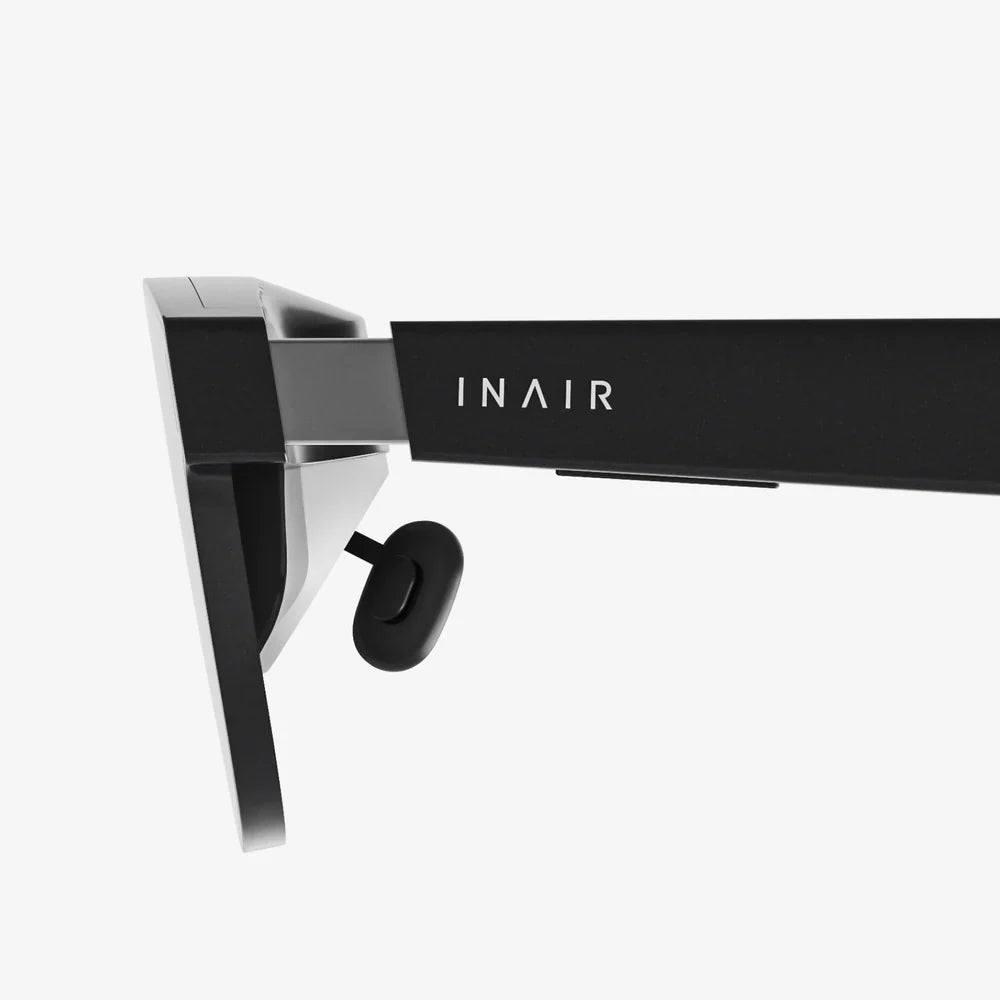
Today, we stand on the cusp of the next great leap. The goal is no longer just to create AR, but to perfect it—to make the technology so seamless and intuitive that it becomes an invisible interface to the world's information. The current trajectory is moving away from holding up a phone screen and towards wearable, socially acceptable smart glasses. These devices aim to project high-resolution imagery directly onto the retina or use waveguides to layer light onto real-world vision, all while being as lightweight and unobtrusive as standard eyeglasses.
The potential applications are boundless. In medicine, surgeons will see vital signs and 3D anatomical guides superimposed on a patient during surgery. In education, students will dissect virtual frogs or walk through ancient Roman ruins reconstructed in their classroom. In navigation, arrows will be painted onto the road itself, guiding us to our destination. In our daily lives, the technology will recognize faces and discreetly remind us of names, translate foreign text on menus in real-time, and overlay performance stats onto athletes during a broadcast.
The first augmented reality was a terrifying, ceiling-suspended monster that could only render a floating cube. Its descendants are poised to become the most intimate and powerful tools humanity has ever created, fundamentally reshaping how we work, learn, play, and connect with each other and the world around us. The journey from the Sword of Damocles to the smart glasses of tomorrow is a testament to the power of a single, visionary idea—the idea that our reality is not fixed, but a canvas waiting to be enhanced.
That first, clunky headset didn't just show a wireframe cube; it showed us a new way of seeing. The initial awe of that moment has never truly faded; it has only evolved, multiplying into a million different applications that are quietly infiltrating our everyday lives. The revolution began not with a bang, but with a hum of a server rack and the whir of a mechanical arm, and its final chapter is now being written in the code on our phones and the lenses of the next generation of glasses. The boundary between what is real and what is digital is dissolving, and we are all stepping through.
Share:
Best Augmented Reality Companies Shaping Our Digital Future
Spatial Display Augmented Reality: The Invisible Interface Reshaping Our World