


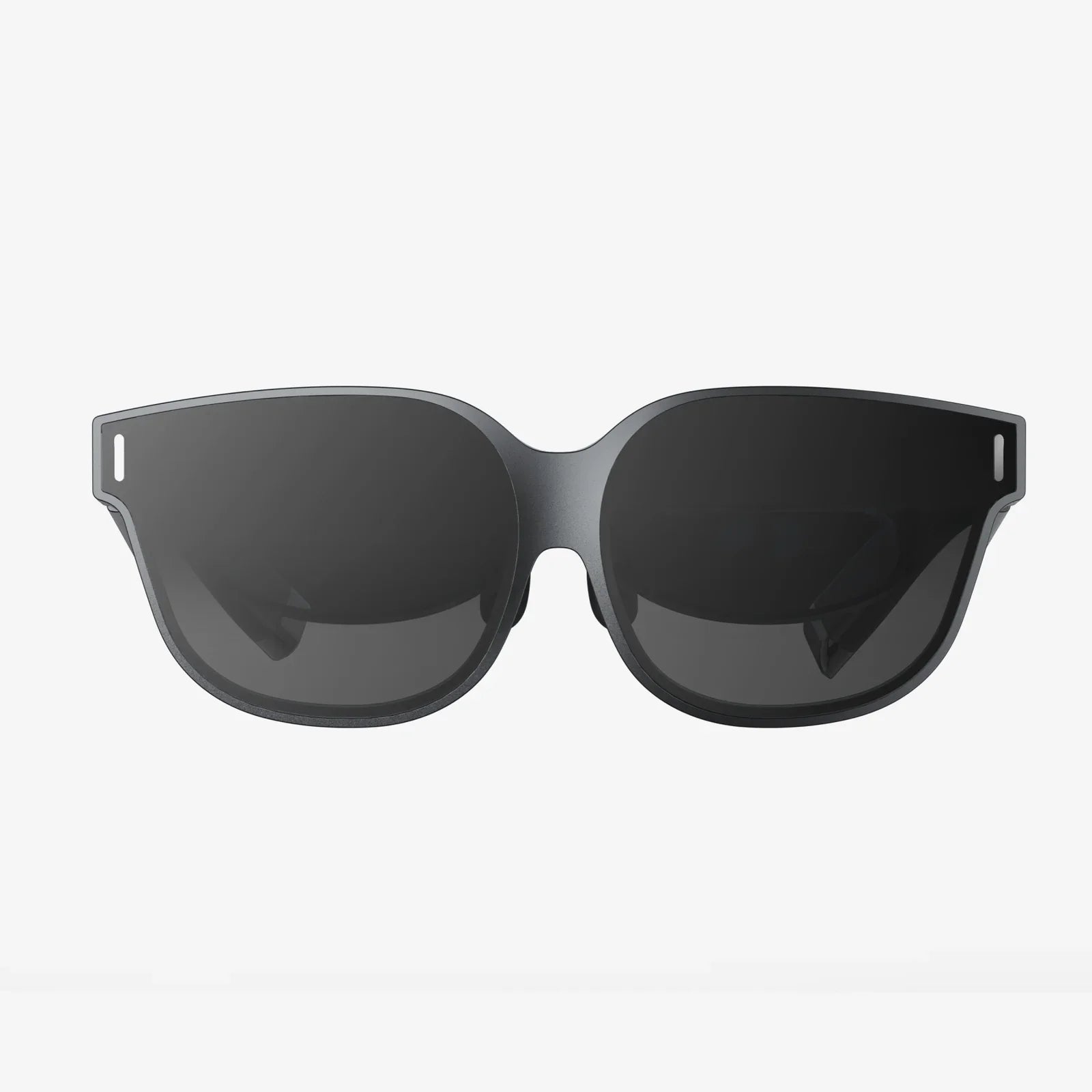
Imagine strapping a bulky, wired helmet over your eyes, hearing the whirr of a cooling fan, and being transported from your living room into a wire-frame universe. This wasn’t a scene from a 1990s cyberpunk movie; for a handful of researchers and enthusiasts, it was the breathtaking, albeit primitive, reality of experiencing the first VR goggles. Long before the term "metaverse" entered the public lexicon, a quiet revolution was brewing in university labs and tech company R&D departments, driven by a singular, audacious dream: to trick the human senses into believing the digital is real. The story of these first VR goggles isn't just a footnote in tech history; it's the foundational saga of a technology that is now poised to redefine human interaction, creativity, and experience itself. It’s a tale of fits and starts, of spectacular failures and breathtaking triumphs, all beginning with a vision that seemed impossible until the moment it wasn't.
The Genesis of a Vision: Pre-Digital Dreams
The conceptual roots of virtual reality and, by extension, the head-mounted displays that would enable it, stretch back far earlier than most realize. The human desire to simulate an experience is ancient, but the technological path to VR began in the mid-20th century.
In 1956, a visionary cinematographer named Morton Heilig developed a radical idea he called the "Experience Theater," designed to fully immerse the viewer in the film. By 1960, he had built a working prototype of his concept, which he patented as the Telesphere Mask. This device bears the unmistakable silhouette of what we would recognize today as a VR headset. It featured stereoscopic 3D wide vision lenses, stereo sound, and even incorporated rudimentary aromas and wind to simulate a motorcycle ride. While it lacked head-tracking and computer-generated imagery, relying on pre-filmed content, Heilig’s creation was the philosophical and mechanical progenitor of all VR goggles to follow. He understood that immersion was a multisensory experience, a principle that still guides high-end VR development today.
Just two years later, in 1962, Heilig built upon this idea with the Sensorama, an entire arcade-style cabinet that incorporated the Telesphere Mask alongside moving chairs and environmental effects. It was, in essence, a proto-VR arcade machine. While commercially unsuccessful, Heilig’s work established the foundational goal: total sensory immersion.
The Father of Virtual Reality and the First Functional Headset
If Morton Heilig was the dreamer, then Ivan Sutherland was the engineer who turned the dream into a tangible, albeit terrifying, reality. In 1968, Sutherland and his student Bob Sproull created what is widely considered the first true head-mounted display system: The Sword of Damocles.
This name was not hyperbolic. The device was so monstrously heavy that it had to be suspended from a mechanical arm bolted to the ceiling, forever poised over the user's head like the legendary sword. What it displayed was equally primitive by today's standards: simple, glowing wireframe geometric shapes like cubes and rooms that overlaid the user's actual environment. This was an Augmented Reality (AR) experience as much as it was VR.
Yet, beneath its crude appearance, the Sword of Damocles was a marvel of engineering that established the core architecture for all future VR goggles. It incorporated:
- Head Tracking: It used ultrasonic trackers to monitor the user's head position and orientation, updating the perspective of the wireframe graphics in real-time.
- Stereoscopic 3D Display: It presented a unique image to each eye to create a convincing sense of depth and volume.
- Computer-Generated Graphics: Unlike Heilig’s filmed content, Sutherland’s worlds were generated in real-time by a computer, a revolutionary concept at the time.
Sutherland’s system was the first to combine these three critical technologies into a single unit. It was the proof of concept that convinced the world that interactive, computer-generated virtual worlds were possible. The road from there, however, would be long and fraught with challenges.
The 1980s and 1990s: The First Commercial Forays and The Hype Cycle
For the next two decades, VR technology remained largely confined to government and university research labs, particularly within NASA and the U.S. military, which saw its potential for flight simulation and remote control of machinery. The computing power required was prohibitively expensive for consumers.
This changed in the late 1980s and early 1990s. Advances in computing, notably the rise of the personal computer and more powerful graphics processors, finally brought VR to the brink of the mainstream. This era saw the release of the first commercially available VR goggles aimed at the public.
Companies like VPL Research, founded by Jaron Lanier (who popularized the term "Virtual Reality"), began selling complete VR systems, including the EyePhone headset and DataGloves. These systems were astronomically expensive, placing them firmly in the domain of corporate and research institutions, but they captured the media's imagination.
The true consumer craze began when companies started marketing cheaper, more accessible VR units for video games and entertainment. These devices were a far cry from the high-fidelity systems used by NASA. They were characterized by:
- Low Resolution: Displays were often LCD screens with very low pixel density, resulting in a notorious "screen door effect" where users could see the gaps between pixels.
- Significant Latency: The delay between a user moving their head and the display updating was often significant, leading to disorientation and motion sickness, nicknamed "sim sickness."
- Limited Software: The games and experiences were simplistic and often little more than tech demos.
Despite the glaring technical limitations, the hype was immense. VR arcades popped up in malls, and news programs featured segments with amazed reporters trying out these new devices. The public perception of VR was set: it was the technology of the future, but the actual consumer experience was deeply disappointing. The technology simply couldn't deliver on the promise, leading to a massive market crash and a long "winter" for VR throughout the late 1990s and 2000s.
The Long Winter and the Seeds of Revival
For nearly two decades, VR was seen as a failed fad. The first VR goggles had overpromised and underdelivered, and the technology retreated back into academic and industrial labs. However, this period of quiet development was crucial. Key advancements were made in areas like:
- Display Technology: The smartphone industry began driving rapid innovation in high-resolution, low-latency, and miniaturized displays—the exact components needed for good VR.
- Motion Tracking: Research into more accurate and cheaper inside-out and outside-in tracking systems continued.
- Computing Power: Moore's Law ensured that the processing power needed to render two high-resolution images at 90 frames per second became more accessible.
The catalyst for VR's dramatic re-emergence was a pivotal moment in 2012. A young enthusiast and entrepreneur named Palmer Luckey unveiled a prototype he called the Rift. Its key innovation was not necessarily doing something brand new, but rather combining off-the-shelf components like high-density smartphone displays with novel, low-persistence tracking to create a headset that finally delivered a smooth, high-field-of-view, and low-latency experience that was orders of magnitude better than the 1990s consumer models. More importantly, it was affordable to produce.
This prototype sparked a revival. It led to a massively successful Kickstarter campaign, which in turn caught the attention of major technology companies. This proved that the core technologies had finally matured enough to make comfortable and compelling VR a reality. The modern VR era had begun, not with a slow burn, but with a firestorm of renewed interest and investment.
The Legacy of the Pioneers: From Wireframes to the Metaverse
Every modern VR headset, from the highest-end professional system to the most accessible standalone unit, carries the direct DNA of those first VR goggles. The core challenges identified by Sutherland and his contemporaries—latency, tracking, field of view, and rendering—remain the primary focus of engineers today, albeit at a vastly more advanced level.
The journey from the Sword of Damocles to today's wireless devices is a story of incremental innovation across multiple industries. The smartphone revolution provided the screens and sensors. The gaming industry provided the content and demand for powerful, real-time graphics. The aerospace and military sectors continued to fund research into haptics and user interface.
Today's devices are finally beginning to fulfill the original vision set out by the pioneers. They offer high-resolution, photorealistic visuals, accurate inside-out tracking that requires no external sensors, and a growing library of sophisticated software for gaming, social connection, fitness, and professional design. The lessons learned from the failures of the first consumer wave—namely that comfort and content are just as important as the technology itself—are now central to product development.
The dream that started with Morton Heilig’s Telesphere Mask and was forged in the cold, geometric world of Ivan Sutherland’s lab is now closer to reality than ever before. We are no longer just looking at virtual worlds; we are starting to live and work within them, all thanks to the clunky, brilliant, and revolutionary first VR goggles.
You might slip on a lightweight headset today to play a game or tour a foreign city, unaware of the decades of struggle and innovation that made that seamless moment of escape possible. That simple act is the culmination of a hundred-year dream, a direct lineage from the first crude prototypes that dared to ask a revolutionary question: what if we could build a reality not of atoms, but of bits? The journey from those initial, awe-inspiring glimpses into a digital frontier to the hyper-realistic immersive experiences of tomorrow is the ultimate testament to human ingenuity—and it’s a journey that is still only just beginning. The next virtual frontier awaits, and it will be built upon the foundation of those first, monumental steps.
Share:
What is Human-Computer Interaction (HCI)? The Complete Guide to the Digital Bridge Between People and Machines
What is Human-Computer Interaction (HCI)? The Complete Guide to the Digital Bridge Between People and Machines