


- by wangfred
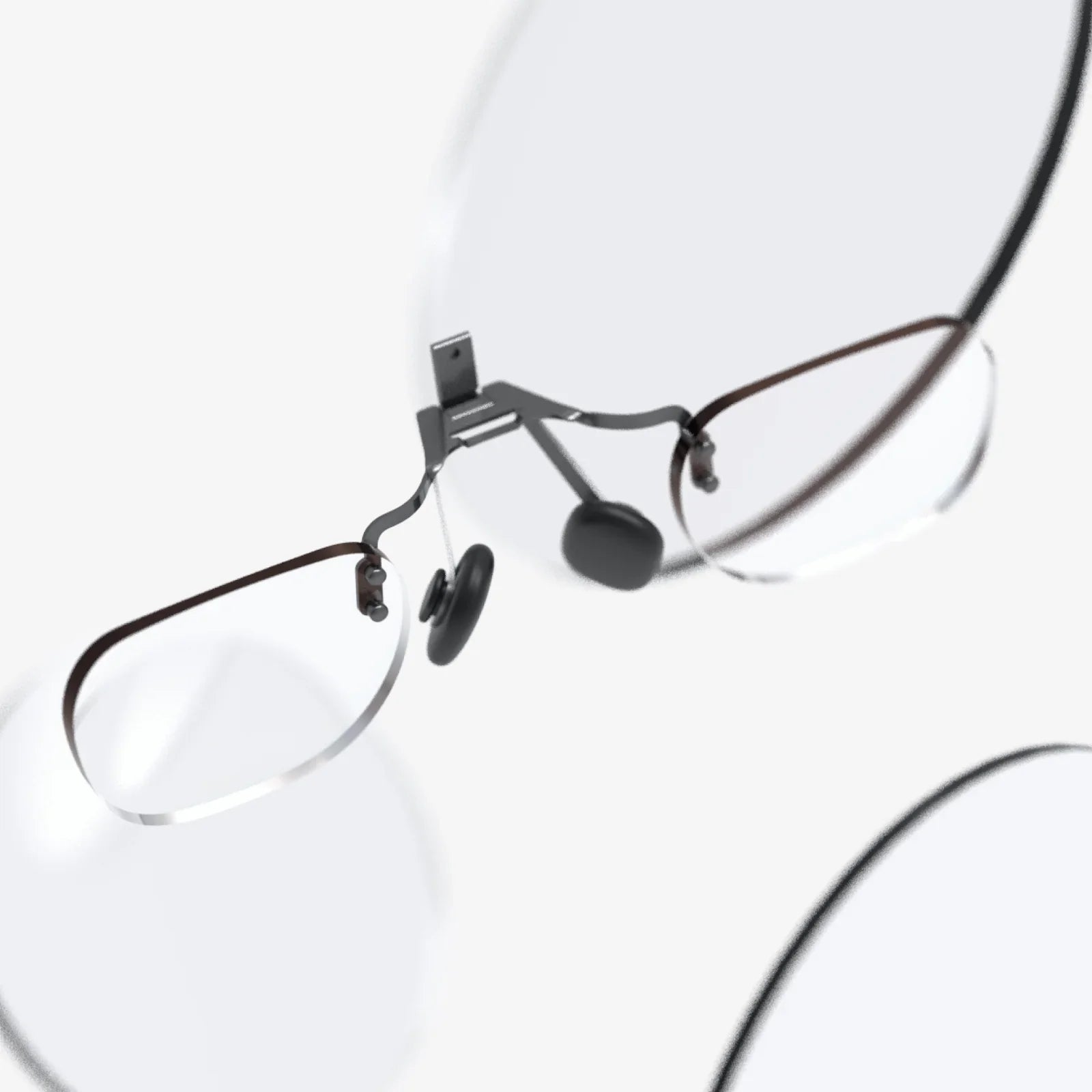
Frameless Smart Glasses The Invisible Revolution in Personal Computing
- by wangfred
Imagine a world where information flows as freely as air, where digital assistants are not confined to screens but exist as whispers in your ear and overlays on your reality, all without a single obtrusive wire or chunky frame. This is the promise held by the next frontier in wearable technology, a future defined not by what we put on our faces, but by what we can make disappear. The race to create the perfect blend of human and computer is accelerating, and its most compelling contender is emerging from the shadows of clunky prototypes into the light of elegant, everyday design.
The journey to frameless smart glasses has been a long one, marked by ambitious promises and often disappointing realities. Early iterations of head-mounted displays were bulky, expensive, and tethered to powerful external computers, confining them to research labs and industrial applications. They were tools, not companions. The subsequent wave of consumer-focused smart glasses often fell into a design valley—too conspicuous for daily wear yet not powerful enough to justify their awkward aesthetics. They announced their technological purpose to the world, creating a social barrier that was often too high for the average user to cross.
The true breakthrough, therefore, is not merely a matter of improving processing power or battery life, though those are crucial. It is a fundamental rethinking of the form factor. The goal is technological sublimation—where the device ceases to be a distinct object and becomes an integrated, almost invisible part of the user's persona. This shift moves the industry beyond the realm of gadgets and into the realm of personal accessories, akin to the transition from the pocket watch to the wristwatch. It’s about enhancing human capability without compromising human connection.
Creating a fully functional computer that looks and feels like a classic pair of lenses is a monumental engineering challenge. It requires the seamless integration of several advanced technologies into a minuscule package.
At the heart of every pair of smart glasses is its optical system—the method by which digital images are projected into the user's eye. For a frameless design, this technology must be exceptionally miniaturized and efficient. Two primary methods are leading the charge:
How do you deliver rich, personal audio without covering or plugging the ears? Traditional headphones or earbuds would instantly shatter the illusion of seamless integration. The answer lies in bone conduction or directional speaker arrays built into the temples. These speakers fire precise vibrations that are either conducted through the skull to the inner ear or directed straight into the ear canal without spilling much sound into the surrounding environment. This allows users to listen to music, take calls, and hear AI responses while remaining fully aware of ambient noises—a critical feature for safety and social awareness.
The computational power required for AR experiences, object recognition, and voice assistance is significant. Frameless designs demand a distributed architecture. The glasses themselves will house the bare essentials: sensors, optical engines, and audio drivers. The heavy processing is often offloaded to a companion device, like a smartphone, via a robust wireless connection like Bluetooth Low Energy or a proprietary protocol. Alternatively, a small, sleek processing pod might be housed in a temple tip, distributing weight and heat efficiently. Battery technology remains a key hurdle, with innovations in solid-state and graphene-based batteries offering hope for all-day life in a tiny package.
The value of frameless smart glasses is not in their invisibility alone, but in the doors that invisibility opens. By being socially acceptable and comfortable enough for all-day wear, they become a universal portal for information.
In fields where hands-free access to information is paramount, frameless smart glasses will be revolutionary. A surgeon could see vital signs and procedural guides overlayed on their patient without looking away from the operating table. A field engineer repairing complex machinery could see schematic diagrams and receive remote expert guidance superimposed on the equipment itself. An architect could walk through a construction site and see the digital building model aligned with the physical structure, identifying discrepancies in real-time. The productivity and safety gains are immense.
Imagine walking through a foreign city where street signs automatically translate in your periphery. Or attending a large conference where the name and professional background of everyone you shake hands with discreetly appears. Navigation arrows could be painted onto the sidewalk, guiding you turn-by-turn without ever needing to glance at a phone. This constant, contextual stream of data, delivered unobtrusively, has the power to make us more knowledgeable and connected to our immediate environment.
Gaming will evolve from something we do on a rectangular screen to something that happens in our living room. Imagine a strategy game where the battlefield unfolds across your coffee table, or a horror game where entities hide in the actual shadows of your home. Watching a sports game could come with real-time stats floating beside players, and a film could be accompanied by director's commentary visuals that appear next to the action. This is the true meaning of immersive media.
With great power comes great responsibility. The very features that make frameless smart glasses so powerful also raise profound questions.
The path forward is not to halt progress, but to engage in a proactive and public dialogue about building these guardrails into the foundation of the technology.
The dream of augmenting human reality is finally shedding its awkward, mechanical shell. Frameless smart glasses represent more than a product category; they are the embodiment of a philosophy that technology should adapt to us, not the other way around. They are the key to unlocking a world where our digital and physical lives are no longer in conflict but are woven together into a single, enhanced experience. The invisible revolution is not coming; it’s already here, waiting for you to see it.