


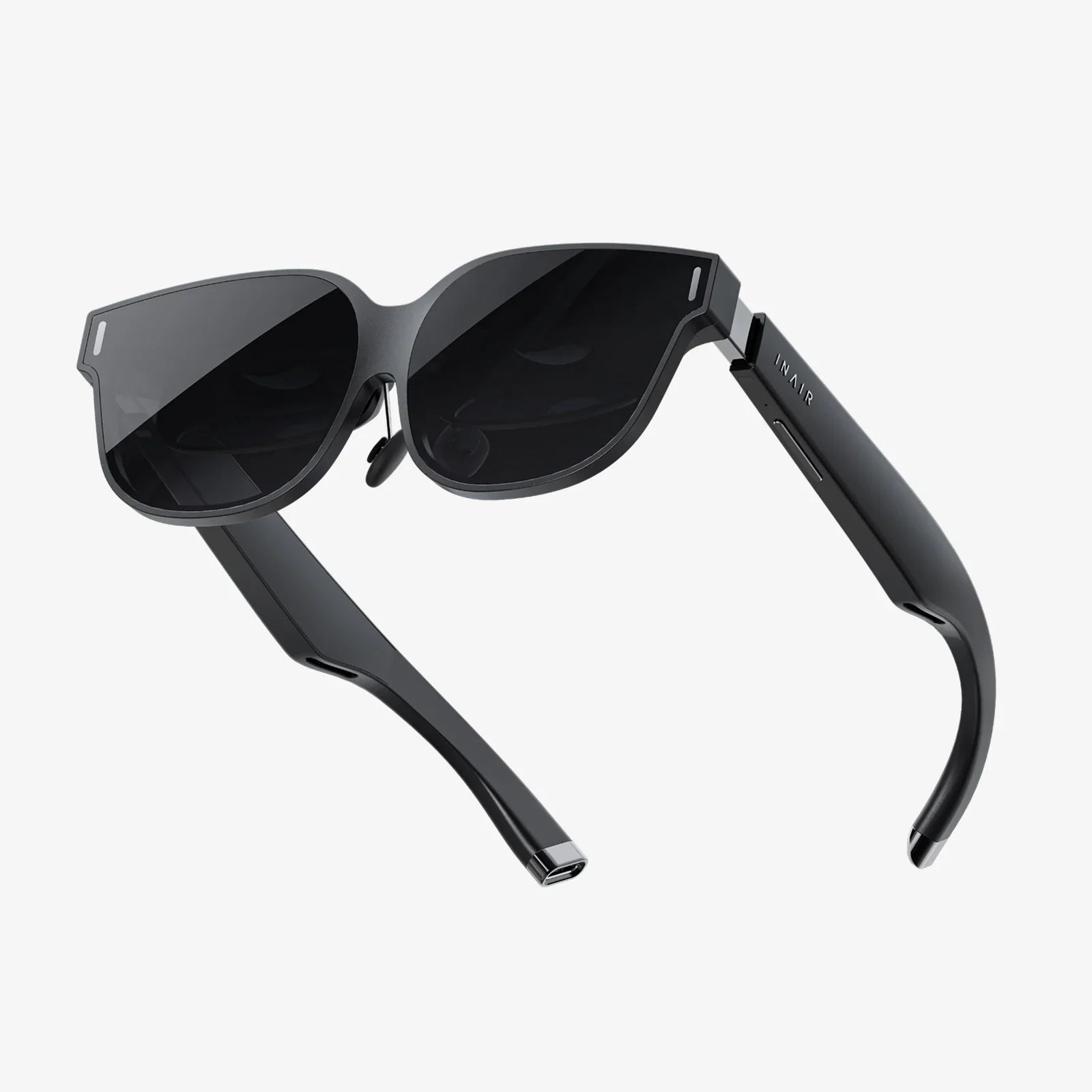
Imagine a world where your environment anticipates your needs before you even form the thought. The lights in your home dim to your preferred evening ambiance as you walk in, a grocery list is automatically compiled based on the dwindling contents of your fridge, and your morning commute is rerouted in real-time to avoid a traffic snarl you didn’t know existed. This is not a scene from science fiction; it is the emerging reality of our transition from the personal computer to intelligent devices—a shift so profound it is quietly dismantling the very paradigm of computing that has dominated for half a century. We are moving from a world where we actively use a tool to one where we are passively, perpetually served by an ecosystem of sentient technology.
The Dawn of the Personal Era: A Machine for the Individual
The rise of the personal computer was, in itself, a revolutionary act. It was a deliberate move away from the monolithic, room-sized mainframes that were the exclusive domain of corporations, governments, and academia. These early behemoths operated on a principle of time-sharing—a scarce resource doled out to users in measured increments. The PC shattered this model. It was a declaration of independence, putting computational power directly on the desk of the individual. For the first time, a single user had complete, sovereign control over a machine. They decided its operating system, its software, its purpose. The interaction was explicit and direct: a keyboard for input, a screen for output. The machine was a tool, a magnificent and powerful one, but a tool nonetheless. Its intelligence was strictly bounded by the commands its user issued and the programs they chose to run. It was a closed system, a universe contained within a beige box.
The Connective Tissue: The Internet and the Seeds of Intelligence
The isolation of the personal computer could not last. The advent of the widespread internet acted as a catalytic agent, transforming these isolated islands of computation into a vast, interconnected archipelago. This connectivity was the crucial precursor to intelligence. Suddenly, data—the lifeblood of learning systems—could flow between machines. Email and early web browsing were just the beginning. This nascent network laid the groundwork for cloud computing, a paradigm shift that would prove even more significant than the PC itself. The cloud moved processing power and storage from the local device to remote data centers, effectively creating a shared, omnipresent brain. This meant a device no longer needed to be immensely powerful on its own; it simply needed a reliable connection to tap into near-limitless resources. This fundamental change enabled the development of software that could learn and improve collectively from aggregated user data, planting the first seeds of what we now call artificial intelligence.
The Proliferation of Form: Beyond the Beige Box
As processing power shunk and connectivity expanded, the physical form of the computer began to mutate and multiply. The laptop untethered computing from the desk. Then came the smartphone, a device that condensed the core functions of a PC into a slab of glass and metal that fit in a pocket. This was the death knell for the PC's central dominance. Computing was no longer a stationary activity; it was a constant companion. This proliferation continued into wearables like smartwatches and fitness trackers, and then exploded into the home with smart speakers, thermostats, and connected appliances. Each of these devices represented a fragmentation of the PC's unified purpose. Instead of one general-purpose machine, we now had a constellation of special-purpose devices, each optimized for a specific context or task. The center of computing had not just moved; it had dissipated into the environment around us.
The Rise of the Algorithmic Mind: From Tools to Partners
This shift in form factor was merely the physical manifestation of a deeper, more philosophical change: the nature of the interaction between human and machine. The personal computer operated on a logic of command and control. The intelligent device operates on a logic of suggestion and anticipation. This is powered by the trifecta of modern technology: sophisticated sensors, ubiquitous connectivity, and artificial intelligence. Our devices are no longer passive; they are equipped with eyes (cameras), ears (microphones), and a sense of touch and movement (accelerometers, gyroscopes). They are constantly gathering data from their environment. This data is streamed to the cloud, where AI algorithms—particularly machine learning and neural networks—process it to build models of our behavior, preferences, and patterns.
The result is a move from explicit to implicit interaction. We don't need to type a search query into a classic personal computer; our smartphone surfaces a relevant news article based on our past reading habits. We don't need to program a thermostat; a smart home system learns our schedule and preferences to optimize temperature automatically. The intelligent device is less a tool we wield and more of a partner we coexist with. Its value is derived not from its raw processing speed, but from its contextual awareness and its ability to make useful decisions on our behalf.
The Ambient Intelligence: The Invisible Fabric of Life
The ultimate expression of this evolution is the concept of ambient intelligence, or ambient computing. This is the point where the technology itself fades into the background, becoming an invisible, woven-in fabric of our daily existence. The goal is no longer to interact with a device, but to accomplish a task seamlessly through a symphony of interoperating devices. Asking a speaker to play music, which then streams to wireless earbuds; having a doorbell camera recognize a visitor and show their face on the nearest screen; using a phone to unlock a car, which then loads your personalized profile for seat position and radio presets—these are all examples of ambient intelligence in action. The personal computer was the spotlight, a focused beam of technology we had to sit under. Intelligent devices are the ambient light, illuminating our entire lives without a visible source.
The Double-Edged Sword: Convenience at a Cost
This new world of anticipatory, ambient convenience does not come without significant trade-offs, creating a complex landscape of ethical and societal challenges that we are only beginning to grapple with.
The Privacy Paradox
Intelligence requires data—enormous, continuous, and intimate amounts of it. For a device to be truly helpful, it must know you deeply: your routines, your conversations, your health metrics, your location history, your preferences. This creates an unprecedented privacy paradox. We willingly trade this deeply personal information for convenience and functionality, often without a full understanding of how it is stored, processed, or used. The data collected by one device for a benign purpose can be aggregated with other data streams to create a startlingly complete digital profile of an individual, raising fears of surveillance capitalism and data exploitation.
The Opacity of Decision-Making
Unlike a personal computer, where a user could understand the logic of a program (or at least, had the potential to), the decision-making processes of AI systems are often opaque "black boxes." We see the input and the output, but the reasoning in between can be inscrutable. When an algorithm denies a loan application, curates your news feed, or recommends a medical diagnosis, understanding the "why" becomes critically important. This lack of transparency challenges concepts of accountability and fairness.
Digital Dependency and Fragility
As our environments become smarter, we also become more dependent on the seamless functioning of these complex systems. A network outage or a server failure doesn't just mean we can't check email; it could mean our lights don't work, our locks won't open, or our heat shuts off. This creates a new form of societal fragility, where our basic utilities are reliant on digital infrastructure that can be vulnerable to outages, cyber-attacks, or simply technical glitches.
The Future Unfolds: What Lies Beyond the Intelligent Device?
The trajectory from personal computer to intelligent devices points toward an even more integrated future. The next frontier is the seamless merger of the digital and physical worlds through advancements in augmented reality (AR) and brain-computer interfaces (BCIs). AR aims to overlay intelligent information directly onto our perception of the real world, while BCIs seek to create a direct communication pathway between the brain and an external device. These technologies promise to dissolve the interface entirely, making our intention the command. The journey that began with us consciously operating a machine is culminating in a state where technology operates as a natural extension of our own cognition and will.
This relentless evolution from the solitary personal computer to the pervasive network of intelligent devices represents one of the most significant transformations in human history. It is a shift that redefines convenience, reimagines capability, and redraws the boundaries of our personal space. The beige box on the desk promised empowerment through control. The intelligent devices humming quietly in our homes, on our wrists, and in our pockets promise empowerment through assistance. But with this promise comes a profound responsibility—to guide this intelligence with careful ethical consideration, to safeguard our individual autonomy, and to ensure that this incredible technology ultimately serves to elevate the human experience, not diminish it. The revolution is no longer on your desk; it’s everywhere else, and it’s just getting started.
Share:
Best Custom Wearables: The Ultimate Guide to Personalizing Your Tech
Holograms The Future of Near-Eye Display: A New Reality Beckons