


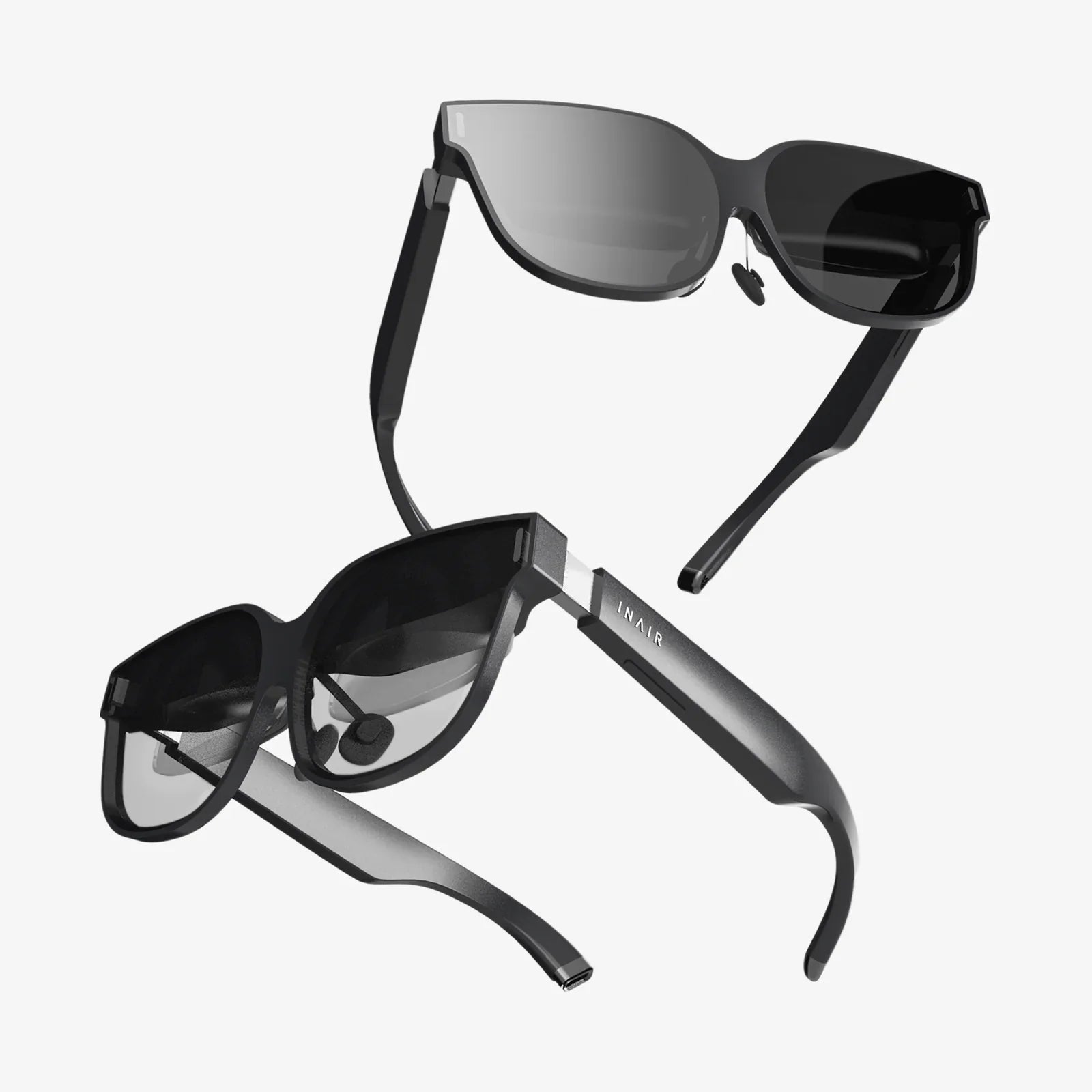
Imagine a device that doesn’t just display a world but becomes your entire reality, a portal sealed around your vision that transports your consciousness from your living room to the edge of a black hole, the peak of Mount Everest, or a battlefield a thousand years in the past. This is the promise, the absolute premise, of the modern full-screen VR headset. It is more than a piece of technology; it is the most direct conduit to experiential escapism and profound connection ever devised. For those seeking the pinnacle of digital immersion, the quest begins and ends with a headset that offers a truly complete, unobstructed, and all-encompassing field of view.
The Anatomy of True Immersion: What Makes a Screen "Full"?
The term "full screen" is deceptively simple. It doesn't merely refer to a large display placed close to the eyes. Instead, it describes a holistic engineering achievement aimed at tricking the human brain into accepting a digital reality as truth. This feat rests on several critical pillars, each contributing to the sensation of being somewhere else entirely.
Field of View (FOV): The Window to Your New World
The single most important metric for a full-screen VR headset is its field of view. Measured in degrees, FOV represents the angular extent of the virtual world you can see at any given moment. The human eye has a horizontal FOV of approximately 200-220 degrees when including peripheral vision, though our detailed binocular vision is closer to 120 degrees.
Early VR devices offered a FOV of around 90-100 degrees, akin to looking at the world through binoculars or a scuba mask. You were always aware of the hard, black edges of the screen, a constant reminder of the illusion. A true full-screen VR headset aggressively pushes this number beyond 120 degrees and toward the holy grail of 200 degrees. This expansion is monumental. It eliminates the "goggle effect," allowing your natural peripheral vision to engage. A shadowy movement out of the corner of your eye in a horror game becomes a genuine jump-scare. The sense of scale in a vast virtual cathedral feels authentic because you can almost take in the entire structure without turning your head. This biological trick is the first and most crucial step toward presence—the feeling of actually being in the virtual environment.
Resolution and Pixel Density: Banishing the Screen Door
A wide field of view is useless if the world it reveals is blurry, pixelated, or obscured by the "screen-door effect" (SDE)—the visible fine mesh of black lines separating individual pixels on the display. SDE was the immersion-breaking hallmark of first-generation hardware, constantly pulling users out of the experience.
Modern full-screen VR headsets combat this with two key advancements: incredibly high-resolution displays and high pixel-per-degree (PPD) density. We are now entering an era of headsets featuring mini-LED and OLED displays with resolutions exceeding 4K per eye. When these ultra-dense displays are combined with advanced, custom-engineered pancake lenses, the result is a visual clarity that borders on real life. Text becomes sharp and readable, distant objects retain detail, and the once-ubiquitous screen door effect vanishes entirely. The virtual world is no longer a digital approximation; it is a visually coherent and believable space.
Optical Stack and Lens Technology: The Gateway of Light
The journey of light from the micro-display to your retina is governed by the optical stack. For years, Fresnel lenses were the standard. They are lightweight and good at providing a large sweet spot (the area where the image is in focus), but they introduce visual artifacts like god rays—unwanted glare and streaks of light around high-contrast objects.
The latest generation of full-screen VR headsets is rapidly adopting pancake lenses. This revolutionary design uses a folded light path between multiple lens elements to drastically reduce the distance needed between the display and the eye. This allows for a much slimmer and lighter headset design. More importantly, pancake lenses virtually eliminate god rays and provide edge-to-edge clarity, meaning the image remains sharp even when you glance around with your eyes instead of turning your head. This subtlety makes the experience vastly more comfortable and natural, further cementing the illusion of reality.
Beyond the Visuals: The Complete Sensory Package
While the visual fidelity of a full-screen VR headset is paramount, true immersion is a multi-sensory experience. The best hardware understands that the eyes are just one part of the equation.
Audio: The Unseen Hand of Atmosphere
3D spatial audio is non-negotiable for a complete experience. High-quality, built-in headphones or speakers that utilize head-related transfer function (HRTF) create sound that seems to come from specific points in the 3D space around you. The crunch of gravel underfoot sounds like it's beneath you, a whisper in a game feels like it's coming from your left ear, and an overhead spaceship truly sounds like it's soaring above. This auditory landscape is critical for selling the reality of a space and is a key component of the full-screen VR promise.
Tracking and Controllers: Your Body in the Digital Ether
Your virtual hands are your primary tool for interaction. Inside-out tracking, where cameras on the headset itself track the movement of the controllers (and your own hands via computer vision), has become the standard. This eliminates the need for external base stations and makes the technology more accessible. The precision of this tracking allows for nuanced interactions—pointing, grabbing, throwing, and gesturing with a level of fidelity that makes these digital extensions feel like your own. Haptic feedback in the controllers provides tactile confirmation, from the gentle buzz of a virtual button press to the jarring kick of a virtual weapon.
Comfort and Form Factor: Forgetting You're Wearing It
Immersion is broken the moment you become aware of the hardware on your face. A heavy, front-heavy, or poorly balanced headset causes neck strain and constantly pulls you out of the experience. A well-designed full-screen VR headset prioritizes ergonomics through balanced weight distribution, plush facial interfaces that block out external light, and easily adjustable straps. The shift to pancake optics also enables a smaller, lighter form factor, making long-duration sessions in these expansive virtual worlds not just possible, but comfortable.
The Software That Breathes Life into the Hardware
The most advanced full-screen VR headset in the world is a lifeless shell without software designed to exploit its capabilities. We are witnessing a symbiotic evolution where content creators are now building experiences specifically for this new level of immersion.
Games are the most obvious application. Titles built from the ground up for high-fidelity VR are leveraging wide FOV to create overwhelming senses of scale and atmosphere. Flight and racing simulators benefit enormously, as the ability to glance into a turn with your peripheral vision or check your instruments without moving your head is a game-changer for both realism and performance.
But the applications extend far beyond entertainment. Architects and designers use full-screen VR to walk clients through unbuilt structures at a 1:1 scale. Medical students practice complex surgeries in risk-free simulated environments. Corporate teams meet in persistent virtual boardrooms that feel tangibly present, reading body language and making eye contact in ways flat video calls simply cannot replicate. Artists paint in 3D space, sculpting with light and virtual clay. The full-screen headset becomes a universal tool for creation, collaboration, and training.
The Future is Already Here: Where Do We Go From Here?
The current generation of hardware has solved the fundamental technical barriers to immersion. The focus is now shifting to refining the experience and expanding accessibility. Several key trends are shaping the immediate future of full-screen VR headsets.
We are seeing a clear bifurcation in the market: standalone headsets that offer incredible convenience and wireless freedom, and premium tethered headsets that push the absolute limits of visual fidelity by leveraging the raw power of high-end computing hardware. There is also a growing interest in VR/AR hybrid devices, often called Mixed Reality (MR) headsets. These devices use high-resolution color passthrough cameras to blend the real world with the virtual, allowing for experiences that can overlay digital information onto your physical surroundings or let you interact with virtual objects on your real desk.
Furthermore, eye-tracking technology is poised to become a standard feature. It enables foveated rendering—a technique where the headset renders only the area you are directly looking at in full detail, while subtly reducing the detail in your periphery. This dramatically reduces the computational power needed, allowing for even more complex and beautiful worlds without sacrificing performance. It also enables new forms of social interaction in VR, as avatars can make realistic eye contact, and new UI paradigms where you can select items just by looking at them.
The journey of the full-screen VR headset is a story of the relentless pursuit of presence. It is a story of engineers and designers obsessing over every degree, every pixel, and every millisecond to create a seamless window into other realities. They are building not just gadgets, but gateways.
This is no longer a glimpse into a distant sci-fi future; it is an invitation to a new layer of reality available today. The barrier between you and the experience has finally, truly, disappeared. The only question that remains is not about the technology's capability, but about your own readiness to step through the portal and see what lies on the other side of the screen.
Share:
VR Headset Management: The Definitive Guide to Scaling Your Virtual Reality Ecosystem
Bigscreen Beyond VR Headset: The Unprecedented Leap Into Personal Virtual Reality