


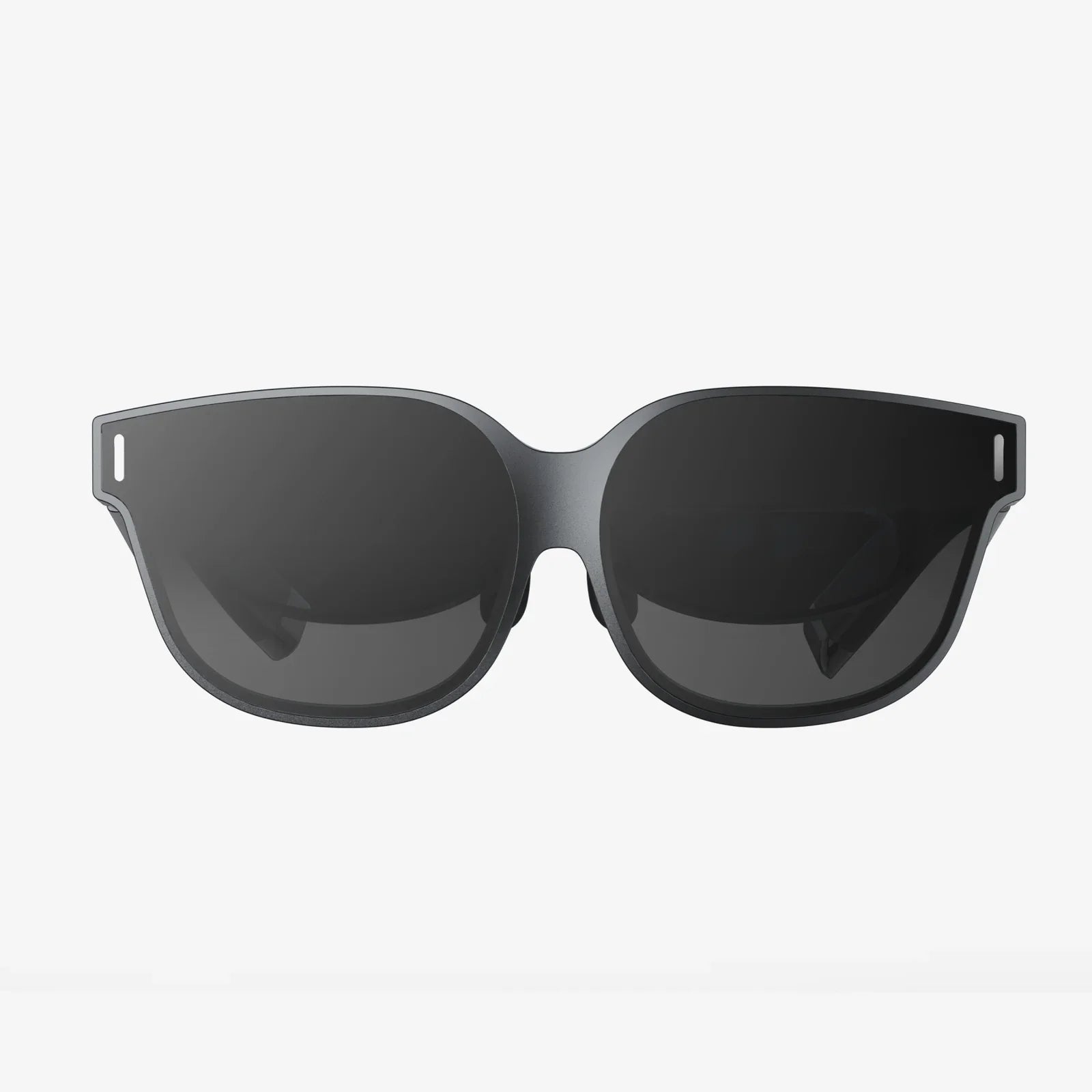
Imagine slipping on a headset and instantly being transported to the deck of a sunken pirate galleon, to the surface of Mars, or to a surgical theater to observe a master at work—all without leaving your living room. This is the profound promise of virtual reality (VR), a technology that has captivated science fiction for decades and is now a tangible, world-altering reality. The allure is undeniable: the chance to experience the impossible, to learn by doing in a consequence-free environment, and to connect with others across vast distances as if you were in the same room. But this magic doesn't happen by chance. It is the direct result of a complex and fascinating interplay of technology, software, and human perception, all built upon a solid foundation of core principles. Understanding the fundamentals of virtual reality is the key to unlocking its immense potential, from its current applications to the breathtaking possibilities of the future.
The Core Pillar: Achieving the Illusion of Presence
At the very heart of every virtual reality experience lies a single, paramount goal: the illusion of presence. Presence is the psychological phenomenon, the holy grail of VR, where a user's brain is convincingly tricked into believing it is somewhere other than their physical location. It is the suspension of disbelief made technological. This is not merely about seeing a 3D image; it is about feeling like you are inside that image, that you can reach out and touch the digital world. Achieving presence is the primary objective that dictates the design of every other component in the VR stack. It is the benchmark against which all VR systems are measured. Without a convincing sense of presence, an experience remains a simple simulation or a 360-degree video. With it, it becomes a transformative event.
The Three I's: Immersion, Interaction, and Imagination
The path to presence is paved by what are often called the Three I's of VR.
- Immersion: This refers to the objective level of sensory fidelity a VR system can provide. It is a measure of the technology's ability to shut out the physical world and replace it with a convincing digital one. Immersion is achieved through high-resolution displays, precise head-tracking, wide fields of view, and immersive spatial audio. The more seamless and high-fidelity the sensory input, the greater the immersion.
- Interaction: True presence requires more than just observation; it demands agency. Interaction is the user's ability to manipulate and affect the virtual environment in a natural and intuitive way. This is facilitated by motion controllers, hand-tracking technology, and even haptic feedback suits. When a user can reach out, grab a virtual object, throw it, and feel a convincing sense of weight and resistance, the brain more readily accepts the reality of the experience.
- Imagination: This is the human element. It is the user's willingness to engage with the virtual world and meet the technology halfway. A well-crafted narrative, compelling game mechanics, or a meaningful social context can powerfully engage a user's imagination, enhancing the overall sense of presence. The most technologically advanced system will fail if the content does not captivate the user's mind.
The Hardware Foundation: Building the Gateway to Other Worlds
The pursuit of presence has driven the creation of a sophisticated hardware ecosystem. This physical technology acts as the gateway, the conduit through which users enter the virtual realm.
Head-Mounted Displays (HMDs): The Window to VR
The Head-Mounted Display, or HMD, is the most recognizable piece of VR hardware. It is a helmet or pair of goggles that contains the screens that display the virtual world. The design and capabilities of the HMD are critical to immersion. Key components include:
- Screens and Lenses: Modern HMDs use two high-resolution OLED or LCD screens (one for each eye) to create a stereoscopic 3D effect. Custom-designed lenses are placed between the screens and the user's eyes to focus the image correctly and to create a wide field of view (FOV), expanding the peripheral vision and making the world feel vast rather than like looking through a pair of binoculars.
- Field of View (FOV): Measured in degrees, the FOV determines how much of the virtual world you can see at any given moment. A narrow FOV can create a distracting "goggle" or "tunnel vision" effect, while a wider FOV (approaching the human natural FOV of roughly 180–220 degrees) significantly enhances immersion.
- Refresh Rate: Measured in Hertz (Hz), the refresh rate is how many times per second the image on the screen is updated. A low refresh rate can lead to lag, stuttering, and, most problematically, simulator sickness. High-end VR systems target 90Hz, 120Hz, or even higher to ensure smooth, fluid motion that keeps the user's visual system in sync with their physical movements.
Tracking Systems: Knowing Where You Are
For the virtual world to feel solid and responsive, the system must know the precise position and orientation of the user's head and, ideally, their hands. This is the job of the tracking system.
- Rotational Tracking: This tracks the orientation of your head—whether you are looking up, down, left, or right. This is typically accomplished using an Inertial Measurement Unit (IMU), which contains gyroscopes, accelerometers, and magnetometers.
-
Positional Tracking: This tracks the physical movement of your head through 3D space—leaning forward, crouching down, or stepping sideways. There are two primary methods:
- Outside-In Tracking: External sensors or cameras placed around the room observe LEDs or patterns on the HMD and controllers to triangulate their position. This is known for high accuracy but requires setup.
- Inside-Out Tracking: Cameras mounted directly on the HMD itself look out at the surrounding environment, using visual features in the room to track its own movement relative to the world. This is more convenient and portable, as it requires no external hardware.
Input Devices: Your Hands in the Virtual World
Controllers are the primary means of interaction. Modern VR controllers are sophisticated pieces of hardware themselves, often featuring:
- IMUs for tracking their own rotation and position.
- Analog sticks, buttons, and triggers for traditional input.
- Capacitive touch sensors to detect finger placement, allowing for gestures like pointing or thumbs-up.
- Haptic feedback motors to provide tactile sensations, like the vibration of a virtual object or the recoil of a weapon.
Beyond controllers, the frontier of input is hand-tracking, which uses the HMD's cameras to directly track the user's fingers and hands, enabling natural, controller-free interaction. Further still, haptic gloves and full-body tracking suits aim to provide even more detailed feedback and embodiment.
Audio: The Forgotten Half of the Experience
Sound is arguably just as important as visuals for achieving presence. 3D spatial audio is a critical technology that mimics how sound behaves in the real world. It allows users to perceive sounds as coming from specific locations around them—behind, above, or to the side. Hearing a bird chirp to your left and turning your head to find it creates a powerful and convincing feedback loop that anchors you in the virtual space.
The Software and Computational Engine: Bringing the World to Life
Hardware provides the window, but software paints the view. The computational side of VR is responsible for creating, rendering, and managing the virtual environment in real-time.
Rendering: Drawing Two Worlds at Once
VR rendering is one of the most demanding tasks asked of modern computing hardware. The system must render two slightly different perspectives for the left and right eyes at a very high resolution and at an exceptionally high and stable frame rate (90fps or more). Any drop in performance breaks presence and can cause discomfort. Techniques like foveated rendering (which leverages eye-tracking to render only the area you are directly looking at in high detail) and asynchronous spacewarp (which generates synthetic frames to maintain smoothness during performance dips) are essential innovations for making high-fidelity VR achievable.
Latency: The Silent Killer of Presence
Latency, or lag, is the delay between a user's movement and the corresponding update of the image in the HMD. High latency is the primary cause of simulator sickness, as it creates a disconnect between the user's vestibular system (in their inner ear, which senses motion) and their visual system. The goal for a comfortable VR experience is to keep motion-to-photon latency—the time from moving your head to seeing the new image—under 20 milliseconds. This requires an incredibly optimized pipeline from the tracking sensors, through the computer's CPU and GPU, and finally to the display.
Engines and Development
Most VR experiences are built on powerful game engines, which provide the tools and framework for building interactive 3D worlds. These engines handle the complex tasks of physics simulation, lighting, and, crucially, stereoscopic rendering, allowing developers to focus on creating content rather than building a VR system from scratch.
The Human Factor: Perception and Potential Pitfalls
VR technology is designed explicitly around the quirks and capabilities of human biology. Understanding perception is key to understanding VR's impact.
Vestibular Mismatch and Simulator Sickness
The most common challenge for new VR users is a form of motion sickness often called simulator sickness. It occurs when there is a conflict between what your eyes see and what your vestibular system feels. For example, your eyes might tell your brain you are running forward in a virtual game, but your body feels that you are standing still. This sensory conflict can cause dizziness, nausea, and discomfort. Mitigating this through smooth locomotion techniques, high frame rates, and stable tracking is a fundamental concern for developers.
Embodiment and the Proteus Effect
VR has a unique psychological power through embodiment—the feeling that a virtual body is your own. Studies have shown that the form of your virtual avatar can influence your behavior and perceptions, a phenomenon known as the Proteus Effect. Embodiment is a powerful tool for empathy training, allowing someone to literally step into the shoes of another person, with a different body, background, or life experience.
Applications: Beyond Entertainment
While gaming is a major driver, the fundamentals of virtual reality enable transformative applications across industries:
- Education and Training: From practicing complex surgical procedures to training mechanics on new engines, VR provides a safe, repeatable, and cost-effective training environment.
- Healthcare: Used for pain management, physical therapy, and exposure therapy for treating phobias and PTSD.
- Architecture and Design: Architects and clients can walk through unbuilt designs at full scale, enabling better spatial understanding and decision-making.
- Remote Collaboration: Teams distributed across the globe can meet in a shared virtual space as lifelike avatars, interacting with 3D models and data as if they were in the same physical room.
The Future: The Path to Full Dive?
The evolution of VR will be guided by further refining these fundamentals. The pursuit of photorealism continues, with advancements in display technology (like varifocal displays that mimic eye focus) and rendering. Haptics will move beyond simple vibration to provide nuanced sensations of texture, temperature, and force. Brain-computer interfaces represent a distant but tantalizing frontier, potentially allowing us to control virtual worlds with our thoughts. Each step forward will be measured by its contribution to the ultimate goal: perfecting the fragile, magical illusion of presence.
The journey into the virtual is just beginning. As the hardware shrinks, the visuals sharpen, and the interactions become more intuitive, the line between our physical reality and these digital dreamscapes will continue to blur. The fundamentals of virtual reality are not just about the technology we strap to our faces; they are about extending human experience, unlocking new forms of creativity, and building bridges to places we could previously only imagine. This is more than entertainment; it is a new frontier for human connection, understanding, and expression, waiting for you to take the first step.
Share:
Best AI Out Right Now: A Deep Dive into the Titans Shaping Our Future
Top Virtual Reality Glasses: An In-Depth Guide to Immersive Technology