


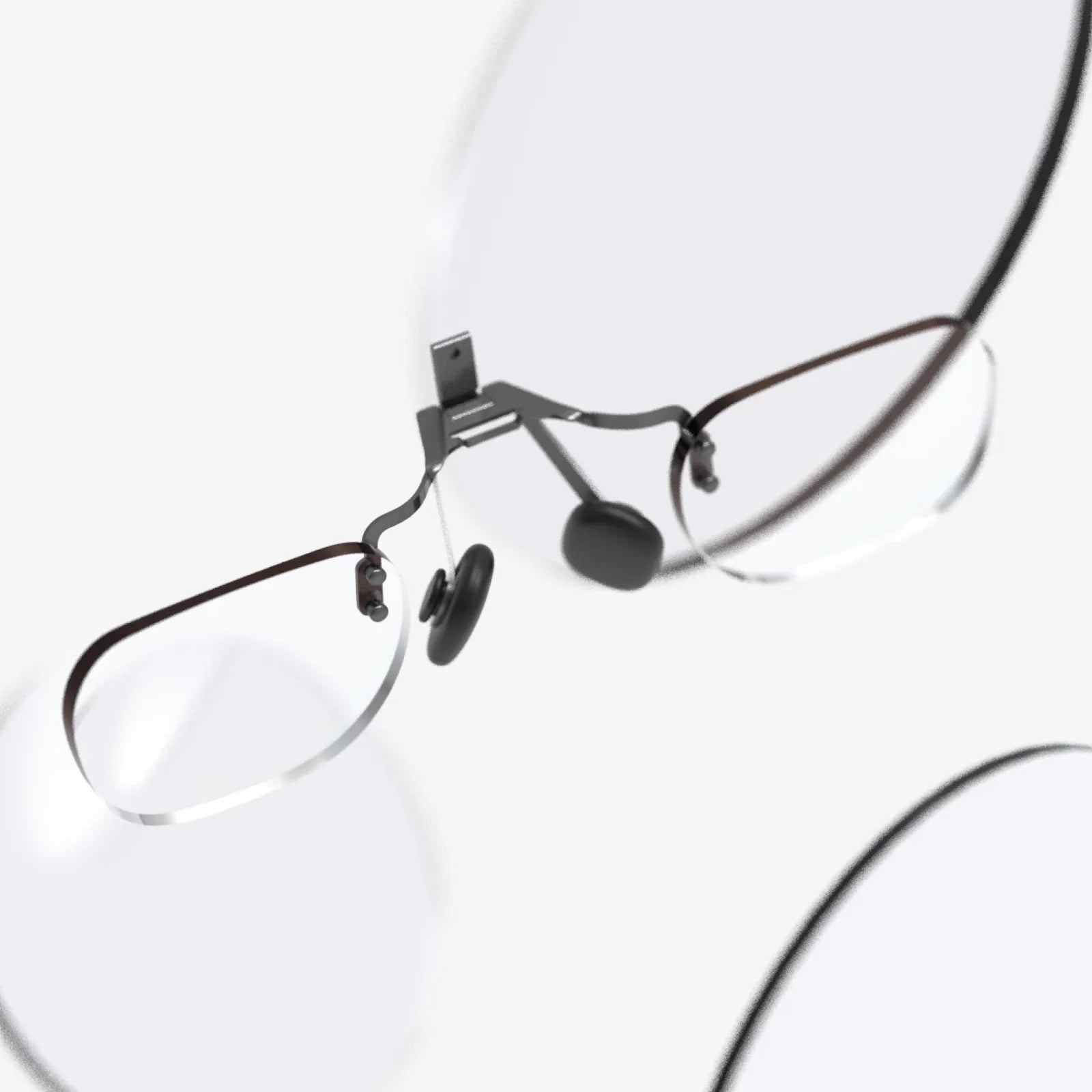
Imagine a world where the boundaries of physical reality are no longer a constraint—where a surgeon in London can guide a procedure in Mumbai, a student can walk through ancient Rome, and an architect can step inside a building that exists only as a digital blueprint. This is not the distant future; it is the rapidly approaching horizon of virtual reality, a technology poised to fundamentally transform every facet of our lives. The journey beyond the headset is just beginning, and its destination is nothing short of revolutionary.
Beyond Entertainment: The Paradigm Shift
For many, the term "virtual reality" still conjures images of immersive video games and high-tech entertainment. While this sector was the initial catalyst for consumer adoption, it represents merely the first chapter in a much larger story. The true potential of VR lies in its capacity to serve as a universal tool for augmentation—augmenting our abilities, our understanding, and our connections. We are witnessing a paradigm shift from VR as a medium of consumption to VR as an instrument of creation, healing, and learning. This shift is powered by advancements in haptic feedback, photorealistic graphics, eye-tracking, and artificial intelligence, all converging to create simulations that are indistinguishable from reality in their utility and emotional impact.
Revolutionizing Healthcare: From Treatment to Empathy
The healthcare industry stands to be one of the most profoundly transformed by VR applications. The technology is moving beyond novel experiments into core clinical practice.
Surgical Training and Planning
Medical students and seasoned surgeons can practice complex procedures within a risk-free virtual environment. Using detailed anatomical models generated from patient scans, a surgeon can rehearse a delicate operation countless times, exploring different approaches and anticipating complications before ever making an incision. This not only shortens the learning curve dramatically but also significantly improves patient safety and surgical outcomes.
Pain Management and Physical Rehabilitation
VR is proving to be a powerful non-pharmacological tool for pain management. By immersing patients in calming, engaging virtual worlds, the technology can effectively distract the brain from processing pain signals, reducing the need for opioids, especially for burn victims or during painful wound care. In physical rehabilitation, VR turns repetitive, often monotonous exercises into interactive games. A patient recovering from a stroke, for instance, might be motivated to repeatedly move their arm by virtually playing a game of tennis, accelerating neuroplasticity and recovery in a way that feels less like therapy and more like play.
Mental Health and Exposure Therapy
Therapists are using controlled virtual environments to treat phobias, anxiety disorders, and PTSD. A patient with a fear of flying can gradually experience the sights and sounds of an airport and a plane in a safe setting, allowing them to confront and manage their anxiety at a manageable pace. Similarly, veterans with PTSD can process traumatic memories through guided exposure therapy within a virtual setting that the therapist can meticulously control and tailor.
Medical Education and Empathy Building
Beyond technical skills, VR is fostering empathy. Applications are being developed that allow medical students and healthcare providers to experience the world from the perspective of a patient with conditions like macular degeneration, Parkinson's disease tremors, or auditory hallucinations. This first-person insight can build a deeper understanding and compassion that is difficult to achieve through textbooks alone.
Transforming Education and Corporate Training
The future of learning is experiential, and VR is the ultimate experiential medium. It moves education from passive listening to active doing.
Immersive Historical and Scientific Exploration
Imagine a history class not just reading about the pyramids of Giza but being able to walk around them, examining their scale and construction at the time they were built. A biology student could shrink down to the cellular level and witness the process of mitosis firsthand. This level of immersion creates powerful cognitive hooks that improve knowledge retention and spark a genuine passion for learning.
Skills-Based and Safety Training
In corporate and industrial settings, VR is revolutionizing training. Employees can practice operating complex machinery, handling hazardous materials, or navigating emergency procedures like fire drills or evacuations without any real-world risk. This is particularly valuable for high-stakes industries like aviation, energy, and manufacturing, where mistakes in training can be catastrophic and costly.
Soft Skills and Public Speaking
VR platforms are being used to practice soft skills in a realistic yet safe environment. A manager can practice having a difficult conversation with a virtual employee, receiving feedback on their tone and body language. Individuals with a fear of public speaking can practice delivering presentations to a virtual audience of thousands, building confidence before stepping onto a real stage.
Redefining Remote Work and Digital Collaboration
The shift to remote work has highlighted the limitations of video conferencing. VR offers a compelling alternative: the digital office. Colleagues from across the globe can meet as lifelike avatars in a shared virtual space, interacting with 3D models, brainstorming on virtual whiteboards, and experiencing a sense of co-presence that flat screens cannot provide. An engineering team could collaboratively examine a full-scale 3D prototype of a new engine, pointing to specific components and discussing changes in real-time, as if they were all in the same physical room. This will not only make remote collaboration more effective but also drastically reduce the need for business travel and physical prototyping, saving both time and resources.
Architecture, Engineering, and Construction
For architects and clients alike, VR is becoming an indispensable tool. Instead of trying to interpret a series of 2D blueprints, a client can don a headset and take a guided tour of their unbuilt home. They can experience the flow of the space, the lighting at different times of day, and the feel of the room proportions, allowing for feedback and changes long before construction begins. This eliminates costly change orders and ensures the final product aligns perfectly with the client's vision. On construction sites, workers can use VR to visualize complex installations or identify potential clashes between systems (e.g., plumbing and electrical) before they become expensive problems.
The Future of Social Connection and Experience
The concept of the "metaverse"—a persistent network of shared virtual spaces—points to a future where VR is a primary platform for social interaction. This extends far beyond social media. We could attend live concerts with friends from around the world, feeling as though we are standing side-by-stage in the front row. Families separated by geography could gather in a virtual living room to play games, watch movies, or simply chat, fostering a deeper sense of connection than a video call allows. This has the potential to combat loneliness and create new forms of shared experience that transcend physical location.
Ethical Considerations and the Path Forward
With such transformative power comes significant responsibility and ethical challenges. Issues of data privacy and security will be paramount, as VR systems can collect incredibly intimate data about our movements, reactions, and even biometrics. The potential for addiction and a desire to escape reality is a serious concern that must be addressed through mindful design. Furthermore, the digital divide could widen, creating a new class of individuals who cannot afford access to these transformative virtual experiences, exacerbating existing social and economic inequalities. Navigating these challenges will require proactive collaboration between technologists, policymakers, and ethicists to ensure the virtual future is equitable, safe, and enhances our humanity rather than diminishing it.
The headset is merely a window. On the other side lies a new layer of reality, waiting to be shaped. The future applications of virtual reality promise to dissolve the barriers of distance, scale, and even possibility, offering unprecedented tools for healing, creating, and understanding our world and each other. This is not just about better technology; it’s about building a better human experience, and that is a future everyone will want to step into.
Share:
Virtual Display Screen: The Invisible Canvas Revolutionizing Our Digital World
Flowly Virtual Reality: The Future of Mindfulness and Pain Management