


The business landscape is on the cusp of a revolution more profound than the dawn of the internet, a seismic shift where the very fabric of how companies operate, innovate, and compete will be rewoven by a new generation of technological capabilities. For executives, entrepreneurs, and forward-thinking professionals, understanding these forces is no longer a strategic advantage—it is an absolute necessity for survival and relevance in the market of tomorrow. The next decade will separate the disruptors from the disrupted, and it all begins with a clear vision of the technological horizon.
The Pervasive Intelligence: AI and Machine Learning Maturation
While artificial intelligence is already a powerful tool, its future evolution will see it transition from a discrete application to a pervasive, ambient intelligence woven into every business process. We are moving beyond simple pattern recognition and predictive analytics toward systems capable of generative design, complex reasoning, and autonomous decision-making.
This maturation will be characterized by the rise of foundation models—vast AI systems trained on broad datasets that can be adapted to a wide range of specialized tasks without starting from scratch. This will democratize AI capabilities, allowing mid-sized enterprises to leverage powerful intelligence that was previously the exclusive domain of tech giants. Businesses will utilize these models to design entirely new materials, simulate complex economic scenarios, and create hyper-personalized customer experiences at an unimaginable scale.
Furthermore, the focus will shift from merely building AI models to managing the entire AI lifecycle—a concept known as MLOps (Machine Learning Operations). This ensures that AI systems remain accurate, unbiased, and effective in production, creating a new layer of mission-critical infrastructure within organizations. The ethical implications and the need for explainable AI (XAI) will also move to the forefront, as regulatory frameworks demand transparency in automated decisions that affect consumers' lives.
The Quantum Leap: Beyond Binary Computation
Once confined to theoretical physics laboratories, quantum computing is steadily approaching commercial viability. Unlike classical computers that use bits (0s and 1s), quantum computers use qubits, which can represent multiple states simultaneously through superposition and entanglement. This allows them to solve certain classes of problems that are intractable for even the most powerful supercomputers of today.
For business, the implications are staggering. Industries will be transformed:
- Pharmaceuticals and Materials Science: Quantum computers will simulate molecular and atomic interactions with perfect accuracy, dramatically accelerating the discovery of new drugs, vaccines, and materials with bespoke properties.
- Logistics and Supply Chain: Optimizing complex global routes for fleets of ships and trucks, managing just-in-time inventory across continents, and solving intricate scheduling problems will become trivial, saving billions and reducing environmental impact.
- Finance: Portfolio optimization, risk analysis, and the development of new financial models will be supercharged, while simultaneously posing a threat to current cryptographic security standards.
While widespread adoption is still on the horizon, forward-thinking businesses are already establishing quantum readiness initiatives, exploring partnerships, and investing in talent to position themselves for this coming paradigm shift.
The Immersive Frontier: The Spatial Web and Digital Twins
The next evolution of the internet, often called the Spatial Web or Web 3.0, promises to merge our physical and digital worlds into a continuous, immersive experience. Powered by advancements in augmented reality (AR), virtual reality (VR), and 5G/6G connectivity, this will create a persistent, context-aware digital layer over our physical reality.
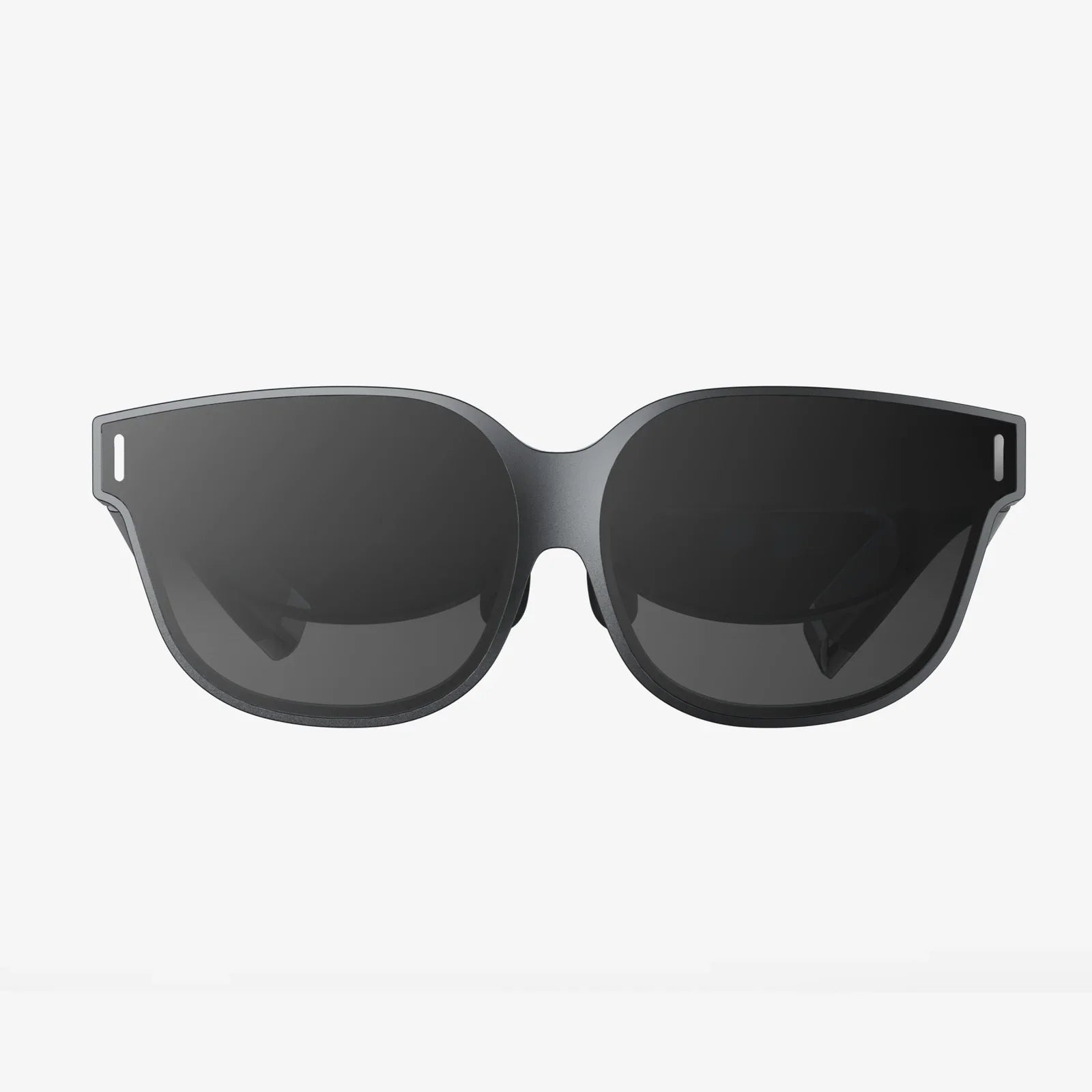
At the heart of this for business will be the proliferation of digital twins—virtual, dynamic replicas of physical assets, systems, or processes. These are not static CAD models; they are living simulations that update in real-time via IoT sensors and data feeds. A factory manager will not just look at a production line; they will don a lightweight AR headset and see real-time performance metrics, predictive maintenance alerts, and optimization suggestions overlaid directly onto the machinery. An urban planner will simulate traffic flow, emergency response, and energy usage within a perfect digital copy of an entire city before implementing a single change in the real world.
This technology will revolutionize fields from manufacturing and architecture to retail and healthcare, enabling unprecedented levels of efficiency, experimentation, and remote collaboration. The metaverse concept, often misunderstood as merely a virtual playground for consumers, will find its most powerful and profitable applications in these industrial and enterprise contexts.
Hyperautomation and the Invisible Workforce
Robotic Process Automation (RPA) was just the beginning. The future belongs to hyperautomation—the coordinated use of multiple technologies, including RPA, AI, machine learning, and process mining, to automate virtually every repetitive, rules-based task within an organization.
This goes beyond automating clerical work. Hyperautomation will create an "invisible workforce" of software bots that manage everything from IT infrastructure and cybersecurity threat detection to complex invoice processing and customer communication. These systems will be self-healing and self-optimizing, capable of identifying inefficiencies in processes and automating them without human intervention.
The business impact is twofold. First, it will unleash massive gains in operational efficiency, accuracy, and speed, freeing human workers to focus on strategic, creative, and empathetic tasks that machines cannot perform. Second, it will necessitate a fundamental rethinking of organizational structures and employee roles. The most successful companies will be those that master the human-machine collaboration model, viewing AI and automation not as a replacement for people, but as the ultimate augmentation of human potential.
The Green Tech Imperative: Sustainability Through Innovation
Technology will no longer be evaluated solely on its economic ROI. The escalating climate crisis and stakeholder demand for ethical practices are making sustainable technology a dominant business trend. This involves two key aspects: using technology to improve sustainability and making the technology industry itself more sustainable.
On the first front, AI and IoT will be deployed to create hyper-efficient "smart" energy grids, optimize water usage in agriculture, and reduce waste throughout supply chains. Precision agriculture, using drones and sensors, will maximize crop yields while minimizing environmental footprint. Blockchain technology will provide transparent, immutable ledgers to verify the ethical and sustainable provenance of materials, empowering conscious consumerism.
Simultaneously, the tech industry is grappling with the enormous energy consumption of massive data centers and the environmental cost of manufacturing hardware. Future trends will include the rise of "green cloud" providers, a focus on energy-efficient coding practices, a circular economy model for hardware where components are endlessly reused and recycled, and the development of low-power microchips designed specifically for AI workloads.
The Human Element: Upskilling, Ethics, and Continuous Adaptation
Amidst the dazzling array of hardware and software trends, the most critical factor remains human. The accelerating pace of technological change creates a persistent skills gap. The workforce of the future will require continuous learning and adaptation. Businesses must invest not just in technology, but in robust upskilling and reskilling programs to cultivate a culture of agile learning.
Furthermore, ethical considerations will become a core business function. Trust is the new currency. Companies will need to establish clear ethical frameworks for their use of AI, data, and automation. This includes ensuring algorithmic fairness, protecting consumer privacy in an increasingly data-driven world, and being transparent about how technology is used. A breach of ethical tech trust will prove far more damaging than any cybersecurity incident.
The leadership mindset must also evolve. Success will depend on fostering a culture of experimentation, psychological safety, and resilience. The goal is not to predict the future perfectly, but to build an organization that is agile enough to pivot and capitalize on technological shifts as they occur.
Ignoring these trends is a guaranteed path to obsolescence, but for those bold enough to lean in, the next wave of technological innovation offers a unprecedented opportunity to build more efficient, sustainable, and human-centric enterprises than ever before. The tools are arriving; the only question left is who will be first to master them and define the next era of global business.
Share:
Smart Working Significato: Redefining the Modern Workspace and Its Cultural Impact
Smart Working Significato: Redefining the Modern Workspace and Its Cultural Impact