


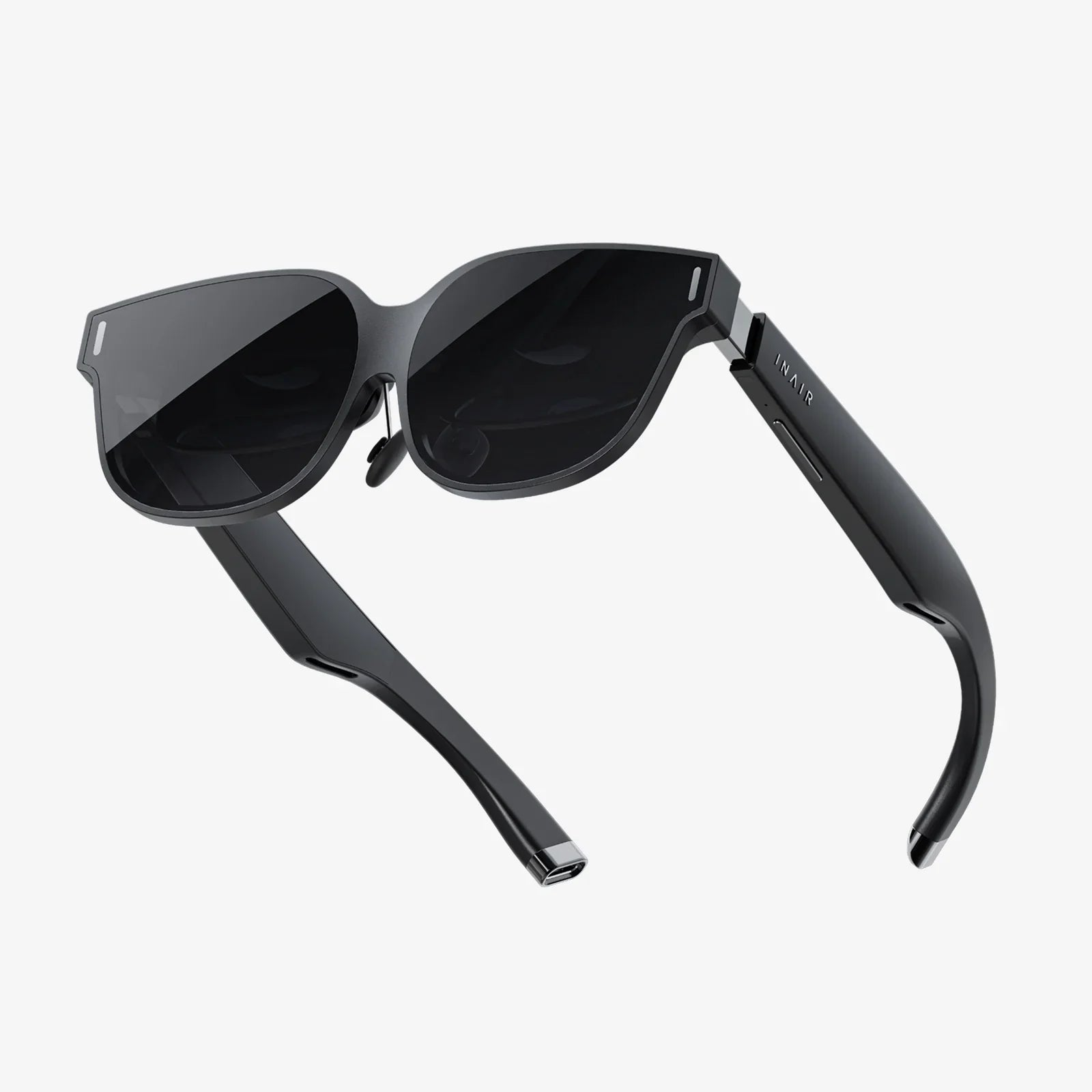
Imagine walking through a foreign city, and the very streets whisper their history to you. Your glasses don’t just translate a menu; they highlight the most popular dish, warn of your allergens, and overlay reviews from friends. A mechanic, faced with a complex engine, sees not just metal but animated arrows guiding each step, with the AI predicting potential faults before they happen. This is not a distant science fiction fantasy; it is the imminent future being forged today at the powerful intersection of Augmented Reality (AR) and Artificial Intelligence (AI). This convergence promises to move beyond simple digital overlays into a world where our environment becomes a responsive, intelligent partner in our daily lives and professional endeavors.
The Foundational Synergy: Why AI is the Brain of AR
For years, AR existed primarily as a visual trick—a clever way to superimpose computer-generated imagery (CGI) onto a live camera feed. Its utility was often limited to entertainment and simple information display. The fundamental limitation was a lack of contextual understanding. An AR device could place a virtual dinosaur in your living room, but it couldn't understand the room itself—the furniture, the people in it, their intentions, or the task you were trying to accomplish. It was a powerful eye, but it had no brain.
This is where AI completes the picture. Artificial Intelligence, particularly the sub-fields of machine learning (ML) and computer vision, provides the cognitive engine that allows AR to perceive, interpret, and interact with the real world in a meaningful way. This symbiotic relationship is foundational:
- Computer Vision for Perception: AI algorithms are trained on millions of images to perform real-time object recognition, semantic segmentation (understanding what each pixel represents), and spatial mapping. This allows the AR system to distinguish a wall from a window, a table from a chair, and a specific machine part from another.
- Machine Learning for Prediction and Personalization: ML models can analyze user behavior, environmental data, and historical patterns to predict what information a user might need next. This transforms AR from a passive display into a proactive assistant.
- Natural Language Processing (NLP) for Intuitive Interaction: Integrating NLP allows users to interact with their AR interface using voice commands and conversational language, making the technology far more accessible and hands-free.
Without AI, AR remains a static and dumb window into a digital layer. With AI, that layer becomes dynamic, intelligent, and deeply personalized.
Intelligent Overlays: From Static Data to Dynamic Context
The most immediate impact of infusing AI into AR is the evolution of the overlay itself. Instead of generic instructions or bland text, information becomes dynamic, contextual, and incredibly valuable.
Consider the field of complex assembly and maintenance. A traditional AR manual might show a floating arrow pointing to where a part should be installed. An AI-powered AR system does much more. It uses computer vision to confirm the worker has selected the correct part. It recognizes the specific model of the machinery and tailors the instructions accordingly. It can track the progress of the assembly in real-time, automatically moving to the next step only when the previous one is verified as complete. If the worker hesitates or looks confused, the system could offer additional visual aids or summon a human expert remotely, whose own annotations are anchored to the physical components through the AR view.
In our daily lives, this intelligence will manifest as a hyper-contextual filter for the world. Walking through a supermarket, your AR device could highlight products that align with your health goals, budget, and recipes you've saved, drawing on a deep understanding of your preferences. It could show you the carbon footprint of an item or cross-reference its ingredients with a database of ethical sourcing practices. The overlay is no longer just data; it is data filtered through the lens of your personal AI, which understands your values and goals.
The Spatial Web and the Ambient Interface
The culmination of AI and AR is often described as the Spatial Web or Web 3.0—a version of the internet that is not confined to screens but is mapped onto and interwoven with our physical environment. In this paradigm, every location, object, and person can possess a digital twin or a wealth of associated data. AI acts as the indispensable interpreter and gatekeeper of this vast spatial network.
Navigating this web will require a new form of human-computer interaction: the ambient interface. Instead of looking down at a phone, information will appear around us, contextually relevant to our location and activity. AI will be the agent that decides what information to surface and when, prioritizing to avoid overwhelming the user. It will understand that you need walking directions to a meeting now, but the details of a historical monument can wait until you stop and look at it. This shift from pull (searching for information) to push (receiving timely, relevant information) is profound, making technology less intrusive and more supportive.
Generative AI and the Creation of Synthetic Realities
One of the most explosive advancements, generative AI, adds a breathtaking new dimension to AR: the ability to create and modify reality in real-time. Generative models can create photorealistic images, 3D models, and dynamic textures from simple text prompts.
This capability will democratize content creation for the AR world. Instead of needing a team of 3D artists, an interior designer could simply tell their AR glasses, “Show a large, modern sofa in charcoal grey against this wall.” Instantly, a photorealistic generative model renders the sofa in place, perfectly scaled and shaded. A teacher describing an ancient Roman marketplace could have the AI generate a bustling, animated scene around the classroom, bringing history to life in a way previously impossible. This fusion of generative AI and AR will unlock unprecedented levels of creativity, prototyping, and storytelling, blurring the lines between the real and the synthetic in a coherent and compelling way.
Revolutionizing Industries: The Practical Impact
The theoretical potential of AI-driven AR is vast, but its practical applications are already taking shape and will redefine entire sectors.
- Healthcare and Surgery: Surgeons will use AR headsets overlayed with AI-processed data from MRI or CT scans, precisely projecting tumor margins or critical blood vessels onto the patient's body during operation. AI can monitor vital signs and warn of potential complications in real-time, all within the surgeon's field of view.
- Manufacturing and Logistics: Beyond assembly, AI-AR will optimize warehouse workflows. Workers will see the most efficient picking routes, with AI dynamically rerouting them based on changing priorities. Equipment will be monitored by AI systems that project maintenance alerts and part lifetimes directly onto the machinery, enabling predictive maintenance and minimizing downtime.
- Education and Training: Learning will become experiential. Medical students will practice procedures on AI-generated anatomical models. Mechanics will train on complex virtual engines. Historical events will be reenacted in the classroom. AI will tailor the difficulty and information based on the student's progress, creating a truly personalized educational journey.
- Retail and Remote Collaboration: Try before you buy will reach its ultimate form. You'll see how furniture fits in your home, how clothes look on your body, all generated and adjusted by AI. Remote collaboration will feel physical, with experts able to annotate the real world and guide others with precise digital arrows and holograms that feel tangibly present.
Navigating the Inevitable Challenges
This powerful fusion is not without significant challenges that must be addressed head-on.
- Privacy and Data Security: An always-on, always-perceiving AR device powered by AI is arguably the most intimate data collection device ever conceived. It will see what you see, hear what you hear, and know your context at all times. Robust frameworks for data ownership, anonymization, and user control are non-negotiable. The question of who has access to this data stream is one of the most critical of our digital age.
- Algorithmic Bias and Reality Filtration: If an AI decides what information we see about the world, it holds immense power to shape our perception of reality. The inherent biases in training data could lead to skewed or discriminatory overlays. The risk of creating personalized "reality bubbles"—where we only see information that confirms our existing beliefs—is a serious threat to social cohesion.
- The Digital Divide and Accessibility: The cost of advanced AR hardware and the AI processing required could create a new societal chasm between those who can afford this enhanced reality and those who cannot. Ensuring the technology is developed with accessibility and equity as core principles is vital.
- Hardware and Connectivity: For this vision to be realized, AR devices must become socially acceptable, comfortable, all-day wearables with immense processing power and long battery life. They will require seamless connectivity to edge computing networks and cloud AI to handle the staggering computational load without latency.
The path forward is not merely a technological race; it is an ethical one. The companies and consortiums that build this future must prioritize building trust as diligently as they build algorithms.
The fusion of AI and AR is not merely another tech trend; it is the blueprint for the next era of computing. It promises to dissolve the barrier between the digital and the physical, transforming our world into a responsive, informative, and assistive partner. The device in your pocket will fade into the background, replaced by an intelligent layer of context and connection that enhances your perception of everything around you. The streets will whisper, machines will guide, and your environment will adapt to your needs. This isn't just the future of technology; it's the dawn of a new human experience, and it's arriving faster than we think.
Share:
AI Deeper: Beyond the Hype into the Next Frontier of Intelligence
VR Retail: The Immersive Shopping Revolution Reshaping Consumer Experience