


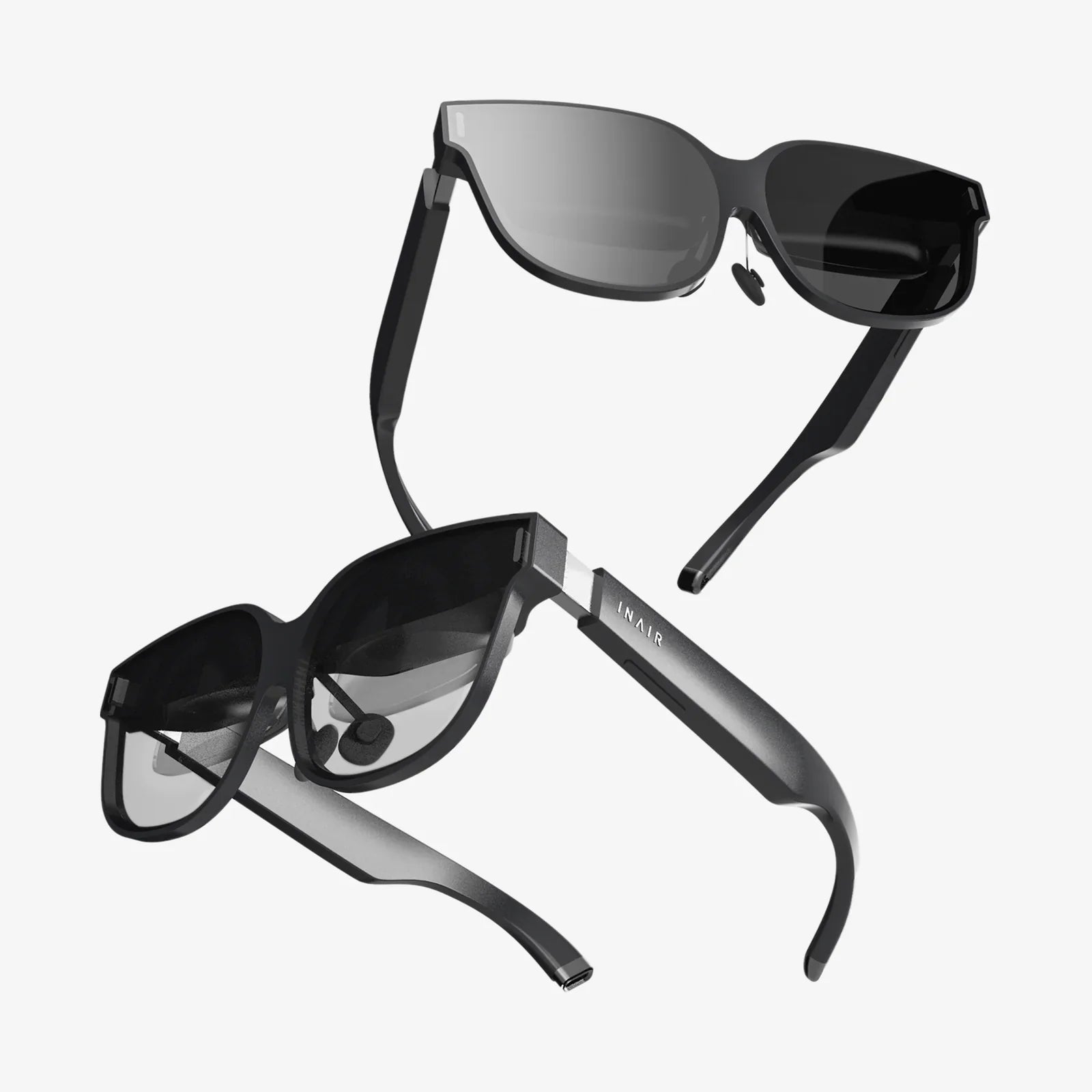
Imagine a world where the digital and the physical are no longer separate realms but a single, intertwined existence. The boundaries between what is real and what is rendered dissolve, not on a screen you hold in your hand, but in the very space around you. This is the profound and inevitable destination of the future of immersive technology—a future that promises to redefine every facet of our lives, from how we work and learn to how we connect and perceive reality itself. It’s a shift from simply using technology to living within it, and it’s closer than you think.
From Pixels to Presence: The Evolution of Immersion
The trajectory of immersive technology is a story of escalating sensory engagement. It began with the two-dimensional, flat world of personal computing—a powerful tool, but one that existed at a distance. The first true leap into immersion arrived with virtual reality (VR), which sought to transport users entirely into a digital environment. By blocking out the physical world and replacing it with a computer-generated one, VR offered unparalleled escapism and presence, primarily finding early adoption in gaming and specialized training simulations.
Augmented reality (AR) then introduced a different paradigm. Instead of replacement, AR focused on augmentation, overlaying digital information and objects onto our view of the real world through devices like smartphones and early smart glasses. This technology bridged the gap, offering contextual data and interactive experiences without severing the user from their surroundings.
The next evolutionary step, mixed reality (MR), is where the future truly begins to take shape. MR doesn’t just overlay digital content; it anchors it to the physical world, allowing virtual and real objects to interact in real-time. A digital character can hide behind your physical sofa; a virtual control panel can be fixed to your real wall. This requires a sophisticated understanding of the user's environment—spatial mapping, depth sensing, and persistent object placement—creating a cohesive blend of both realities.
The ultimate horizon is often referred to as the "metaverse" or "spatial computing," a persistent, shared, and interconnected network of experiences accessible through various immersive technologies. It’s not a single application but a continuum of experiences, from fully virtual worlds to subtle digital enhancements of our daily life.
The Architectural Shift: Key Technologies Powering the Future
This future will not be built on incremental improvements to existing headsets but on a foundation of groundbreaking technological advancements. Several key areas are critical to moving from clunky prototypes to seamless, all-day wearable experiences.
1. The Hardware Revolution: Invisible and Intuitive
The most immediate barrier to mass adoption is hardware. The future demands devices that are socially acceptable, comfortable, and powerful. This means a decisive move away from bulky, tethered headsets towards sleek, lightweight glasses that resemble ordinary eyewear. Achieving this requires monumental leaps in miniaturization, battery technology, and thermal management.
Central to this hardware revolution are advancements in display and optics. Technologies like holographic waveguides and laser beam scanning aim to project high-resolution, bright images directly onto the retina, creating vivid digital content that coexists naturally with the real world. The goal is a wide field of view with varifocal capabilities that mimic the eye’s natural focus, eliminating the vergence-accommodation conflict that causes discomfort in current devices.
2. The AI Brain: Contextual and Predictive Understanding
Hardware is the skeleton, but artificial intelligence is the brain that will animate the future of immersive tech. AI and machine learning will move beyond simple voice commands to provide true contextual awareness. Your device will understand not just where you are, but what you are doing, what you might need, and even how you are feeling.
Imagine walking through a foreign city. Your AI-powered glasses, understanding your itinerary and personal interests, could subtly highlight the best route to a historical site, translate a menu in real-time as you glance at it, and provide a historical anecdote about the building you’re looking at. This predictive, proactive assistance will make technology feel less like a tool and more like a seamless extension of our own cognition.
3. Haptics and Sensory Expansion: Beyond Sight and Sound
True immersion engages all the senses. The next frontier is replicating touch and even manipulating other senses to create profound realism. Advanced haptic technologies are moving from rumble packs to sophisticated systems that can simulate the texture of fabric, the resistance of a virtual button, or the impact of a digital object.
Research into ultrasonic and electromagnetic arrays promises mid-air haptics, allowing users to "feel" digital objects without wearing gloves. Further out, technologies like olfactory feedback (smell) and even neural interfaces could complete the sensory loop, creating experiences that are indistinguishable from physical reality for training, entertainment, and communication.
4. Connectivity and The Edge: The Power of Instantaneous Data
Processing the immense data required for high-fidelity, shared immersive experiences cannot be done on a device alone. The widespread deployment of high-bandwidth, low-latency networks is the essential circulatory system. Technologies will enable the heavy lifting of rendering complex simulations and environments to be handled by powerful cloud servers, streaming the experience to lightweight devices in real-time.
This shift to cloud and edge computing is crucial for enabling persistent, shared worlds where millions of users can interact simultaneously with no perceivable lag, making the vision of a truly interconnected metaverse technically feasible.
Transforming Industries: The Practical Applications
While the entertainment potential is obvious, the most profound impact of immersive technology will be felt across core industries, revolutionizing processes and creating new paradigms for work and innovation.
Revolutionizing Healthcare and Medicine
In medicine, immersive tech is poised to save lives and improve outcomes. Surgeons can practice complex procedures on detailed virtual anatomies before ever touching a scalpel, reducing risk and improving precision. Medical students can step inside a holographic human body, exploring systems in 3D rather than from a textbook. For patients, VR is already proving effective in pain management, physical therapy, and treating phobias and PTSD through controlled exposure therapy.
Reimagining Education and Training
Education will shift from passive learning to active experience. Instead of reading about ancient Rome, students can walk its streets in a history class. Mechanics can learn to repair a complex engine by following holographic instructions overlaid on the actual machinery. This "see-one, do-one" approach in a risk-free virtual environment drastically accelerates skill acquisition and retention, democratizing access to high-quality training regardless of geographical location.
Empowering Enterprise and Remote Collaboration
The concept of remote work will be utterly transformed. Rather than a grid of faces on a video call, teams will meet in a virtual boardroom as photorealistic avatars or share a 3D model of a new product design, able to walk around it, disassemble it, and make changes collaboratively as if they were in the same physical room. This spatial collaboration preserves the nuance and serendipity of in-person interaction, breaking down the limitations of traditional remote work.
Reshaping Retail and Design
Consumers will be able to try before they buy in ways previously unimaginable. You could see how a new sofa looks in your living room at full scale, change its fabric with a gesture, or "try on" clothes without entering a fitting room. For architects and interior designers, immersive technology allows clients to walk through a building before the foundation is even poured, enabling iterative design changes in real-time and ensuring the final product perfectly matches the vision.
The Human Factor: Navigating the Societal Implications
With such transformative power comes immense responsibility. The integration of immersive technology into the fabric of society raises critical ethical, psychological, and philosophical questions that we must address proactively.
The Privacy Paradox
Always-on, contextually aware devices represent the ultimate data collection platform. They will see what we see, hear what we hear, and understand our behaviors and environments intimately. This data is essential for functionality but creates unprecedented privacy risks. Who owns this data? How is it stored and used? Robust frameworks for data sovereignty, transparency, and user control are not an add-on; they are a prerequisite for public trust and adoption.
The Blurring of Realities
As digital experiences become more compelling and realistic, we risk fostering a society where virtual fulfillment is preferred to physical reality. This could exacerbate social isolation, create new forms of addiction, and challenge our shared sense of objective truth. The potential for hyper-realistic misinformation and deepfakes within an immersive context is a particularly alarming threat that demands advanced content authentication and digital literacy efforts.
The Digital Divide 2.0
There is a danger that immersive technology could become a new vector of inequality, creating a chasm between those who can afford access to these enhanced realities and those who cannot. This "digital divide" could extend beyond simple access to information and into the very quality of education, healthcare, and social connection. Ensuring equitable access and developing humane, inclusive design principles will be crucial to prevent a new technological caste system.
The Invisible Layer: A World Remade
The endgame of immersive technology is not to have us all living in headsets, but for the technology itself to fade into the background. It will become an invisible layer of intelligence and experience woven into our environment—a permanent enhancement to human capability. We will interact with it through natural gestures, gaze, and voice, and it will understand our context and intent implicitly. This shift will be as profound as the transition from command-line interfaces to the graphical user interface, making powerful computing intuitive and accessible to all.
This is not a distant sci-fi fantasy. The foundational technologies are being developed in labs and startups today. The next decade will see this future coalesce, moving from niche applications to mainstream utility. It will redefine entertainment as a participatory experience, revolutionize how we maintain our social bonds across distances, and unlock new forms of creativity and expression we have yet to imagine. The screen, that dominant rectangle of the last half-century, will lose its primacy, giving way to a world where information, story, and connection exist all around us, waiting to be discovered. The future is not something we will watch; it is something we will step into and shape with every glance.
Share:
AR Customer Experience: The Ultimate Guide to Transforming Retail and Engagement
Can I Convert a 2D Drawing to a 3D Model? A Complete Guide to Modern Techniques