


Imagine a world where your digital life doesn’t exist behind a screen but flows effortlessly into your physical space. Where a recipe hovers over your mixing bowl, a colleague’s avatar sits on your couch for a brainstorming session, and a historical battle unfolds in your living room for your child’s homework. This is the promise of mixed reality (MR), a technology not of isolation, but of integration. We stand on the precipice of a fundamental shift in human-computer interaction, moving beyond the confines of the glass rectangle into a world where information, entertainment, and connection are spatially aware, contextually intelligent, and intuitively part of our reality. The journey ahead is not just about better hardware; it’s about rearchitecting the very fabric of our daily experience.
The Spectrum of Reality: Defining the Undefinable
To understand the future, we must first map the territory. Often conflated with its technological cousins, mixed reality exists on a spectrum known as the reality–virtuality continuum. On one end lies our unmediated physical reality. On the other lies a fully digital virtual reality (VR), a complete immersion that shuts out the physical world. In between lies a vast landscape.
Augmented reality (AR) overlays digital information onto the real world, like directions on a street view or a cartoon character on your table. It is primarily an additive experience. Mixed reality, however, is the pinnacle of this spectrum. It represents the seamless blending and interactivity between real and digital objects. In a true MR experience, a virtual ball can bounce off your real table, a digital character can hide behind your physical sofa, and your real hand can manipulate a holographic engine model, with both environments responding to each other in real-time. The future of MR is about closing this loop, making the interaction between the real and the virtual so fluid that the distinction begins to vanish.
The Confluence of Technologies Powering the MR Revolution
The ascent of MR is not driven by a single invention but by the powerful convergence of several exponential technologies, each reaching a critical point of maturity simultaneously.
Spatial Computing and Environmental Understanding
At the heart of MR is spatial computing—the ability of a device to perceive, understand, and navigate the physical world. This is achieved through a sophisticated array of sensors: depth-sensing LiDAR, high-resolution cameras, inertial measurement units (IMUs), and microphones. Future advancements will see these sensors become smaller, more power-efficient, and vastly more capable. They will move beyond simple mesh mapping to a semantic understanding of environments. A device won’t just see a flat surface; it will recognize it as a wooden dining table, know that a ceramic cup is on it, and understand that a window to the left is a source of natural light, allowing digital objects to cast accurate shadows and reflections. This deep environmental intelligence is the bedrock upon which believable mixed realities are built.
Artificial Intelligence as the Invisible Architect
If sensors are the eyes and ears, AI is the brain. Machine learning algorithms, particularly computer vision and neural networks, are what make sense of the massive, unstructured data captured by the sensors. AI enables real-time object recognition, spatial anchoring (persistently placing a hologram in a specific location), gesture and eye-tracking, and predictive interactions. The future will see AI evolve from a passive interpreter to an active participant. Context-aware AI assistants will proactively surface relevant information—imagine walking into a kitchen and your MR device, knowing your schedule and diet, instantly highlighting the ingredients for a quick, healthy dinner and guiding you through the steps.
The Pursuit of the Perfect Form Factor: From Headsets to Eyewear
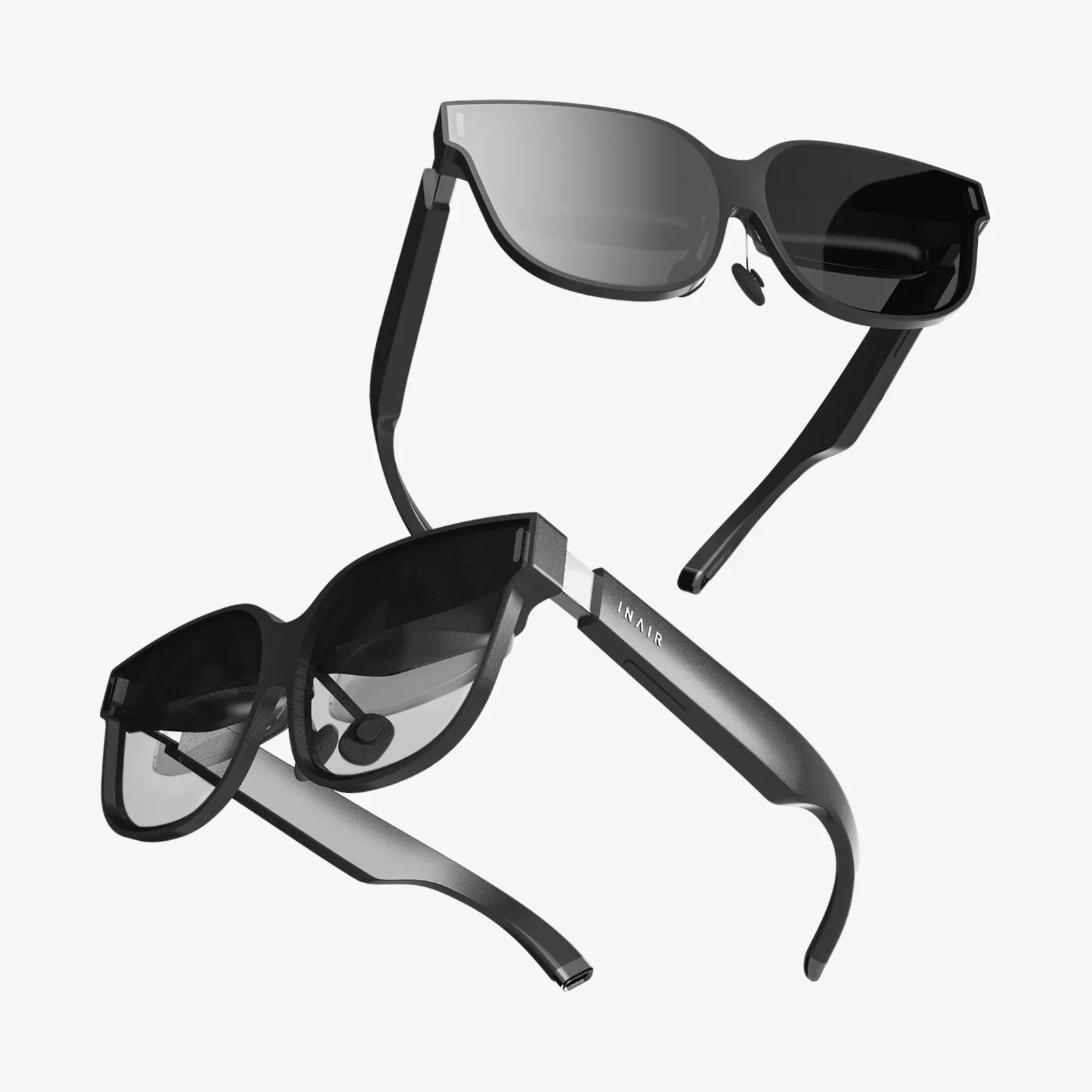
Current MR headsets are powerful but often bulky, tethered, or socially isolating. The holy grail is a device with the visual fidelity and computational power of a high-end headset in a form factor resembling everyday eyeglasses. This requires breakthroughs in several fields:
- Waveguide and Holographic Optics: Replacing bulky lenses with thin, transparent waveguides that project light directly onto the retina.
- Micro-LED Displays: Providing incredibly bright, high-resolution, and power-efficient images necessary for outdoor use and overlaying on bright surfaces.
- Battery Technology and Edge Computing: Overcoming the energy bottleneck through new solid-state batteries and by offloading intensive processing to powerful, low-latency cloud or 5G/6G networks.
The endpoint is not a single device but an ecosystem: stylish glasses for all-day wear, powerful professional headsets for specialized work, and even contact lens-based displays further into the future.
The Haptic and Multisensory Frontier
A visual and auditory overlay is only part of the experience. The future of MR must engage our other senses to achieve true presence. Haptic technologies, which provide touch feedback, are rapidly evolving. This ranges from wearable gloves and suits that simulate the weight and texture of a virtual object to more advanced techniques like ultrasonic mid-air haptics, which use focused sound waves to create the sensation of touch on your bare skin without any wearable. Further out, research into olfactory and gustatory (smell and taste) interfaces will create deeply immersive training simulations for chefs or medics, or incredibly rich entertainment experiences.
Transforming Industries and Reshaping Society
The true measure of this technology’s success will be its impact on how we live and work. The applications are as boundless as human imagination itself.
The Future of Work: The Remote Collaboration Paradigm Shift
MR will dismantle the limitations of remote work. Instead of a grid of faces on a video call, teams will share a persistent virtual workspace. Engineers from different continents will collaborate on a life-size, holographic prototype of a new jet engine, making adjustments with gestures and seeing real-time stress simulations. Architects will walk clients through a full-scale, photorealistic model of a building before a single brick is laid. This "digital twin" concept will extend to entire factories and cities, allowing for remote monitoring, training, and simulation of processes in a risk-free environment.
Revolutionizing Education and Training
Learning will transition from passive absorption to active exploration. Medical students will practice complex surgical procedures on hyper-realistic holographic patients, making mistakes without consequences. History students won’t just read about ancient Rome; they will walk through a faithfully reconstructed Forum, witnessing speeches and daily life unfold around them. This experiential learning leverages spatial memory and emotional engagement, dramatically improving retention and understanding.
Redefining Social Connection and Storytelling
Social media will evolve into a "spatial social" experience. Instead of posting a photo from a vacation, you might share a 3D holographic memory that your family can step into and experience with you. Live concerts and sporting events will be attended by millions of avatars in a shared virtual arena, with all the social dynamics of a real crowd. Narrative storytelling will become an active, immersive experience where you are inside the story, exploring environments and interacting with characters at your own pace.
Enhancing Daily Life and Accessibility
MR will serve as an invisible but indispensable assistant. Navigation arrows will be painted directly onto the street. When you look at a restaurant, its menu and reviews will appear next to the door. For individuals with disabilities, the assistive potential is profound: real-time captioning of conversations for the hearing impaired, object recognition and navigation for the visually impaired, and cognitive aids that help with memory and task completion.
The Inevitable Challenges and Ethical Imperatives
This powerful future is not without significant risks and challenges that society must proactively address.
The Privacy Paradox: A World of Constant Surveillance
An MR device that sees everything you see and hears everything you hear is, by definition, the most intimate surveillance device ever conceived. The data collected—your biometric responses, gaze patterns, personal environment, and social interactions—is incredibly sensitive. Robust, transparent, and user-centric data governance frameworks must be established. Who owns this data? How is it used? Can you have a private moment in a world of always-on AR? These are not technical questions but societal ones that demand answers before the technology becomes ubiquitous.
The Digital Divide and Economic Inequality
There is a real danger that MR could exacerbate existing inequalities. Will access to this transformative technology for education, healthcare, and economic opportunity be a luxury for the wealthy? Will it create a new class of "information haves" and "have-nots"? Ensuring equitable access and developing public infrastructure for MR will be crucial to prevent a new digital chasm.
Reality Filtration and the Erosion of Shared Truth
If everyone can customize their reality with digital overlays, do we risk losing a common ground of shared, objective truth? Malicious actors could create convincing deepfakes or alter people’s perceptions of events in real-time. The ability to "filter" reality could lead to extreme social fragmentation and new forms of manipulation. Developing systems for verifying the source and authenticity of digital information, and fostering critical media literacy, will be essential defenses.
The Human Experience: Augmentation or Alienation?
Finally, we must ask the philosophical question: what does constant augmentation do to the human experience? Will we become overwhelmed by digital clutter, suffering from "notification fatigue" on a planetary scale? Could our constant engagement with a layered world lead to a neglect of our immediate physical environment and the people in it? The goal must be to design MR experiences that enhance human connection and well-being, not replace them. The technology should serve to deepen our understanding of and engagement with the real world, not provide an escape from it.
The line between our digital and physical selves is set to blur into irrelevance. The future of mixed reality promises a world not of escaping reality, but of enriching it—a canvas for human creativity painted across the dimensions of our lives. The devices will become invisible, the interactions will become instinctive, and the digital layer will become as natural as electricity: an unseen force that empowers everything we do. We are not just building new gadgets; we are crafting the next chapter of human perception, and the story is just beginning to be written.
Share:
Who Uses Virtual Reality: A Deep Dive into the Diverse Demographics Embracing the Metaverse
How to Set Spatial Audio: The Ultimate Guide to Immersive Sound