


- by wangfred
Future of Smart Devices: The Seamless Integration of Intelligence into Everyday Life
- by wangfred
Imagine a world where your environment doesn't just respond to your commands but anticipates your needs, where technology fades into the background, and the line between the digital and physical realms becomes almost indistinguishable. This isn't a scene from a science fiction movie; it is the imminent future of smart devices, a future hurtling towards us at an exponential pace. The next evolutionary leap won't be defined by a new smartphone with a better camera, but by a radical reimagining of how intelligence is woven into the very fabric of our existence, creating an ecosystem that is intuitive, proactive, and profoundly personal.
The first generation of smart devices was fundamentally reactive. We asked a voice assistant to play a song, told a thermostat to adjust the temperature, or used a phone to manually control lights. The future, however, belongs to predictive intelligence. Powered by sophisticated machine learning algorithms and vast datasets, devices will move beyond simple command-and-response models. They will learn from our behaviors, patterns, and even our physiological states to anticipate our needs before we articulate them.
Your home will not just allow you to set a morning routine; it will craft one for you. By analyzing sleep quality data from your wearable, it might gently adjust the thermostat and simulate a sunrise with your lights to wake you at the optimal point in your sleep cycle. The coffee machine will start brewing as it detects you stirring awake. Your mirror might display the day's calendar, weather, and suggest an outfit based on your schedule and the forecast, all while performing a subtle health scan for signs of illness or fatigue. This predictive layer transforms devices from tools into partners, aiming to reduce cognitive load and streamline daily life.
As intelligence becomes predictive, the interfaces we use will undergo a dramatic transformation. The goal is ambient computing—where technology recedes into the background, and interaction becomes frictionless and natural. We are moving away from a world dominated by screens towards one enriched by context-aware environments.
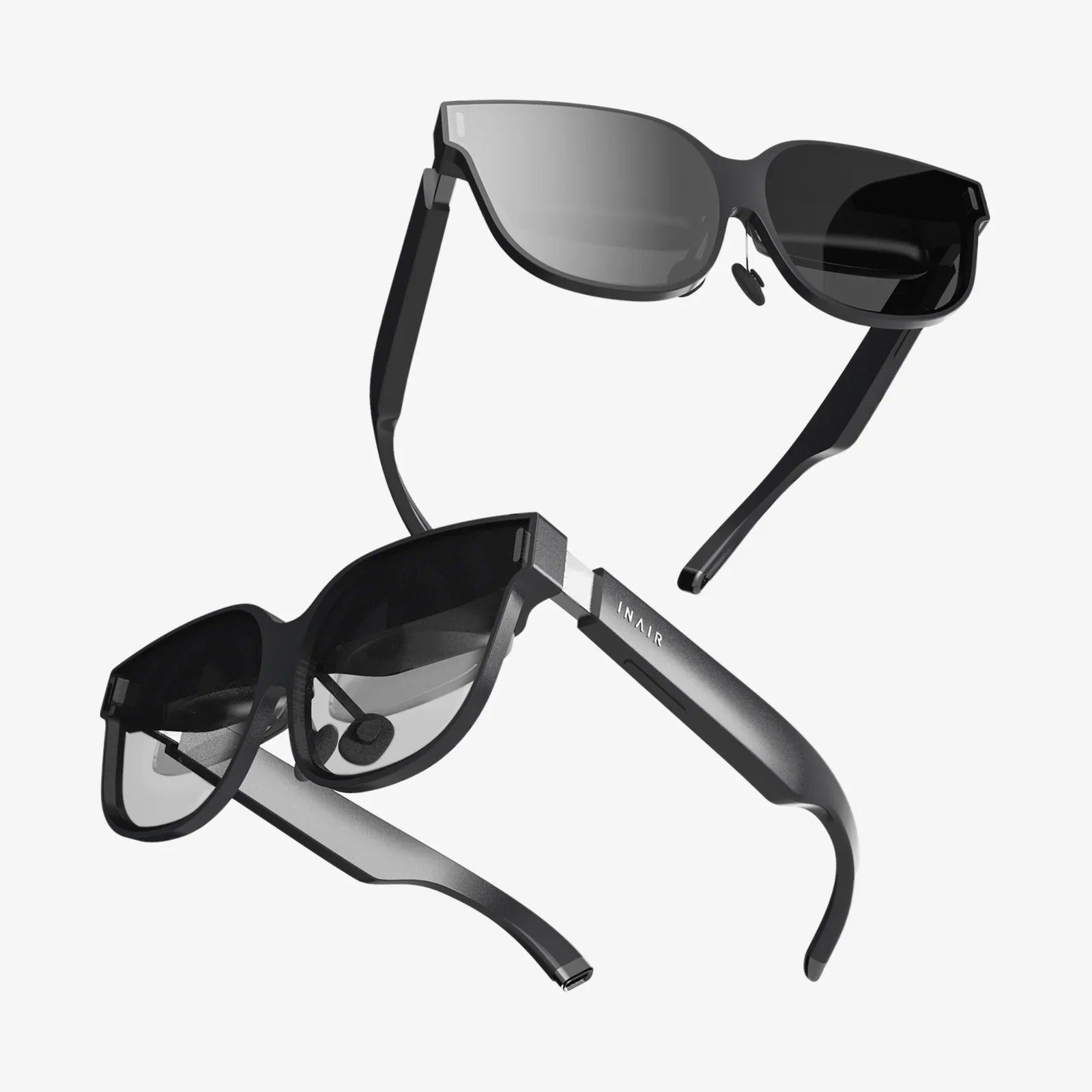
Instead of looking down at a smartphone, information will be projected onto real-world surfaces or directly into our field of vision via augmented reality (AR) glasses. Instead of typing or tapping, we will interact through gesture control, gaze tracking, and advanced voice recognition that understands nuance, context, and emotion. Haptic feedback from clothing or wearables will provide silent, discreet notifications. The device itself becomes invisible; what remains is the utility, the information, and the assistance, available exactly when and where it is needed without the intrusive mediation of a black rectangle of glass and metal.
Today's smart devices often exist in isolated silos—different brands, competing protocols, and fragmented user experiences. The future is one of profound interoperability. A universal standard, likely built upon a foundation like Matter, will allow devices from different manufacturers to communicate seamlessly, securely, and reliably. Your car will talk to your garage door, which will signal your home to turn on the lights and adjust the climate control. Your wearable will share vitals with your bathroom scale and fridge, which might then suggest a meal plan tailored to your health goals.
This ecosystem will function less like a collection of apps and more like a symphony orchestra, with each device playing its part in harmony, conducted by a centralized, yet invisible, intelligence that understands the overall score—your life. This shift will finally deliver on the original promise of a truly smart home and a connected world, where the whole is vastly greater than the sum of its parts.
The intelligence driving future devices will be deeply personal. Artificial intelligence will act as a digital double, learning our preferences, habits, and idiosyncrasies with incredible depth. This goes beyond recommending a movie; it's about creating an environment that adapts to our mental and physical state in real-time.
Biometric sensors will be embedded everywhere—in chairs that monitor posture and stress, in carpets that detect falls, in steering wheels that check for alertness, and in mirrors that analyze skin health. This continuous stream of biometric data will allow devices to offer hyper-personalized feedback. A smart lamp could adjust its color temperature throughout the day to optimize your circadian rhythm. A speaker could play music not just based on your favorite playlist, but calibrated to reduce your current stress levels, as measured by your wearable. This creates a feedback loop between us and our environment, fostering well-being and peak performance.
The paradigm of opening a dedicated app to accomplish a task is reaching its expiration date. The future interface will be a conversational AI agent—a single, overarching assistant that manages all other devices and services on your behalf. You won't open a weather app, a calendar app, and a traffic app to plan your morning; you will simply tell your agent, "Get me to my 9 AM meeting on time."
This agent will then check all relevant data streams, cross-reference your preferences, reserve your smart car, plot the best route, notify attendees if traffic dictates you'll be late, and reschedule lower-priority tasks automatically. These AI agents will act as digital proxies, capable of executing complex, multi-step commands across dozens of different platforms and devices, making technology feel simpler and far more powerful simultaneously.
The proliferation of devices raises serious concerns about energy consumption and electronic waste. The next generation of smart technology must and will address this head-on. We will see a major push towards energy-efficient designs, the use of recycled and biodegradable materials, and longer product lifecycles.
Furthermore, devices will become self-sustaining. Advancements in energy harvesting will allow sensors to power themselves through ambient light, temperature differences, radio frequencies, and even kinetic energy from movement. A smart switch might not need a battery or wiring; pressing it could generate enough power to send a signal. This move towards autonomy from the power grid is crucial for deploying billions of sensors in the world sustainably and for enabling devices to be placed anywhere without logistical constraints.
This hyper-connected, data-driven future is not without its perils. The most significant hurdles are not technological but ethical and societal. The amount of personal data required for these systems to function is staggering. The conversation around privacy will intensify, shifting from data collection to data use. Who owns this data? How is it used? Could an insurance company use data from your bathroom mirror to adjust premiums? Could law enforcement access feeds from your smart home? Robust, transparent, and user-centric data governance frameworks will be non-negotiable.
Similarly, security becomes a matter of physical safety. A vulnerability in a car's software can be life-threatening; a hacked smart lock compromises home security. Security must be baked into the hardware level from the very beginning, not bolted on as an afterthought. Finally, the digital divide threatens to widen into a chasm. If these technologies offer significant advantages in health, efficiency, and education, ensuring equitable access is paramount to prevent a society split into the tech-augmented and the tech-deprived.
Amidst the excitement, a crucial question remains: what is the ultimate goal? The most successful future of smart devices is one of human augmentation. The technology should handle mundane tasks, manage complexity, and provide insights, freeing us to focus on creativity, connection, and experiences that make us human. It should be a partnership where technology empowers us to be better versions of ourselves—healthier, more informed, more efficient, and more creative.
The goal is not to create a world where humans are passive consumers served by machines, but one where technology acts as an invisible scaffold, supporting us in achieving our potential. It's about removing friction and annoyance, giving us back the most precious resource: time and mental space. The most intelligent device will be the one you never actually see, the one that makes your life effortlessly better, making you feel more in control, not less.
The promise of a truly intelligent, ambient, and seamless technological ecosystem is no longer a distant dream but a tangible destination on the horizon. It’s a future where your stress levels are subtly eased by your surroundings, your schedule manages itself around your well-being, and your home protects your privacy as fiercely as it protects your comfort. The next chapter won't be written by a single revolutionary device, but by the silent, collective hum of a billion interconnected things working in concert, finally delivering on technology's ultimate purpose: to enhance the human experience without ever demanding our attention.