


- by wangfred
Future of Virtual Reality 2025: A Glimpse Into the Next Digital Frontier
- by wangfred
Imagine slipping on a headset not to play a game, but to step into your office, sit across a virtual table from colleagues who feel palpably present, and manipulate 3D data models with your hands. This is not a scene from a science fiction film; it is the rapidly approaching reality of 2025. The future of virtual reality is barreling towards us, promising a transformation far more profound and integrated into our daily lives than most anticipate. The next two years will mark a critical inflection point, moving VR from a niche novelty to a central pillar of our digital existence.
The most immediate and tangible evolution by 2025 will be in the hardware itself. The clunky, wired, and isolating headsets of the past are giving way to a new generation of devices designed for seamless integration into life and work.
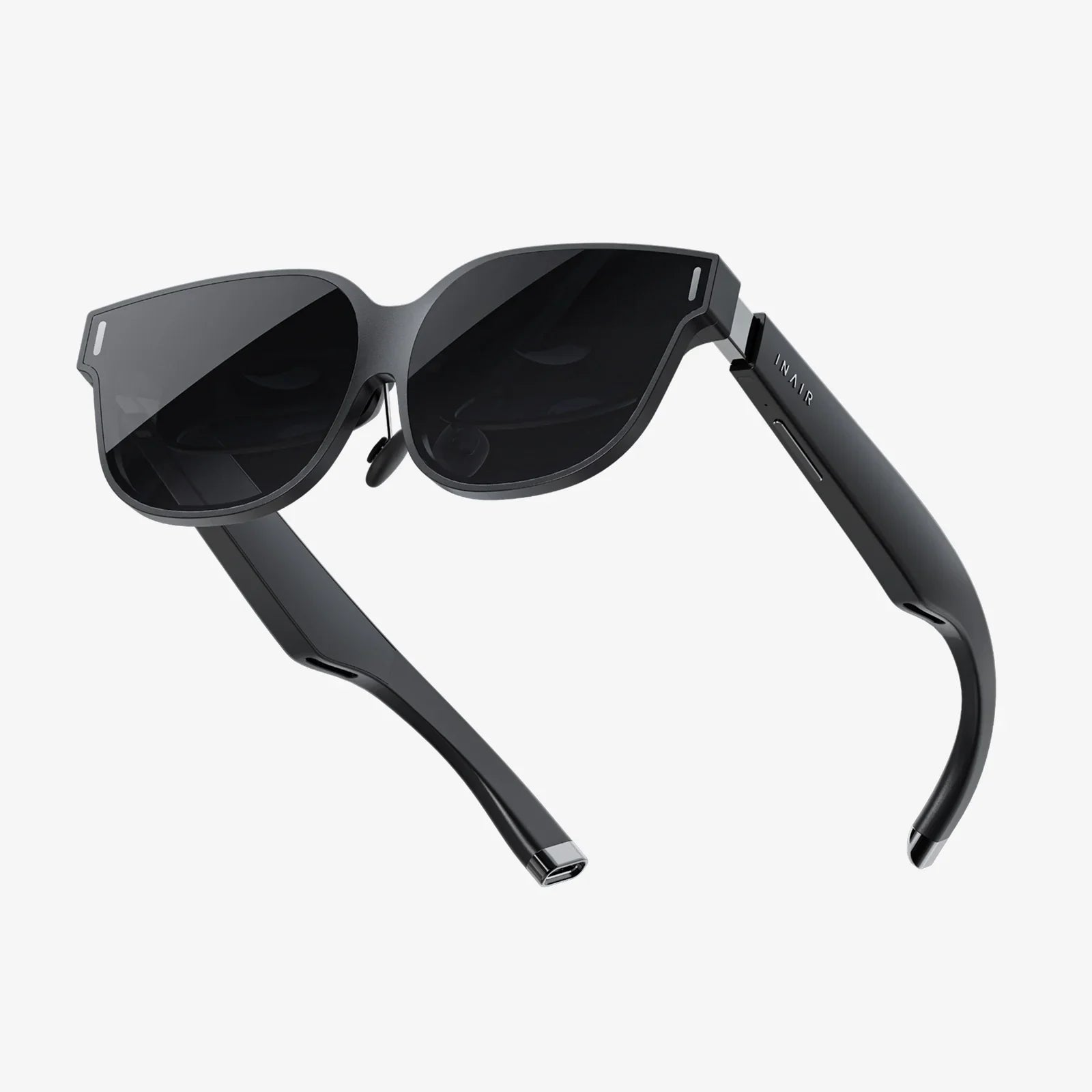
Form Factor and Comfort: The pursuit of the "invisible interface" will be well underway. Headsets will become significantly lighter, slimmer, and more akin to a pair of premium sunglasses than a gaming peripheral. Advancements in micro-OLED and pancake lens technology will allow for this miniaturization without sacrificing visual fidelity. The goal is all-day comfort, moving VR from short-burst experiences to a platform for sustained productivity and social interaction.
Visual and Audio Fidelity: Resolution will approach the coveted "retina" level, with pixel density so high the human eye can no longer discern individual pixels, effectively eliminating the "screen door effect." High Dynamic Range (HDR) will bring incredibly vibrant colors and deep contrasts, making virtual environments feel more real than real life. Spatial audio will be perfected, allowing for pinpoint accuracy in sound, making a whisper from behind you feel genuinely located behind you, crucial for both immersion and collaborative work.
The End of the Controller? While controllers will persist for specific gaming and design applications, the primary mode of interaction will shift to natural input. Inside-out tracking, combined with advanced hand-tracking algorithms and haptic feedback gloves, will allow users to manipulate the virtual world with their bare hands. The feeling of tactile feedback—the weight of a virtual object, the texture of a digital surface—will become increasingly sophisticated, closing the loop between action and sensation.
Performance and Connectivity: The processing power required for this hyper-realistic VR will be immense. We will see a hybrid approach: standalone headsets with powerful, efficient on-board chipsets for mobility, paired with the ability to tap into external computational power via Wi-Fi 6E and 7 for the most demanding tasks. This could mean streaming from a local home computer or, more significantly, from the cloud, rendering the concept of a physical gaming rig obsolete.
While gaming will remain a massive driver of innovation and revenue, the most explosive growth by 2025 will be in enterprise and productivity applications. The software will be the true engine of VR's mainstream adoption.
The Virtual Office is Open for Business: Remote work, now a permanent fixture, will evolve into immersive work. Platforms will offer persistent virtual office spaces where teams can collaborate regardless of physical location. The sense of "presence"—achieved through high-fidelity avatars with realistic eye-tracking and facial expressions—will make meetings more engaging and productive than a grid of video calls. Imagine brainstorming on a virtual whiteboard that is infinite, or prototyping a new product in 3D space with colleagues from three different continents.
Education and Training Reimagined: VR will democratize and revolutionize education. Medical students will perform intricate virtual surgeries, making mistakes without consequences. History classes will not read about ancient Rome; they will walk through a faithfully reconstructed Forum. Mechanics will train on virtual engines, and astronauts will prepare for missions in simulated space stations. The cost and risk associated with high-stakes training will plummet while efficacy soars.
SocialVR and the Metaverse: The concept of the metaverse—a persistent, interconnected network of virtual spaces—will begin to crystallize. While a single, unified metaverse is unlikely by 2025, we will see robust, interoperable platforms where your avatar, identity, and digital assets can travel between experiences. Social interaction will be the killer app. Concerts, movie nights, museum tours, and simply "hanging out" will take on a new dimension in shared virtual spaces, offering a sense of togetherness that flat screens cannot replicate.
Healthcare and Therapy: VR will become a standard therapeutic tool. It is already being used successfully for exposure therapy to treat phobias and PTSD. By 2025, we will see its expansion into pain management, physical rehabilitation through gamified exercises, and cognitive therapy for conditions like Alzheimer's, where patients can revisit calming, familiar virtual environments.
This technological upheaval will not occur in a vacuum. It will bring profound societal changes, both empowering and challenging.
The Future of Work and the Digital Nomad: VR could enable a true decoupling of geographic location and economic opportunity. A world-class designer in a small town could work in a top-tier firm's virtual studio. This promises greater flexibility but also raises questions about company culture, serendipitous innovation, and the potential for a new kind of digital divide between those with access to high-end VR and those without.
Identity and Expression: In a world where you can be anyone or anything, concepts of identity will be stretched. Avatar creation will be a deeply personal and expressive act, allowing for exploration of self in ways previously impossible. This offers incredible freedom but also introduces new complexities around authenticity, representation, and potential for deception.
Privacy and Ethics in a Captured World: The data collected in VR is exponentially more intimate than web browsing history. Headsets can track eye movement, pupil dilation, body language, and even biometric data. Who owns this data? How is it used? Robust ethical frameworks and regulations will be desperately needed by 2025 to prevent a dystopian future of targeted manipulation and constant surveillance within these immersive environments.
For this future to be realized, significant hurdles must be overcome. The industry cannot innovate in a vacuum; it must solve for the human and infrastructural elements.
Solving for Simulator Sickness: For a significant portion of the population, VR induces nausea and discomfort. Mitigating this through higher refresh rates, reduced latency, and better user calibration is paramount for mass adoption. It remains one of the biggest technical barriers.
The Cost of Entry: While prices will fall, high-end, comfortable, and powerful VR will still represent a significant investment for consumers and businesses alike. Creating accessible entry-points and demonstrating clear ROI for enterprise applications will be critical.
Content is Still King: The hardware is a vessel; it is the software experiences that will compel people to return. The development community needs tools to create rich, compelling, and comfortable experiences efficiently. The success of VR hinges on a vibrant and sustainable ecosystem for creators.
Interoperability and Open Standards: The worst-case scenario for the metaverse is a series of walled gardens, like the social media landscape of today. For a truly open and connected virtual future, major players will need to agree on standards for avatars, assets, and worlds to allow for true user agency and movement.
The journey to 2025 is not about perfect photorealism; it is about perfect presence. It is about creating technology that fades into the background, allowing for human connection and human creativity to take center stage. The headset is not the destination; it is the doorway. The future of virtual reality is the future of how we connect, create, and comprehend our world—and that future is being built today, one line of code, one micro-LED, and one transformative idea at a time. The only question that remains is: what will you build when you step through?
Share:
What Can I Do With Virtual Reality? Exploring the Limitless Possibilities of the Digital Frontier
Full Immersive Virtual Reality: Redefining Reality and Reshaping Human Experience