


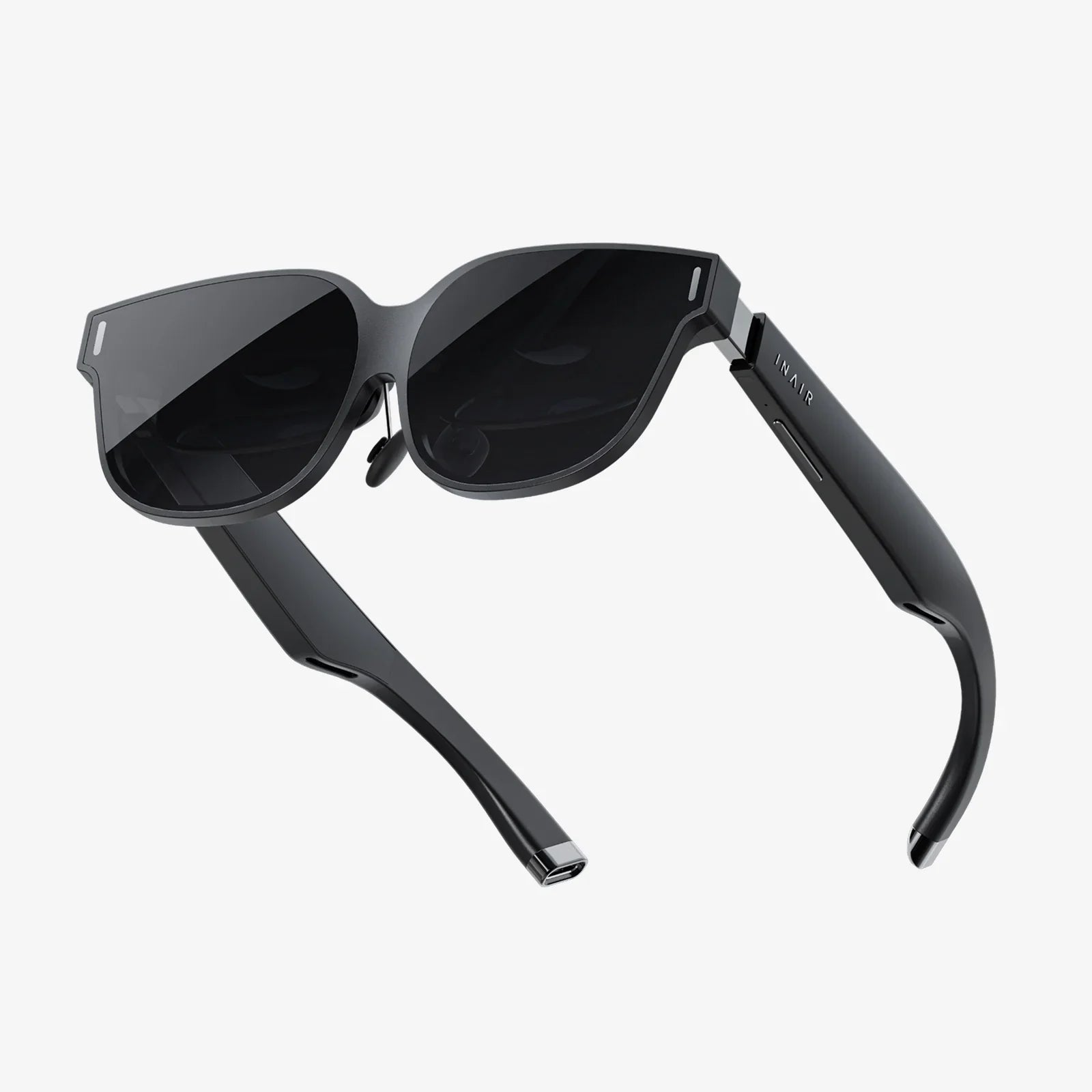
Imagine walking into your office, not through a door, but by simply putting on a headset. Your physical surroundings dissolve, replaced by a sun-drenched virtual workspace where your global team, rendered as photorealistic avatars, is already deep in discussion around a holographic 3D model. You reach out, grab a component, and twist it apart to examine its internal mechanics—a feat impossible in any video call. This isn't a scene from a sci-fi movie; it is the imminent future of the workplace with Extended Reality (XR), a future that promises to be more immersive, more collaborative, and more human than we ever thought possible from behind a screen.
The XR Spectrum: Demystifying the Toolkit of Tomorrow
Before delving into the transformative applications, it's crucial to understand the components of XR. Extended Reality is an umbrella term encompassing a spectrum of immersive technologies:
- Virtual Reality (VR): Fully immersive, digital environments that completely replace the user's physical world. Accessed through headsets, VR is ideal for simulated training, full virtual meetings, and prototyping in a completely controlled digital space.
- Augmented Reality (AR): overlays digital information—images, data, 3D models—onto the user's real-world view, typically through glasses, smartphones, or tablets. AR is perfect for providing real-time information to field technicians, visualizing furniture in a room, or displaying data dashboards on factory equipment.
- Mixed Reality (MR): A more advanced blend where digital and physical objects co-exist and interact in real-time. Using advanced sensors, MR allows a user to see their physical hands manipulating a virtual object or have a digital character sit on their real-world couch. It represents the pinnacle of seamless integration between realities.
This technological trinity forms the foundation upon which the next era of work will be built, moving us from flat, two-dimensional interactions to rich, spatial, and contextual experiences.
The Demise of the Flat Screen: Revolutionizing Remote Collaboration
The rapid shift to remote work exposed the critical limitations of traditional video conferencing. The "grid of faces" on a screen is a poor substitute for the nuanced, spontaneous interactions of a physical office. It fosters fatigue, hinders non-verbal communication, and makes complex collaborative tasks like design or engineering reviews incredibly cumbersome. XR shatters this flat paradigm.
In the XR-powered workplace, collaboration becomes spatial and embodied. Teams from across the globe can meet in a persistent virtual office or a custom-designed environment suited to their task. Instead of a video feed, each member is represented by an avatar that can replicate their facial expressions and body language, restoring the human connection lost in traditional remote work. The benefits are profound:
- Presence and Engagement: The feeling of "being there" with colleagues, known as telepresence, drastically reduces the sense of isolation and fosters stronger team cohesion. A nod, a gesture, a shared glance in a virtual space carries more weight than a thousand emojis in a chat window.
- Manipulating Shared Objects: Teams can interact with and manipulate 3D models, data visualizations, and virtual whiteboards as if they were physical objects in the room. Architects can walk clients through a building before ground is broken. Engineers can disassemble a virtual engine together, identifying potential issues long before manufacturing begins.
- Contextual Data Overlays: During a discussion about a complex piece of machinery, an engineer can pull up schematics, performance metrics, or maintenance history that hover in the air next to the object, accessible to everyone in the meeting. This instant access to contextual information accelerates decision-making and problem-solving.
This shift transforms collaboration from a passive viewing experience into an active, participatory, and deeply human endeavor.
Learning by Doing: The Training and Onboarding Revolution
One of the most immediate and impactful applications of XR is in corporate training and development. Traditional methods often involve expensive physical setups, theoretical learning, and high-stakes scenarios where mistakes can have real-world consequences. XR creates a safe, scalable, and infinitely repeatable environment for experiential learning.
- High-Fidelity Simulations: Surgeons can practice intricate procedures on virtual patients. Aircraft mechanics can learn to repair jet engines without the risk of causing millions in damage or compromising safety. These simulations can replicate rare fault conditions or dangerous scenarios that would be impossible or unethical to recreate in the real world.
- Soft Skills and Leadership Training: Employees can practice difficult conversations, sales pitches, or public speaking in front of a virtual audience. They can navigate complex HR scenarios with AI-powered avatars, receiving instant feedback on their tone, language, and approach in a low-pressure environment.
- Guided Remote Assistance: An expert engineer sitting at headquarters can see exactly what a field technician sees through their AR glasses. The expert can then draw arrows, highlight components, and pull up instructions directly onto the technician's field of view, guiding them through a repair step-by-step. This drastically reduces downtime, travel costs, and errors.
This "see one, do one" approach in XR leads to significantly higher knowledge retention, increased confidence, and competency achieved in a fraction of the time required by traditional methods.
Beyond the screen: Redesigning the Physical Workspace
XR will not just create virtual offices; it will also profoundly reshape our physical workspaces. The concept of the "smart office" will evolve into the "contextual office," where the digital and physical realms are fused to enhance productivity and well-being.
- The Infinite Workspace: AR glasses could allow a worker sitting at a simple desk to have multiple large, virtual screens floating in their periphery, creating a boundless digital workstation without the physical clutter of monitors.
- Spatial Computing and Wayfinding: New employees navigating a large corporate campus or hospital could have directional arrows and room names overlaid onto their real-world view, guiding them effortlessly to their destination.
- Enhanced Well-being and Ergonomics: XR could remind users to take breaks, suggest posture corrections, or even transform a windowless cubicle into a serene, virtual beachscape during a mindfulness session, combating fatigue and boosting mental well-being.
The office will cease to be a static container of desks and become a dynamic interface—a canvas upon which digital information is painted, tailored to the needs of the individual and the task at hand.
Navigating the New Frontier: Challenges and Considerations
The path to this XR-utopia is not without its obstacles. Widespread adoption hinges on overcoming significant technological, cultural, and ethical hurdles.
- Hardware and Accessibility: Current-generation headsets can be bulky, expensive, and power-intensive. For XR to become as ubiquitous as the laptop, devices need to become lighter, more comfortable, have all-day battery life, and be affordable for organizations of all sizes. The user experience must be seamless and intuitive.
- Network Infrastructure: High-fidelity, multi-user XR experiences require immense bandwidth and extremely low latency. The widespread rollout of advanced wireless networks is critical to supporting these data-intensive applications without lag or interruption.
- The Digital Divide and Inclusivity: Organizations must be vigilant to ensure these new tools do not create a new class of "haves" and "have-nots." Not all roles are suited for XR, and forcing immersion could be counterproductive. Furthermore, experiences must be designed to be accessible to individuals with different physical abilities and neurodiversities.
- Data Privacy and Security: XR devices are data collection powerhouses, tracking user movement, eye gaze, voice, and even biometric responses. This raises enormous questions about who owns this data, how it is used, and how to protect sensitive corporate information within virtual spaces.
- Cultural Adoption and "Virtual Fatigue": Transitioning to a new paradigm of work requires careful change management. Employees will need training not just on the technology, but on new digital etiquette. Furthermore, companies must be mindful of "virtual fatigue" and establish healthy boundaries to prevent burnout in an "always-on" immersive environment.
Addressing these challenges proactively is not optional; it is essential for building an XR future that is equitable, secure, and human-centered.
The Human Element: XR as an Amplifier, Not a Replacement
The most critical perspective to maintain is that XR's ultimate purpose is to augment human capability, not replace human connection. The goal is to strip away the friction and limitations of distance and physicality, allowing us to focus on what humans do best: creativity, strategic thinking, empathy, and innovation.
This technology will not make the office obsolete; rather, it will redefine its value. The physical workplace will likely evolve into a hub for fostering culture, building deep social bonds, and engaging in the most complex, creative collaborations—activities that, while enhanced by XR, are ultimately rooted in shared physical experience. The future of work is not about choosing between the physical and the digital, but about seamlessly flowing between them, using the right tool for the right task. It is a hybrid, flexible, and deeply intelligent ecosystem where technology empowers people to do their most meaningful work, unshackled from the constraints of location and the flat screen.
The headset is not just a new piece of hardware; it's a passport to a workspace without walls, where a handshake can happen across continents and a breakthrough idea can be pulled from the air and shaped by a global team. The future of work is being rendered all around us, and it's waiting for you to log in.
Share:
Using Your iPhone as a VR Headset: A Comprehensive Guide to Mobile Virtual Reality
Using Your iPhone as a VR Headset: A Comprehensive Guide to Mobile Virtual Reality