


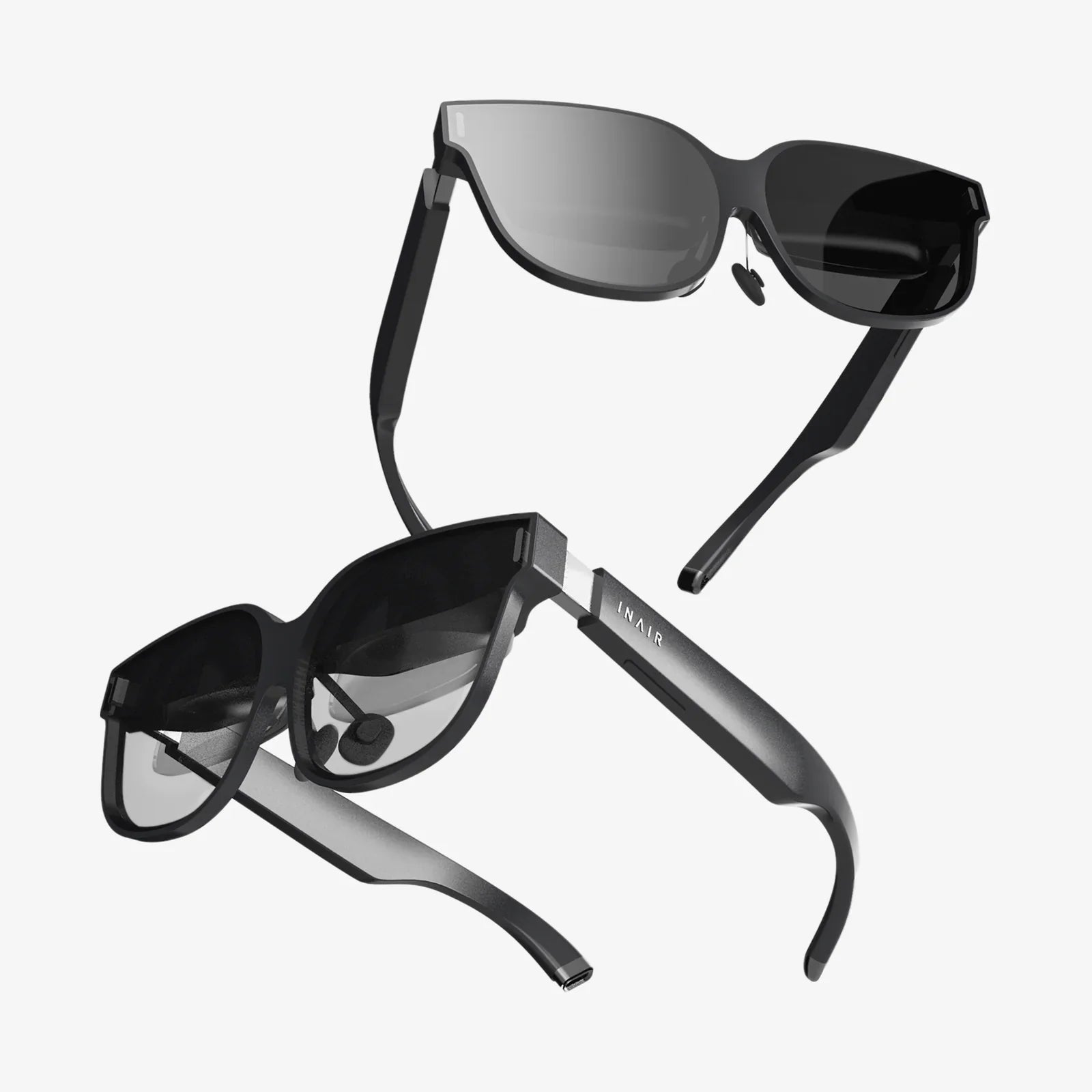
Imagine a world where the boundary between the digital and the physical isn't just blurred—it's elegantly woven together, creating a layer of interactive intelligence over everything you see. This isn't a distant sci-fi fantasy; it's the tangible future being built today, and by 2025, it will begin arriving on our faces and in our homes. The rapid evolution of Augmented Reality (AR) and Virtual Reality (VR) headsets is accelerating toward a pivotal moment, promising to unlock experiences and capabilities that will fundamentally alter our daily lives. The journey from clunky prototypes to sleek, powerful portals is almost complete, and the destination is closer than most realize.
The Architectural Leap: Hardware Reimagined
The most immediate and noticeable change by 2025 will be in the physical form and capability of the headsets themselves. The cumbersome, tethered, and isolating designs of the past will give way to a new era of wearability and power.
Form Factor: From Goggles to Glasses
The dream of AR glasses that look no different from standard prescription eyewear is nearing reality. Advances in micro-OLED displays, waveguide optics, and holographic diffraction gratings are enabling manufacturers to project rich, vibrant digital images onto incredibly thin lenses. By 2025, we predict the emergence of socially acceptable AR glasses that are lightweight, all-day wearable, and even stylish. VR headsets, while still requiring more robust displays for full immersion, will undergo a similar slimming down, becoming more like sleek ski goggles than bulky helmets, thanks to pancake lenses and better weight distribution.
Sensory Fidelity: Seeing, Hearing, and Feeling
Visual resolution will approach the coveted "retina" quality, where the human eye can no longer distinguish individual pixels, eliminating the screen-door effect that has long plagued VR. High dynamic range (HDR) and wide color gamut will bring virtual worlds to life with breathtaking realism. But immersion is more than visual. Spatial audio will become standard, accurately simulating sound from any direction, making a whisper behind your left ear feel unsettlingly real. Perhaps most excitingly, we will see the maturation of haptic feedback beyond simple controller vibrations. Ultrasonic haptics and wearable gloves will begin to simulate the tactile sensation of touching virtual objects, from the rough texture of a stone wall to the gentle pushback of a virtual button.
Compute Power and Connectivity: The Engine Room
The processing burden for these intense experiences won't solely rest on the device. A hybrid compute model will dominate. On-board processors will handle basic tracking and UI, but for complex simulations and photorealistic graphics, headsets will seamlessly leverage cloud streaming and edge computing via high-bandwidth, low-latency 5G and Wi-Fi 6E networks. This "wireless tether to the cloud" will allow even the slimmest glasses to deliver experiences that would require a desktop computer today, all without a wired connection or a bulky processing pack.
The Invisible Revolution: AI as the Operating System
Hardware is the vessel, but artificial intelligence will be the lifeblood of the 2025 headset. AI won't be a feature; it will be the foundational layer that makes everything possible.
Perception and Understanding
Headsets will be equipped with a sophisticated suite of sensors—cameras, LiDAR, depth sensors, and microphones—that act as digital eyes and ears. On-device AI neural processing units (NPUs) will interpret this data in real-time, not just mapping the room but understanding it. Your headset will recognize your coffee mug, your sofa, your dog, and the book you left open. It will understand context: if you're cooking, it can project a recipe timer onto your oven; if you're looking at a complex piece of machinery, it can overlay animated repair instructions.
The Intelligent Interface
Forget clunky menus and controllers. The primary interface will be natural and intuitive. Eye-tracking will allow you to select items just by looking at them. Advanced hand-tracking will let you manipulate digital objects with precise pinches and gestures. Voice assistants, powered by large language models, will evolve into true spatial companions, capable of understanding conversational commands related to what you're seeing. "How does this engine part fit into the whole?" you might ask, and an AI avatar would materialize to explain and demonstrate.
Transforming Industries: The Enterprise Metaverse
While consumer applications grab headlines, the most profound early impacts of AR/VR in 2025 will be felt in enterprise and industry, where the return on investment is clear and compelling.
Remote Collaboration and Design
The concept of the "office" will be radically redefined. Instead of a flat video call, remote teams will meet in persistent virtual workspaces or share a physical space through AR avatars. Architects and engineers will collaboratively walk through life-sized 3D models of their designs long before ground is broken, making changes in real-time. A senior engineer in one country will be able to see what a junior technician on a factory floor sees, and annotate their field of view with arrows and notes to guide them through a complex repair, drastically reducing downtime and travel costs.
Training and Simulation
From surgeons practicing delicate procedures to firefighters training for dangerous scenarios, VR will provide a safe, repeatable, and cost-effective simulation platform. These won't be generic training modules; they will be hyper-realistic recreations of specific environments, powered by game-engine fidelity. AR will provide just-in-time information overlay for complex tasks, like wiring an aircraft cockpit or assembling custom machinery, reducing errors and accelerating proficiency.
Reshaping Society: The Consumer Experience
For the average person, the headsets of 2025 will unlock new forms of entertainment, social connection, and personal augmentation.
Social and Spatial Computing
Social media will evolve from a feed on a phone to a shared layer over reality. You might meet friends for a virtual coffee that appears to sit on your actual table, or watch a movie together on a virtual screen that feels anchored to your living room wall. Your digital identity—your avatar—will become as important as your physical one, traversing different applications and experiences with you.
Contextual Computing and Personal AI
Your headset will function as the ultimate personal assistant. Walking through a city, it could highlight the history of buildings you pass, translate street signs instantly, or notify you that a friend is in a café around the corner. It could help you navigate a crowded airport, with arrows painted on the floor only you can see, guiding you to your gate. It will remember where you left your keys.
Health and Wellness
AR/VR will become powerful tools for mental and physical health. VR meditation apps can transport you to a serene beach to combat stress. AR can turn physical therapy exercises into engaging games. For those with visual impairments, AR could enhance contrast, highlight obstacles, or magnify text in the real world, acting as a powerful assistive technology.
The Hurdles on the Horizon: Challenges to Address
This future is not without its significant challenges. For widespread adoption to occur by 2025, several critical issues must be confronted head-on.
The Privacy Paradox
A device that sees and hears everything you do represents an unprecedented privacy challenge. The constant collection of environmental and biometric data (where you look, how you react) will require new ethical frameworks and robust, transparent privacy controls. Users must have absolute sovereignty over their data and how it is used.
Digital Division and Accessibility
There is a real risk of a "digital divide" emerging between those who can afford these advanced tools and those who cannot, potentially exacerbating existing inequalities. Furthermore, the industry must prioritize designing for accessibility from the ground up, ensuring those with different physical abilities can fully participate in the immersive future.
Psychological and Social Impact
We must carefully study the long-term effects of spending significant time in blended realities. How does it affect our attention spans, our memory, and our connection to the physical world and the people in it? Establishing healthy usage norms and digital literacy will be crucial.
The year 2025 is not an endpoint, but a gateway. The AR and VR headsets arriving then will be the first true embodiment of spatial computing—intuitive, powerful, and context-aware. They will move beyond novelty to become indispensable tools that augment our human capabilities, redefine collaboration, and unlock new realms of creativity and experience. The revolution won't be televised; it will be overlayed, inviting us to see our world, and ourselves, in a brilliant new light.
Share:
Industries That Use Augmented Reality Are Reshaping Our World
Augmented Reality Input Devices: The Invisible Interface of Tomorrow