


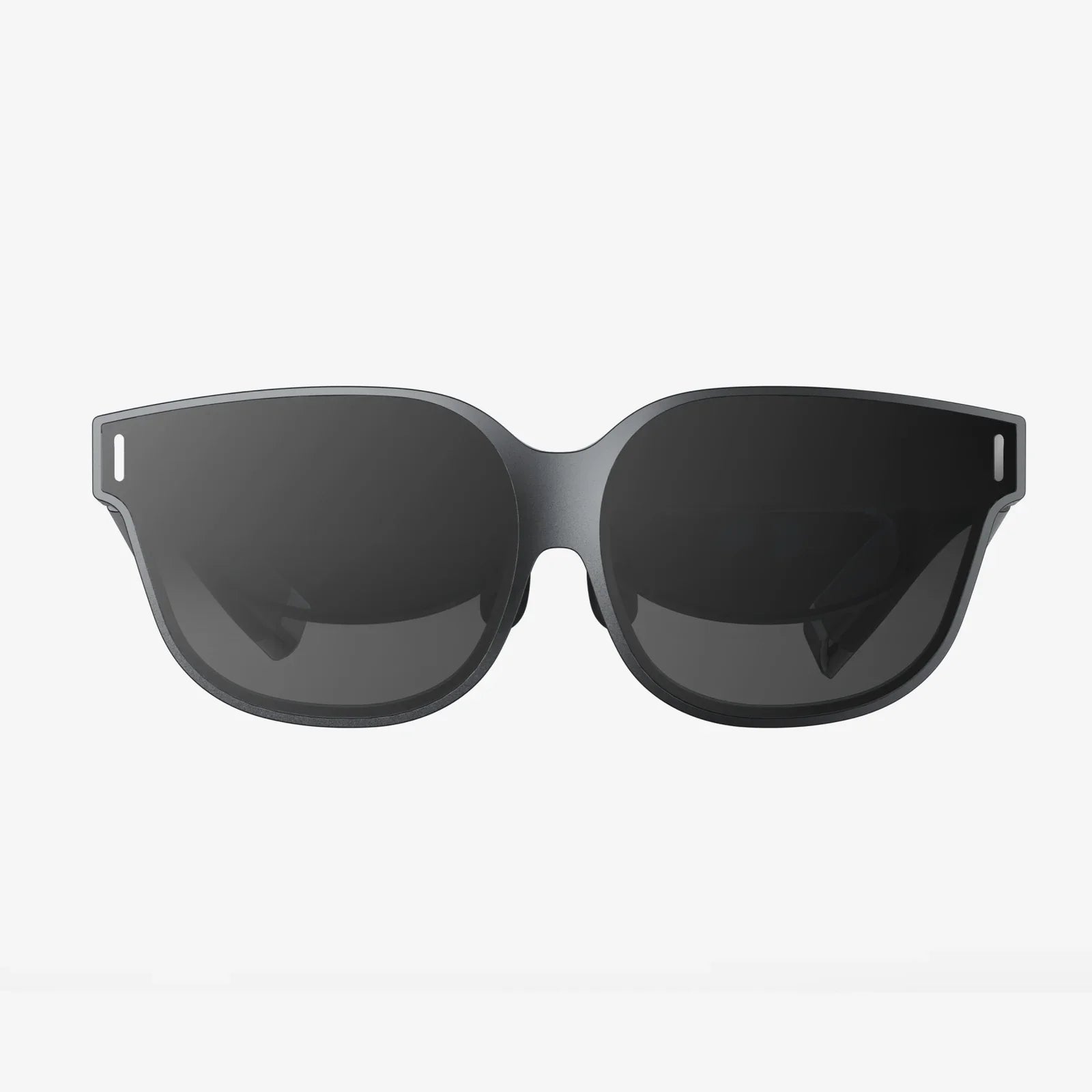
Imagine a world where digital information isn't confined to a screen but is seamlessly woven into the fabric of your physical reality, enhancing everything you see and do. This is no longer the stuff of science fiction; it's the present-day reality for countless professionals across the globe. The adoption of augmented reality (AR) is accelerating at a breathtaking pace, moving beyond gaming and entertainment to become a critical tool in some of the world's most vital and complex sectors. Industries that use augmented reality are not just experimenting with a novel technology; they are fundamentally reshaping their operational paradigms, achieving unprecedented levels of efficiency, safety, and understanding. The convergence of the digital and physical worlds is unlocking potential that was once unimaginable, and it's happening right now, from the depths of a mine to the peak of a construction crane.
The Digital Blueprint: Revolutionizing Design and Construction
The architecture, engineering, and construction (AEC) industry is a prime beneficiary of AR's capabilities. For decades, professionals have relied on 2D blueprints and 3D digital models on computer screens, a process that requires significant mental translation and can lead to costly errors in interpretation.
AR shatters this barrier. By using devices like smart glasses or tablets, architects and engineers can project their full-scale 3D models directly onto a physical site. A project manager on an empty plot of land can see the entire building's skeleton, including plumbing, electrical conduits, and HVAC systems, superimposed precisely where they will be built. This allows for:
- Clash Detection: Identifying conflicts between different structural elements or systems before a single shovel hits the ground, saving immense time and resources on rework.
- Enhanced Collaboration: All stakeholders can view and interact with the same model on-site, ensuring everyone from the architect to the subcontractor is aligned.
- Precision Assembly: For complex prefabricated components, AR can guide workers through the exact placement and installation sequence, reducing errors and speeding up the building process.
- Progress Monitoring: Comparing the as-built structure with the original digital model in real-time to ensure the project is on track and to spec.
This 'see-what-you-will-build' approach minimizes guesswork, drastically reduces costly change orders, and enhances overall project safety by making potential hazards and planned structures visibly clear.
The Augmented Surgeon: Advancing Medical Precision and Training
Perhaps one of the most profound applications of AR is within the healthcare sector. Here, the stakes are immeasurably high, and the technology is being used to enhance patient outcomes, improve surgical precision, and revolutionize medical training.
Surgeons are now using AR headsets to overlay critical patient data—such as MRI or CT scans—directly onto their field of view during procedures. Instead of glancing away at a monitor, a neurosurgeon can see a tumor's exact boundaries and location highlighted on the patient's brain. This allows for more precise incisions, safer navigation around critical structures, and ultimately, better surgical outcomes. Applications extend beyond the operating room:
- Medical Training and Education: Students can practice complex procedures on virtual patients or interact with detailed, life-sized 3D models of human anatomy, gaining invaluable experience without risk.
- Enhanced Diagnostics: AR can help visualize complex medical data, making it easier for clinicians to explain conditions to patients and for researchers to identify patterns.
- Remote Assistance: A senior specialist can guide a less experienced colleague through a procedure from thousands of miles away, seeing their perspective and annotating the real-world view with instructions.
- Rehabilitation: AR games and simulations can make physical therapy more engaging for patients, providing real-time feedback on their movements and progress.
By providing a seamless layer of intelligent information, AR is empowering medical professionals to work with superhuman accuracy and empathy.
The Factory of the Future: Supercharging Manufacturing and Logistics
In the relentless pursuit of efficiency and quality, manufacturing and logistics have emerged as powerhouse adopters of augmented reality. The technology is being deployed across the entire product lifecycle, from initial assembly to maintenance and repair.
On the factory floor, assembly line workers equipped with AR smart glasses no longer need to constantly consult paper manuals or computer screens. Digital work instructions, diagrams, and warnings are projected directly into their line of sight, guiding them through each step of a complex wiring harness installation or engine assembly. This hands-free guidance:
- Boosts Efficiency: Significantly reduces task completion times and minimizes errors by eliminating context switching.
- Upskills Workers: Allows less experienced employees to perform complex tasks with expert-level guidance, reducing training time and dependency on a few seasoned experts.
- Ensures Quality Control: The system can highlight the specific components to be installed and the exact torque specifications for bolts, ensuring every product meets stringent quality standards.
In logistics and warehousing, AR is a game-changer for order picking. Forklift operators and pickers see the most efficient route through a warehouse displayed on their glasses, with digital arrows guiding them to the exact shelf. The system can also highlight the correct item and quantity to be picked, dramatically accelerating fulfillment speeds and slashing error rates in shipping orders.
Retail Reimagined: Transforming the Customer Journey
The retail industry is leveraging AR to bridge the gap between online convenience and in-store experience, creating immersive and personalized shopping journeys that were previously impossible.
The most recognizable application is virtual try-on. Customers can use their smartphones or in-store kiosks to see how glasses, makeup, watches, or clothing will look on them without ever physically touching a product. This not only provides a fun and engaging experience but also drastically reduces purchase hesitation and the likelihood of returns. Beyond apparel, AR allows shoppers to:
- Visualize Products in Their Home: See how a new sofa, refrigerator, or paint color will look and fit in their actual living space at scale. This eliminates the guesswork of online furniture shopping and builds consumer confidence.
- Access Enhanced Product Information: By pointing their device at a product or its packaging, shoppers can unlock interactive demonstrations, ingredient sourcing information, or style tutorials.
- Navigate Stores: In large retail environments, AR can overlay digital navigation paths on a live video feed, guiding customers directly to the items on their list.
This technology is empowering consumers to make more informed decisions and is providing retailers with powerful new tools to engage, assist, and delight their customers.
Beyond the Obvious: AR in Energy, Education, and Public Safety
The reach of augmented reality extends far into other critical fields, often in ways the public rarely sees but relies upon every day.
In the energy sector, technicians working on remote wind turbines or complex refinery equipment use AR for remote expert support. A field engineer can stream their point of view to a central command center, where an expert can annotate their display with arrows and instructions to guide them through a repair, minimizing downtime and avoiding costly site visits. AR also provides vital safety information by highlighting hazardous areas or displaying equipment status and operational data in real-time.
In education, AR is turning classrooms into dynamic learning environments. History lessons can come alive with historical figures and events reenacted in the classroom. Biology students can dissect a virtual frog or explore the human circulatory system in 3D. This interactive, visual learning promotes deeper understanding and retention of complex subjects.
For public safety and military personnel, AR provides a critical tactical advantage. Firefighters can use AR displays in their helmets to see the layout of a burning building, including the location of hazards and trapped occupants. Soldiers can have real-time intelligence, navigational data, and friendly troop positions overlaid on their battlefield view, enhancing situational awareness and decision-making in high-pressure scenarios.
The thread connecting all these diverse applications is a fundamental shift in how we interact with information. AR doesn't just provide data; it provides context. It delivers the right information at the right time and, most importantly, in the right place. This contextual computing is reducing cognitive load, minimizing errors, and unlocking human potential by allowing us to focus on the task itself rather than the tools required to complete it. The barriers between the digital and physical are dissolving, and in their place, a more intuitive, efficient, and astonishingly capable world is being built—one augmented layer at a time.
The silent revolution happening on factory floors and in operating rooms is a clear signal that augmented reality's true power lies not in isolated consumer apps, but in its deep integration into the workflows that power our civilization. This is just the beginning of a fundamental rewiring of how we work, learn, and interact with the physical world, and the most innovative organizations are already racing to harness its full potential.
Share:
Augmented Reality Fusion: Merging Our Digital and Physical Worlds
Future Predictions for AR and VR Headsets in 2025: A Glimpse into the Next Digital Revolution