


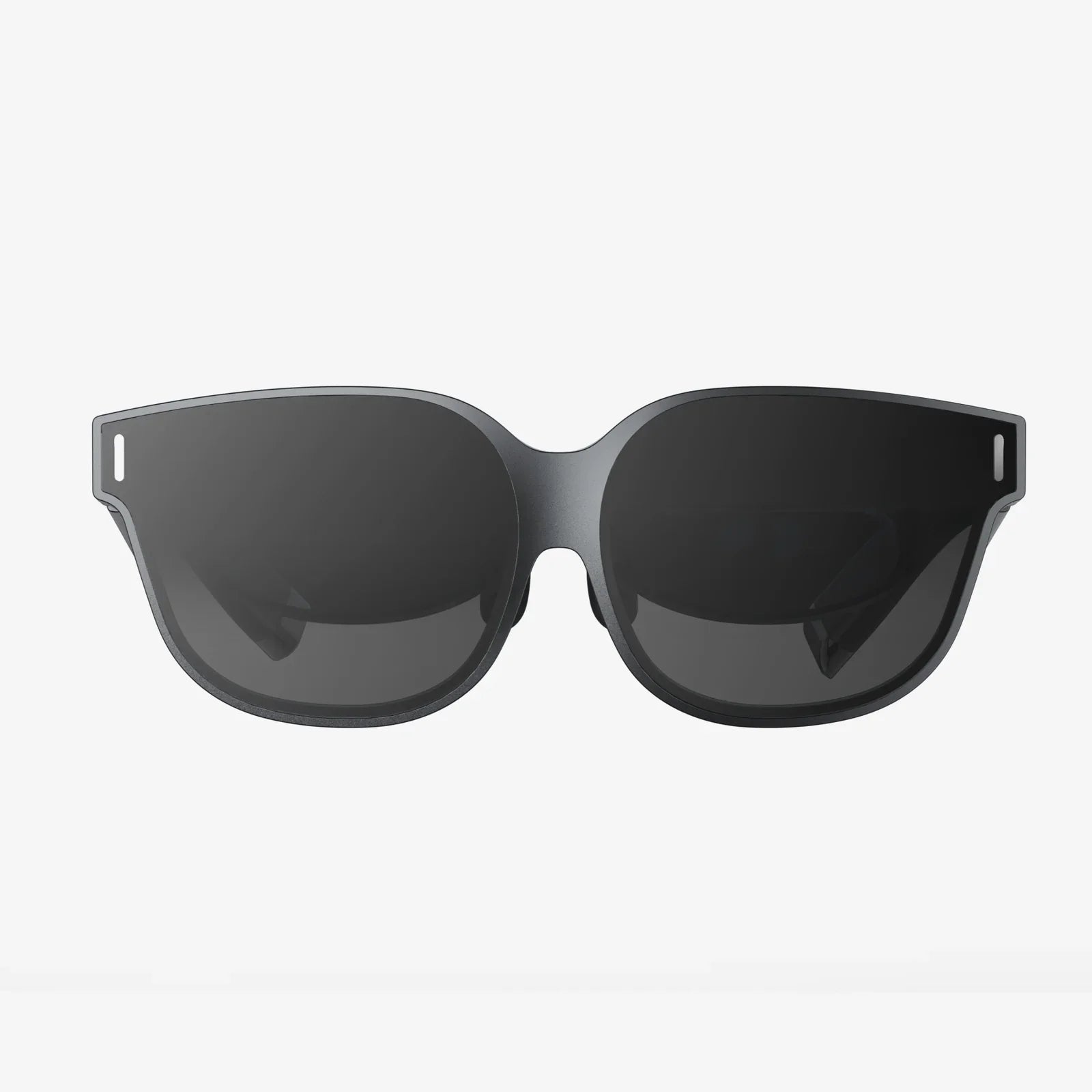
Imagine a world where information flows as naturally as sight, where the digital and physical realms are not just connected but seamlessly interwoven into a single, enhanced experience. This is the promise of future tech glasses, a device category on the cusp of transforming from a niche gadget into the next indispensable portal to our digital lives. They represent not merely an upgrade to our eyesight but a fundamental shift in how we perceive, interact with, and understand the world around us.
Beyond Vision Correction: The Evolution of Eyewear
For centuries, glasses served a singular, vital purpose: to correct imperfect vision. The 20th century saw them evolve into a statement of fashion and personal identity. However, the 21st century is catapulting them into an entirely new dimension. The journey began with clumsy headsets and limited functionality, but the trajectory is now clear. Future tech glasses are converging advancements from optics, material science, artificial intelligence, and biotechnology to create a wearable computer that sits comfortably on the bridge of your nose.
The core idea is to move beyond the isolated screen. Instead of looking down at a smartphone or up at a monitor, the world itself becomes the canvas. Data, interfaces, and digital objects can be overlaid, pinned, and interacted with in your immediate environment. This shift from looking at technology to looking through it represents one of the most significant changes in human-computer interaction since the invention of the graphical user interface.
The Architectural Pillars of Next-Generation Smart Glasses
The magic of these devices will be powered by a symphony of cutting-edge technologies working in perfect harmony. Understanding these core components is key to appreciating their potential.
Advanced Display Systems: Painting Light onto Reality
The heart of the experience is the display. Unlike virtual reality, which blocks out the world, augmented reality (AR) glasses must project digital imagery onto transparent lenses. Several technologies are vying for dominance. Waveguide displays, using microscopic gratings to bend light into the eye, offer a sleek form factor. Other approaches involve micro-LED projectors, which are incredibly bright and efficient, beaming images directly onto the retina. The holy grail is achieving a high resolution, wide field of view, and vibrant colors while maintaining transparency and a small, socially acceptable form factor. The goal is to make digital elements indistinguishable in quality from the physical world they augment.
Powering the Experience: Batteries and Processing
All this computational intensity requires significant power and processing muscle. Future designs will leverage a hybrid approach. The glasses themselves will house a minimalist processor and a small battery for essential functions, maintaining a lightweight design. For more intensive tasks—complex AI processing, high-end graphics rendering—they will seamlessly tether to a more powerful device in your pocket or utilize ultra-low-latency cloud computing via 5G and 6G networks. This distributed computing model ensures the glasses remain practical for all-day wear without sacrificing capability.
The Invisible Interface: AI and Contextual Awareness
The true intelligence of future tech glasses won't be in the hardware alone, but in the sophisticated artificial intelligence that drives them. A suite of sensors, including high-resolution cameras, LiDAR scanners, microphones, and inertial measurement units, will constantly scan the environment. On-device AI will process this data in real-time to understand context. It will recognize faces, identify objects, translate street signs instantly, and map the 3D geometry of a room. This contextual awareness allows the glasses to provide relevant information proactively and intuitively, creating an interface that feels less like a tool and more like a cognitive extension of the user.
Transforming Everyday Life: A World Augmented
The applications for this technology extend far beyond novelty, poised to revolutionize nearly every facet of daily life and professional endeavor.
Revolutionizing Professional and Industrial Work
In the professional sphere, the impact will be immediate and profound. A surgeon could see a patient's vital statistics and a 3D model of the anatomy overlaying the operating field, guiding precise incisions. A field engineer repairing complex machinery could see animated repair instructions and part numbers superimposed directly on the equipment they are fixing, hands-free. Architects could walk through a physical building site and see their digital blueprints come to life around them. This hands-free, information-rich environment will drastically improve efficiency, accuracy, and safety.
The Ultimate Personal Assistant and Navigation Tool
For the consumer, tech glasses will become the ultimate personal assistant. Walking through a new city, directional arrows could be painted onto the sidewalk, and historical facts about a building could pop up as you glance at it. In a social setting, the glasses could subtly display the name and key details of a person you're meeting, having pulled the information from a public professional profile. During a conversation, real-time language translation could be displayed, effectively breaking down language barriers. Shopping for groceries could involve seeing product origins, nutritional information, and allergy warnings floating above each item.
A New Paradigm for Health and Wellness Monitoring
Perhaps one of the most impactful applications will be in personal health. Future iterations could incorporate non-invasive sensors that monitor key biomarkers. Miniature spectrometers could analyze the skin to track blood glucose levels or hydration. Tiny cameras could observe pupillary response and blood flow to gauge fatigue, stress levels, or even early signs of neurological conditions. This constant, passive health monitoring would provide a rich dataset for predictive health, alerting users to potential issues long before they become serious, all through a device they are already wearing.
Navigating the Inevitable Challenges: The Road Ahead
For all their promise, the path to ubiquitous tech glasses is fraught with significant technical and sociological hurdles that must be overcome.
The Form Factor Conundrum: Fashion vs. Function
The greatest barrier to adoption remains design. To be widely accepted, these glasses cannot look like clunky, obvious pieces of tech. They must be as lightweight, comfortable, and stylish as conventional eyewear. This requires a monumental engineering effort to miniaturize components without compromising on battery life or display quality. The solution will likely be a diverse ecosystem of frames and styles, allowing users to choose a design that reflects their personal taste, making the technology disappear into an accepted accessory.
The Privacy Paradox: Seeing and Being Seen
This is arguably the most critical challenge. A device with always-on cameras and microphones worn in public presents a profound privacy dilemma. How do we prevent illicit recording and protect the privacy of individuals who are unknowingly being captured by someone else's glasses? Robust, clear, and legally enforceable digital etiquette and laws must be established. Technical solutions will be paramount, such as physical privacy shutters, clear recording indicator lights, and on-device processing that blurs the faces of non-consenting individuals in the background of images and videos.
The Digital Divide and Accessibility Concerns
As with any transformative technology, there is a risk of exacerbating social inequalities. If tech glasses become essential for work, navigation, and social interaction, ensuring they are accessible and affordable for all, not just the wealthy, will be crucial. Furthermore, the industry must be mindful of not creating a society where individuals are constantly distracted by digital overlays, potentially missing the richness of unfiltered human interaction and the physical world. Designing for focus, presence, and intentional use will be a critical design philosophy.
The Societal Shift: Redefining Human Connection and Reality
The widespread adoption of tech glasses will catalyze a societal shift as profound as the smartphone's impact. Our very perception of reality will become mediated and customizable. We will gain incredible powers of information access and environmental control, but we may also face new forms of digital distraction and information overload. The line between public and private space will be further blurred, demanding a new social contract. It will challenge our definitions of attention, presence, and even memory, as our experiences become persistently recorded and annotated.
This technology holds the mirror to our choices as a society. It can be a tool for immense good—enhancing human capability, democratizing information, and improving health outcomes. Or, if mismanaged, it could lead to greater isolation, privacy erosion, and new vectors for misinformation. The responsibility lies not just with the engineers who build them, but with policymakers, ethicists, and users to shape their development towards a future that is more connected, informed, and human-centric.
The horizon is no longer a distant line but a layer of infinite potential waiting to be unlocked. Future tech glasses are the key, offering a glimpse into a world where our reality is not replaced, but thoughtfully, powerfully, and beautifully enhanced. The next era of computing won't be held in your hand; it will be framed before your eyes, seamlessly blending the tangible and the digital into a new, extraordinary human experience.
Share:
Productive Virtual Meetings: The Ultimate Guide to Mastering Digital Collaboration
Android Smart Glasses News: The Next Frontier in Personal Computing is Here