


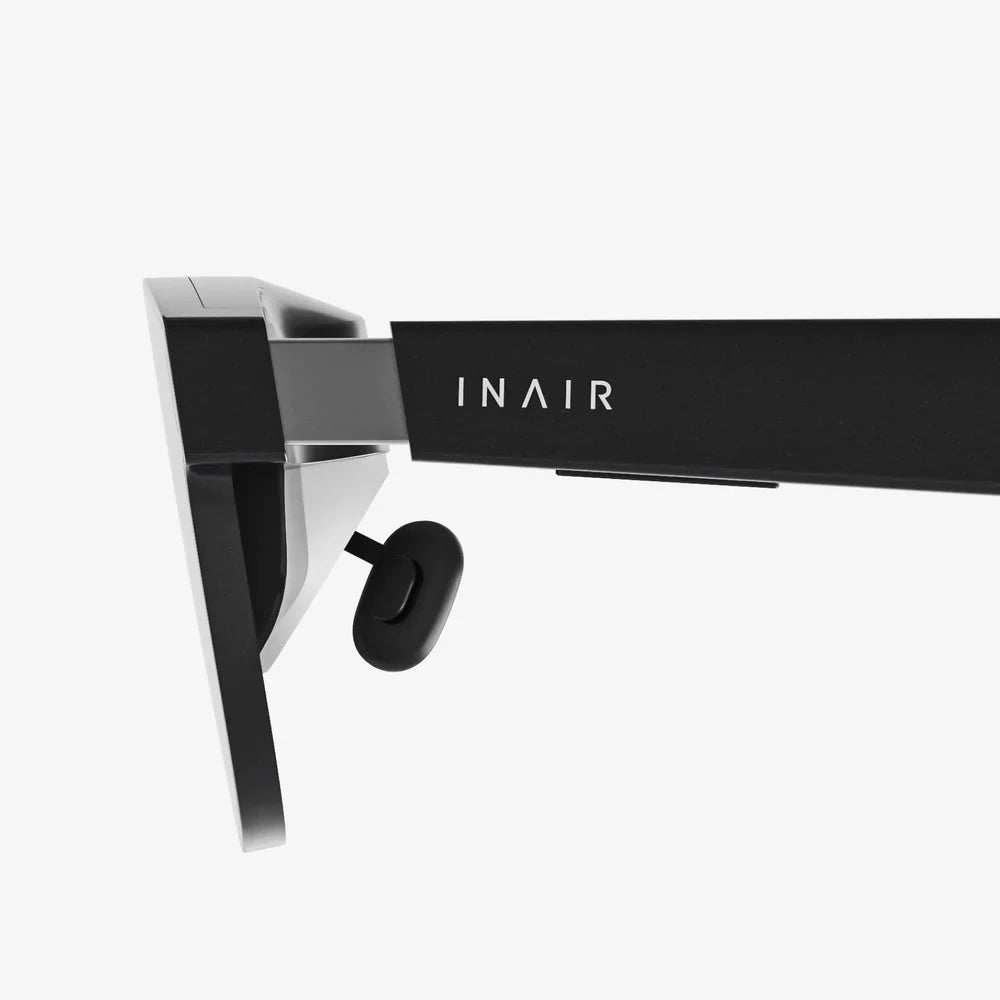
Imagine a world where your computer doesn't just sit on your desk, but understands your intentions before you even click, responds to the subtle nuance in your voice, and weaves digital information so seamlessly into your physical reality that the line between the two begins to blur. This isn't a scene from a science fiction novel; it is the imminent future of human-computer interaction (HCI), a field on the cusp of a revolution that will fundamentally redefine our relationship with technology. We are moving beyond the keyboard and mouse, beyond the touchscreen, into an era of invisible, ambient, and intelligent interfaces that promise to be more natural, powerful, and profoundly integrated into the fabric of our daily lives.
The Shift from Graphical to Natural User Interfaces
For decades, the dominant paradigm in HCI has been the Graphical User Interface (GUI). Icons, windows, and pointers, controlled by a mouse and keyboard, created a powerful metaphor—the desktop—that democratized computing. However, the GUI imposes a layer of abstraction between the user and the task. We must learn its language, its rules of engagement. The future lies in inverting this model, moving towards Natural User Interfaces (NUIs) that leverage innate human skills like speech, gesture, touch, and even gaze.
This evolution is driven by a simple principle: technology should adapt to humans, not the other way around. Instead of requiring users to articulate commands in a specific, structured syntax, future systems will interpret our natural, often ambiguous, human expressions. This involves a massive leap in perceptual computing, where sensors and algorithms work in concert to see the world as we see it and understand our place within it. The goal is interaction that feels effortless, where the interface itself fades into the background, leaving only the task or the experience at the forefront.
The Pervasive Rise of Voice and Conversational AI
Perhaps the most visible trend in this shift is the proliferation of voice assistants and conversational AI. Speaking is one of the most fundamental forms of human communication, and voice-based interaction represents a huge leap in accessibility and convenience. We are rapidly moving from simple command-based voice systems to truly conversational agents.
Future voice interfaces will move beyond today's limited question-and-answer format. They will understand context, maintain the thread of a conversation across multiple topics, and detect emotional subtext from tone and cadence. They will become proactive partners, anticipating needs based on patterns and offering suggestions without being explicitly asked. This will be powered by advancements in natural language processing (NLP) and generation (NLG), moving from statistical pattern recognition to deeper semantic understanding. The keyboard will not disappear, but voice will become a primary, and often preferred, mode of interaction for a vast array of tasks, from controlling our smart homes to composing complex documents through dictation and dialogue.
Embodied Interaction: The World as Your Interface
While voice is powerful, it is not always the most appropriate or efficient modality. The next frontier is embodied interaction—using our bodies, through gesture and movement, to control digital systems. This trend is intrinsically linked with the advancement of Augmented Reality (AR) and Virtual Reality (VR). In a fully immersive VR environment, your hands are your controllers; grabbing, pointing, and manipulating virtual objects with natural gestures creates a powerful sense of presence and agency.
In the real world, AR overlays digital information onto our physical surroundings. Interacting with this digital layer cannot be done with a mouse; it requires new modalities. Hand-tracking technology, already becoming commercially viable, allows users to pinch, swipe, and grab holograms mid-air. More advanced systems are exploring full-body tracking, enabling avatars to mirror our movements with perfect fidelity or allowing us to control games and applications with our entire physique. This embodied paradigm treats the world itself as an interface, where any surface can become a touchscreen and any gesture can become a command, making computing a more physical and engaging experience.
Context-Aware and Ambient Computing
A truly intelligent interface is one that understands not just the user's direct input, but the entire context in which that input occurs. This is the promise of ambient computing: technology that recedes into the background, working silently on our behalf. Future HCI systems will be hyper-aware of their environment and the user's state within it.
Using a fusion of data from cameras, microphones, inertial measurement units (IMUs), and other environmental sensors, devices will understand context. Your phone will know if you are in a meeting and automatically silence notifications. Your smart glasses could recognize the person you're talking to and discreetly display their name and last interaction. Your car could detect signs of driver fatigue and suggest taking a break. This requires a sophisticated, privacy-centric architecture that can process sensor data efficiently, often on the device itself through edge computing, to infer context—location, activity, social setting, physiological state—and adapt the interaction accordingly. The system becomes a thoughtful partner, modulating its behavior to suit the moment.
The Brain-Computer Interface (BCI) Horizon
For the ultimate in seamless interaction, the field is looking inward—to the human brain itself. Brain-Computer Interfaces (BCIs) represent the final frontier of HCI, promising a direct communication channel between the brain and external devices. While still largely in the research and medical realms, non-invasive BCIs (using headsets rather than implants) are progressing rapidly.
The initial applications are profound for accessibility, giving individuals with severe motor disabilities the ability to control computers, prosthetics, and communication devices with their thoughts. Looking further ahead, the potential expands to more general use. Imagine controlling your music playlist with a mental command, scrolling through a document by merely thinking of the action, or even sharing a complex idea or feeling directly to another person or a computer. The ethical and philosophical implications are staggering, raising questions about privacy of thought, identity, and what it means to be human when our neural data becomes a usable resource. While widespread consumer adoption is likely decades away, BCI research is laying the groundwork for a future where intention alone is the command.
The Critical Imperative: Ethical Design and Human-Centrism
As these technologies grant systems unprecedented insight into our lives—our behaviors, our preferences, our emotions, and potentially even our thoughts—a critical conversation about ethics and human-centric design must be at the core of their development. The power of pervasive, ambient, and intelligent interfaces comes with immense responsibility.
Designers and engineers must prioritize user agency, transparency, and privacy. Users must always be in control, understanding what data is being collected and how it is being used. There is a grave danger of manipulation if systems can leverage our cognitive biases and emotional states. Furthermore, the digital divide could widen into a chasm if these advanced interfaces are not designed to be accessible and affordable to all, not just a privileged few. The goal of future HCI should not be to replace humanity with technology, but to augment human capabilities, foster genuine connection, and enhance our lived experience in the physical world. The technology must serve us, not the other way around.
The devices we use tomorrow will bear little resemblance to the screens we stare at today. They will be worn, embedded in our environments, and intimately aware of our context. They will respond to our voice, our gestures, and eventually, the quiet intent of our minds. This evolution promises to unlock new realms of creativity, productivity, and human potential, dissolving the barriers that have long separated us from the digital universe we've created. The next chapter of human-computer interaction is being written now, and it tells a story not of isolation behind a screen, but of a deeper, more intuitive, and truly symbiotic partnership between human and machine.
Share:
Best AI Wearables 2025: The Ultimate Guide to the Next Generation of Personal Technology
Best AI Wearables 2025: The Ultimate Guide to the Next Generation of Personal Technology