


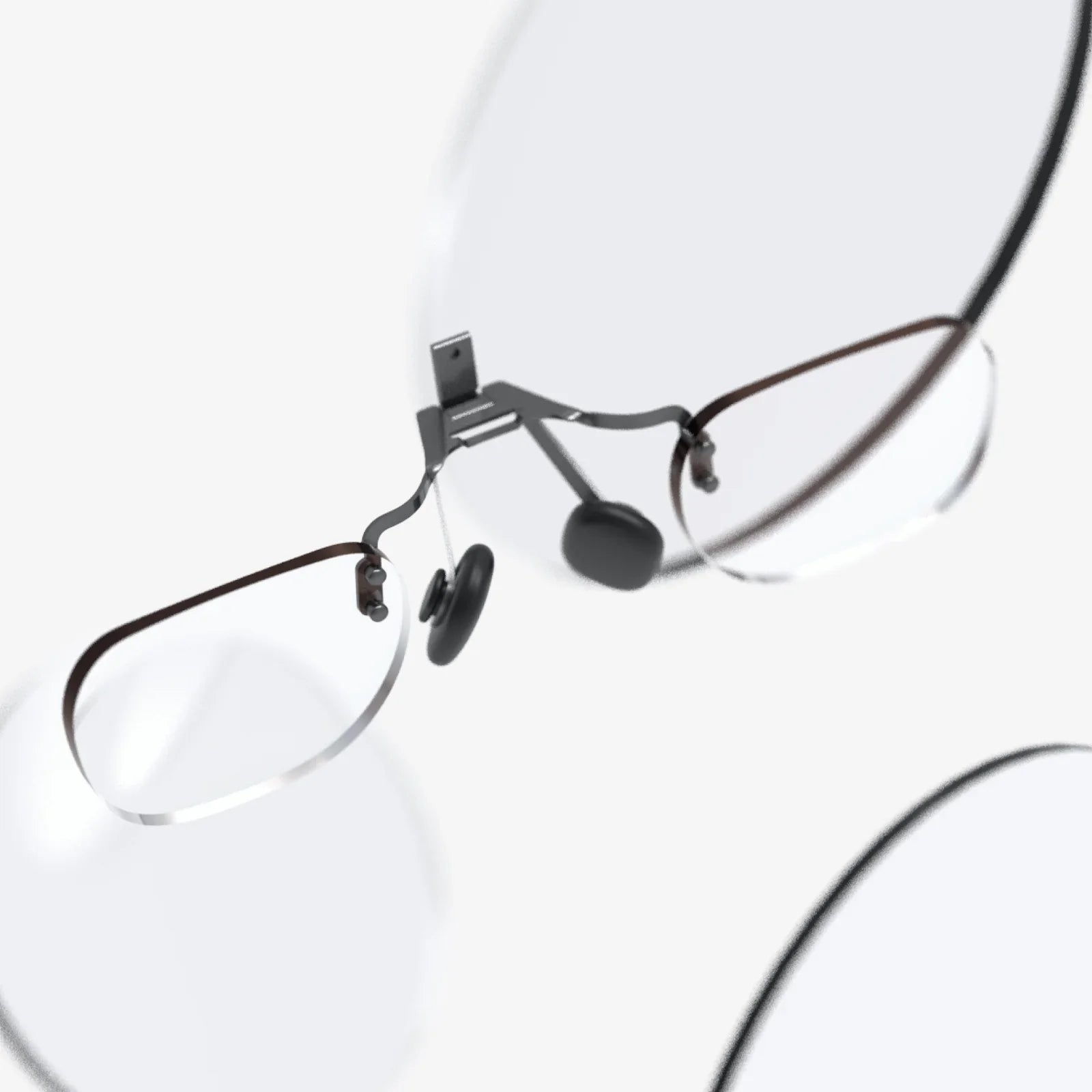
Imagine slipping on a device, no bulkier than a pair of sunglasses, and instantly stepping into a boundless digital universe—a world as rich, complex, and sensually vivid as our own, yet limited only by the imagination. This is the tantalizing promise of the future VR headset, a piece of technology poised to evolve from a niche gaming peripheral into the next great computing platform, fundamentally reshaping how we work, connect, learn, and experience reality itself. The journey there is not just about incremental upgrades; it's a complete reimagining of the interface between human and machine.
Beyond the Screen: The Pursuit of Photorealism and Presence
The primary hurdle for current generation devices is the screen-door effect, latency, and a field of view that constantly reminds users they are looking into a box. The future VR headset will obliterate these barriers. We are moving towards micro-OLED and eventually laser-beam scanning (LBS) displays offering resolutions exceeding 8K per eye, pushing pixel densities so high that the human eye can no longer distinguish individual pixels. This creates a visually seamless experience, but the true magic lies in the combination of this clarity with a drastic expansion of the field of view, approaching the natural human peripheral vision of approximately 220 degrees.
This visual fidelity will be powered by groundbreaking advancements in graphics processing. The future VR headset will likely not rely on a tethered cable to a powerful external computer. Instead, it will leverage cloud streaming and on-device AI co-processors that handle the immense computational load required for real-time ray tracing and complex physics simulations. Foveated rendering, a technique that uses eye-tracking to render only the area of the screen you are directly looking at in full detail, will become standard, drastically reducing the processing power needed without the user ever noticing a difference.
The ultimate goal is photorealism—creating digital environments and avatars that are indistinguishable from their real-world counterparts. This isn't just about texture quality; it's about simulating the way light behaves, how materials interact with it, and creating a dynamic world that responds and evolves. Achieving this level of realism is the key to unlocking true presence, the neurological phenomenon where the brain fully accepts the virtual world as real, making a video call feel like sitting across from someone and a virtual meeting feel like gathering in a physical boardroom.
The Sensory Revolution: More Than Just Sight and Sound
A truly immersive experience must engage more than just our eyes and ears. The future VR headset will be a hub for a full-body sensory suite, making the digital world tangible.
- Haptics and Tactile Feedback: The simple rumble of today's controllers will be replaced by sophisticated haptic gloves and even full-body suits. These will use a combination of ultrasonic arrays, electroactive polymers, and microfluidic systems to simulate the sensation of touch—from the rough bark of a tree to the gentle pressure of a handshake. This technology will be crucial for professional applications like remote surgery, where a surgeon must feel the resistance of tissue.
- Ambient and Environmental Simulation: Integrated systems will manage thermoelectric cooling and heating to simulate standing in a cold wind or feeling the sun on your skin. Miniaturized olfactory dispensers could release precise scents to enhance environments, from the salty sea air of a virtual beach to the distinct smell of a rain-soaked forest.
- Biometric Integration: Future headsets will incorporate advanced biometric sensors to read the user's emotional and physical state. By monitoring heart rate, pupil dilation, and even brainwave patterns via integrated electroencephalography (EEG), the experience can adapt in real-time. A horror game could intensify its scares based on your fear response, or a meditation app could guide you deeper by monitoring your relaxation levels.
The Interface of Thought: From Controllers to Neural Input
The most profound shift will come from how we interact with these new realities. Hand-held controllers are an intermediary step. The future points towards a complete hands-free interface.
Advanced inside-out tracking, using a constellation of miniature cameras and sensors on the headset itself, will map the physical environment and track the user's hands, fingers, and body with sub-millimeter accuracy with no external base stations required. This will allow for natural gesturing, typing on virtual keyboards, and manipulating digital objects with our bare hands.
Beyond gestures lies the final frontier: the brain-computer interface (BCI). While still in early stages, non-invasive BCIs, using sensors placed on the scalp (or eventually integrated into the headset's strap), are showing remarkable progress. The future VR headset could eventually interpret basic neural commands—selecting an app with a thought, navigating a menu through intention, or even communicating silently with another user's avatar. This doesn't mean reading your private thoughts; it's about detecting the faint electrical signals of intentional motor commands before they are sent to your limbs. This technology promises to make interaction instantaneous, intuitive, and incredibly powerful, particularly for users with physical disabilities.
The Form Factor: From Bulky Helmet to Invisible Companion
For mass adoption, the hardware must become socially acceptable and comfortable for all-day use. The future is lightweight, wireless, and aesthetically pleasing. We are already seeing a shift towards standalone headsets, but the next evolution is towards mixed reality (MR) glasses that look no different from standard eyewear.
Breakthroughs in holographic optics, such as pancake lenses and eventually metalenses (ultra-thin, flat surfaces that can manipulate light), will allow the optical stack to become incredibly slim. These will be paired with micro-projectors that beam images directly onto the retina. The result will be a device that can seamlessly overlay digital information onto the real world or switch to a fully immersive opaque mode, all within a form factor that is easy to wear for hours on end. Battery technology remains a challenge, but innovations in solid-state batteries and distributed power systems (e.g., a battery pack in a pocket) will provide the necessary life for sustained use.
Applications Beyond Entertainment: Reshaping Industries
While gaming will continue to be a massive driver, the impact of the future VR headset will be felt across every sector of society.
- The Remote Workspace: The concept of the "metaverse" will find its most practical application in remote work. Instead of a flat video call, teams will gather around a virtual 3D model, architects will walk clients through unbuilt structures at 1:1 scale, and colleagues from across the globe will collaborate on digital prototypes as if they were in the same physical room.
- Education and Training: Imagine medical students performing virtual dissections or practicing complex procedures without risk. History students could walk through ancient Rome. Mechanics could train on the digital twin of a jet engine. This experiential learning is far more effective than textbooks or videos, creating muscle memory and deep understanding.
- Social Connection and Telepresence: The future headset could revolutionize long-distance relationships and social media. Instead of scrolling through a feed, you could literally share a virtual space with friends and family, watching a movie together on a virtual big screen or attending a live concert where your avatar is in the front row. This offers a profound sense of togetherness that 2D screens cannot replicate.
- Healthcare and Therapy: VR is already used for exposure therapy and pain management. Future systems with photorealistic graphics and full-body haptics will make these therapies even more effective. They could also be used for cognitive rehabilitation and providing immersive, calming experiences for patients with chronic illnesses or those in palliative care.
The Ethical and Societal Implications: A Double-Edged Sword
With such transformative power comes significant responsibility and potential peril. The development of the future VR headset must be accompanied by a robust ethical framework.
The potential for addiction is immense. If a virtual world becomes more appealing than reality for a significant portion of the population, it could lead to widespread social withdrawal and neglect of real-world responsibilities. The concept of " reality privilege " could emerge, where those who can afford the best virtual experiences live in a digitally curated paradise, while others are left behind in an increasingly neglected physical world.
Data privacy becomes a paramount concern. A device that tracks your eye movements, biometric responses, and even neural signals is collecting the most intimate data imaginable. Who owns this data? How is it used? Without strict regulation, this information could be exploited for targeted advertising, social scoring, or even manipulation.
Finally, the line between reality and simulation will blur. Deepfakes are a concern today, but a photorealistic VR experience created by a malicious actor could be used for misinformation or psychological manipulation on an unprecedented scale. Establishing digital provenance and authenticity will be one of the great challenges of the coming decade.
The path to the future VR headset is not a simple straight line of improvement; it's a convergence of multiple revolutionary technologies—from optics and AI to haptics and neural science. The device that emerges will be more than just a gateway to games; it will be a portal to new forms of human experience, a tool for unprecedented creativity, and a mirror reflecting both our greatest aspirations and our deepest fears about technology's role in our lives. The headset of tomorrow won't just be something we look at; if we get it right, it will be something that truly looks back, understands, and enhances our human experience without ever replacing the irreplaceable value of the real world we share.
Share:
How Much Does the Average VR Headset Cost? A Deep Dive into Virtual Reality Pricing
VR Reality Headset: Your Portal to Immersive Digital Worlds and Beyond