


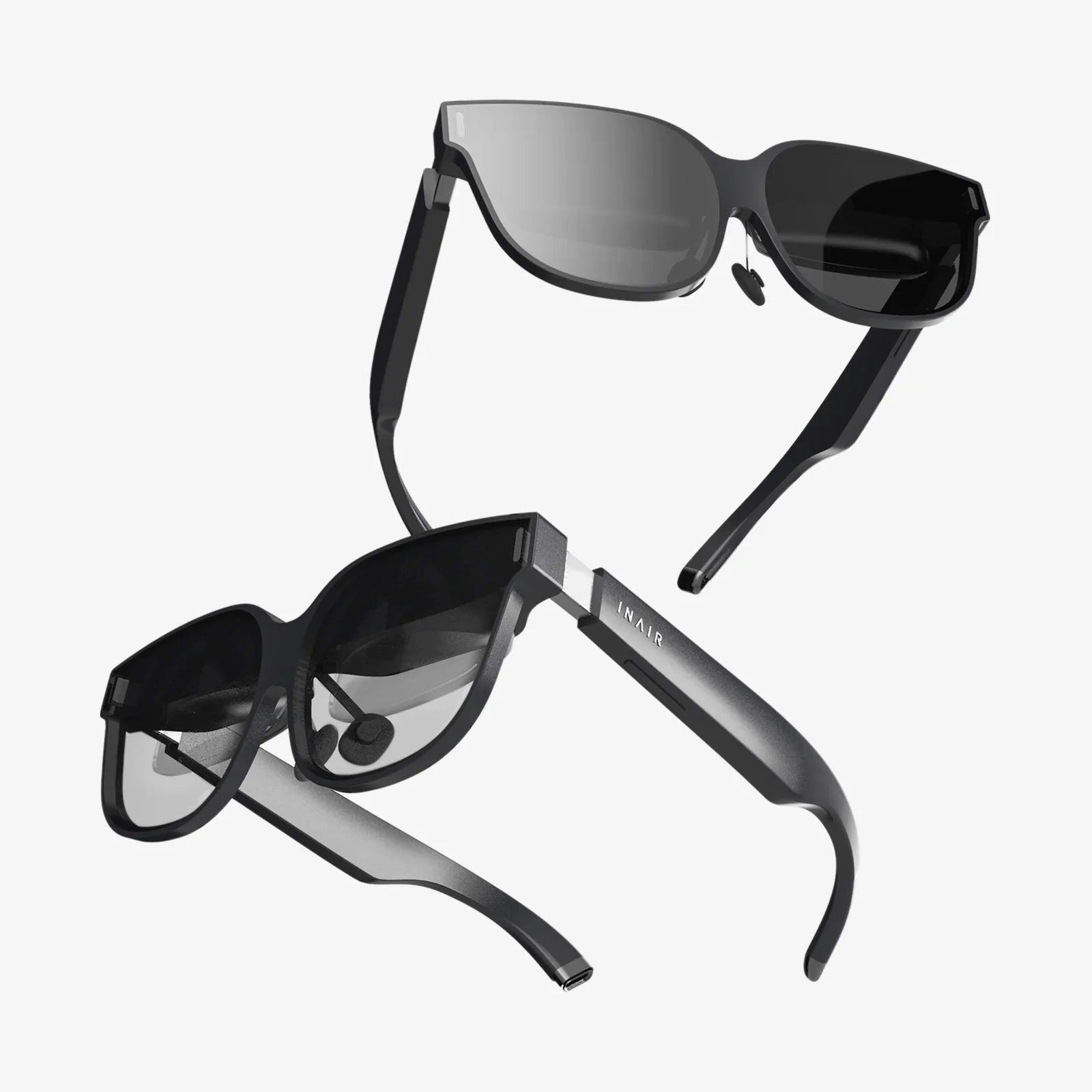
Imagine a world where information doesn’t reside on a screen in your pocket but is painted onto the canvas of reality itself, where digital guides whisper directions onto the pavement, historical figures reenact events on the very ground they occurred, and complex mechanical repairs are illuminated through transparent, step-by-step instructions overlaid on the machinery. This is not a distant science fiction fantasy; it is the imminent future being unlocked by the next generation of wearable augmented reality devices. These are not merely gadgets; they are gateways to a fundamentally new way of interacting with our environment, our data, and each other.
The Evolutionary Leap: From Clunky Prototypes to Seamless Integration
The journey of wearable AR has been one of rapid, albeit sometimes awkward, evolution. Early iterations were often characterized by bulky headsets, limited field of view, underwhelming battery life, and a distinct lack of compelling use cases beyond novel gaming and basic information display. They felt like prototypes because, in many ways, they were. The future of these devices hinges on solving these fundamental challenges through a convergence of several critical technological advancements.
The most obvious barrier to mass adoption has been form factor. Future wearable AR devices will undergo a dramatic miniaturization, evolving from headsets into sleek glasses that are socially acceptable and comfortable for all-day wear. This will be achieved through advancements in waveguide technology, which pipes light to the eye, and micro-LED displays, which offer incredible brightness and clarity in a minuscule package. The processing power, instead of being housed in the glasses themselves, will increasingly be offloaded to powerful companion devices or, more likely, to the edge cloud, connected via ultra-low-latency 5G and eventual 6G networks. This ensures the glasses remain light and cool while leveraging immense computational resources on demand.
The Pillars of Next-Generation Augmented Reality
The magic of future AR will not be in the display alone, but in its deep, contextual understanding of the world. This intelligence is built upon several core technological pillars.
Spatial Mapping and Persistent World Locking
Future devices will not just see the world; they will understand it in profound detail. Using a sophisticated fusion of LiDAR, radar, and advanced computer vision, these glasses will create a real-time, millimeter-accurate 3D map of their surroundings. This digital twin will allow digital objects to not only appear in a room but to interact with it physically—a virtual ball bouncing off a real couch, or a digital annotation staying firmly locked to a specific machine part even as you walk around it. Furthermore, this map will be persistent. The device will remember the placement of your digital artifacts, so the virtual family photos you hang on your real wall will still be there when you put your glasses on the next day.
Ambient and Contextual Intelligence
Powered by on-device AI and constant cloud connectivity, future AR wearables will become anticipatory companions. They will see what you see and understand your intent. Look at a restaurant, and its menu and reviews materialize beside it. Glance at a foreign language sign, and it instantly translates in your field of view. Struggle with a recipe in the kitchen, and the next steps are gently highlighted over your mixing bowl. This shift from explicit commands (“Hey device, search for…”) to implicit, context-driven information is the key to moving from a tool to a seamless extension of our own cognition.
Natural and Intuitive Interaction
The clumsy controllers of today will give way to a rich tapestry of interaction models. Hand-tracking will become so precise that pinching, dragging, and manipulating digital objects will feel as natural as using your hands in the real world. Voice assistants, evolved to understand complex, conversational commands, will be a primary interface. Perhaps most intriguingly, emerging technologies like subvocal recognition (reading neuromuscular signals when you silently form words) and even direct brain-computer interfaces in the farther future could allow for control through mere thought, making the technology truly hands-free and always available.
Transforming Industries and Redefining Professions
The impact of mature AR wearables will be most profoundly felt in enterprise and specialized fields, revolutionizing workflows and unlocking new levels of efficiency and expertise.
The Future of Work and Remote Collaboration
The concept of remote work will be utterly transformed. Instead of staring at a grid of faces on a flat screen, you could don your glasses and join a meeting where 3D avatars or holographic representations of your colleagues are sitting around your actual conference table. You could collaboratively manipulate a 3D model of a new product design, pointing and annotating in mid-air as if it were physically present. For field technicians, an expert thousands of miles away can see their live point-of-view, draw arrows and circles directly onto the faulty equipment, and guide them through complex repairs, effectively teleporting their knowledge onto the job site. This "see-what-I-see" capability dissolves geographical barriers to skill and mentorship.
Healthcare and Surgical Precision
In healthcare, the implications are staggering. Surgeons could have vital signs, ultrasound data, or 3D anatomical models from pre-op scans projected directly onto their field of view during an operation, eliminating the need to look away at monitors. Medical students could practice procedures on hyper-realistic virtual patients overlaid on mannequins. For patients, AR can provide visual guidance for physical therapy exercises or help those with low vision navigate their environment by enhancing contrast and highlighting obstacles.
Education and Experiential Learning
Education will shift from passive absorption to active exploration. History lessons will no longer be confined to textbooks; students will walk through ancient Rome, witnessing its glory superimposed on their schoolyard. Biology students could dissect a virtual frog, with each organ labeled and animated. This hands-on, immersive learning caters to different learning styles and makes complex abstract concepts tangibly understandable, fostering deeper engagement and retention.
The Social and Ethical Landscape: A Double-Edged Sword
With such transformative power comes a host of serious societal and ethical questions that我们必须 proactively address.
The Privacy Paradox
A device that sees and interprets the world 24/7 is, by its very nature, a powerful surveillance tool. The data it collects—what you look at, for how long, your biometric responses, the detailed 3D map of your home—is incredibly sensitive. Robust, transparent data governance frameworks will be non-negotiable. Users must have absolute control over their data, with clear opt-in policies and the ability to easily wipe locally stored information. The potential for misuse by corporations or governments is significant, demanding new legal and social norms around digital eavesdropping and data ownership in public and private spaces.
The Digital Divide and Accessibility
There is a real risk that AR technology could exacerbate existing social and economic inequalities. If these devices become essential tools for work, education, and social interaction, a new form of digital divide could emerge between those who can afford them and those who cannot. Furthermore, designing interfaces that are accessible to people with a wide range of physical and cognitive abilities is crucial to ensure this technology is inclusive and empowering for all, not just a privileged few.
Reality Blur and Mental Health
As the digital and physical layers become increasingly intertwined, questions about our perception of reality arise. Will we become addicted to these digitally enhanced filters, preferring them to an un-augmented world? Could constant notifications and information overload lead to new forms of anxiety and attention deficit disorders? The potential for immersive, hyper-realistic advertising and propaganda is also a concern. Establishing digital well-being features, the ability to create "quiet" zones, and fostering media literacy will be essential to maintaining a healthy relationship with this always-on technology.
The Path Forward: A Symbiotic Future
The ultimate goal for future wearable AR devices is not to distract us from the real world, but to enhance our perception of it and augment our human capabilities. They promise a future where we are more knowledgeable, more connected, and more productive. The path to this future is not just a technical challenge; it is a deeply human one. It requires a collaborative effort between engineers, designers, ethicists, policymakers, and users to build a framework that maximizes the immense benefits of this technology while diligently guarding against its pitfalls.
The true success of this technology will be measured not by its technical specifications, but by its ability to fade into the background, to become so intuitive and useful that we forget it's there—not as a barrier between us and the world, but as a lens that brings us closer to it, unlocking a deeper understanding and a richer experience of the reality we all share. The devices themselves will become invisible, leaving only the magic of a smarter, more connected, and astonishingly enhanced world at our fingertips.
Share:
Deep Learning Wearable: The Future of Personal Technology on Your Wrist
What Is Smart Device Computing: The Invisible Revolution Reshaping Our World