


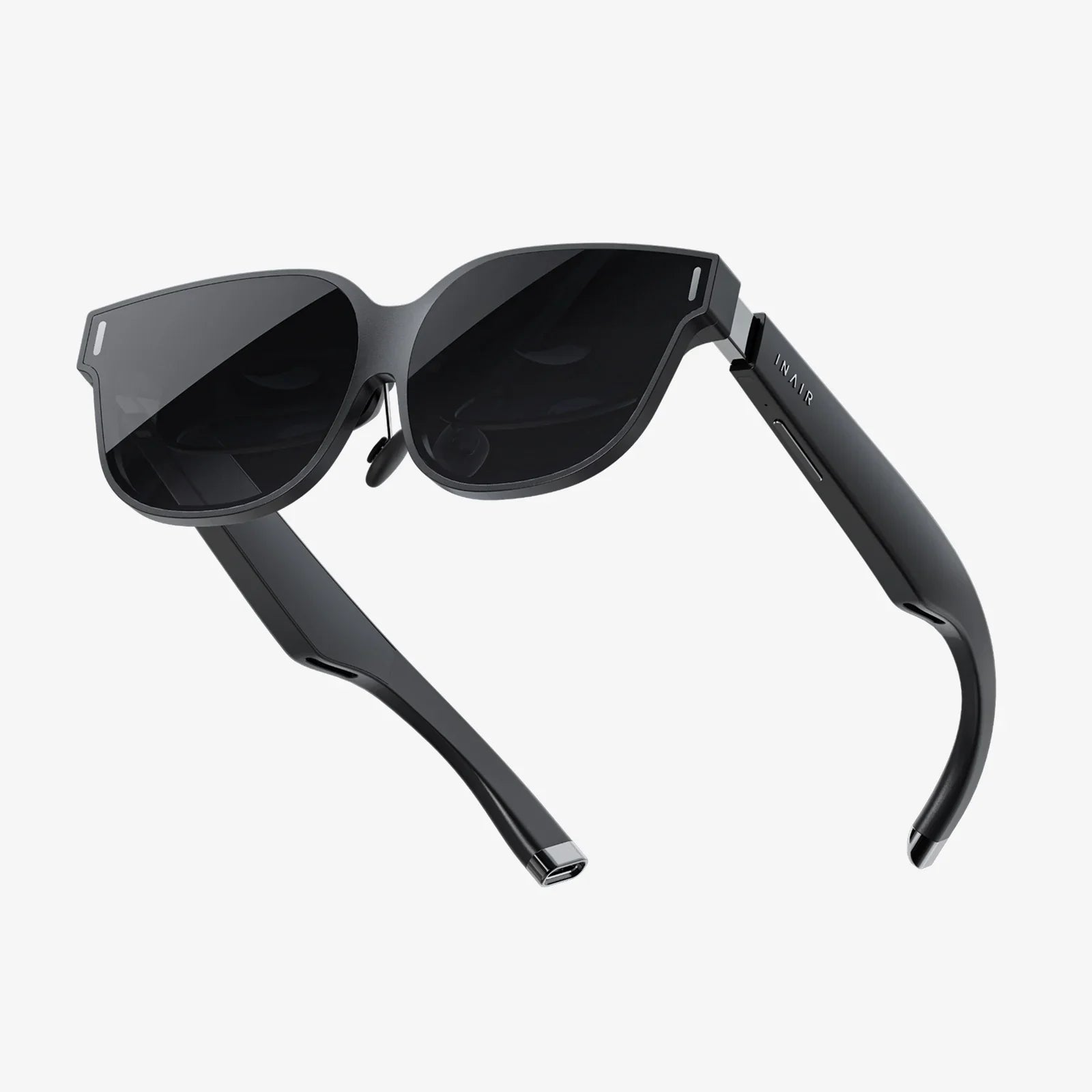
Imagine a device so profound it doesn’t just display a new world but convinces every one of your senses that you are living within it. This is the promise, the siren's call, of the next generation of futuristic VR glasses—a technological leap poised to dissolve the final barriers between the digital and the physical, forever altering the landscape of human experience.
The Evolution of Immersion: From Novelty to Neural Bridge
The journey to this point has been one of incremental yet staggering advances. Early iterations of virtual reality were impressive for their time but were ultimately defined by their limitations: bulky headsets, low-resolution screens that exposed the dreaded 'screen-door effect', noticeable latency that could induce discomfort, and a tangible sense of being an observer looking into a world, rather than an inhabitant within it. They were portals, but the glass was smudged and the frame was heavy.
Futuristic VR glasses represent the culmination of efforts to eliminate these limitations entirely. The term 'glasses' is itself a declaration of intent—moving away from the cumbersome 'headset' towards a form factor that is sleek, wearable, and socially accessible. This evolution is driven by breakthroughs across multiple scientific disciplines, converging to create a seamless experience.
Deconstructing the Magic: The Core Technologies
At the heart of these devices lies a symphony of cutting-edge technology, each component playing a critical role in building the illusion of reality.
Visual Fidelity: Beyond Resolution
The quest for visual perfection is paramount. We are moving past 8K resolutions into realms where pixel density exceeds the human eye's ability to discern individual pixels. This is coupled with advancements in micro-OLED and laser-beam scanning displays that offer unparalleled brightness, color gamut, and contrast ratios. High Dynamic Range (HDR) visuals within VR will replicate the intricate light and shadow of a sun-dappled forest or the blinding glare of a alien star, adding a crucial layer of depth and believability. Furthermore, varifocal and light-field technology will dynamically adjust to where your eyes are focused, mimicking natural depth of field and eliminating the vergence-accommodation conflict—a primary source of eye strain in current systems.
The Auditory Layer: Crafting Soundscapes
Immersion is as much about what you hear as what you see. Next-generation spatial audio technology goes beyond simple stereo or surround sound. It uses advanced Head-Related Transfer Function (HRTF) algorithms to create a 3D soundscape that is perfectly tailored to the user's unique anatomy. In a futuristic VR environment, you will hear the faint whisper of another avatar from precisely over your left shoulder, the echo of footsteps accurately bouncing off a virtual cavern wall behind you, and the subtle Doppler effect of a spacecraft whizzing past your head. This auditory precision is fundamental to selling the illusion of presence.
Haptics and Sensory Feedback: The Feeling of Reality
The most futuristic aspect of these glasses may not be what they show you, but what they make you feel. Haptic technology is evolving from simple controller rumble to full-body tactile suits and, more importantly, integrated systems within the glasses themselves. Using ultrasonic arrays or targeted electromagnetic pulses, these devices can simulate the sensation of touch on the skin—feeling the virtual rain on your face, the brush of a butterfly's wing on your hand, or the recoil of a virtual tool. This multi-sensory engagement is the final frontier in breaking the brain's disbelief.
Processing Power and Latency: The Unseen Engine
None of this is possible without immense, instantaneous computational power. The dreaded lag—the disconnect between your head movement and the world's response—is the ultimate immersion-breaker. Futuristic VR glasses will leverage on-device AI chipsets and cloud-based distributed computing to render incredibly complex worlds in real-time. The goal is to achieve photorealistic graphics with latency so low it is imperceptible to the human nervous system, creating a feedback loop that feels as natural and immediate as the real world.
Beyond Entertainment: The Transformative Applications
While gaming and immersive films are the most obvious applications, the true revolution of futuristic VR glasses lies in their potential to reshape entire industries and facets of daily life.
Redefining the Workspace
The concept of the office will be fundamentally transformed. Why join a video call when you can sit around a virtual holographic table with colleagues from across the globe, all represented by photorealistic avatars? Architects will walk clients through full-scale, interactive models of unbuilt skyscrapers. Surgeons might practice complex procedures on hyper-realistic virtual patients or even guide robotic arms in an operating room on another continent. The line between remote work and co-located collaboration will blur into irrelevance.
Revolutionizing Education and Training
Education will shift from passive learning to active experience. Instead of reading about ancient Rome, history students will stroll through a faithfully reconstructed Forum, hearing the sounds and witnessing the events. Medical students will dissect virtual cadavers that react with physiological accuracy. Astronauts will train for spacewalks in a perfect simulation of zero gravity and the vastness of space. The cost and risk associated with training for high-stakes professions will plummet while efficacy soars.
The Frontiers of Social Connection and Telepresence
Social media will evolve into social 'presence'. Platforms will become persistent virtual worlds where we don't just share photos and messages, but share experiences—attending a virtual concert with friends who live thousands of miles away, watching a sunset on a Martian landscape, or simply relaxing in a virtual living room. For an increasingly distributed global population, this offers a powerful antidote to loneliness and a new, profound way to maintain bonds. It will also enable true telepresence, allowing us to attend family events, weddings, or graduations as if we were physically there.
Therapeutic and Healthcare Breakthroughs
The therapeutic potential is immense. Phobia treatment can be conducted in perfectly safe, controlled virtual environments. Patients recovering from physical injuries can engage in motivating VR-based physiotherapy. These glasses could also be equipped with biometric sensors to monitor stress, neurological activity, and ocular health, providing real-time health data and interventions for conditions like anxiety or PTSD.
The Human and Societal Implications: A Double-Edged Sword
Such a powerful technology does not arrive without significant questions and challenges. The widespread adoption of futuristic VR glasses will force us to confront profound ethical and societal dilemmas.
The Privacy Paradox
These devices will be the most intimate data-gathering tools ever created. They will track not just where you look, but how your pupils dilate, your biometric responses to stimuli, your unconscious behaviors, and your deepest engagements. Who owns this data? How is it used? The potential for manipulation, targeted advertising, and surveillance is unprecedented. Robust ethical frameworks and data sovereignty laws will be required to prevent a dystopian outcome.
The Reality Divide
As these virtual worlds become more appealing than physical reality for some, we risk a new form of digital divide—not just access to technology, but a preference for escapism. What happens to societal cohesion, physical health, and our relationship with the natural world when a perfect digital alternative exists? Managing this balance and ensuring these technologies augment rather than replace reality will be a critical challenge.
Redefining Human Interaction and Identity
When we can project any appearance we desire through our avatars, concepts of identity and authenticity will be tested. Social norms will have to adapt to these new forms of interaction. Furthermore, the psychological impact of switching between reality and hyper-realistic virtuality is still unknown. We must carefully study the long-term effects on the human brain and social structures.
The Invisible Interface: A Glimpse into the Far Future
The ultimate endpoint for this technology is its eventual disappearance. Futuristic VR glasses are a stepping stone. Beyond them lies the potential for direct neural interfaces—BCIs (Brain-Computer Interfaces) that could stream digital experiences directly into the cortex, bypassing the eyes and ears entirely. This would represent the final merger of human and machine consciousness, a future where reality itself is a subjective and malleable construct. The glasses of today are the first, crucial step on that monumental journey, teaching us how to build and navigate these new realms.
The horizon beckons not with a screen to watch, but with a world to enter, to feel, and to shape. The age of passive observation is ending; the era of visceral, multi-sensory experience is dawning. This is the true calling of futuristic VR glasses—to become not just a piece of technology we use, but a fundamental lens through which we choose to live, work, connect, and understand the very nature of our existence.
Share:
Smart Glasses Market Overview: A Comprehensive Analysis of Trends, Challenges, and Future Projections
What Is a Digital Product? The Ultimate Guide to Understanding the Intangible Economy