


- by wangfred
Futuristic Wearable HUD: The Invisible Interface Revolutionizing Our Reality
- by wangfred
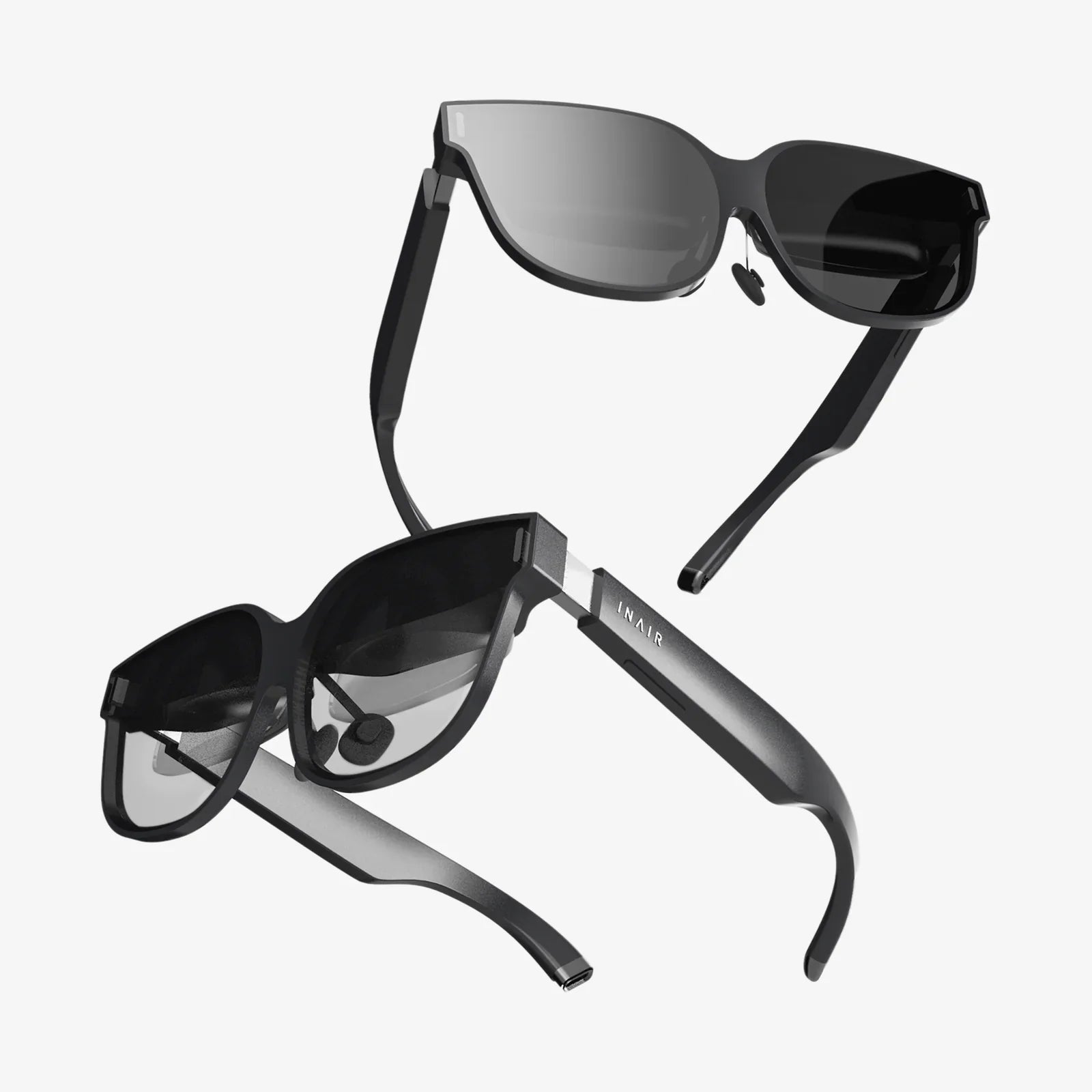
Imagine a world where information doesn’t live on a screen in your pocket but is painted onto the canvas of reality itself. Where navigating a new city, learning a complex skill, or connecting with a colleague across the globe happens not through a device you hold, but through a seamless layer of intelligence integrated directly into your field of vision. This is the promise, and the imminent reality, of the futuristic wearable HUD—a technology set to dissolve the barrier between the digital and the physical, forever changing how we perceive and interact with the world.
The concept of a Heads-Up Display is not new. Its origins are firmly rooted in the cockpits of high-performance military aircraft, where pilots needed critical flight data—airspeed, altitude, targeting information—projected onto their canopies to maintain situational awareness without looking down at their instruments. This was a revolutionary step in human-machine interaction, but it was confined to a specialized, incredibly expensive environment.
The journey from the fighter jet to the consumer's face has been a long one, marked by prototypes that were often bulky, expensive, and socially awkward. Early consumer attempts, while ambitious, served more as proof-of-concept than practical daily tools. They suffered from limited field of view, short battery life, and a lack of compelling software. However, they planted a crucial seed, demonstrating the potential for a new kind of always-available, context-aware computing.
Today, we stand on the precipice of a new era. Breakthroughs in several key fields are converging to make the futuristic wearable HUD not just possible, but inevitable. The path has evolved from making a visible device smaller to making the technology itself disappear, culminating in an interface that feels less like a tool and more like a natural extension of our own senses.
The seamless experience of a next-generation HUD belies the incredible complexity operating beneath the surface. It is a symphony of advanced technologies, each playing a critical role.
At the heart of any HUD is the method by which digital images are superimposed onto the user's view of the real world. Early systems used simple projection onto a combiner glass. The future, however, lies in waveguide technology. Think of a waveguide as a piece of transparent glass or plastic that acts like a conduit for light. Microprojectors shoot photons into the edge of this waveguide, which then bounces and channels this light through a process of total internal reflection until it's eventually directed out into the user's eye.
This technology is what allows for sleek, eyeglasses-like form factors. It eliminates the need for large, heavy components directly in the line of sight. Innovations in nanotechnology and holographic optical elements are further refining this, creating thinner, lighter, and more efficient waveguides that can project full-color, high-brightness images that are visible even in direct sunlight.
A HUD is not just a display; it's a powerful computer. Driving the experience is a miniaturized system-on-a-chip, similar to those found in high-end smartphones but optimized for extreme low power consumption and thermal efficiency. This processor is the brain, but it relies on a nervous system of sensors to understand the world:
Hardware is nothing without software. The true magic of a futuristic HUD is its contextual intelligence. Using data from its sensor suite, it constructs a real-time, understanding of the user's environment—a concept known as spatial computing. It doesn't just see a table; it understands it's a surface. It identifies doors, windows, people, and text. This allows digital information to interact meaningfully with the physical world. A virtual screen can be pinned to a wall. Navigation arrows can appear to hover on the road ahead. A tutorial can overlay instructions directly onto the machinery you are learning to operate.
The potential applications for this technology stretch as far as the imagination, poised to revolutionize nearly every aspect of our personal and professional lives.
In the professional realm, HUDs will be transformative, enhancing human capability and safety.
Beyond work, HUDs will redefine how we socialize, learn, and navigate our daily routines.
With such transformative power comes profound responsibility. The widespread adoption of wearable HUDs presents a host of ethical, social, and practical challenges that we must confront proactively.
This is the single greatest challenge. A HUD with always-on cameras and microphones is a powerful surveillance tool. The potential for constant recording raises alarming questions:
Robust, transparent, and user-centric privacy frameworks will be non-negotiable. Features like physical camera shutters, clear recording indicators, and granular digital consent mechanisms must be standard.
Will this technology be a great equalizer or a source of greater inequality? High costs could initially create a new digital divide between those who are "augmented" and those who are not, potentially granting significant professional and social advantages to the former. Conversely, if designed inclusively, HUDs could be one of the most powerful assistive technologies ever created, offering real-time captioning for the hearing impaired, detailed audio descriptions for the visually impaired, and cognitive aids for those with memory conditions.
If we can curate and filter our reality, what happens to our shared experience of the world? There is a risk of societies fracturing into individual realities, where people see only the information that confirms their biases. Furthermore, the potential for always-on information stimulation could exacerbate attention deficits and anxiety. The ability to "unplug" and experience the world without a digital filter will be a critical feature for mental well-being.
Looking beyond the next five to ten years, the trajectory of HUD technology points toward even deeper integration with the human experience. We are moving toward interfaces that are not just worn but woven into the fabric of our existence.
The end goal is a complete eradication of the device. Research into electronic tattoos and neural interfaces suggests a future where displays are not in front of our eyes but projected onto our retinas by tiny, embedded devices, or where information is communicated directly to the brain, bypassing the eyes altogether. This sounds like science fiction, but it represents the logical conclusion of the quest for the perfect, invisible interface.
In this future, the question shifts from "How do we build a better screen?" to "What does it mean to be human in a world where reality is programmable?" The futuristic wearable HUD is not merely a new product category; it is the foundational technology for a new phase of human-computer symbiosis, a bridge to a world where our digital and physical selves are finally, and utterly, fused.
The screen that has dominated our attention for decades is beginning to fade. In its place, a new layer of reality is coming into focus—one that promises to augment our abilities, reshape our industries, and challenge our very notions of privacy and connection. The era of looking down at a device is ending; the age of looking up and out into an augmented world is dawning. The question is no longer if this future will arrive, but how quickly we can prepare for the immense possibilities and profound responsibilities it brings.